Network Solution Architecture
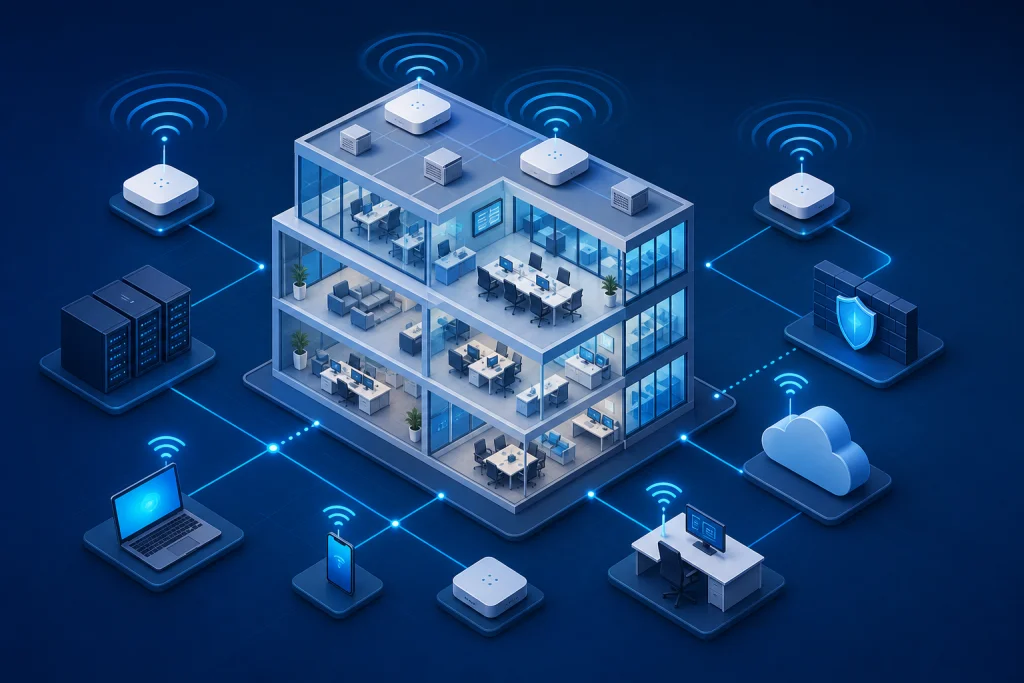
Our network solution architecture is built on a three-tier hierarchical model: Core, Distribution, and Access layers, ensuring scalability and performance. At the core, we deploy high-speed switches with redundant fabric, such as Cisco Catalyst 9600 series, to handle aggregate traffic with minimal latency. The distribution layer aggregates access switches and implements policies like VLAN routing and access control lists (ACLs). For the access layer, we use PoE+ switches to power devices like IP phones and wireless access points. The WAN edge is equipped with SD-WAN capable routers from Fortinet or Cisco, enabling dynamic path selection and application-aware routing. For wireless, we design a controller-based WLAN with seamless roaming and band steering, using access points from Ruijie or Cisco. Security is embedded at every layer: next-generation firewalls at the perimeter, intrusion prevention systems (IPS), and network access control (NAC) for endpoint compliance. We also integrate networking with our cybersecurity framework to provide unified threat management. The architecture supports both on-premises and cloud-based management via centralized controllers or cloud portals, allowing IT teams to monitor and configure the network remotely. Redundancy is achieved through protocols like HSRP, VRRP, and link aggregation, ensuring 99.999% uptime for critical services.
Scalability is a key design principle. The network can grow from a single site to multi-site deployments with MPLS or SD-WAN interconnections. We use VXLAN and EVPN for network virtualization, enabling multi-tenant environments without physical segmentation. Quality of Service (QoS) policies prioritize real-time traffic like VoIP and video, while traffic shaping prevents congestion. For data centers, we deploy spine-leaf architecture with high-speed 25/100GbE links to support east-west traffic. The entire architecture is documented with detailed network diagrams and IP addressing schemes, ensuring easy troubleshooting and future expansions.
Industry Use Cases for Network Solution
In the manufacturing sector, our network solution supports industrial IoT (IIoT) by providing deterministic latency and high reliability. For example, a large automotive plant in Jakarta uses our network to connect sensors, robots, and PLCs with time-sensitive networking (TSN) over a converged network. This reduces downtime by 30% and improves production efficiency. In retail, our WLAN solution enables omnichannel experiences, such as real-time inventory tracking and personalized promotions. A retail chain with 50 stores across Java deployed our SD-WAN to connect POS systems and back-office applications, resulting in 40% lower WAN costs and faster transaction processing. For healthcare, we design networks that meet regulatory compliance (e.g., Kemenkes) and support critical applications like PACS and telemedicine. A hospital in Surabaya implemented our network with redundant links and VLAN segmentation for patient data, achieving 99.99% uptime and secure access. In the education sector, universities benefit from high-density WLAN for thousands of concurrent users, enabling e-learning and research collaboration. A university in Bandung deployed our solution with 802.11ax access points and centralized management, improving student satisfaction scores by 25%.
Financial institutions require ultra-low latency and security. A bank in Jakarta uses our network with Cisco ACI and Fortinet firewalls to meet PCI DSS requirements, reducing latency for trading applications by 15%. For logistics and warehousing, our ruggedized access points and switches handle harsh environments, supporting real-time asset tracking with RFID and barcode scanners. A logistics company in Batam deployed our network across a 50,000 sqm warehouse, increasing inventory accuracy to 99.5%. These use cases demonstrate the versatility and performance of our network solution across diverse industries in Indonesia.
Network Solution vs Traditional Alternatives
Traditional network architectures often rely on manual configuration, static routing, and hardware-centric designs. They lack agility and are prone to human error. In contrast, our network solution leverages software-defined networking (SDN) and automation to reduce deployment time by 60%. For example, traditional WANs use MPLS circuits with fixed bandwidth, leading to underutilization or congestion. Our SD-WAN solution dynamically routes traffic over multiple links (MPLS, broadband, LTE), optimizing cost and performance. A case study showed a 50% reduction in WAN costs and 30% improvement in application performance. Traditional networks also struggle with security; they often require separate appliances for firewall, IPS, and VPN. Our integrated security fabric from Fortinet or Cisco provides unified threat management, reducing complexity and improving threat response time by 40%.
Another key difference is scalability. Traditional networks require forklift upgrades to add capacity. Our solution uses modular switches and pay-as-you-grow licensing, allowing seamless expansion. For wireless, traditional WLANs suffer from interference and poor roaming. Our controller-based WLAN with AI-driven RF optimization ensures consistent coverage and capacity. In terms of management, traditional networks rely on CLI and SNMP, which are time-consuming. Our solution offers a centralized dashboard with analytics and automation, reducing troubleshooting time by 50%. Finally, traditional networks have limited visibility into application performance. Our solution includes NetFlow/IPFIX and application recognition, enabling IT to identify bandwidth hogs and optimize traffic. Overall, our network solution provides superior agility, security, and cost-efficiency compared to traditional alternatives.
Case Study & Implementation Methodology
Case Study: A multinational logistics company in Indonesia faced frequent network outages at its Jakarta headquarters and three distribution centers. The legacy MPLS network experienced 15% packet loss during peak hours, causing delays in shipment tracking and ERP access. The challenge was to provide high-availability, low-latency connectivity while reducing costs. We implemented a dual-link SD-WAN solution using Fortinet FortiGate 100F appliances at each site, with primary MPLS and backup broadband links. The solution included FortiManager for centralized orchestration and FortiAnalyzer for visibility. Additionally, we deployed Cisco Catalyst 9300 switches for LAN access and Ruijie APs for WLAN. The result: packet loss reduced to <0.1%, WAN costs cut by 45% by shifting 60% of traffic to broadband, and application response time improved by 35%. The network uptime increased to 99.98%, enabling real-time tracking and streamlined operations.
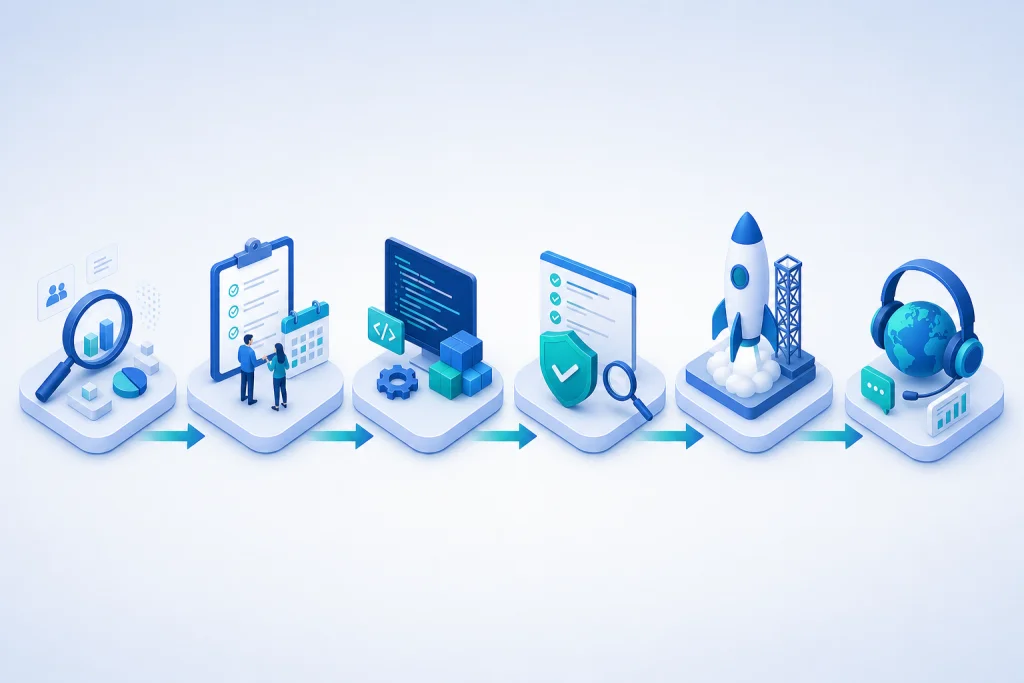
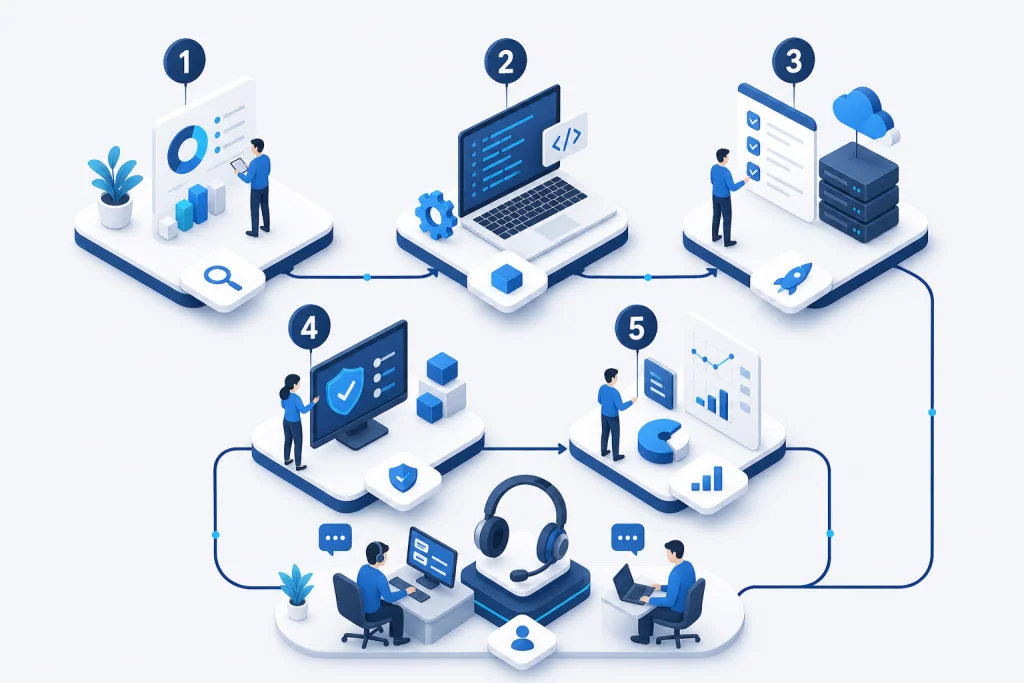
Our implementation methodology follows a structured approach: Discovery & Assessment, Design, Pilot, Deployment, and Optimization. In the Discovery phase, we conduct site surveys, traffic analysis, and stakeholder interviews. The Design phase produces detailed network diagrams, IP plans, and security policies. A pilot deployment on a subset of users validates performance. Full deployment uses a phased rollout to minimize disruption. Finally, we provide ongoing optimization with quarterly reviews and proactive monitoring. This methodology ensures a smooth transition and maximizes ROI. For internal linking, learn more about our enterprise WiFi solutions and cybersecurity integration.