SEWA IT Architecture
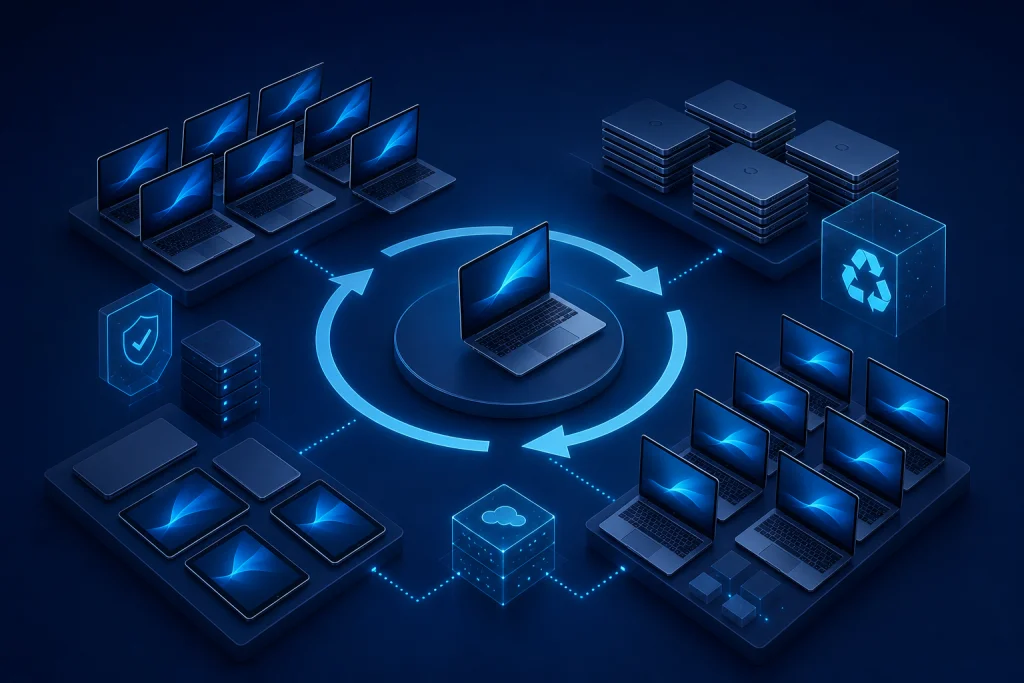
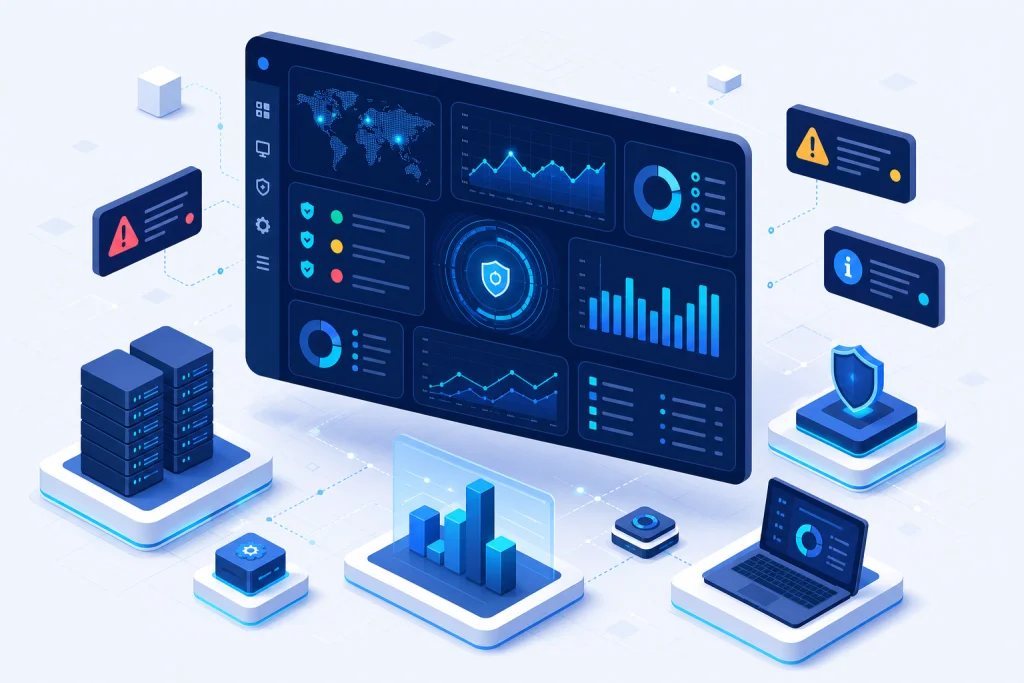
The SEWA IT architecture is a multi-layered system designed for scalability and real-time data processing. At the edge, RFID readers and IoT sensors (e.g., temperature, humidity, motion) capture asset data. These are connected to edge servers like Lenovo ThinkEdge SE450 or HP Edgeline EL300, which preprocess data locally to reduce latency. The edge layer communicates via networking infrastructure (Cisco Catalyst switches or Ruijie RG-S series) to a core data center or cloud. The core layer includes server & storage systems such as Dell PowerEdge servers and Synology RackStation NAS for centralized data aggregation and backup. A hyperconverged infrastructure (HCI) from HCI vendors like VMware vSAN can be used for simplified management. The application layer runs asset management software (e.g., IBM Maximo, SAP EAM) with real-time dashboards and analytics. Integration with hybrid cloud enables remote access and disaster recovery. Security is enforced via cybersecurity solutions including Fortinet firewalls and endpoint protection. This architecture ensures end-to-end visibility, from warehouse to field operations.
Key components include RFID middleware for tag data normalization, IoT gateways for protocol translation (MQTT, CoAP), and a centralized database (SQL or NoSQL) for asset history. The system supports both active and passive RFID tags, with read ranges up to 100 meters for active tags. For high-value assets, GPS-enabled tags provide real-time location tracking. The architecture is designed to handle 10,000+ assets per site with sub-second latency.
Industry Use Cases for SEWA IT
SEWA IT is deployed across multiple industries in Indonesia. In manufacturing, it tracks raw materials and work-in-progress items, reducing inventory discrepancies by 25%. For example, an automotive parts manufacturer in Jakarta integrated SEWA IT with IT infrastructure from Dell and Synology to monitor 50,000+ components. Result: 99% inventory accuracy and 15% reduction in stockouts. In healthcare, hospitals use SEWA IT to manage medical equipment and IT assets. A hospital in Surabaya deployed RFID-enabled asset tracking with enterprise WiFi from Ruijie to locate infusion pumps and ventilators. Result: 30% reduction in equipment search time and 20% lower rental costs. In logistics, a warehouse in Bandung implemented SEWA IT with HP servers and enterprise CCTV integration to monitor high-value electronics. Result: 50% decrease in theft and 40% faster order fulfillment. Retail enterprises use SEWA IT for real-time stock visibility, integrating with HCI for scalable data processing. A retail chain in Bali achieved 98% stock accuracy and 10% increase in sales due to better availability.
Other use cases include IT asset lifecycle management for enterprises with distributed offices. A financial services firm in Jakarta tracked 20,000 laptops and servers across 10 branches using SEWA IT with backup & disaster recovery from Veeam. Result: 95% reduction in asset loss and 30% lower audit preparation time. The system also supports compliance with Indonesian regulations (e.g., UU ITE) by maintaining detailed audit trails.
SEWA IT vs Traditional Alternatives
Traditional asset tracking relies on manual barcode scanning, spreadsheets, or periodic audits. These methods suffer from human error (up to 20% inaccuracy), delayed data (hours to days), and lack of real-time visibility. In contrast, SEWA IT automates data capture via RFID and IoT, achieving 99.5% accuracy and sub-second updates. For example, a manual audit of 10,000 assets might take 3 days; SEWA IT can complete the same in 1 hour. Traditional systems also require significant labor costs (e.g., 5 full-time employees for a warehouse), whereas SEWA IT reduces labor by 60%. Additionally, traditional methods cannot provide condition monitoring (temperature, humidity) or predictive analytics. SEWA IT integrates with cybersecurity and hybrid cloud for secure remote access, while traditional systems are often siloed. Another disadvantage of traditional approaches is the lack of integration with enterprise resource planning (ERP) systems. SEWA IT offers APIs for seamless integration with SAP, Oracle, or Microsoft Dynamics. Cost-wise, traditional manual tracking has low upfront costs but high operational expenses (e.g., labor, error correction). SEWA IT requires initial investment in hardware (RFID readers, sensors, servers) and software, but the ROI is typically achieved within 12-18 months through reduced shrinkage, improved efficiency, and lower labor costs.
A comparison of total cost of ownership (TCO) over 3 years: Traditional: $500,000 (labor, audits, losses) vs SEWA IT: $350,000 (hardware, software, maintenance). SEWA IT also offers scalability—adding 1,000 assets requires minimal incremental cost, while traditional methods require proportional labor. For enterprises in Indonesia with multiple sites, SEWA IT provides centralized management via networking and cloud, unlike fragmented traditional systems.
Case Study & Implementation Methodology
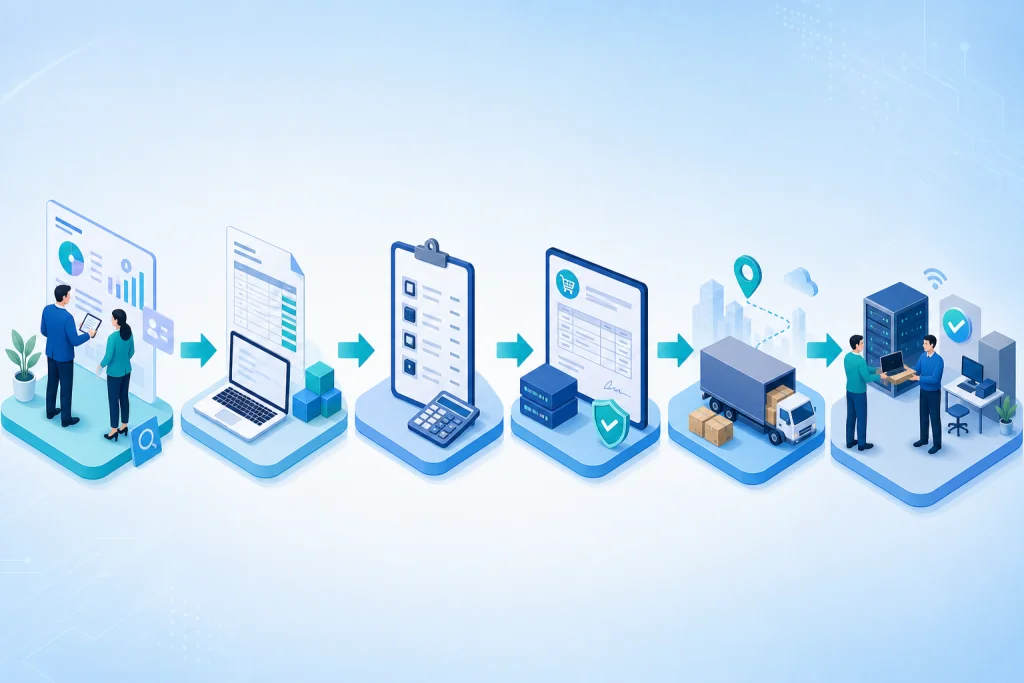
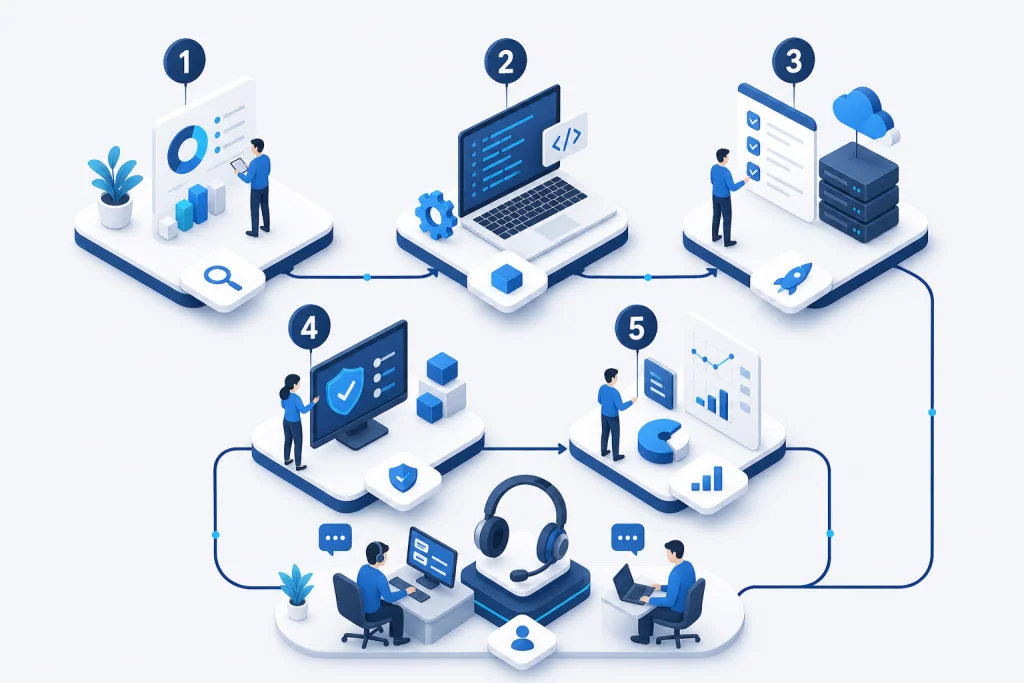
Manufacturing Company in Bekasi, Challenge: 8% annual asset shrinkage (value $2M) and 15% inventory inaccuracy due to manual tracking. Solution: Deployed SEWA IT with Lenovo edge servers, HP ProLiant for backend, Synology NAS for local storage, and RFID readers from Impinj. Integrated with networking from Cisco. Implementation followed a 5-phase methodology: Phase 1 (Assessment): Audited 50,000 assets and identified critical tracking points. Phase 2 (Design): Architected edge-core-cloud topology with HCI for scalability. Phase 3 (Deployment): Installed 20 RFID portals and 100 IoT sensors; integrated with SAP ERP. Phase 4 (Testing): Conducted 2-week pilot with 5,000 assets; achieved 99.8% read accuracy. Phase 5 (Rollout): Full deployment over 3 months. Result: Asset shrinkage reduced to 1% ($250K savings/year), inventory accuracy improved to 99.5%, retrieval time cut by 40%, and labor costs reduced by 50%. ROI achieved in 14 months.
Warehouse & Logistics Company in Surabaya, Challenge: 12% error rate in order picking and 20% overtime costs. Solution: Implemented SEWA IT with Dell PowerEdge servers, Ruijie WiFi for connectivity, and handheld RFID readers. Integrated with backup & disaster recovery using Veeam. Methodology: Agile implementation with 2-week sprints. Phase 1: Mapped 10,000 pallet locations. Phase 2: Deployed fixed RFID readers at chokepoints. Phase 3: Trained 50 staff on mobile RFID scanners. Phase 4: Go-live with parallel run for 1 month. Result: Picking error rate dropped to 1%, overtime reduced by 30%, throughput increased by 25%. ROI achieved in 10 months.