Network Upgrade Architecture
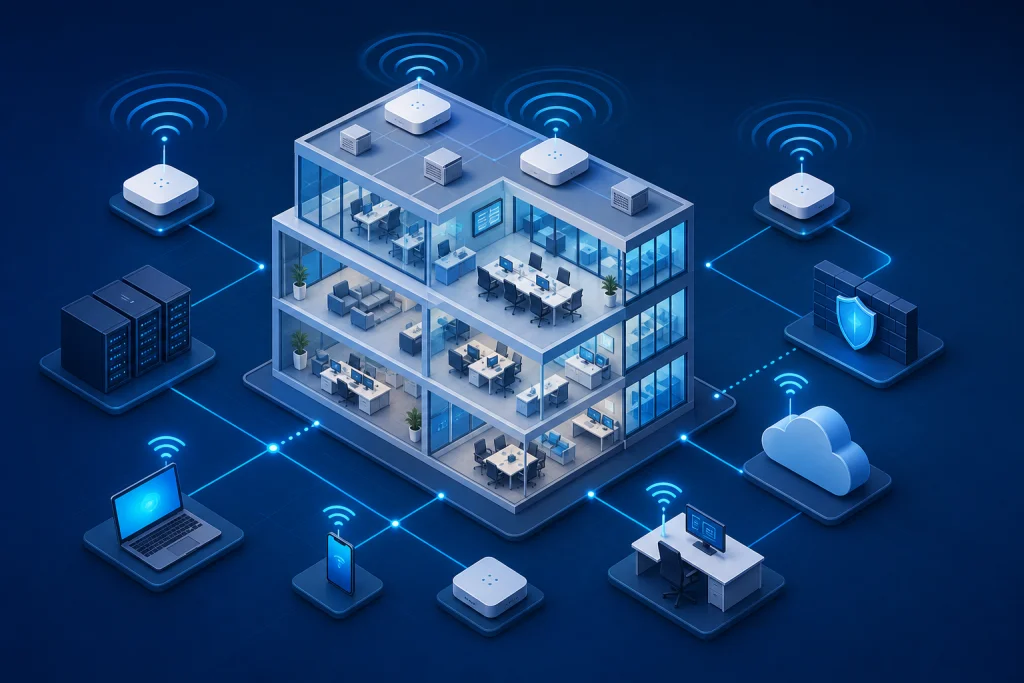
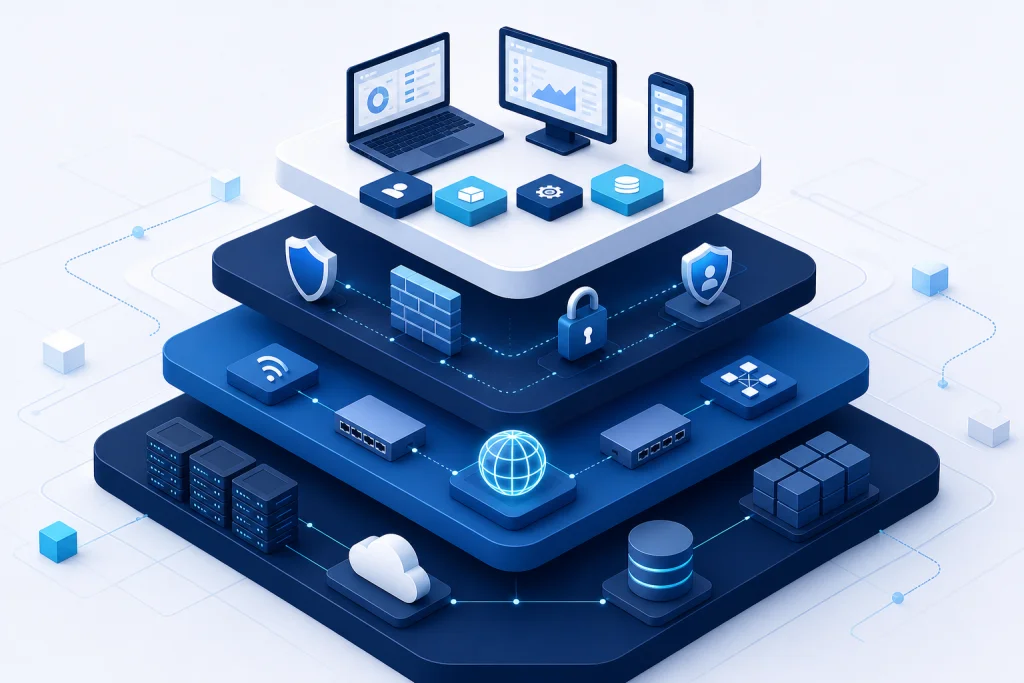
A modern network upgrade architecture for enterprises in Indonesia must address three core pillars: high-speed connectivity, intelligent management, and robust security. The foundation is a spine-leaf topology using 10/25GbE or 100GbE switches from vendors like Cisco and Ruijie, which provides non-blocking performance and low latency (<1 microsecond). This is paired with SD-WAN overlays from Fortinet or Cisco Viptela to optimize traffic routing across MPLS, broadband, and LTE links. Wireless upgrades involve Wi-Fi 6 access points with OFDMA and MU-MIMO, supporting up to 4x higher client density. For security, a zero-trust architecture with micro-segmentation and encrypted DNS is deployed at the edge. The architecture also includes centralized network management via Cisco DNA Center or FortiManager, enabling automation of provisioning, monitoring, and troubleshooting. Redundancy is ensured through dual-homed connections and failover mechanisms, achieving 99.999% uptime. This design scales from 500 to 10,000+ users, making it ideal for large campuses, multi-site enterprises, and data centers.
Key technical specifications include support for IPv6, VXLAN overlays for network virtualization, and integration with cloud-based SD-WAN controllers. The architecture also incorporates Quality of Service (QoS) policies to prioritize real-time applications like VoIP and video conferencing, ensuring <150ms latency. For high-availability, redundant power supplies and fans are standard in all switches. The use of automation reduces manual configuration errors by 80% and accelerates deployment by 60%. This architecture is vendor-agnostic but optimized for Cisco, Fortinet, and Ruijie ecosystems, providing flexibility for future upgrades.
Industry Use Cases for Network Upgrade
In the manufacturing sector, a network upgrade enables real-time monitoring of IoT sensors and robotic systems. For example, a automotive parts manufacturer in Bekasi upgraded to a Cisco-based industrial Ethernet network with deterministic latency (<10ms), reducing production downtime by 35% and enabling predictive maintenance. The deployment of Wi-Fi 6 allowed AGVs (Automated Guided Vehicles) to operate seamlessly across a 50,000 sqm facility. Similarly, in the financial industry, a bank in Jakarta implemented Fortinet SD-WAN with integrated security, achieving 99.99% uptime for branch connectivity and reducing WAN costs by 40%. The upgrade also enabled secure direct internet access for cloud applications, improving transaction processing speed by 50%. For healthcare, a hospital network upgrade to Ruijie switches and Wi-Fi 6 supported 200+ concurrent telemedicine sessions with <50ms latency, enhancing patient care. In the education sector, a university in Bandung deployed a campus-wide Wi-Fi 6 network from Cisco, supporting 10,000+ students with seamless roaming and bandwidth allocation per device, improving online learning engagement by 30%. These use cases demonstrate how tailored network upgrades drive measurable operational and financial benefits across industries.
Additional verticals include retail, where network upgrades support omnichannel experiences with real-time inventory tracking and POS systems. A retail chain in Surabaya upgraded to Fortinet SD-WAN, reducing checkout transaction times by 20% and enabling centralized management of 50+ stores. In logistics, a warehouse in Jakarta implemented a Cisco Wi-Fi 6 and 10GbE backbone for barcode scanners and IoT trackers, improving package sorting efficiency by 25%. Each use case highlights the importance of aligning network architecture with specific business processes, leveraging vendor expertise from Cisco, Fortinet, and Ruijie.
Network Upgrade vs Traditional Alternatives
Traditional network architectures rely on manual configurations, static routing, and hub-and-spoke topologies, leading to high operational overhead and limited scalability. In contrast, a modern network upgrade embraces SDN (Software-Defined Networking) and automation, reducing provisioning time from weeks to hours. For example, traditional MPLS circuits cost 3-5x more than SD-WAN broadband links while offering less flexibility. SD-WAN provides application-aware routing, allowing real-time traffic steering based on performance metrics, which traditional routers cannot do. In terms of security, traditional networks often rely on perimeter firewalls, while upgraded architectures incorporate integrated security at every point, such as Cisco Umbrella for DNS-layer protection or Fortinet's Security Fabric. This reduces breach impact by 60% according to industry studies. Performance-wise, traditional Wi-Fi (802.11ac) supports up to 3.5 Gbps aggregate, while Wi-Fi 6 (802.11ax) delivers 9.6 Gbps, with 4x better efficiency in dense environments. Additionally, traditional network management requires manual CLI commands, whereas modern systems like Cisco DNA Center offer intent-based automation and analytics, reducing troubleshooting time by 90%. For enterprises in Indonesia, the total cost of ownership (TCO) for a network upgrade is typically 20-30% lower over 3 years due to reduced downtime and operational savings. The shift from legacy to modern architecture is not just about speed but about enabling agility, security, and scalability that traditional alternatives cannot match.
Another critical difference is in resilience. Traditional networks often have single points of failure, while upgraded designs incorporate redundancy at every layer, from dual power supplies to multi-path routing. For example, a traditional network might experience 10+ hours of downtime per year, whereas a modern network with automated failover achieves less than 5 minutes. This is vital for enterprises in sectors like finance and healthcare where downtime costs can exceed $100,000 per hour. The adoption of intent-based networking also allows policy-driven changes that prevent misconfigurations, a common issue in traditional networks. Ultimately, the decision to upgrade is a strategic move to future-proof the enterprise against growing bandwidth demands and cyber threats.
Case Study & Implementation Methodology
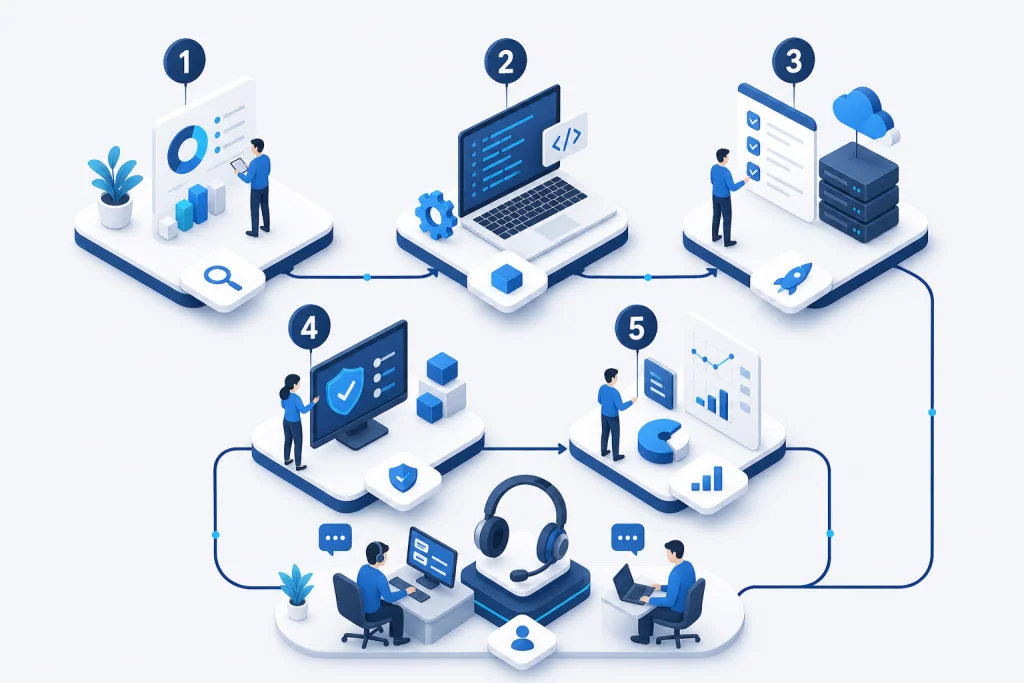
A manufacturing company in Karawang with 2,000 employees faced frequent network outages (average 3 hours/month) due to outdated 1GbE switches and single WAN link. Challenge: 40% of production downtime was network-related, costing $500,000 annually. Solution: Deployed a spine-leaf architecture with Cisco Catalyst 9300 switches (10GbE uplinks) and SD-WAN from Fortinet, with dual 500Mbps broadband links. Implemented Wi-Fi 6 from Ruijie for warehouse IoT devices. Result: Network uptime increased to 99.99%, production downtime reduced by 90%, and WAN costs decreased by 35%. ROI achieved in 14 months. Implementation followed a phased methodology: Phase 1 (Assessment): Conducted network audit and traffic analysis over 4 weeks, identifying bottlenecks and security gaps. Phase 2 (Design): Created a detailed architecture plan with redundancy and QoS policies, validated via simulation. Phase 3 (Deployment): Rolled out in 8 weeks with zero downtime using cutover planning and parallel runs. Phase 4 (Optimization): Post-deployment monitoring for 4 weeks to fine-tune policies and ensure SLAs. This methodology ensures minimal business disruption and maximum performance gains.
Another example: a financial services firm in Jakarta with 500 users upgraded from legacy Cisco 3750 switches to Cisco 9300 with SD-Access, integrating with Fortinet firewalls. Challenge: Latency of 200ms for critical trading applications. Solution: Implemented VXLAN for segmentation and prioritized trading traffic. Result: Latency dropped to 10ms, application performance improved by 60%, and security incidents reduced by 80%. The methodology included stakeholder workshops to align business needs, proof-of-concept testing, and staff training. Both cases underscore the importance of a structured approach, leveraging vendor expertise from Cisco, Fortinet, and Ruijie to deliver tangible business outcomes.