01
Client Profile & Background
A large manufacturing company in Bekasi, Indonesia, with over 2,000 employees and 500 daily visitors including contractors, suppliers, and auditors. The facility spans 50 hectares with multiple production buildings, warehouses, and administrative offices. The company operates 24/7 with strict security protocols due to sensitive intellectual property and compliance with international standards like ISO 27001. Prior to the upgrade, visitor management was handled manually with paper logs and temporary ID cards, leading to long queues at peak hours and security gaps.
The company's IT team managed a mix of legacy access control systems from different vendors, with no centralized visitor database. Security personnel spent 30% of their time on administrative tasks related to visitor processing. Management recognized the need for a digital transformation to improve security, operational efficiency, and visitor experience. They sought a solution that could integrate with their existing HID readers, Axis cameras, and Enterprise WiFi network.
02
Technical Challenge
The primary technical challenge was the lack of real-time visibility and control over visitor movements. Paper logs were often illegible, lost, or not properly archived, making audit compliance difficult. Average visitor check-in time was 8 minutes during peak hours, causing bottlenecks at the main gate. Additionally, the company faced security incidents where unauthorized individuals gained access by using fake IDs or tailgating. The manual system could not provide instant blacklist checks or integration with watchlists.
Another critical issue was data synchronization across multiple entry points. The facility had 6 entry gates, each operating independently without a central database. This led to duplicate records and inability to track visitor duration or location. The company also needed to comply with Indonesia's Personal Data Protection (PDP) Law, requiring secure storage and controlled access to visitor personal information. The existing system stored data in unencrypted Excel files, posing a high risk of data breaches. Furthermore, the legacy hardware was end-of-life, with frequent failures causing 12-hour backup failures during power outages.
03
Implemented Solution
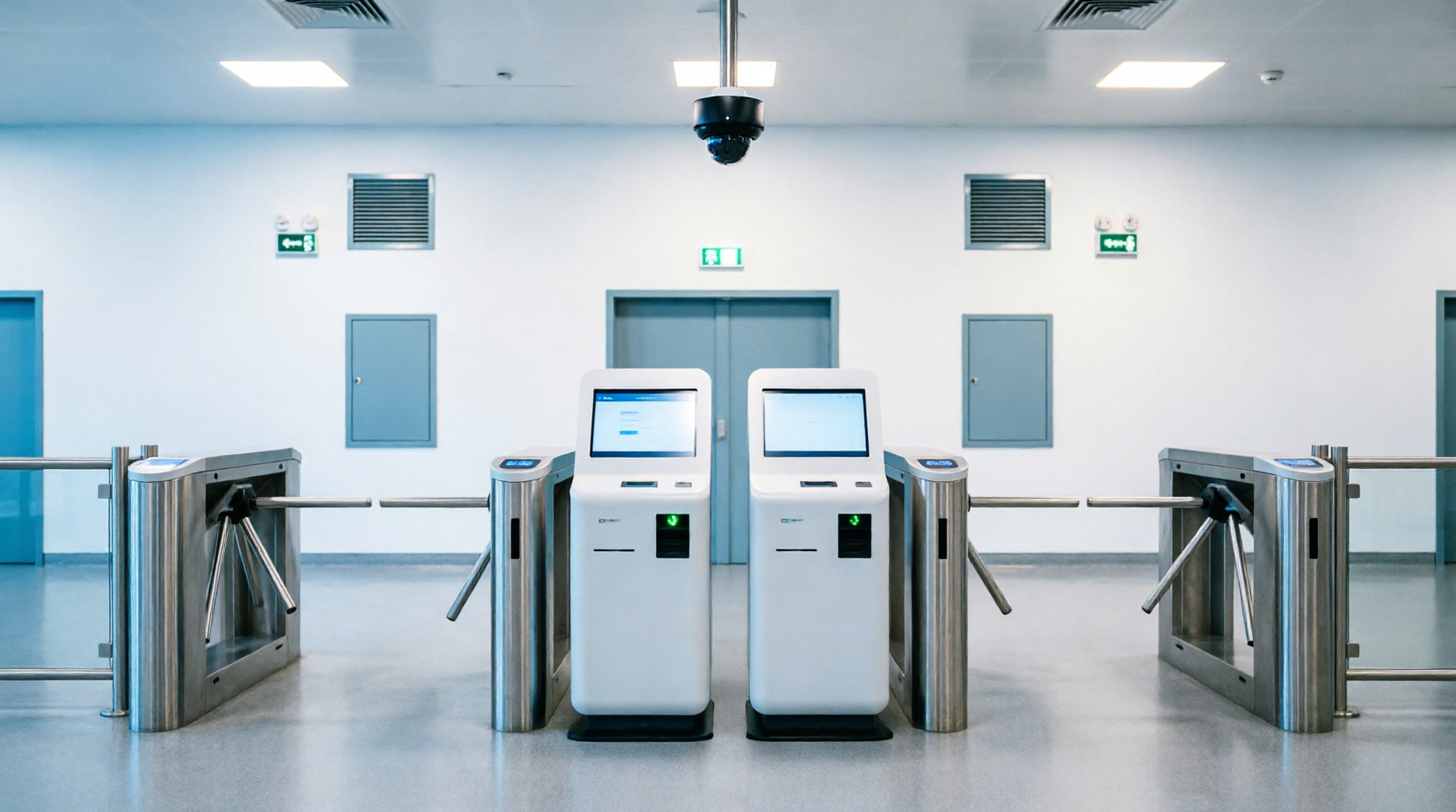
Intilogy designed and deployed an integrated visitor management system combining HID biometric readers, Genetec Security Center, and Axis network cameras. The solution includes self-service kiosks at all entry points with QR code scanners and badge printers. Visitors pre-register via a web portal, receive a QR code via email, and scan at the kiosk for instant badge printing. Biometric verification (fingerprint) is used for high-security zones. The system integrates with HCI infrastructure for high availability.
For backend, we deployed Veeam for backup and disaster recovery, ensuring visitor data is protected. The VMS is integrated with Enterprise CCTV for live video verification and with Cisco network switches for QoS. The solution also includes a mobile app for hosts to approve visitors and receive notifications. Cloud-based analytics provide real-time dashboards for security managers. The entire system was deployed in 8 weeks with zero downtime during transition.
04
Results & ROI
Post-implementation, visitor check-in time reduced from 8 minutes to under 30 seconds, a 94% improvement. The security team saved 30% of administrative time, reallocated to proactive monitoring. The company achieved 100% compliance with internal security policies and PDP Law requirements. RPO for visitor data reduced from 24 hours to 1 hour with Veeam backup. The system blocked 15 unauthorized access attempts in the first month via blacklist integration.
Financial ROI was realized within 12 months: reduced labor costs from manual processing (saving $50,000 annually), eliminated paper and printing costs ($10,000/year), and avoided potential fines from data breaches. Visitor satisfaction scores increased from 3.2 to 4.8 out of 5. The solution also enabled contactless check-in during the pandemic, ensuring business continuity. Overall, the investment in enterprise visitor management strengthened security posture and operational efficiency.