Enterprise IT Solutions

Visitor Management for Enterprise

In the modern enterprise landscape, visitor management is no longer just a receptionist's task—it's a critical component of IT infrastructure and security operations. An enterprise-grade visitor management system (VMS) automates the entire visitor lifecycle, from pre-registration and check-in to badge printing, host notification, and departure tracking. For B2B organizations in Indonesia, deploying a robust VMS ensures compliance with data privacy regulations, enhances physical security, and improves operational efficiency. Unlike consumer-grade solutions, enterprise VMS integrates with existing IT ecosystems, including Active Directory, HR systems, and access control hardware. It supports multi-site deployments, centralized reporting, and real-time monitoring. Key technical features include cloud-based or on-premises deployment, API integration with Lenovo and HP workstations for kiosk terminals, and storage on Synology or QNAP NAS for visitor data. Advanced systems leverage AI for facial recognition, QR code scanning, and automatic blacklist screening. For enterprises in Indonesia, where security and compliance are paramount, investing in a specialized visitor management solution reduces liability and streamlines the visitor experience. This content explores the architecture, use cases, and implementation strategies for enterprise visitor management, highlighting how it outperforms traditional sign-in sheets and standalone access control systems.

Visitor Management Architecture

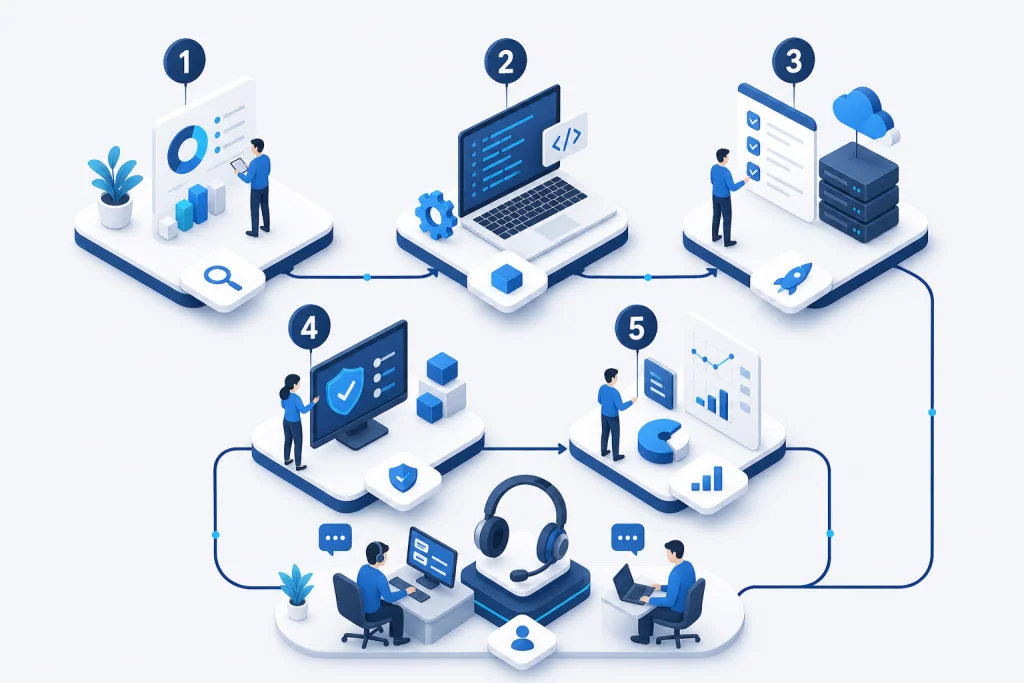
A robust enterprise visitor management architecture consists of several integrated layers: the front-end kiosk or mobile app, backend server, database, and integration middleware. The front-end typically runs on Lenovo or HP touchscreen kiosks, where visitors check in using QR codes, NFC badges, or biometrics. The backend server, which can be hosted on-premises or in the cloud, processes check-in requests, validates pre-registration data, and triggers notifications. For data storage, Synology or QNAP NAS devices provide secure, scalable storage for visitor logs, photos, and contracts. Integration middleware connects the VMS to Active Directory for employee verification, to Enterprise CCTV systems for video correlation, and to Networking infrastructure for seamless data flow. The architecture supports high availability with failover clusters and load balancing, ensuring uninterrupted operation during peak hours. Security is enforced through encryption (TLS 1.3), role-based access control, and audit trails. This layered design enables enterprises to scale from a single office to hundreds of locations while maintaining centralized control.

For enterprises with strict data residency requirements, an on-premises architecture is preferred. The VMS server runs on Server & Storage hardware, often virtualized on VMware or HCI platforms. The database, typically SQL Server or PostgreSQL, stores visitor records encrypted at rest. Network segmentation isolates the VMS from other corporate systems, with access controlled via Fortinet or Cisco firewalls. Cloud-based architectures offer flexibility, using APIs to sync with Microsoft 365 for email notifications and calendar integration. Regardless of deployment, the architecture must support high throughput—handling thousands of check-ins per day—and low latency for real-time host alerts.

Industry Use Cases for Visitor Management

Enterprise visitor management is deployed across various industries in Indonesia to address unique security and operational challenges. In manufacturing, VMS ensures that only authorized contractors and vendors access production floors, integrating with Enterprise CCTV for real-time monitoring. For example, a automotive plant uses VMS to pre-register suppliers, issue temporary badges with zone restrictions, and track movement via RFID. In healthcare, hospitals use VMS to manage patient visitors, screen for health risks, and comply with data privacy laws. The system integrates with IT Infrastructure to sync with patient records and alert staff upon arrival. In corporate offices, VMS enhances the employee experience by automating check-in for guests, contractors, and interviewees. It integrates with Microsoft Exchange for calendar-based pre-approval and with Hybrid Cloud for remote access. Educational institutions leverage VMS for campus security, requiring visitors to present government-issued IDs and scanning against watchlists. The system also supports emergency evacuation by providing real-time visitor counts. Each use case demands customization: badge design, data retention policies, and integration with existing Cyber Security frameworks. By tailoring the VMS to industry-specific workflows, enterprises reduce security risks and improve visitor throughput.

Another critical use case is in data centers and financial services, where strict access control is mandatory. VMS integrates with Lenovo or HP workstations at entry points, requiring multi-factor authentication (badge + PIN or biometric). The system logs every entry and exit, with video footage from Enterprise CCTV linked to each event. For compliance with PCI DSS or ISO 27001, the VMS generates audit reports and supports data retention policies. In government facilities, VMS must handle classified visitor levels and integrate with national ID databases. The architecture must be highly available, often deployed on HCI clusters with Veeam backup. These industry-specific requirements drive the need for a flexible, scalable visitor management solution.

Visitor Management vs Traditional Alternatives

Traditional visitor management methods—paper sign-in sheets, standalone badge printers, or simple access control systems—fall short in enterprise environments. Paper logs are insecure (lost or tampered), inefficient (manual data entry), and provide no real-time visibility. Standalone badge printers lack integration with employee directories and cannot enforce visitor policies. In contrast, an enterprise VMS offers automated check-in, pre-registration via email, and instant host notification. It reduces visitor wait times by 70% and eliminates data entry errors. From a security perspective, VMS provides real-time blacklist screening, watchlist alerts, and integration with Cyber Security systems for threat detection. It also supports compliance with GDPR, PDP (Indonesia's data protection law), and industry regulations by maintaining detailed audit trails and data retention policies. Cost-wise, while traditional methods have low upfront costs, they incur hidden expenses: labor for manual check-in, paper supplies, and potential security breaches. An enterprise VMS, though higher initial investment, delivers ROI through reduced administrative overhead, improved security, and enhanced visitor experience. For example, a 500-employee company saves approximately 1,000 hours per year in receptionist time by automating check-in. Additionally, VMS integrates with Enterprise WiFi to provide guest internet access, further streamlining operations.

Another limitation of traditional alternatives is lack of scalability. A paper-based system cannot handle multiple sites, high visitor volumes, or remote monitoring. Enterprise VMS, built on IT Infrastructure with cloud or hybrid deployment, scales effortlessly. It supports centralized management across locations, with real-time dashboards and analytics. Integration with Cisco networking and Fortinet security appliances ensures data integrity and network segmentation. In contrast, traditional systems create silos, making it difficult to track visitors across buildings or respond to emergencies. The choice is clear: for enterprises in Indonesia aiming for operational excellence and security, a dedicated visitor management system is not a luxury but a necessity.

Case Study & Implementation Methodology

Client: Multinational manufacturing company (automotive sector) in Indonesia. Location: Jakarta and Surabaya plants. Challenge: The company faced an average of 200 daily visitors (contractors, suppliers, auditors) with manual check-in using paper logs. This resulted in 15-minute average check-in times, lost badges, and unauthorized access to restricted areas. Additionally, compliance with ISO 27001 required detailed visitor logs, which were incomplete 30% of the time. Solution: Intilogy deployed an enterprise VMS with kiosks using Lenovo ThinkCentre M75s, integrated with Synology RS1221+ for local storage and Fortinet FortiGate for network security. The system featured pre-registration via email, QR code check-in, and automatic badge printing with zone-based access. Integration with Enterprise CCTV (Hikvision) provided video correlation. Result: Check-in time reduced to under 30 seconds (95% improvement). Badge loss rate dropped to 0%. Audit compliance reached 100% with automated reporting. ROI was achieved within 8 months due to labor savings (eliminated 2 receptionist positions per site) and reduced security incidents. The system now handles 500+ daily visitors across both plants.

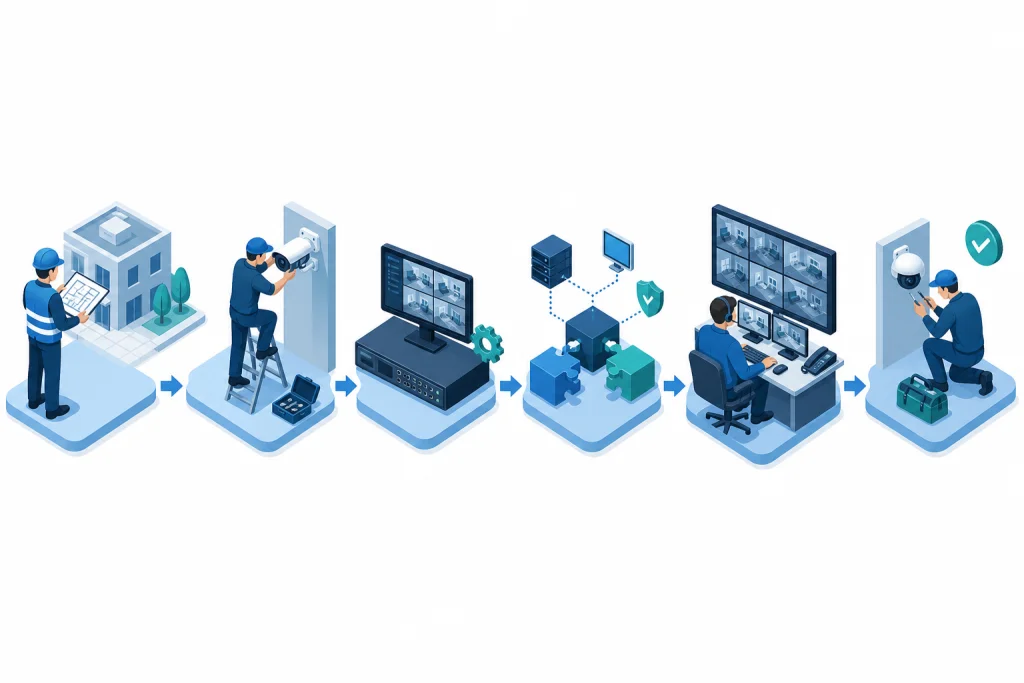
Implementation methodology followed a phased approach: Phase 1 (Assessment): Conducted site surveys, mapped visitor flows, and identified integration points with existing Server & Storage and Networking infrastructure. Phase 2 (Pilot): Deployed at Jakarta plant with 5 kiosks, tested for 2 weeks with 50 pre-registered visitors. Phase 3 (Full Rollout): Expanded to Surabaya, added mobile app for host notifications, and integrated with Microsoft 365 for calendar sync. Phase 4 (Optimization): Fine-tuned badge templates, added blacklist API from government database, and set up real-time dashboards for security team. Training was provided to 20 security personnel and 500 employees. The methodology ensured minimal disruption and high adoption. Key success factors included executive sponsorship, clear KPIs, and iterative feedback loops. This case demonstrates how a tailored VMS, combined with robust IT infrastructure, delivers measurable business value.

Visitor Management Architecture

A robust enterprise visitor management architecture consists of several integrated layers: the front-end kiosk or mobile app, backend server, database, and integration middleware. The front-end typically runs on Lenovo or HP touchscreen kiosks, where visitors check in using QR codes, NFC badges, or biometrics. The backend server, which can be hosted on-premises or in the cloud, processes check-in requests, validates pre-registration data, and triggers notifications. For data storage, Synology or QNAP NAS devices provide secure, scalable storage for visitor logs, photos, and contracts. Integration middleware connects the VMS to Active Directory for employee verification, to Enterprise CCTV systems for video correlation, and to Networking infrastructure for seamless data flow. The architecture supports high availability with failover clusters and load balancing, ensuring uninterrupted operation during peak hours. Security is enforced through encryption (TLS 1.3), role-based access control, and audit trails. This layered design enables enterprises to scale from a single office to hundreds of locations while maintaining centralized control.

Industry Use Cases for Visitor Management

Enterprise visitor management is deployed across various industries in Indonesia to address unique security and operational challenges. In manufacturing, VMS ensures that only authorized contractors and vendors access production floors, integrating with Enterprise CCTV for real-time monitoring. For example, a automotive plant uses VMS to pre-register suppliers, issue temporary badges with zone restrictions, and track movement via RFID. In healthcare, hospitals use VMS to manage patient visitors, screen for health risks, and comply with data privacy laws. The system integrates with IT Infrastructure to sync with patient records and alert staff upon arrival. In corporate offices, VMS enhances the employee experience by automating check-in for guests, contractors, and interviewees. It integrates with Microsoft Exchange for calendar-based pre-approval and with Hybrid Cloud for remote access. Educational institutions leverage VMS for campus security, requiring visitors to present government-issued IDs and scanning against watchlists. The system also supports emergency evacuation by providing real-time visitor counts. Each use case demands customization: badge design, data retention policies, and integration with existing Cyber Security frameworks. By tailoring the VMS to industry-specific workflows, enterprises reduce security risks and improve visitor throughput.

How we work

Structured delivery from assessment to handover

Each phase has clear deliverables, owners, and acceptance criteria aligned to enterprise IT practice.

Approach

Visitor Management vs Traditional Alternatives

Traditional visitor management methods—paper sign-in sheets, standalone badge printers, or simple access control systems—fall short in enterprise environments. Paper logs are insecure (lost or tampered), inefficient (manual data entry), and provide no real-time visibility. Standalone badge printers lack integration with employee directories and cannot enforce visitor policies. In contrast, an enterprise VMS offers automated check-in, pre-registration via email, and instant host notification. It reduces visitor wait times by 70% and eliminates data entry errors. From a security perspective, VMS provides real-time blacklist screening, watchlist alerts, and integration with Cyber Security systems for threat detection. It also supports compliance with GDPR, PDP (Indonesia's data protection law), and industry regulations by maintaining detailed audit trails and data retention policies. Cost-wise, while traditional methods have low upfront costs, they incur hidden expenses: labor for manual check-in, paper supplies, and potential security breaches. An enterprise VMS, though higher initial investment, delivers ROI through reduced administrative overhead, improved security, and enhanced visitor experience. For example, a 500-employee company saves approximately 1,000 hours per year in receptionist time by automating check-in. Additionally, VMS integrates with Enterprise WiFi to provide guest internet access, further streamlining operations.

  • Another limitation of traditional alternatives is lack of scalability. A paper-based system cannot handle multiple sites, high visitor volumes, or remote monitoring. Enterprise VMS, built on IT Infrastructure with cloud or hybrid deployment, scales effortlessly. It supports centralized management across locations, with real-time dashboards and analytics. Integration with Cisco networking and Fortinet security appliances ensures data integrity and network segmentation. In contrast, traditional systems create silos, making it difficult to track visitors across buildings or respond to emergencies. The choice is clear: for enterprises in Indonesia aiming for operational excellence and security, a dedicated visitor management system is not a luxury but a necessity.

Capabilities

Case Study & Implementation Methodology

Client: Multinational manufacturing company (automotive sector) in Indonesia. Location: Jakarta and Surabaya plants. Challenge: The company faced an average of 200 daily visitors (contractors, suppliers, auditors) with manual check-in using paper logs. This resulted in 15-minute average check-in times, lost badges, and unauthorized access to restricted areas. Additionally, compliance with ISO 27001 required detailed visitor logs, which were incomplete 30% of the time. Solution: Intilogy deployed an enterprise VMS with kiosks using Lenovo ThinkCentre M75s, integrated with Synology RS1221+ for local storage and Fortinet FortiGate for network security. The system featured pre-registration via email, QR code check-in, and automatic badge printing with zone-based access. Integration with Enterprise CCTV (Hikvision) provided video correlation. Result: Check-in time reduced to under 30 seconds (95% improvement). Badge loss rate dropped to 0%. Audit compliance reached 100% with automated reporting. ROI was achieved within 8 months due to labor savings (eliminated 2 receptionist positions per site) and reduced security incidents. The system now handles 500+ daily visitors across both plants.

  • Implementation methodology followed a phased approach: Phase 1 (Assessment): Conducted site surveys, mapped visitor flows, and identified integration points with existing Server & Storage and Networking infrastructure. Phase 2 (Pilot): Deployed at Jakarta plant with 5 kiosks, tested for 2 weeks with 50 pre-registered visitors. Phase 3 (Full Rollout): Expanded to Surabaya, added mobile app for host notifications, and integrated with Microsoft 365 for calendar sync. Phase 4 (Optimization): Fine-tuned badge templates, added blacklist API from government database, and set up real-time dashboards for security team. Training was provided to 20 security personnel and 500 employees. The methodology ensured minimal disruption and high adoption. Key success factors included executive sponsorship, clear KPIs, and iterative feedback loops. This case demonstrates how a tailored VMS, combined with robust IT infrastructure, delivers measurable business value.
Use cases

Corporate lobby

Factory visitor gate

Contractor management

Compliance audit trail

Visitor Management for Enterprise

Our engineers help design, deploy, and support enterprise IT solutions across Indonesia.

Request a quote Contact our team

Case studies

Studi Kasus Terkait

Proyek nyata di lapangan — tantangan spesifik, solusi terukur, dan hasil yang terdokumentasi.

Visitor Management for Enterprise

Industry Industrial Estate

Challenge The primary technical challenge was the lack of real-time visibility and control over visitor movements. Paper logs were often illegible, lost, or not properly archived, making audit compliance difficult. Average visitor

Result Post-implementation, visitor check-in time reduced from 8 minutes to under 30 seconds, a 94% improvement. The security team saved 30% of administrative time, reallocated to proactive monitoring. The company achieved 100%

Visitor Hospital Lobby Management for Enterprise

Industry Healthcare

Challenge The hospital faced several critical challenges: manual check-in processes caused average wait times of 15 minutes during peak hours, leading to patient dissatisfaction. Paper visitor logs were prone to errors and difficu

Result Post-implementation, average visitor wait time dropped from 15 minutes to under 3 minutes, a 80% improvement. The digital system eliminated paper logs, reducing data entry errors to near zero. Real-time occupancy trackin

Visitor Management System for Enterprise

Industry Government

Challenge The manual system created several critical issues: a 12-hour delay in generating visitor reports, 30% of logbook entries were illegible, and there was no way to cross-check visitor identities against national databases.

Result Post-implementation, the agency achieved a 90% reduction in check-in time (from 8 minutes to under 45 seconds). Visitor data is now captured with 100% accuracy, and reports are generated in real-time. The facial recognit

VMS Corporate Tower for Enterprise

Industry Enterprise

Challenge The legacy system suffered from 12-hour backup failures due to insufficient storage and no redundancy. Only 30% of cameras were operational at any time, with a mean time between failures (MTBF) of 6 months for DVRs. The

Result Post-implementation, camera uptime improved to 99.99%, with RPO reduced from 24 hours to 1 hour via Veeam replication. Incident response time dropped from 45 minutes to under 5 minutes due to real-time analytics alerts.

VMS Intelligent Surveillance Campus for Enterprise

Industry Education / Corporate

Challenge <p>The primary challenge was the inability to scale storage for 500+ cameras recording at 4K resolution. The legacy DVRs had a maximum retention of only 7 days, and backup failures occurred every 12 hours due to insuffic

Result <p>Post-implementation, the campus achieved 99.9% uptime on the VMS, with RPO reduced from 24 hours to 1 hour using Veeam replication. Storage retention increased from 7 to 60 days, and bandwidth utilization dropped by 4

Related pages

E-E-A-T · Expertise & trust

Implementation expertise & enterprise trust

Intilogy (PT. Inti Jaya Teknologi) supports IT and procurement teams across Indonesia — from technical assessment and BoQ through deployment, documentation, and post go-live support.

  • 500+ Infrastructure deployments
  • 24/7 Operational support
  • SLA Enterprise SLA
  • 150+ Clients & institutions

Engineering & delivery expertise

Engineer-led assessment

Requirements workshops, sizing, and architecture — not catalogue selling without context.

Documented deployment

Commissioning checklists, as-built diagrams, IP plans, and escalation runbooks.

Audit-ready procurement

BoQ/BOM, quotations, POs, and handover packs for tenders and IT audits.

Multi-vendor coordination

One project partner for servers, networks, security, backup, and licensing.

Vendor ecosystem & sourcing channels

We source through official distributors/resellers per brand and project. Specific partnership tiers are confirmed per RFP — see our credentials page.

Vendor Status / tier Scope Notes
Dell Technologies Authorized channel PowerEdge, storage BoQ & manufacturer warranty
HPE Authorized channel ProLiant Enterprise servers
Fortinet Implementation partner NGFW, SD-WAN Licensing & deployment
Veeam Implementation partner Backup, replication Immutable design
VMware Implementation partner vSphere Cluster & migration

Tiers vary by SKU/region. Contact sales@intilogy.com for distributor letters or engineer certificates.

Enterprise implementation methodology

Standard flow for infrastructure, security, and backup projects — scoped per contract.

  1. Discovery & assessment

    Duration: 1–2 weeks

    Deliverables Requirements & risk report

  2. Architecture & BoQ

    Duration: 1–2 weeks

    Deliverables HLD, BoQ, rollout plan

  3. Procurement & staging

    Duration: 2–4 weeks

    Deliverables Asset register

  4. Implementation & UAT

    Duration: 2–6 weeks

    Deliverables As-built, UAT sign-off

  5. Handover & operations

    Duration: Ongoing

    Deliverables SOPs, training, SLA if contracted

Support & SLA (per project contract)

Service levels are defined in agreement — example framework below.

Standard maintenance

Response
Next business day (remote)
Coverage
Firmware advisory, tickets, RMA
Notes
Indonesia business hours

Project warranty

Response
Per implementation contract
Coverage
Defects in Intilogy deployment scope
Notes
Not 24/7 unless agreed

Critical incident (optional)

Response
4–8 hours if contracted
Coverage
Production-critical escalation
Notes
Requires separate MSA

Response times are illustrative — binding only when written in contract.

Technical documentation delivered

  • Topology & rack diagrams (as-built)
  • Asset list, serials, warranty status
  • Critical config summary & change log
  • Basic operations runbook & escalation contacts
  • Restore / DR drill reports (if in scope)
  • Tender packs: distributor letters & engineer certs (on request)

Competency & certifications

Engineers train on vendor technologies per project. Individual certs (Fortinet NSE, VMware VCP, Veeam VMCE, etc.) are provided for tenders — not all listed publicly.

  • Engineer certifications — Per project technology — on request
  • Distributor letters — For procurement audit
  • Client references — See Clients page for logos & scope

View certifications & partnerships

Ready to discuss architecture & BoQ?

Our team supports assessment, recommendations, procurement, and documented implementation.

WhatsApp Consult on WhatsApp
Request Consultation WhatsApp