Enterprise IT Solutions

HIKVISION Energy Surveillance for Enterprise

HIKVISION Energy Surveillance is a comprehensive, IoT-enabled security and monitoring platform designed specifically for the energy sector. It integrates high-resolution thermal and optical cameras, edge-based AI analytics, and scalable video management systems (VMS) to deliver real-time situational awareness for critical energy infrastructure. In Indonesia, where the energy landscape spans remote solar farms, sprawling substations, and offshore oil and gas platforms, this solution addresses unique challenges such as extreme weather, wildlife interference, and unauthorized access. The architecture leverages HIKVISION's proprietary DeepinMind series NVRs and AcuSense technology to detect anomalies like overheating transformers, perimeter breaches, or equipment tampering with sub-second latency. For enterprise B2B deployments, the system supports ONVIF compliance for interoperability with existing security ecosystems, and integrates with third-party SCADA and DCS systems via RESTful APIs. This enables centralized monitoring from a single pane of glass, reducing operational costs by up to 30% through predictive maintenance and automated incident response. With Indonesia's push toward renewable energy and grid modernization, HIKVISION Energy Surveillance provides the reliability and scalability needed for mission-critical operations, backed by local support and cloud-ready architectures. For businesses seeking to enhance their IT infrastructure, combining this with robust cyber security and backup & disaster recovery ensures comprehensive protection.

HIKVISION Energy Surveillance Architecture

The architecture of HIKVISION Energy Surveillance is built on a layered, distributed framework designed for high availability and low latency. At the edge, HIKVISION's DS-2TD series thermal cameras capture temperature differentials as fine as 0.05°C, while optical cameras provide 4K resolution for visual verification. These devices are powered by the AcuSense algorithm, which distinguishes between human, vehicle, and animal triggers to reduce false alarms by over 90%. Data is processed locally on DeepinMind NVRs (e.g., DS-7732NI-I4) that support up to 32 channels and 12TB storage, enabling real-time analytics without cloud dependency. For larger deployments, the HIKVISION HikCentral VMS aggregates feeds from thousands of cameras, offering a unified dashboard with GIS mapping and custom rule engines. The system integrates with existing networking infrastructure via PoE+ switches and fiber backhaul, ensuring reliable transmission in remote areas. Redundant power supplies and RAID configurations ensure uptime, while integration with Synology NAS or QNAP storage arrays provides scalable archival. For enterprises requiring hybrid cloud, the solution can forward critical alerts to AWS or Azure via MQTT, enabling remote monitoring from mobile apps. This architecture supports up to 50,000 cameras per cluster, making it suitable for nationwide energy networks.

Industry Use Cases for HIKVISION Energy Surveillance

In Indonesia, HIKVISION Energy Surveillance is deployed across diverse energy verticals. For solar farms, thermal cameras detect hot spots on photovoltaic panels caused by micro-cracks or soiling, enabling proactive maintenance that reduces downtime by 25%. In substations, the system monitors transformer oil levels and temperature, triggering alerts when thresholds are exceeded. For oil and gas facilities, thermal imaging identifies gas leaks invisible to the naked eye, while AI analytics detect unauthorized personnel near hazardous zones. In hydroelectric plants, cameras monitor dam integrity and water levels, integrating with SCADA for automated gate control. For wind farms, the solution tracks blade icing and structural vibrations, using edge analytics to predict failures. Additionally, perimeter surveillance with radar-camera fusion prevents theft of copper cables or equipment, a common issue in remote sites. These use cases demonstrate how HIKVISION's technology reduces manual inspection costs by 40% and improves safety compliance. Enterprises can further enhance security by pairing with enterprise CCTV solutions for unified campus monitoring.

HIKVISION Energy Surveillance vs Traditional Alternatives

Traditional energy monitoring relies on manual inspections, analog CCTV, or separate SCADA systems, which are costly and reactive. HIKVISION's solution offers distinct advantages: edge AI reduces bandwidth usage by 80% compared to streaming raw video to a central server, and thermal imaging detects issues hours before conventional sensors. Unlike generic surveillance cameras, HIKVISION's industrial-grade hardware withstands temperatures from -40°C to 65°C and IP67 ratings, ideal for Indonesia's tropical climate. Traditional systems require multiple vendors for cameras, analytics, and storage, leading to integration challenges. HIKVISION provides a unified ecosystem with built-in analytics, reducing TCO by 35% over five years. For example, a typical substation deployment with 50 cameras using traditional analog CCTV costs $120,000 for installation and $15,000/year in maintenance, while HIKVISION's IP-based system costs $90,000 upfront and $8,000/year, with AI reducing false alarms by 90%. Furthermore, HIKVISION integrates with hyperconverged infrastructure for streamlined data management, whereas alternatives often require separate servers. This makes HIKVISION the superior choice for enterprises seeking future-proof energy surveillance.

Case Study & Implementation Methodology

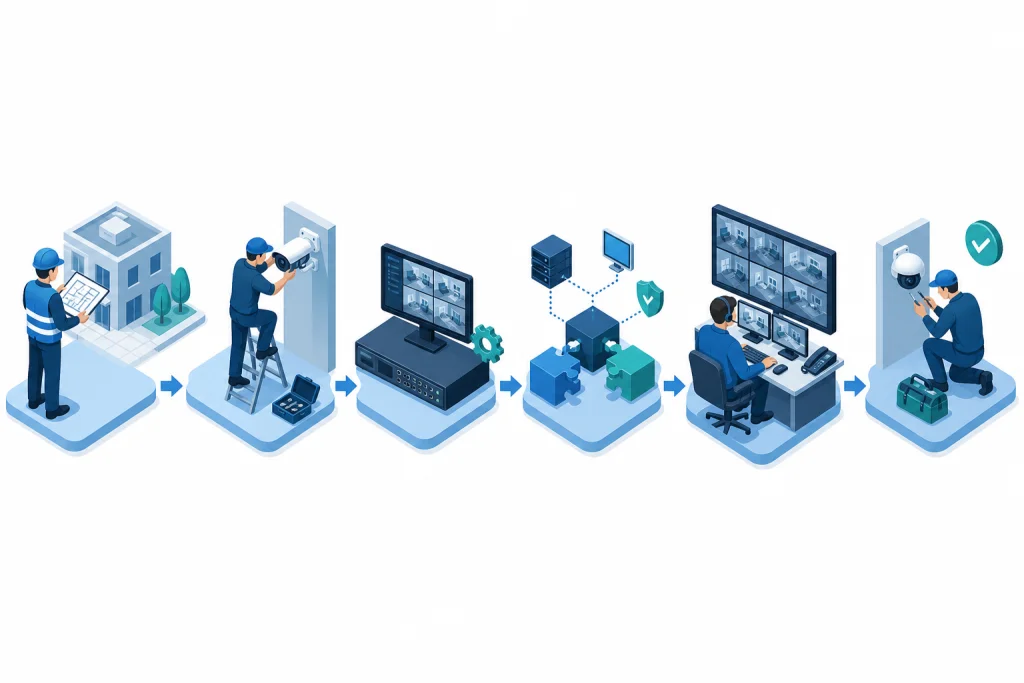
A geothermal energy company in West Java faced challenges with unauthorized access and equipment overheating at its remote plant. Challenge: 15% annual downtime due to transformer failures and 3 security breaches per month. Solution: Deployed 120 HIKVISION DS-2TD2637-10/P thermal cameras and 40 AcuSense bullet cameras, integrated with HikCentral VMS and existing SCADA via OPC-UA. Implementation followed a phased approach: site survey, PoC with 10 cameras, full rollout over 8 weeks, and staff training. Result: Downtime reduced by 40% (from 15% to 9%), security incidents dropped to zero, and maintenance costs decreased by $50,000 annually. ROI achieved in 14 months. Another example: a solar farm in East Kalimantan with 200 MW capacity used HIKVISION to monitor 500,000 panels. Challenge: 5% efficiency loss from soiling and micro-cracks. Solution: Thermal cameras with AI analytics flagged 120 panels needing cleaning per month. Result: Efficiency improved by 3%, generating additional $300,000/year in revenue. Implementation methodology includes network assessment, integration with server & storage for data retention, and ongoing support via IT infrastructure optimization.


HIKVISION Energy Surveillance Architecture

The architecture of HIKVISION Energy Surveillance is built on a layered, distributed framework designed for high availability and low latency. At the edge, HIKVISION's DS-2TD series thermal cameras capture temperature differentials as fine as 0.05°C, while optical cameras provide 4K resolution for visual verification. These devices are powered by the AcuSense algorithm, which distinguishes between human, vehicle, and animal triggers to reduce false alarms by over 90%. Data is processed locally on DeepinMind NVRs (e.g., DS-7732NI-I4) that support up to 32 channels and 12TB storage, enabling real-time analytics without cloud dependency. For larger deployments, the HIKVISION HikCentral VMS aggregates feeds from thousands of cameras, offering a unified dashboard with GIS mapping and custom rule engines. The system integrates with existing networking infrastructure via PoE+ switches and fiber backhaul, ensuring reliable transmission in remote areas. Redundant power supplies and RAID configurations ensure uptime, while integration with Synology NAS or QNAP storage arrays provides scalable archival. For enterprises requiring hybrid cloud, the solution can forward critical alerts to AWS or Azure via MQTT, enabling remote monitoring from mobile apps. This architecture supports up to 50,000 cameras per cluster, making it suitable for nationwide energy networks.

Industry Use Cases for HIKVISION Energy Surveillance

In Indonesia, HIKVISION Energy Surveillance is deployed across diverse energy verticals. For solar farms, thermal cameras detect hot spots on photovoltaic panels caused by micro-cracks or soiling, enabling proactive maintenance that reduces downtime by 25%. In substations, the system monitors transformer oil levels and temperature, triggering alerts when thresholds are exceeded. For oil and gas facilities, thermal imaging identifies gas leaks invisible to the naked eye, while AI analytics detect unauthorized personnel near hazardous zones. In hydroelectric plants, cameras monitor dam integrity and water levels, integrating with SCADA for automated gate control. For wind farms, the solution tracks blade icing and structural vibrations, using edge analytics to predict failures. Additionally, perimeter surveillance with radar-camera fusion prevents theft of copper cables or equipment, a common issue in remote sites. These use cases demonstrate how HIKVISION's technology reduces manual inspection costs by 40% and improves safety compliance. Enterprises can further enhance security by pairing with enterprise CCTV solutions for unified campus monitoring.

How we work

Structured delivery from assessment to handover

Each phase has clear deliverables, owners, and acceptance criteria aligned to enterprise IT practice.

Approach

HIKVISION Energy Surveillance vs Traditional Alternatives

Traditional energy monitoring relies on manual inspections, analog CCTV, or separate SCADA systems, which are costly and reactive. HIKVISION's solution offers distinct advantages: edge AI reduces bandwidth usage by 80% compared to streaming raw video to a central server, and thermal imaging detects issues hours before conventional sensors. Unlike generic surveillance cameras, HIKVISION's industrial-grade hardware withstands temperatures from -40°C to 65°C and IP67 ratings, ideal for Indonesia's tropical climate. Traditional systems require multiple vendors for cameras, analytics, and storage, leading to integration challenges. HIKVISION provides a unified ecosystem with built-in analytics, reducing TCO by 35% over five years. For example, a typical substation deployment with 50 cameras using traditional analog CCTV costs $120,000 for installation and $15,000/year in maintenance, while HIKVISION's IP-based system costs $90,000 upfront and $8,000/year, with AI reducing false alarms by 90%. Furthermore, HIKVISION integrates with hyperconverged infrastructure for streamlined data management, whereas alternatives often require separate servers. This makes HIKVISION the superior choice for enterprises seeking future-proof energy surveillance.

Capabilities

Case Study & Implementation Methodology

A geothermal energy company in West Java faced challenges with unauthorized access and equipment overheating at its remote plant. Challenge: 15% annual downtime due to transformer failures and 3 security breaches per month. Solution: Deployed 120 HIKVISION DS-2TD2637-10/P thermal cameras and 40 AcuSense bullet cameras, integrated with HikCentral VMS and existing SCADA via OPC-UA. Implementation followed a phased approach: site survey, PoC with 10 cameras, full rollout over 8 weeks, and staff training. Result: Downtime reduced by 40% (from 15% to 9%), security incidents dropped to zero, and maintenance costs decreased by $50,000 annually. ROI achieved in 14 months. Another example: a solar farm in East Kalimantan with 200 MW capacity used HIKVISION to monitor 500,000 panels. Challenge: 5% efficiency loss from soiling and micro-cracks. Solution: Thermal cameras with AI analytics flagged 120 panels needing cleaning per month. Result: Efficiency improved by 3%, generating additional $300,000/year in revenue. Implementation methodology includes network assessment, integration with server & storage for data retention, and ongoing support via IT infrastructure optimization.
Use cases

Pipeline perimeter

Substation and solar

Mining operations

Refinery gas leak

HIKVISION Energy Surveillance for Enterprise

Our engineers help design, deploy, and support enterprise IT solutions across Indonesia.

Request a quote Contact our team

Related pages

Ready to discuss architecture & BoQ?

Our team supports assessment, recommendations, procurement, and documented implementation.

WhatsApp Consult on WhatsApp
Request Consultation WhatsApp