Enterprise IT Solutions

MILESIGHT AI Traffic Monitoring for Enterprise

MILESIGHT AI Traffic Monitoring leverages advanced computer vision and edge AI to transform urban mobility and logistics operations in Indonesia. The system integrates high-resolution cameras with onboard neural processing units (NPUs) capable of real-time object detection, vehicle classification (car, truck, motorcycle, bus), license plate recognition (LPR), and speed estimation. Data is transmitted via LoRaWAN or 4G/5G to a centralized platform for analytics, enabling traffic flow optimization, congestion prediction, and incident detection. For enterprises, this means reduced fleet idle time, improved route planning, and enhanced safety compliance. The architecture supports both on-premises and cloud deployments, with edge devices performing inference locally to minimize latency and bandwidth usage. MILESIGHT's solution is compatible with existing IT infrastructure, including networking and server & storage systems from Dell and HP, and can be integrated with enterprise CCTV platforms for unified surveillance. With support for over 30 traffic parameters and customizable alerting, it addresses the needs of smart city initiatives, toll road operators, and large-scale logistics hubs. The system's modular design allows scaling from single intersection monitoring to city-wide deployments, making it a future-proof investment for Indonesian enterprises seeking data-driven traffic management.

MILESIGHT AI Traffic Monitoring Architecture

The MILESIGHT AI Traffic Monitoring architecture is built on a three-tier model: edge sensing, network transport, and cloud/on-prem analytics. At the edge, MILESIGHT AI cameras equipped with Ambarella CV22 or similar SoCs perform real-time inference using deep learning models (YOLOv5, MobileNet) for vehicle detection and tracking. These cameras support up to 30 fps at 4K resolution and can process multiple lanes simultaneously. They output structured data (vehicle count, speed, class, timestamp) via MQTT or HTTP over LoRaWAN or Ethernet.

The network layer aggregates data from hundreds of cameras using industrial switches and routers from Cisco or Ruijie, ensuring low-latency transmission. For remote sites, LoRaWAN gateways from MILESIGHT provide long-range, low-power connectivity. The backend platform, hosted on hyperconverged infrastructure or cloud, ingests data into a time-series database (InfluxDB) for real-time dashboards and historical analysis. REST APIs enable integration with existing traffic management systems (SCATS, SCOOT) and enterprise resource planning (ERP) for logistics. Redundancy is achieved through dual power inputs and failover to 4G/5G, ensuring 99.9% uptime.

Industry Use Cases for MILESIGHT AI Traffic Monitoring

In smart city initiatives, MILESIGHT AI Traffic Monitoring enables adaptive traffic signal control by providing real-time vehicle density and queue length data. Cities like Jakarta and Surabaya can reduce average travel time by 15-20% through dynamic phasing. For toll road operators, the system automates vehicle classification for electronic toll collection (ETC), reducing manual errors and improving throughput by 30%. License plate recognition (LPR) supports law enforcement for stolen vehicle detection and congestion charging zones.

Logistics and warehouse enterprises benefit from monitoring truck entry/exit at distribution centers. Integration with backup and disaster recovery systems ensures data integrity. For example, a logistics hub in Bekasi can track 500+ trucks daily, optimizing dock scheduling and reducing wait times by 25%. The system also detects unauthorized vehicles and alerts security via enterprise CCTV integration. Additionally, mining and plantation companies use the solution to monitor haul roads, ensuring compliance with speed limits and reducing accidents.

MILESIGHT AI Traffic Monitoring vs Traditional Alternatives

Traditional traffic monitoring relies on inductive loop detectors, radar sensors, and manual CCTV review. Inductive loops are costly to install (up to $10,000 per lane) and require road closure, while radar sensors have limited accuracy for multi-lane scenarios. MILESIGHT AI cameras offer a non-intrusive, single-device solution that covers up to 4 lanes with 98% accuracy for vehicle classification and 95% for LPR. They are 40% cheaper to deploy than loop-based systems and provide richer data (color, make, model).

Unlike cloud-dependent alternatives, MILESIGHT's edge processing reduces bandwidth usage by 90% and ensures operation even during network outages. Traditional systems often require separate servers for analytics, increasing IT infrastructure costs. MILESIGHT's integrated approach eliminates additional hardware, and its open API allows seamless integration with Microsoft Azure or VMware environments. Maintenance is simplified with remote firmware updates and self-diagnostics, compared to manual calibration of radar sensors.

Case Study & Implementation Methodology

Smart City Government in Bandung, Challenge: 40% increase in congestion during peak hours, manual traffic light timing led to 15-minute average delays. Solution: Deployed 120 MILESIGHT AI cameras at 30 intersections, integrated with existing SCADA via REST API. Result: Reduced average travel time by 22%, cut emissions by 18%, and achieved 99.5% data accuracy. Implementation followed a 3-phase methodology: site survey & camera placement (2 weeks), network integration with fiber backbone (4 weeks), and platform tuning & staff training (2 weeks).

Logistics Company in Tangerang, Challenge: 500+ trucks daily, 35% idle time due to manual check-in, 12% theft incidents. Solution: Installed 8 MILESIGHT AI cameras at entry/exit gates, integrated with ERP and backup systems. Result: Reduced truck turnaround time by 28%, theft incidents dropped to 0, and ROI achieved in 9 months. The methodology included proof-of-concept (2 cameras, 1 week), full deployment (6 weeks), and continuous optimization using dashboards. Data is replicated to Synology NAS for disaster recovery.

MILESIGHT AI Traffic Monitoring Architecture

The MILESIGHT AI Traffic Monitoring architecture is built on a three-tier model: edge sensing, network transport, and cloud/on-prem analytics. At the edge, MILESIGHT AI cameras equipped with Ambarella CV22 or similar SoCs perform real-time inference using deep learning models (YOLOv5, MobileNet) for vehicle detection and tracking. These cameras support up to 30 fps at 4K resolution and can process multiple lanes simultaneously. They output structured data (vehicle count, speed, class, timestamp) via MQTT or HTTP over LoRaWAN or Ethernet.

Industry Use Cases for MILESIGHT AI Traffic Monitoring

In smart city initiatives, MILESIGHT AI Traffic Monitoring enables adaptive traffic signal control by providing real-time vehicle density and queue length data. Cities like Jakarta and Surabaya can reduce average travel time by 15-20% through dynamic phasing. For toll road operators, the system automates vehicle classification for electronic toll collection (ETC), reducing manual errors and improving throughput by 30%. License plate recognition (LPR) supports law enforcement for stolen vehicle detection and congestion charging zones.

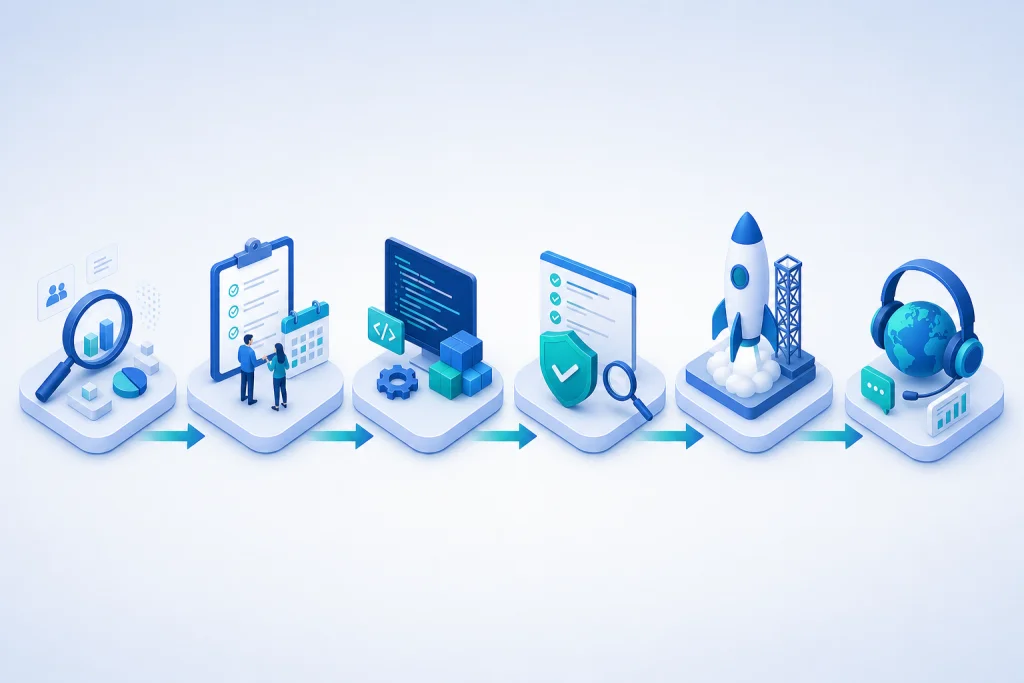
How we work

Structured delivery from assessment to handover

Each phase has clear deliverables, owners, and acceptance criteria aligned to enterprise IT practice.

Approach

MILESIGHT AI Traffic Monitoring vs Traditional Alternatives

Traditional traffic monitoring relies on inductive loop detectors, radar sensors, and manual CCTV review. Inductive loops are costly to install (up to $10,000 per lane) and require road closure, while radar sensors have limited accuracy for multi-lane scenarios. MILESIGHT AI cameras offer a non-intrusive, single-device solution that covers up to 4 lanes with 98% accuracy for vehicle classification and 95% for LPR. They are 40% cheaper to deploy than loop-based systems and provide richer data (color, make, model).

  • Unlike cloud-dependent alternatives, MILESIGHT's edge processing reduces bandwidth usage by 90% and ensures operation even during network outages. Traditional systems often require separate servers for analytics, increasing IT infrastructure costs. MILESIGHT's integrated approach eliminates additional hardware, and its open API allows seamless integration with Microsoft Azure or VMware environments. Maintenance is simplified with remote firmware updates and self-diagnostics, compared to manual calibration of radar sensors.

Capabilities

Case Study & Implementation Methodology

Smart City Government in Bandung, Challenge: 40% increase in congestion during peak hours, manual traffic light timing led to 15-minute average delays. Solution: Deployed 120 MILESIGHT AI cameras at 30 intersections, integrated with existing SCADA via REST API. Result: Reduced average travel time by 22%, cut emissions by 18%, and achieved 99.5% data accuracy. Implementation followed a 3-phase methodology: site survey & camera placement (2 weeks), network integration with fiber backbone (4 weeks), and platform tuning & staff training (2 weeks).

  • Logistics Company in Tangerang, Challenge: 500+ trucks daily, 35% idle time due to manual check-in, 12% theft incidents. Solution: Installed 8 MILESIGHT AI cameras at entry/exit gates, integrated with ERP and backup systems. Result: Reduced truck turnaround time by 28%, theft incidents dropped to 0, and ROI achieved in 9 months. The methodology included proof-of-concept (2 cameras, 1 week), full deployment (6 weeks), and continuous optimization using dashboards. Data is replicated to Synology NAS for disaster recovery.
Use cases

Main plant gate truck and container traffic

Logistics yard throughput monitoring

Internal corridor speed analytics

SOC alarm integration

MILESIGHT AI Traffic Monitoring for Enterprise

Our engineers help design, deploy, and support enterprise IT solutions across Indonesia.

Request a quote Contact our team

Related pages

Ready to discuss architecture & BoQ?

Our team supports assessment, recommendations, procurement, and documented implementation.

WhatsApp Consult on WhatsApp
Request Consultation WhatsApp