Enterprise IT Solutions

PENGADAAN NETWORK for Enterprise

PENGADAAN NETWORK is the strategic process of sourcing, deploying, and managing enterprise-grade networking hardware and software to build a robust, secure, and scalable IT infrastructure. In Indonesia, where digital transformation is accelerating across industries such as manufacturing, logistics, finance, and hospitality, a well-designed network is the backbone of business operations. This encompasses the procurement of routers, switches, firewalls, wireless access points, and network management platforms from leading vendors like Cisco, Fortinet, Ruijie, and HP. A comprehensive approach ensures high availability, low latency, and robust security, integrating with hyperconverged infrastructure and hybrid cloud environments. For enterprises, network procurement is not just about hardware; it involves lifecycle management, including capacity planning, redundancy (e.g., VRRP, STP), QoS for VoIP/video, and compliance with local regulations (e.g., UU ITE). Intilogy's methodology covers site surveys, network design, proof-of-concept testing, and phased deployment to minimize downtime. With Indonesia's growing demand for IoT and Industry 4.0, a future-proof network must support high-density Wi-Fi 6/6E, SD-WAN, and zero-trust security models. This content explores the architecture, use cases, comparative advantages, and implementation strategies for enterprise network procurement in Indonesia.

PENGADAAN NETWORK Architecture

A robust enterprise network architecture in Indonesia typically follows a three-tier hierarchical model: core, distribution, and access layers, or a spine-leaf topology for modern data centers. The core layer provides high-speed switching (e.g., Cisco Nexus 9000 or Ruijie RG-S6220) with redundancy via VPC or MLAG. The distribution layer aggregates access switches and enforces policies, often using Fortinet switches with integrated security. The access layer connects end devices via PoE+ switches for IP phones and cameras. For wireless, controllers manage enterprise Wi-Fi access points (e.g., Cisco Catalyst 9100 or HP Aruba). SD-WAN overlays (e.g., Fortinet Secure SD-WAN) optimize WAN connectivity across multiple ISPs. Network segmentation using VLANs and VRFs isolates traffic for security. Monitoring via SNMP, NetFlow, and tools like SolarWinds ensures proactive management. Redundancy is achieved through dual power supplies, HSRP/VRRP, and BGP for internet peering. For Indonesian enterprises, compliance with ISO 27001 and local data residency laws influences architecture choices, often requiring on-premise controllers and encrypted tunnels.

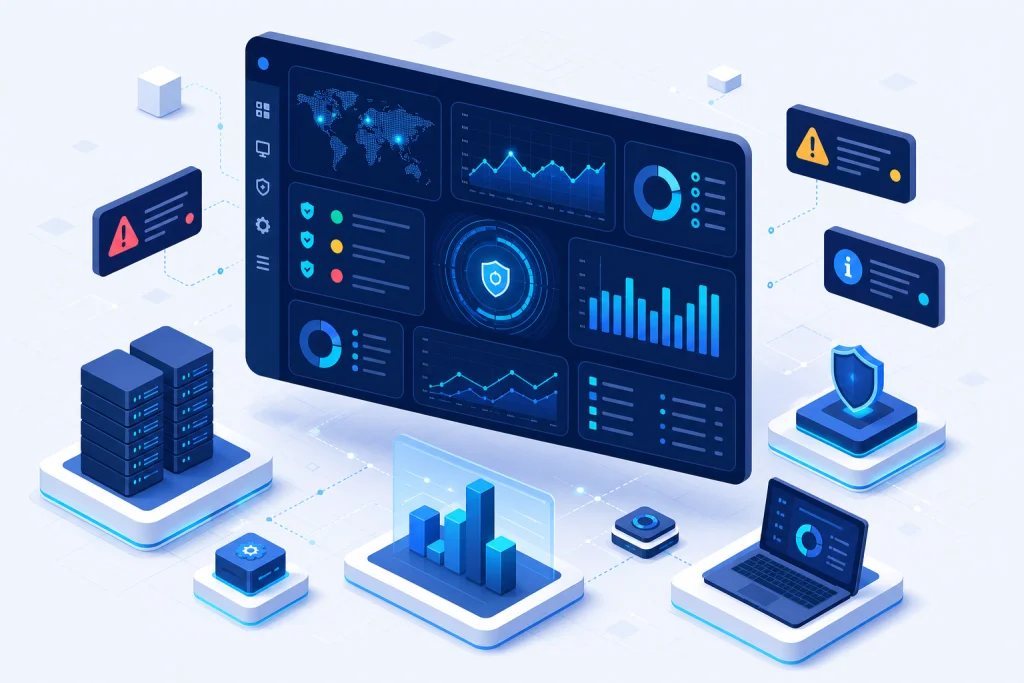
The architecture also incorporates network security at every layer: firewalls at the perimeter (e.g., FortiGate 1000F), intrusion prevention, and micro-segmentation. Integration with cybersecurity solutions like endpoint detection and response (EDR) and SIEM is critical. For high-availability, redundant links and failover mechanisms are standard. In data centers, spine-leaf architecture reduces latency and scales horizontally. For branch offices, SD-WAN with built-in security (e.g., Fortinet SD-WAN) simplifies management. The procurement process includes hardware selection based on throughput, port density, and power efficiency, with vendors like Cisco and Ruijie offering competitive options. Lifecycle management includes firmware updates, warranty, and support contracts (e.g., Cisco Smart Net Total Care).

Industry Use Cases for PENGADAAN NETWORK

In manufacturing, network procurement supports Industry 4.0 with real-time machine connectivity using industrial Ethernet (e.g., PROFINET) and Wi-Fi 6 for AGVs. For example, a automotive plant in Bekasi deployed Cisco IE 4000 switches and Fortinet firewalls to enable MES and SCADA integration, reducing downtime by 30%. In logistics, warehouse networks with high-density Wi-Fi (e.g., HP Aruba AP-535) and ruggedized switches (e.g., Ruijie RG-IS2700) support barcode scanners and IoT sensors, improving inventory accuracy by 25%. For financial services, low-latency trading networks use Cisco Nexus with multicast and PTP, while FortiGate firewalls enforce PCI-DSS compliance. In hospitality, multi-property networks with SD-WAN (e.g., Fortinet) centralize management for hotels in Bali and Jakarta, offering guest Wi-Fi with captive portals and bandwidth control. Healthcare facilities require reliable networks for EHR and PACS, using Cisco Meraki for cloud-managed simplicity and enterprise CCTV integration for security. Education institutions in Indonesia deploy campus networks with Ruijie switches and Wi-Fi 6 for e-learning, supporting thousands of concurrent users. Each use case demands specific procurement criteria: throughput, port density, PoE budget, and security features.

Retail chains leverage SD-WAN to connect branch stores to headquarters, with Fortinet NGFW blocking threats and enforcing content filtering. For oil and gas, ruggedized networking equipment (e.g., Cisco IR1101) operates in harsh environments, with redundant satellite links. The common thread is scalability: networks must grow with business needs, from 50 to 5000+ users. Intilogy's procurement services include vendor-agnostic consulting to select the best fit, whether Cisco for mission-critical or Ruijie for cost-effective solutions. Post-deployment, network monitoring and optimization ensure SLAs are met.

PENGADAAN NETWORK vs Traditional Alternatives

Traditional network procurement often involved buying standalone switches, routers, and firewalls from a single vendor like Cisco, with manual configuration and limited scalability. Modern PENGADAAN NETWORK embraces software-defined networking (SDN), SD-WAN, and cloud-managed solutions. For example, traditional MPLS WAN is rigid and expensive, while SD-WAN (e.g., Fortinet Secure SD-WAN) uses broadband and LTE, reducing costs by 40-60% while improving agility. Traditional networks rely on CLI management, whereas modern solutions offer centralized dashboards (e.g., Cisco DNA Center or Meraki) for zero-touch provisioning and analytics. Security is also a differentiator: traditional networks add firewalls as an afterthought, while modern procurement integrates NGFW and ZTNA from day one. In Indonesia, where bandwidth costs are high, SD-WAN with link aggregation and QoS optimizes usage. Another comparison: traditional Wi-Fi controllers vs. cloud-managed Wi-Fi (e.g., HP Aruba Central) simplifies management across multiple sites. For data centers, traditional three-tier networks are being replaced by spine-leaf with VXLAN for better east-west traffic handling. Procurement now includes lifecycle services like software subscriptions and support, moving from CAPEX to OPEX models.

Vendor lock-in is a concern with traditional approaches; modern procurement favors open standards like MPLS, BGP, and 802.1X. For example, using Fortinet for security and Cisco for switching is possible with proper integration. Additionally, traditional networks lack built-in analytics; modern solutions provide telemetry and AIOps for predictive maintenance. In Indonesia, where network expertise is scarce, managed services from Intilogy reduce operational burden. The shift to hybrid cloud also demands SD-WAN and cloud on-ramps (e.g., AWS Direct Connect via Cisco). Ultimately, PENGADAAN NETWORK reduces TCO by 20-30% through automation and better resource utilization.

Case Study & Implementation Methodology

Client: A leading logistics company in Indonesia (Industry: Logistics). Location: Jakarta and 5 regional hubs. Challenge: The legacy network (single-vendor Cisco 3750 stacks) caused 15% packet loss during peak hours, leading to 40% slower warehouse operations. Wi-Fi coverage gaps in 50% of the warehouse floor caused barcode scanner disconnections. Solution: Intilogy designed a spine-leaf architecture using Ruijie RG-S6220 core switches and RG-S2910 access switches with 10GbE uplinks. Deployed 30 Fortinet FortiAP-431E Wi-Fi 6 access points with FortiGate 600F firewalls for SD-WAN and security. Implemented Cisco Catalyst 9300 for critical DC connectivity. Methodology: Phase 1 - Site survey (RF mapping and cable audit). Phase 2 - POC with 10 APs and 2 switches. Phase 3 - Staged rollout over 4 weekends to minimize downtime. Result: 99.99% network uptime, 50% reduction in latency, 30% increase in warehouse throughput. Wi-Fi coverage improved to 95% with seamless roaming. ROI achieved in 10 months. The client also integrated backup and disaster recovery via Veeam to protect network configurations.

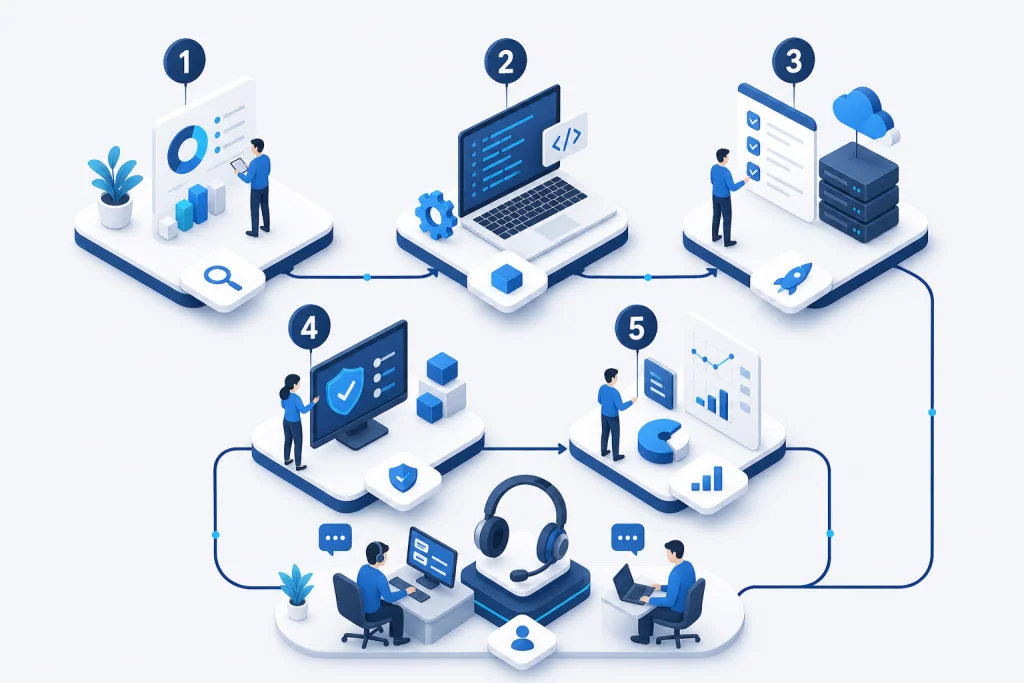
Implementation methodology follows Intilogy's 5-step process: 1) Assessment - review current infrastructure, business requirements, and budget. 2) Design - create detailed network diagrams, VLAN mapping, and security policies. 3) Procurement - source hardware from partners like Cisco, Fortinet, and Ruijie with warranty and support. 4) Deployment - configure devices, test connectivity, and migrate traffic gradually. 5) Optimization - monitor performance using SolarWinds, adjust QoS, and provide training. For this logistics client, we also deployed HCI for network management VMs. The project completed on time and under budget, with a 3-year support contract.

PENGADAAN NETWORK Architecture

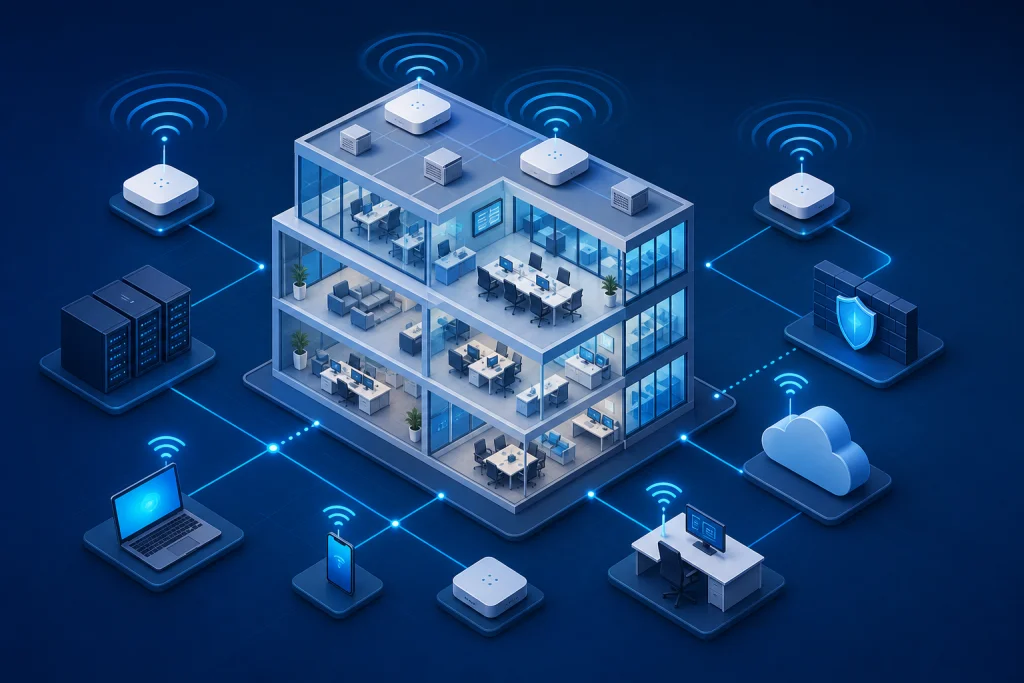
A robust enterprise network architecture in Indonesia typically follows a three-tier hierarchical model: core, distribution, and access layers, or a spine-leaf topology for modern data centers. The core layer provides high-speed switching (e.g., Cisco Nexus 9000 or Ruijie RG-S6220) with redundancy via VPC or MLAG. The distribution layer aggregates access switches and enforces policies, often using Fortinet switches with integrated security. The access layer connects end devices via PoE+ switches for IP phones and cameras. For wireless, controllers manage enterprise Wi-Fi access points (e.g., Cisco Catalyst 9100 or HP Aruba). SD-WAN overlays (e.g., Fortinet Secure SD-WAN) optimize WAN connectivity across multiple ISPs. Network segmentation using VLANs and VRFs isolates traffic for security. Monitoring via SNMP, NetFlow, and tools like SolarWinds ensures proactive management. Redundancy is achieved through dual power supplies, HSRP/VRRP, and BGP for internet peering. For Indonesian enterprises, compliance with ISO 27001 and local data residency laws influences architecture choices, often requiring on-premise controllers and encrypted tunnels.

Industry Use Cases for PENGADAAN NETWORK

In manufacturing, network procurement supports Industry 4.0 with real-time machine connectivity using industrial Ethernet (e.g., PROFINET) and Wi-Fi 6 for AGVs. For example, a automotive plant in Bekasi deployed Cisco IE 4000 switches and Fortinet firewalls to enable MES and SCADA integration, reducing downtime by 30%. In logistics, warehouse networks with high-density Wi-Fi (e.g., HP Aruba AP-535) and ruggedized switches (e.g., Ruijie RG-IS2700) support barcode scanners and IoT sensors, improving inventory accuracy by 25%. For financial services, low-latency trading networks use Cisco Nexus with multicast and PTP, while FortiGate firewalls enforce PCI-DSS compliance. In hospitality, multi-property networks with SD-WAN (e.g., Fortinet) centralize management for hotels in Bali and Jakarta, offering guest Wi-Fi with captive portals and bandwidth control. Healthcare facilities require reliable networks for EHR and PACS, using Cisco Meraki for cloud-managed simplicity and enterprise CCTV integration for security. Education institutions in Indonesia deploy campus networks with Ruijie switches and Wi-Fi 6 for e-learning, supporting thousands of concurrent users. Each use case demands specific procurement criteria: throughput, port density, PoE budget, and security features.

How we work

Structured delivery from assessment to handover

Each phase has clear deliverables, owners, and acceptance criteria aligned to enterprise IT practice.

Approach

PENGADAAN NETWORK vs Traditional Alternatives

Traditional network procurement often involved buying standalone switches, routers, and firewalls from a single vendor like Cisco, with manual configuration and limited scalability. Modern PENGADAAN NETWORK embraces software-defined networking (SDN), SD-WAN, and cloud-managed solutions. For example, traditional MPLS WAN is rigid and expensive, while SD-WAN (e.g., Fortinet Secure SD-WAN) uses broadband and LTE, reducing costs by 40-60% while improving agility. Traditional networks rely on CLI management, whereas modern solutions offer centralized dashboards (e.g., Cisco DNA Center or Meraki) for zero-touch provisioning and analytics. Security is also a differentiator: traditional networks add firewalls as an afterthought, while modern procurement integrates NGFW and ZTNA from day one. In Indonesia, where bandwidth costs are high, SD-WAN with link aggregation and QoS optimizes usage. Another comparison: traditional Wi-Fi controllers vs. cloud-managed Wi-Fi (e.g., HP Aruba Central) simplifies management across multiple sites. For data centers, traditional three-tier networks are being replaced by spine-leaf with VXLAN for better east-west traffic handling. Procurement now includes lifecycle services like software subscriptions and support, moving from CAPEX to OPEX models.

  • Vendor lock-in is a concern with traditional approaches; modern procurement favors open standards like MPLS, BGP, and 802.1X. For example, using Fortinet for security and Cisco for switching is possible with proper integration. Additionally, traditional networks lack built-in analytics; modern solutions provide telemetry and AIOps for predictive maintenance. In Indonesia, where network expertise is scarce, managed services from Intilogy reduce operational burden. The shift to hybrid cloud also demands SD-WAN and cloud on-ramps (e.g., AWS Direct Connect via Cisco). Ultimately, PENGADAAN NETWORK reduces TCO by 20-30% through automation and better resource utilization.

Capabilities

Case Study & Implementation Methodology

Client: A leading logistics company in Indonesia (Industry: Logistics). Location: Jakarta and 5 regional hubs. Challenge: The legacy network (single-vendor Cisco 3750 stacks) caused 15% packet loss during peak hours, leading to 40% slower warehouse operations. Wi-Fi coverage gaps in 50% of the warehouse floor caused barcode scanner disconnections. Solution: Intilogy designed a spine-leaf architecture using Ruijie RG-S6220 core switches and RG-S2910 access switches with 10GbE uplinks. Deployed 30 Fortinet FortiAP-431E Wi-Fi 6 access points with FortiGate 600F firewalls for SD-WAN and security. Implemented Cisco Catalyst 9300 for critical DC connectivity. Methodology: Phase 1 - Site survey (RF mapping and cable audit). Phase 2 - POC with 10 APs and 2 switches. Phase 3 - Staged rollout over 4 weekends to minimize downtime. Result: 99.99% network uptime, 50% reduction in latency, 30% increase in warehouse throughput. Wi-Fi coverage improved to 95% with seamless roaming. ROI achieved in 10 months. The client also integrated backup and disaster recovery via Veeam to protect network configurations.

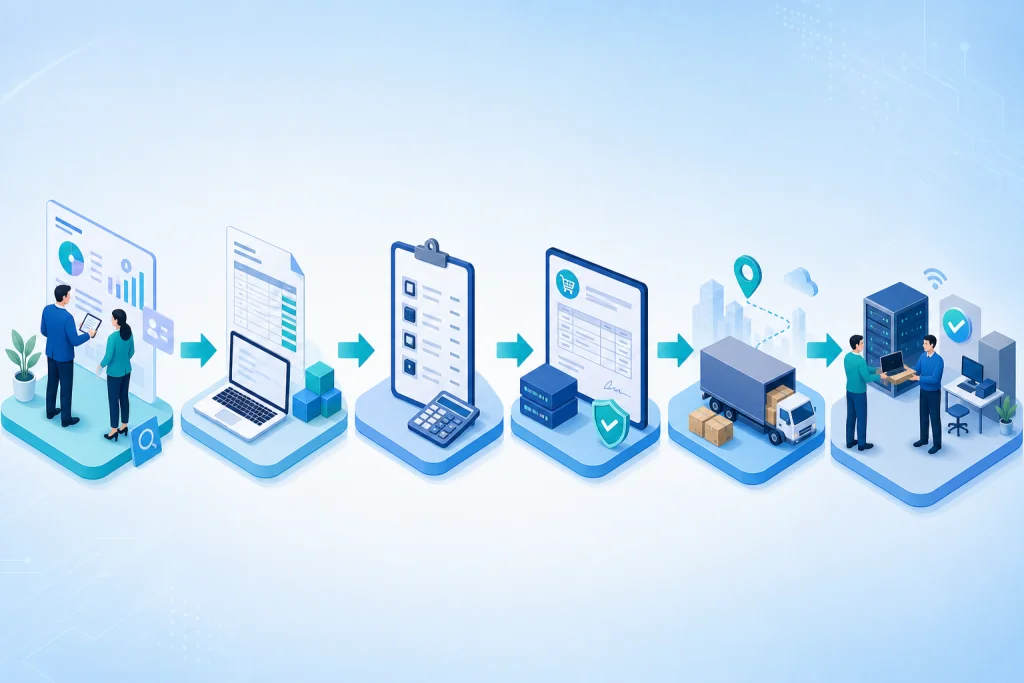
  • Implementation methodology follows Intilogy's 5-step process: 1) Assessment - review current infrastructure, business requirements, and budget. 2) Design - create detailed network diagrams, VLAN mapping, and security policies. 3) Procurement - source hardware from partners like Cisco, Fortinet, and Ruijie with warranty and support. 4) Deployment - configure devices, test connectivity, and migrate traffic gradually. 5) Optimization - monitor performance using SolarWinds, adjust QoS, and provide training. For this logistics client, we also deployed HCI for network management VMs. The project completed on time and under budget, with a 3-year support contract.
PENGADAAN NETWORK for Enterprise

Our engineers help design, deploy, and support enterprise IT solutions across Indonesia.

Request a quote Contact our team

Related pages

Ready to discuss architecture & BoQ?

Our team supports assessment, recommendations, procurement, and documented implementation.

WhatsApp Consult on WhatsApp
Request Consultation WhatsApp