Enterprise IT Solutions

Structured Cabling for Enterprise

Structured cabling is the backbone of modern enterprise IT infrastructure, providing a standardized, scalable, and high-performance cabling system that supports voice, data, video, and building management systems. In Indonesia's rapidly digitizing business landscape, enterprises require cabling solutions that can handle increasing bandwidth demands, support emerging technologies like IoT and 5G, and ensure reliability for mission-critical operations. At Intilogy, we design and deploy structured cabling systems that adhere to international standards such as TIA/EIA-568 and ISO/IEC 11801, using top-tier components from brands like Cisco, Lenovo, and HP. Our solutions encompass copper (Cat6a, Cat7) and fiber optic cabling (single-mode, multimode) tailored to your specific environment—whether it's a high-density data center, a sprawling warehouse, or a multi-floor office. We conduct thorough site surveys, cable pathway planning, and certification testing to guarantee performance and compliance. With Intilogy, you get a future-proof cabling infrastructure that minimizes downtime, simplifies moves/adds/changes, and supports your enterprise's growth. Our vendor-agnostic approach ensures we recommend the best components for your needs, from Ruijie switches to Synology network-attached storage, all integrated seamlessly. Whether you're building a new facility or upgrading an existing network, our structured cabling services deliver the reliability and performance that Indonesian enterprises demand.

Structured Cabling Architecture

A well-designed structured cabling architecture consists of six subsystems: entrance facilities, equipment rooms, backbone cabling, horizontal cabling, telecommunications rooms, and work-area components. The backbone cabling typically uses fiber optic cables (single-mode for long distances, multimode for shorter runs) to connect equipment rooms and telecommunications rooms, while horizontal cabling employs Cat6a or Cat7 copper cables to connect outlets to patch panels. Proper cable management, including cable trays, raceways, and patch panels, is essential for airflow, organization, and future scalability. In data centers, we implement top-of-rack or end-of-row topologies with pre-terminated fiber assemblies for high-density deployments.

Our architecture incorporates redundancy and load balancing, using diverse pathways and multiple fiber strands to ensure uptime. We also integrate power over Ethernet (PoE++) for devices like IP cameras and wireless access points, leveraging enterprise WiFi solutions. Testing with Fluke Networks certifiers ensures each link meets performance standards. For large-scale enterprises in Jakarta or Surabaya, we design cabling that supports up to 40/100GbE, ready for future upgrades.

Industry Use Cases for Structured Cabling

In manufacturing, structured cabling supports industrial IoT sensors, robotic controllers, and real-time monitoring systems, requiring robust shielded cabling (Cat7) to resist electromagnetic interference. For logistics and warehousing, it enables seamless integration of barcode scanners, conveyor belt controls, and inventory management systems, often combined with enterprise CCTV for security. In healthcare, structured cabling connects medical imaging devices, patient monitoring systems, and electronic health records, demanding high bandwidth and low latency.

Financial institutions rely on structured cabling for high-frequency trading platforms and secure transaction processing, using fiber optic links to minimize latency. Educational campuses benefit from a unified cabling system that supports VoIP, digital signage, and Wi-Fi 6 access points. For office environments, structured cabling simplifies moves and changes, reducing downtime. Each use case requires careful planning of cable types, pathways, and termination points to meet specific performance and compliance requirements.

Structured Cabling vs Traditional Alternatives

Traditional point-to-point cabling (e.g., direct runs from each device to a switch) is chaotic, difficult to manage, and costly to troubleshoot. In contrast, structured cabling uses a hierarchical, star topology that centralizes connections in telecommunications rooms, making it easier to add, move, or change devices without rewiring. Traditional cabling often uses lower-category cables (Cat5e) that support only 1GbE, while structured cabling deploys Cat6a (10GbE) or fiber (40/100GbE) for future-proofing.

Traditional cabling lacks standardized labeling and documentation, leading to operational inefficiencies. Structured cabling follows TIA-606 labeling standards, enabling quick fault identification. Additionally, traditional cabling is prone to cable clutter and airflow obstruction, increasing cooling costs. Structured cabling with proper cable management improves airflow and reduces energy consumption. For enterprises in Indonesia, the total cost of ownership (TCO) of structured cabling is lower over 10 years due to reduced downtime and easier maintenance. Our solutions integrate with IT infrastructure components from Dell and VMware for a cohesive ecosystem.

Case Study & Implementation Methodology

Manufacturing Company in Batam, Challenge: 200+ IoT sensors and robotic arms required high-speed, interference-free connections; legacy Cat5e cabling caused 15% packet loss and frequent downtime. Solution: Deployed Cat7 shielded cabling with fiber backbone, using Fortinet switches for segmentation. Result: 99.99% uptime, 50% reduction in latency, and 30% lower maintenance costs.

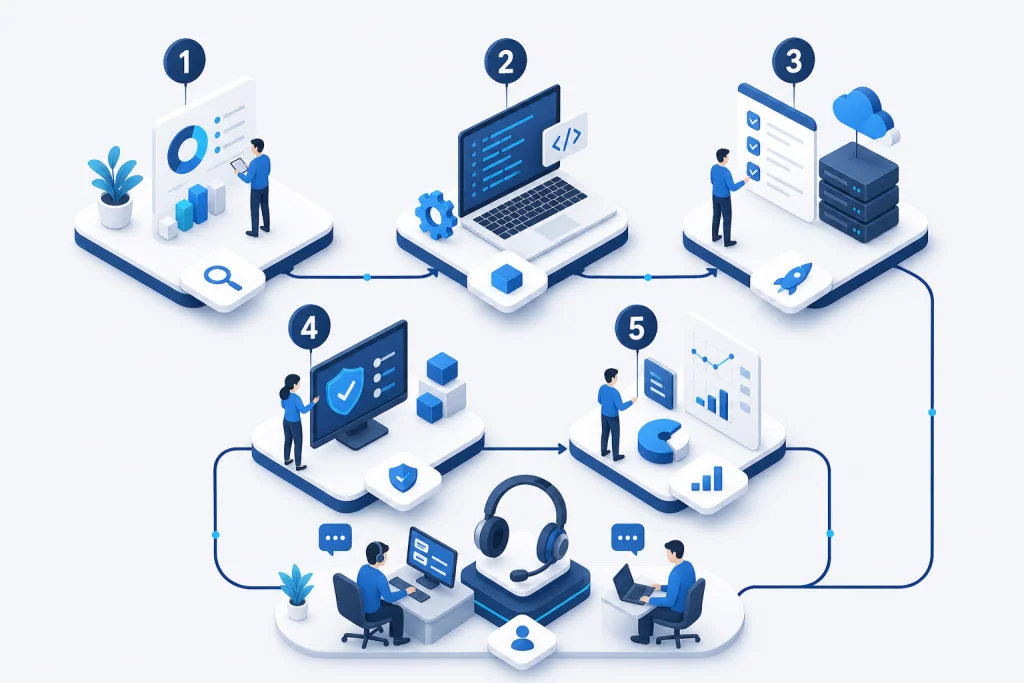
Our implementation methodology follows a five-phase approach: (1) Site survey and requirement analysis, including cable path planning and environmental assessment; (2) Design and specification, selecting appropriate cable categories and components from QNAP for storage; (3) Installation, using certified technicians and proper cable management; (4) Certification testing with Fluke Networks, ensuring all links meet TIA standards; (5) Documentation and handover, providing as-built drawings and labeling. This structured approach ensures minimal disruption and maximum performance for enterprises across Indonesia.

Structured Cabling Architecture

A well-designed structured cabling architecture consists of six subsystems: entrance facilities, equipment rooms, backbone cabling, horizontal cabling, telecommunications rooms, and work-area components. The backbone cabling typically uses fiber optic cables (single-mode for long distances, multimode for shorter runs) to connect equipment rooms and telecommunications rooms, while horizontal cabling employs Cat6a or Cat7 copper cables to connect outlets to patch panels. Proper cable management, including cable trays, raceways, and patch panels, is essential for airflow, organization, and future scalability. In data centers, we implement top-of-rack or end-of-row topologies with pre-terminated fiber assemblies for high-density deployments.

Industry Use Cases for Structured Cabling

In manufacturing, structured cabling supports industrial IoT sensors, robotic controllers, and real-time monitoring systems, requiring robust shielded cabling (Cat7) to resist electromagnetic interference. For logistics and warehousing, it enables seamless integration of barcode scanners, conveyor belt controls, and inventory management systems, often combined with enterprise CCTV for security. In healthcare, structured cabling connects medical imaging devices, patient monitoring systems, and electronic health records, demanding high bandwidth and low latency.

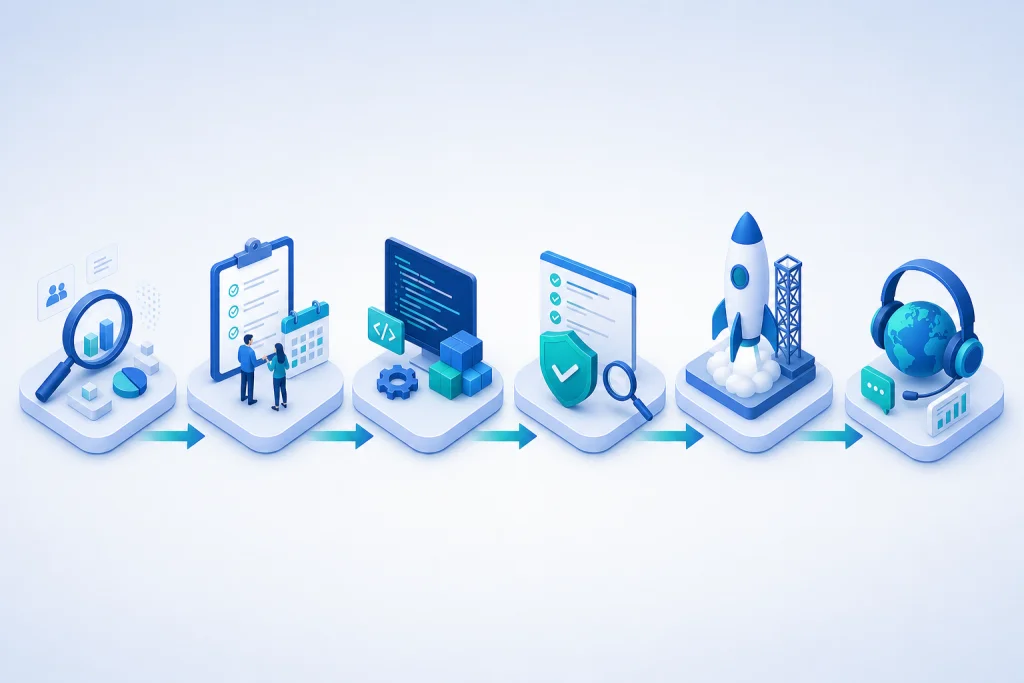
How we work

Structured delivery from assessment to handover

Each phase has clear deliverables, owners, and acceptance criteria aligned to enterprise IT practice.

Approach

Structured Cabling vs Traditional Alternatives

Traditional point-to-point cabling (e.g., direct runs from each device to a switch) is chaotic, difficult to manage, and costly to troubleshoot. In contrast, structured cabling uses a hierarchical, star topology that centralizes connections in telecommunications rooms, making it easier to add, move, or change devices without rewiring. Traditional cabling often uses lower-category cables (Cat5e) that support only 1GbE, while structured cabling deploys Cat6a (10GbE) or fiber (40/100GbE) for future-proofing.

  • Traditional cabling lacks standardized labeling and documentation, leading to operational inefficiencies. Structured cabling follows TIA-606 labeling standards, enabling quick fault identification. Additionally, traditional cabling is prone to cable clutter and airflow obstruction, increasing cooling costs. Structured cabling with proper cable management improves airflow and reduces energy consumption. For enterprises in Indonesia, the total cost of ownership (TCO) of structured cabling is lower over 10 years due to reduced downtime and easier maintenance. Our solutions integrate with IT infrastructure components from Dell and VMware for a cohesive ecosystem.

Capabilities

Case Study & Implementation Methodology

Manufacturing Company in Batam, Challenge: 200+ IoT sensors and robotic arms required high-speed, interference-free connections; legacy Cat5e cabling caused 15% packet loss and frequent downtime. Solution: Deployed Cat7 shielded cabling with fiber backbone, using Fortinet switches for segmentation. Result: 99.99% uptime, 50% reduction in latency, and 30% lower maintenance costs.

  • Our implementation methodology follows a five-phase approach: (1) Site survey and requirement analysis, including cable path planning and environmental assessment; (2) Design and specification, selecting appropriate cable categories and components from QNAP for storage; (3) Installation, using certified technicians and proper cable management; (4) Certification testing with Fluke Networks, ensuring all links meet TIA standards; (5) Documentation and handover, providing as-built drawings and labeling. This structured approach ensures minimal disruption and maximum performance for enterprises across Indonesia.
Use cases

Perencanaan infrastruktur baru

Refresh & modernisasi

Ekspansi multi-cabang

Compliance & audit IT

Structured Cabling for Enterprise

Our engineers help design, deploy, and support enterprise IT solutions across Indonesia.

Request a quote Contact our team

Related pages

E-E-A-T · Expertise & trust

Implementation expertise & enterprise trust

Intilogy (PT. Inti Jaya Teknologi) supports IT and procurement teams across Indonesia — from technical assessment and BoQ through deployment, documentation, and post go-live support.

  • 500+ Infrastructure deployments
  • 24/7 Operational support
  • SLA Enterprise SLA
  • 150+ Clients & institutions

Engineering & delivery expertise

Engineer-led assessment

Requirements workshops, sizing, and architecture — not catalogue selling without context.

Documented deployment

Commissioning checklists, as-built diagrams, IP plans, and escalation runbooks.

Audit-ready procurement

BoQ/BOM, quotations, POs, and handover packs for tenders and IT audits.

Multi-vendor coordination

One project partner for servers, networks, security, backup, and licensing.

Vendor ecosystem & sourcing channels

We source through official distributors/resellers per brand and project. Specific partnership tiers are confirmed per RFP — see our credentials page.

Vendor Status / tier Scope Notes
Dell Technologies Authorized channel PowerEdge, storage BoQ & manufacturer warranty
HPE Authorized channel ProLiant Enterprise servers
Fortinet Implementation partner NGFW, SD-WAN Licensing & deployment
Veeam Implementation partner Backup, replication Immutable design
VMware Implementation partner vSphere Cluster & migration

Tiers vary by SKU/region. Contact sales@intilogy.com for distributor letters or engineer certificates.

Enterprise implementation methodology

Standard flow for infrastructure, security, and backup projects — scoped per contract.

  1. Discovery & assessment

    Duration: 1–2 weeks

    Deliverables Requirements & risk report

  2. Architecture & BoQ

    Duration: 1–2 weeks

    Deliverables HLD, BoQ, rollout plan

  3. Procurement & staging

    Duration: 2–4 weeks

    Deliverables Asset register

  4. Implementation & UAT

    Duration: 2–6 weeks

    Deliverables As-built, UAT sign-off

  5. Handover & operations

    Duration: Ongoing

    Deliverables SOPs, training, SLA if contracted

Support & SLA (per project contract)

Service levels are defined in agreement — example framework below.

Standard maintenance

Response
Next business day (remote)
Coverage
Firmware advisory, tickets, RMA
Notes
Indonesia business hours

Project warranty

Response
Per implementation contract
Coverage
Defects in Intilogy deployment scope
Notes
Not 24/7 unless agreed

Critical incident (optional)

Response
4–8 hours if contracted
Coverage
Production-critical escalation
Notes
Requires separate MSA

Response times are illustrative — binding only when written in contract.

Technical documentation delivered

  • Topology & rack diagrams (as-built)
  • Asset list, serials, warranty status
  • Critical config summary & change log
  • Basic operations runbook & escalation contacts
  • Restore / DR drill reports (if in scope)
  • Tender packs: distributor letters & engineer certs (on request)

Competency & certifications

Engineers train on vendor technologies per project. Individual certs (Fortinet NSE, VMware VCP, Veeam VMCE, etc.) are provided for tenders — not all listed publicly.

  • Engineer certifications — Per project technology — on request
  • Distributor letters — For procurement audit
  • Client references — See Clients page for logos & scope

View certifications & partnerships

Ready to discuss architecture & BoQ?

Our team supports assessment, recommendations, procurement, and documented implementation.

WhatsApp Consult on WhatsApp
Request Consultation WhatsApp