PENGADAAN SERVER Architecture
Enterprise server architecture involves selecting the right form factor (rack, blade, or tower), processor generation (e.g., Intel Xeon Scalable 4th Gen), memory configuration (RDIMMs or LRDIMMs), and storage layout (SAS/SATA SSDs vs NVMe). For virtualized environments, servers should support at least 512GB RAM and dual 25GbE networking to reduce latency. HCI platforms like HCI integrate compute and storage, simplifying procurement. Typical configurations include 2U rack servers with 24 DIMM slots and 10 NVMe bays.
Redundancy is achieved through dual power supplies, RAID 10 for storage, and failover clustering. Management tools such as iLO (HPE), iDRAC (Dell), or Lenovo XClarity enable remote monitoring. For high-performance computing (HPC), GPU-accelerated servers with NVIDIA A100 or H100 are available. Procurement must consider thermal design power (TDP) and cooling requirements, especially in Indonesia's tropical climate. Intilogy recommends Dell PowerEdge or HPE ProLiant for balanced performance and cost.
Industry Use Cases for PENGADAAN SERVER
In the financial sector, banks in Jakarta deploy high-frequency trading servers with sub-millisecond latency using Cisco UCS blades and 100GbE fabric. Manufacturing companies in Batam use ruggedized servers for IoT data aggregation, processing 50,000 sensor readings per second. Healthcare providers in Surabaya require HIPAA-compliant servers for electronic medical records (EMR), often with encrypted NVMe drives and redundant networking.
Retail enterprises in Bandung leverage servers for real-time inventory management, integrating with Enterprise WiFi for seamless connectivity. Media companies in Bali use GPU servers for 4K video rendering, reducing render times by 60%. Government agencies in Jakarta deploy servers for smart city applications, managing traffic data from thousands of cameras. Each use case demands specific CPU, memory, and I/O configurations, which Intilogy customizes through vendor-agnostic procurement.
PENGADAAN SERVER vs Traditional Alternatives
Traditional server procurement often involves buying individual components and assembling them, leading to compatibility issues and higher TCO. In contrast, enterprise-grade servers from Lenovo or HP come pre-validated with firmware and drivers, reducing deployment time by 40%. Cloud alternatives like AWS or Azure offer scalability but incur egress costs and latency; on-premises servers provide predictable performance for latency-sensitive applications.
Virtualization using VMware vSphere on procured servers allows consolidation ratios of 10:1, lowering power and cooling costs by 70% compared to physical servers. Hyperconverged infrastructure (HCI) further simplifies management by combining compute and storage into a single cluster. For organizations with existing Networking investments, on-premises servers avoid cloud lock-in and provide full control over security and compliance.
Case Study & Implementation Methodology
[Finance] Company in Jakarta, Challenge: Legacy servers caused 15% transaction latency, resulting in $2M annual loss. Solution: Deployed 20 Dell PowerEdge R750xa servers with NVIDIA A100 GPUs for AI-driven fraud detection. Result: Latency reduced to 2ms, ROI of 300% in 18 months.
[Manufacturing] Company in Batam, Challenge: 500 IoT devices generating 10TB/day, storage bottleneck. Solution: Procured 4 HPE Synergy 12000 frames with 48 compute nodes and all-flash storage. Result: Data processing speed increased by 5x, TCO reduced by 25%.
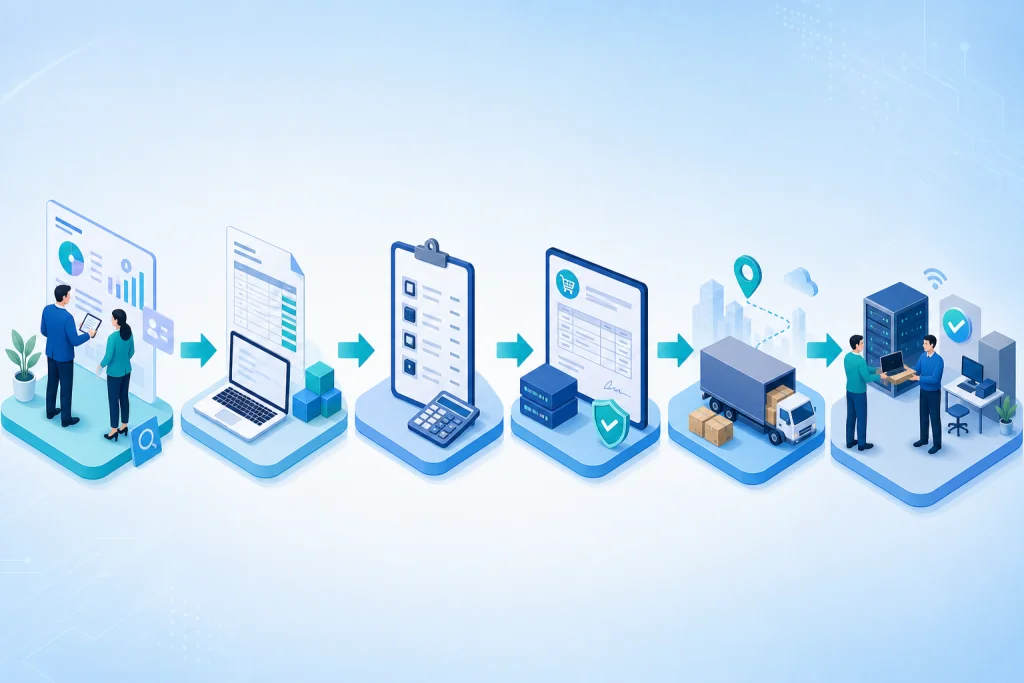
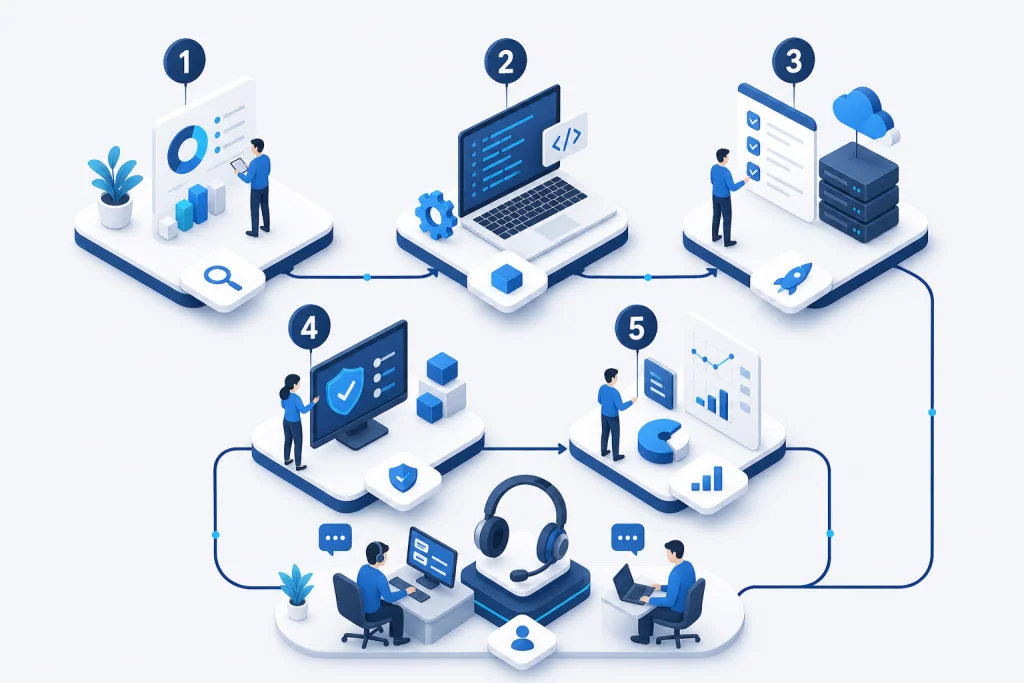
Implementation methodology follows a phased approach: (1) Assessment of workload requirements and existing IT Infrastructure, (2) Vendor selection based on performance benchmarks and warranty terms, (3) Integration with Backup & Disaster Recovery solutions using Veeam, (4) Deployment with automated tools like Ansible, and (5) Ongoing monitoring via iLO/iDRAC. Intilogy ensures 99.99% uptime through proactive maintenance.