BACKUP AND DISASTER RECOVERY Architecture
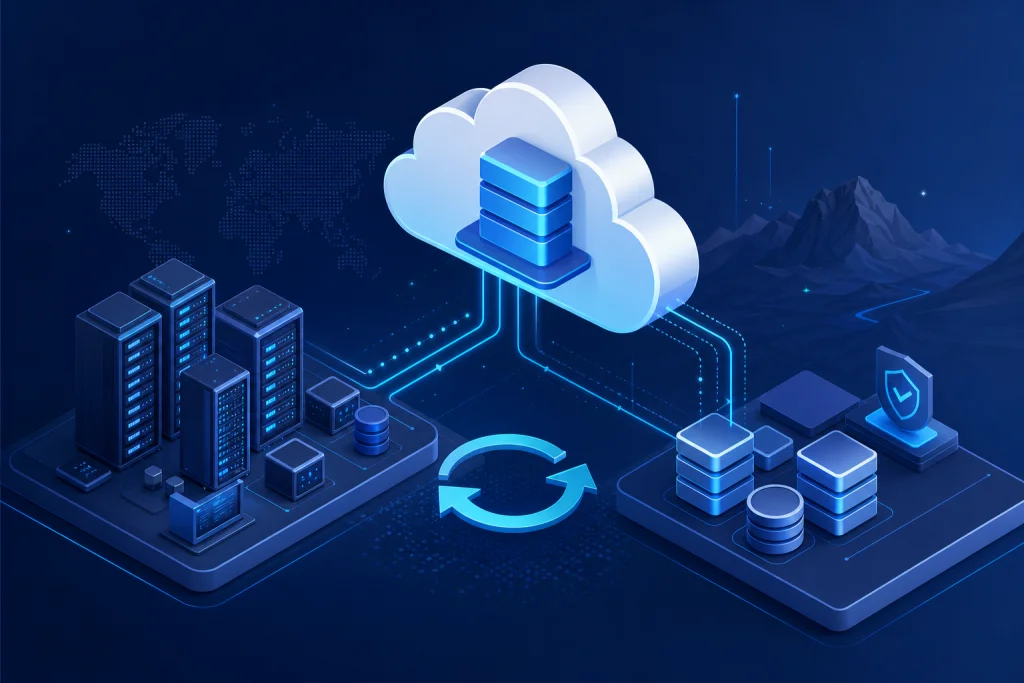
A modern BDR architecture for enterprises combines multiple layers of protection. At the core is the backup infrastructure, which includes backup servers, storage repositories, and media agents. For virtualized environments, we integrate with VMware vSphere and Microsoft Hyper-V using agentless backup from Veeam. Data is first written to fast primary storage (e.g., SSD-based repositories) for quick recovery, then replicated to secondary storage such as Synology NAS or QNAP devices for long-term retention. Offsite replication to a private cloud or public cloud (AWS/Azure) ensures geographic redundancy. Disaster recovery adds orchestration: we configure recovery plans that automatically spin up VMs in a secondary site (either on-premises or cloud) in the correct order. Network segmentation and firewall rules are applied via Fortinet firewalls to ensure secure replication. For critical databases like Oracle or SQL Server, we use log shipping and continuous backup to achieve near-zero RPO. The entire architecture is monitored via a centralized dashboard, with alerts for backup failures and compliance reporting.
Scalability is achieved through scale-out backup repositories (SOBR) that allow adding capacity on the fly. For enterprises with multiple locations in Indonesia, we deploy local backup appliances at each site with central management. Data deduplication and compression reduce storage footprint by up to 10:1. Encryption at rest and in transit (AES-256) ensures data security. The architecture also supports immutable backups to protect against ransomware, using technologies like Veeam Hardened Repository or Synology Write Once Read Many (WORM) storage. With Hybrid Cloud integration, enterprises can burst to cloud for disaster recovery without maintaining a full secondary data center.
Industry Use Cases for BACKUP AND DISASTER RECOVERY
In the financial services sector, banks and insurance companies in Jakarta require strict compliance with Bank Indonesia regulations. Our BDR solution ensures that transaction data is backed up every 15 minutes with automated failover to a secondary site within the same city. For example, a leading bank reduced its RTO from 4 hours to 30 minutes using Veeam and HCI. In the healthcare industry, hospitals in Surabaya need to protect patient records and imaging data. We deploy Synology NAS with HIPAA-compliant encryption and offsite replication to a cloud provider, ensuring data availability even during network outages. For manufacturing and logistics, companies with warehouses in Batam and Surabaya rely on continuous backup of ERP systems (e.g., SAP) and IoT sensor data. Using Server & Storage solutions from Dell and HP, we implement backup windows that do not interfere with production. The result is minimal data loss and quick recovery of critical supply chain applications.
E-commerce platforms in Bandung handle millions of transactions daily. Their BDR architecture includes real-time replication of databases to a geographically separate data center, with automated failover in under 60 seconds. For government institutions, we ensure compliance with Indonesia's PDP Bill by implementing data sovereignty controls—backups remain within the country. In the education sector, universities in Yogyakarta protect research data and student records using a combination of on-premises backup and cloud archival. Each use case is tailored to the specific RTO/RPO requirements and regulatory landscape, leveraging IT Infrastructure best practices.
BACKUP AND DISASTER RECOVERY vs Traditional Alternatives
Traditional backup methods like tape drives or manual disk-based backups are no longer sufficient for enterprise demands. Tape backups have high RTO (hours to days) and are prone to physical damage or loss. Manual disk backups often lack automation, leading to inconsistent backup windows and human errors. In contrast, modern BDR solutions offer automated, policy-driven backups with instant recovery. For instance, Veeam's Instant VM Recovery can restore a virtual machine from a compressed backup file in minutes, compared to hours with traditional restore from tape. Additionally, traditional alternatives often lack disaster recovery orchestration—they only provide backup, not automated failover. This means during a disaster, IT teams must manually spin up servers, which increases downtime. Our BDR solution includes HCI with built-in replication and orchestration, enabling one-click disaster recovery testing and failover.
Another key difference is ransomware protection. Traditional backups are often vulnerable to encryption by malware if they remain connected to the network. Modern BDR employs immutable backups that cannot be modified or deleted, even by administrators. For example, Synology's WORM technology and Veeam's hardened repository provide air-gapped protection. Cost-wise, while traditional tape may have lower upfront costs, the total cost of ownership (TCO) is higher due to manual labor and longer downtime. Our BDR solutions reduce TCO by up to 40% through deduplication and automation. Finally, scalability: traditional methods require manual capacity planning, while modern BDR scales elastically with software-defined storage. For enterprises in Indonesia, the choice is clear: invest in a future-proof BDR architecture that aligns with digital transformation goals.
Case Study & Implementation Methodology
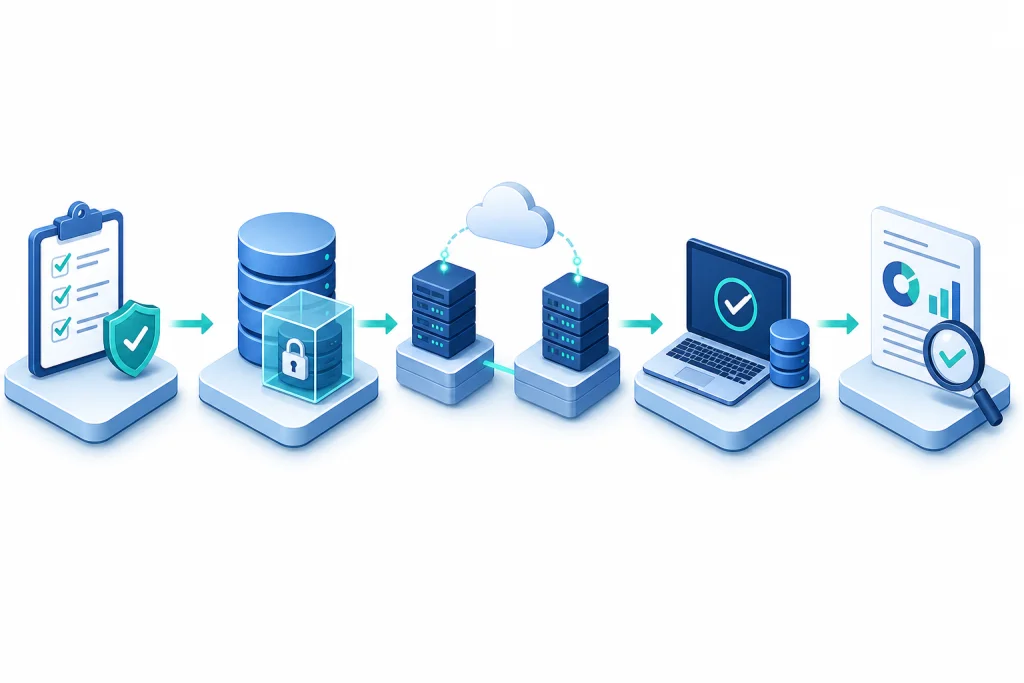
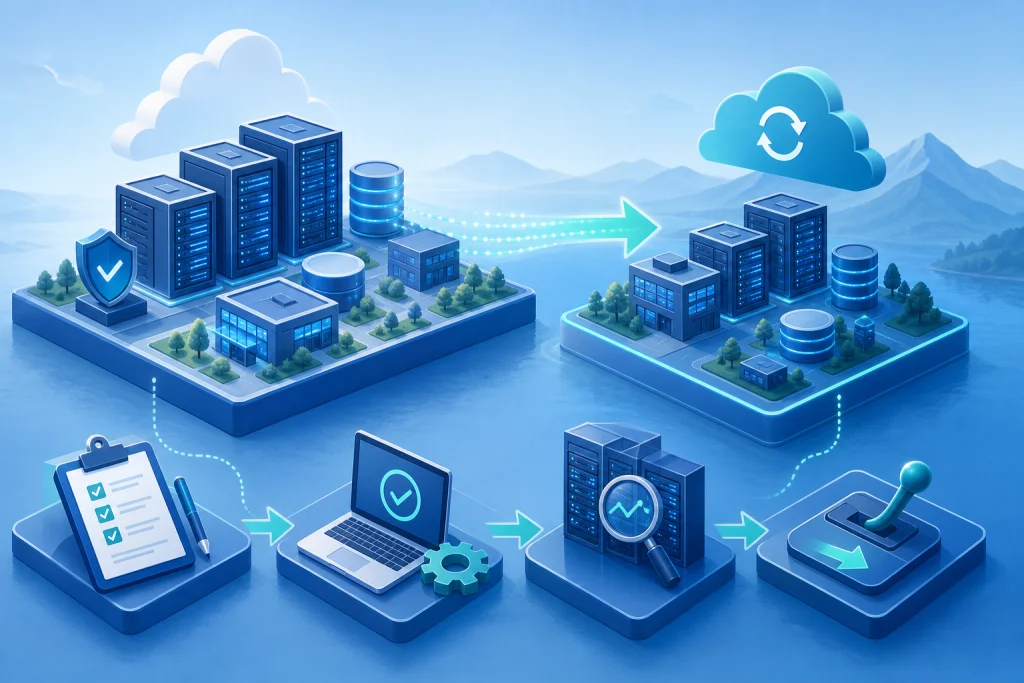
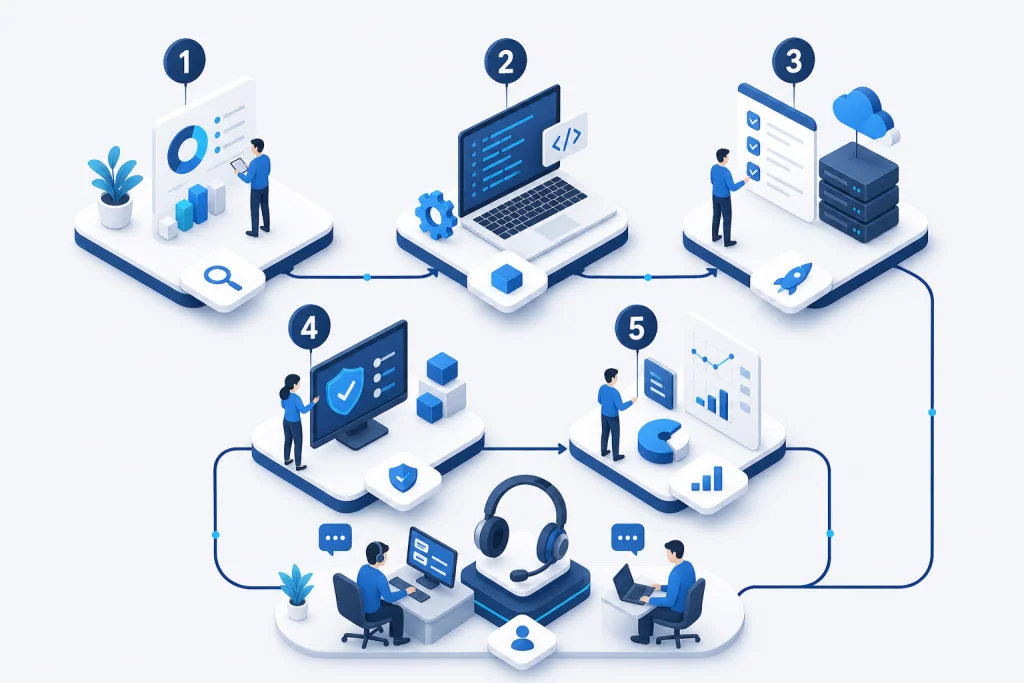
A financial services firm in Jakarta with 500 employees experienced a ransomware attack that encrypted 2 TB of critical data. Challenge: existing tape backups had an RTO of 48 hours, causing business disruption. Solution: we implemented Veeam Backup & Replication with a Synology NAS as an immutable backup target, plus offsite replication to a secondary data center. Result: RTO reduced to 2 hours, RPO to 15 minutes, and 100% data recovery with no ransom paid. The implementation followed our five-phase methodology: Assessment (risk analysis and RTO/RPO definition), Design (architecture blueprint including network and storage), Deployment (installation and configuration of backup software and hardware), Testing (automated recovery drills and validation), and Optimization (monitoring and tuning). For a logistics company in Surabaya with 200 vehicles, Challenge: frequent data loss from IoT sensors due to intermittent connectivity. Solution: local backup appliances at each warehouse with Synology and cloud sync. Result: 99.9% data availability and 30% reduction in data loss.
Our methodology ensures minimal disruption during deployment. We use a phased approach: first, protect non-critical workloads, then migrate critical systems. Each phase includes rigorous testing with documented recovery procedures. We also provide training for IT staff on backup administration and disaster recovery drills. Post-implementation, we offer 24/7 monitoring and support. For enterprises with multiple sites, we deploy a centralized management console with role-based access control. The entire solution is backed by SLAs that guarantee RTO and RPO targets. By partnering with Intilogy, enterprises gain a trusted advisor with deep expertise in BDR for the Indonesian market.