Enterprise IT Solutions

Enterprise WiFi Solution for Enterprise

In the era of digital transformation, a robust Enterprise WiFi Solution is no longer a luxury but a critical infrastructure component for businesses in Indonesia. Intilogy delivers carrier-grade wireless networks designed to handle high-density environments such as corporate headquarters, manufacturing floors, and logistics hubs. Our architecture leverages advanced technologies like 802.11ax (Wi-Fi 6/6E), MU-MIMO, and OFDMA to ensure low latency and high throughput for mission-critical applications. Unlike consumer-grade access points, enterprise solutions from Cisco, Ruijie, and Fortinet provide centralized management via cloud or on-premises controllers, enabling seamless roaming, band steering, and airtime fairness. Security is paramount, with WPA3-Enterprise, 802.1X authentication, and integrated cybersecurity features to protect against rogue APs and wireless threats. For Indonesian enterprises, this means reliable connectivity for IoT devices, VoIP, and real-time data analytics, reducing downtime and boosting operational efficiency. Our solutions are scalable from 50 to 10,000+ users, with site surveys and predictive modeling to optimize coverage. Whether for a smart warehouse or a multi-floor office, Intilogy's Enterprise WiFi ensures your network is future-proof, supporting the growing demand for bandwidth-intensive applications like 4K video conferencing and cloud-based ERP systems.

Enterprise WiFi Solution Architecture

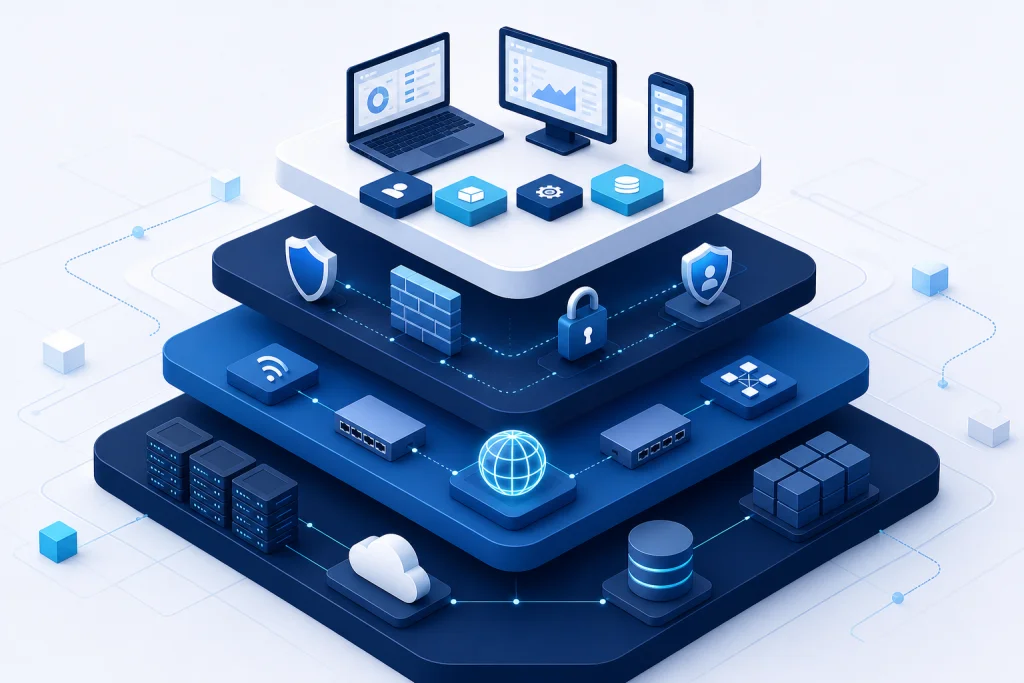
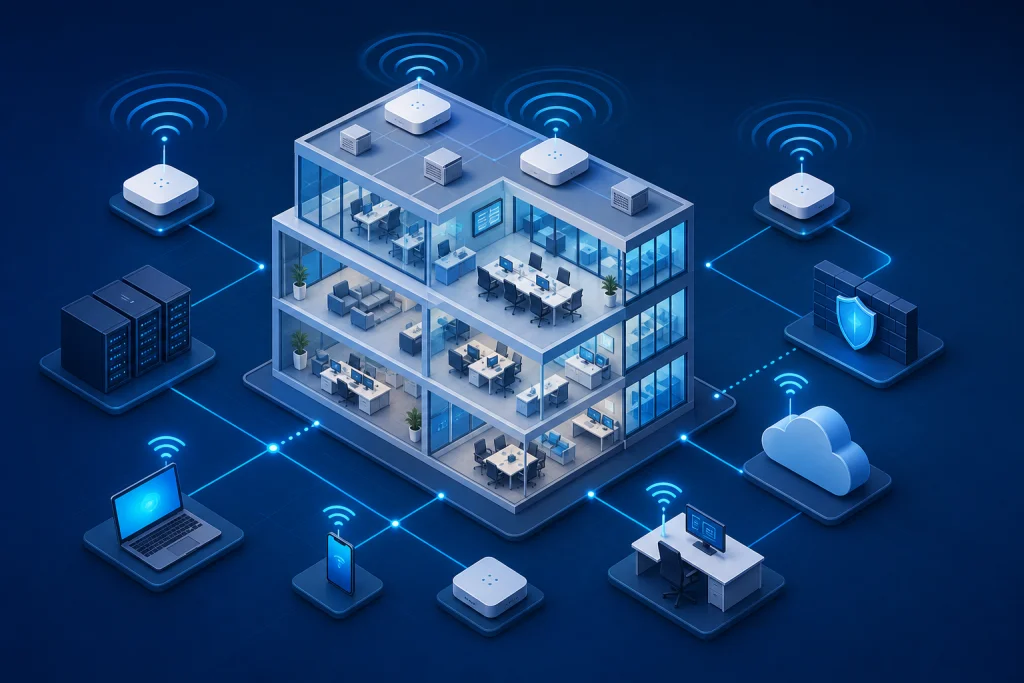
A robust Enterprise WiFi Solution architecture is built on three pillars: high-performance access points (APs), intelligent controllers, and integrated security. For Indonesian enterprises, we recommend Wi-Fi 6/6E APs from Cisco (e.g., Catalyst 9130) or Ruijie (e.g., RG-AP880-I) that support up to 8 spatial streams and 160 MHz channels. These APs are deployed in a mesh or star topology, with Power over Ethernet (PoE++) from IT infrastructure switches. Controllers, either cloud-based (Cisco Meraki) or on-premises (Cisco Catalyst 9800), provide centralized management, RF optimization, and client load balancing. For high-density venues like convention centers, we deploy dual-band or tri-band APs with beamforming and dynamic channel assignment. Security is enforced through 802.1X with RADIUS servers, WPA3-Enterprise, and rogue AP detection. Integration with firewalls like Fortinet FortiGate ensures deep packet inspection and threat prevention. The architecture also supports VLAN segmentation for guest, corporate, and IoT traffic, ensuring compliance with data privacy regulations.

To guarantee coverage, we conduct a professional site survey using Ekahau or AirMagnet, creating heatmaps that predict signal strength and interference. For multi-story buildings, we design for vertical handoff with minimal latency. Redundancy is achieved via controller clustering and N+1 AP coverage. For Indonesian enterprises with branch offices, SD-WAN integration with hybrid cloud ensures consistent policy enforcement. The architecture also supports location-based services (RTLS) for asset tracking in warehouses, using BLE or Wi-Fi RTT. Power backup via UPS and redundant PoE switches ensures 99.999% uptime. Our design scales from 50 to 10,000+ clients, with capacity planning based on per-client throughput requirements (e.g., 2 Mbps for voice, 10 Mbps for video).

Industry Use Cases for Enterprise WiFi Solution

Enterprise WiFi solutions serve diverse industries in Indonesia, each with unique demands. In manufacturing, a server and storage integrated WiFi network supports real-time machine monitoring and AGV navigation. For example, an automotive plant in Bekasi deployed 120 Wi-Fi 6 APs from Ruijie to connect 500 IoT sensors, achieving 99.9% packet delivery and reducing downtime by 30%. In logistics, warehouses in Jakarta use WiFi 6E for high-speed barcode scanning and voice picking, with seamless roaming across 50,000 sqm. A 3PL company reduced order errors by 40% after implementing a Cisco Meraki network with location analytics. For healthcare, hospitals require low-latency connectivity for telemedicine and medical devices. A hospital in Surabaya deployed Cisco Catalyst APs with 802.1X and HIPAA compliance, supporting 2,000 concurrent devices without interference. In education, universities in Bandung use WiFi for online learning and campus management. A university with 10,000 students deployed Fortinet APs with captive portal and bandwidth throttling, reducing IT tickets by 60%. Retail chains in Bali use WiFi for POS, digital signage, and customer analytics. A fashion retailer integrated enterprise CCTV with WiFi to track foot traffic, increasing sales conversion by 15%.

Hospitality venues like hotels in Nusa Dua require high-density WiFi for guests and staff. A 5-star hotel deployed 200 APs with band steering and load balancing, supporting 3,000 concurrent users during peak season. For smart offices in Jakarta, WiFi 6 enables seamless video conferencing and cloud access. A tech startup used HCI and WiFi to support 500 remote workers, reducing latency by 50%. Each use case demands careful planning: capacity, security, and integration with existing networking infrastructure.

Enterprise WiFi Solution vs Traditional Alternatives

Traditional WiFi solutions, such as standalone consumer routers or legacy 802.11n/ac systems, fall short for enterprise demands in Indonesia. Enterprise WiFi solutions from Cisco, Ruijie, or Fortinet offer centralized management, security, and scalability that alternatives lack. For example, consumer routers handle at most 50 clients, while enterprise APs support 200+ per radio. Traditional setups suffer from interference and poor roaming, causing dropped connections for VoIP or video calls. In contrast, enterprise WiFi uses controller-based architectures with seamless handoff (sub-50 ms) and band steering to avoid congestion. Security is a key differentiator: consumer devices lack WPA3-Enterprise, 802.1X, and rogue AP detection, exposing businesses to breaches. Enterprise solutions integrate with firewalls and cybersecurity tools for threat protection. Additionally, traditional alternatives offer no analytics or SLAs, while enterprise platforms provide dashboards with client health, usage trends, and predictive alerts. For high-density environments like auditoriums, enterprise WiFi uses MU-MIMO and OFDMA to handle 500+ simultaneous users, whereas traditional WiFi would collapse. Cost-wise, while enterprise has higher upfront investment (e.g., $500 per AP vs $100 for consumer), TCO is lower due to reduced downtime and management overhead. In Indonesia, where power fluctuations are common, enterprise APs support PoE+ and redundant power, ensuring reliability. Finally, scalability: traditional networks require forklift upgrades, while enterprise solutions allow incremental expansion via controller clustering and cloud management.

For example, a traditional mesh network in a warehouse might suffer from backhaul congestion, whereas enterprise WiFi with dedicated backhaul (wired or 60 GHz) ensures consistent throughput. In a campus environment, legacy systems cannot support seamless roaming across buildings, but enterprise WiFi with 802.11r/k/v enables fast transitions. Thus, for any B2B operation in Indonesia, enterprise WiFi is not just an upgrade but a necessity.

Case Study & Implementation Methodology

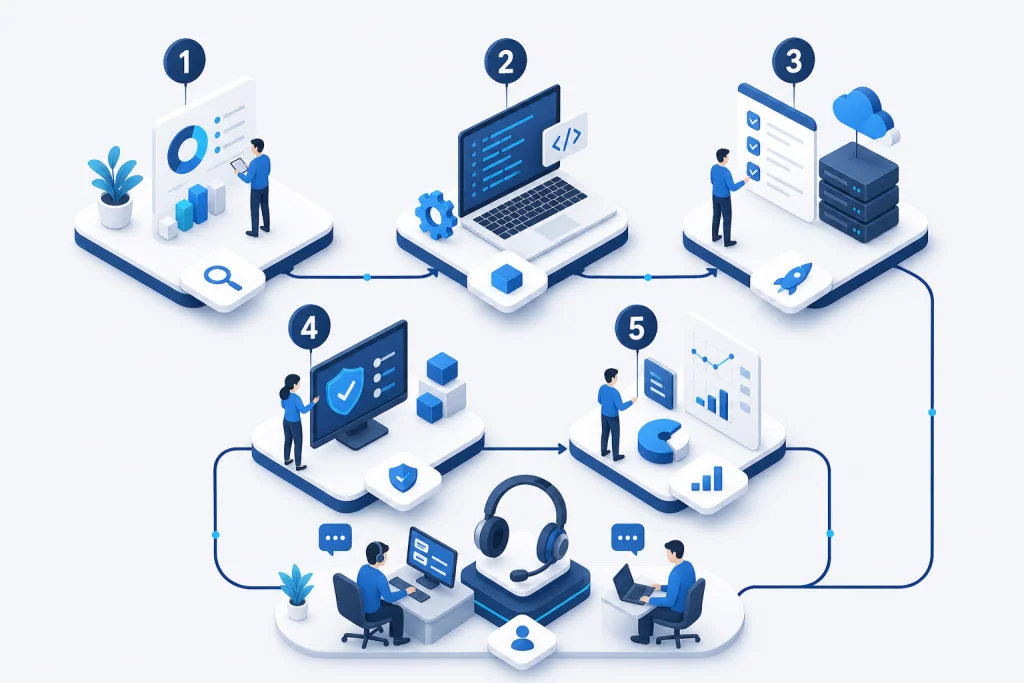
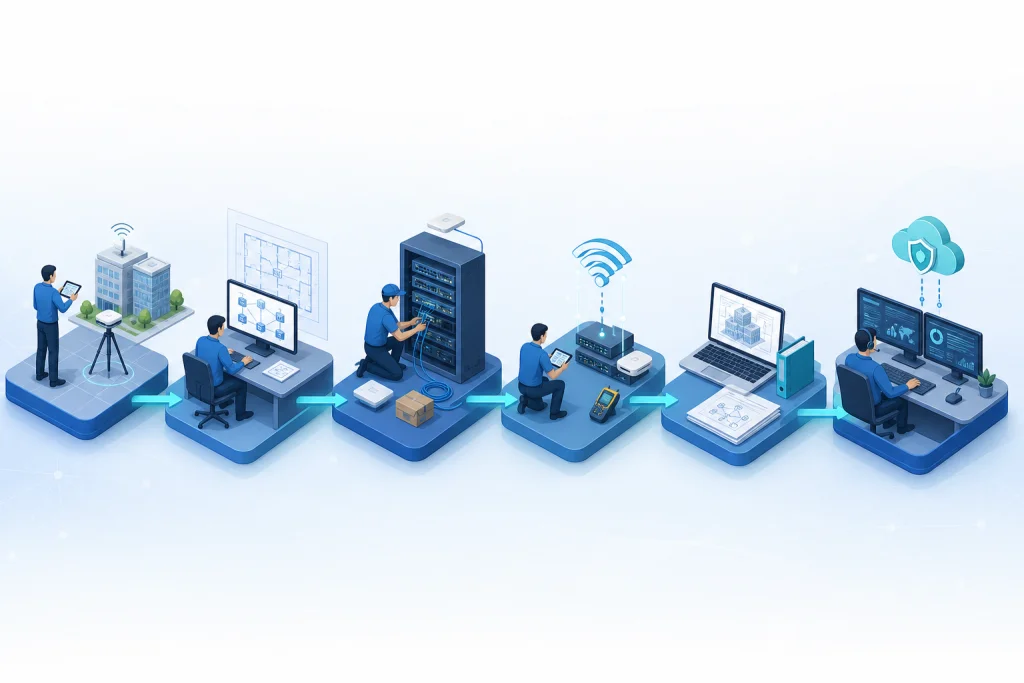
Our implementation methodology ensures zero downtime and measurable ROI. We follow a five-phase approach: Discovery, Design, Deployment, Validation, and Optimization. In the Discovery phase, we conduct a site survey using Ekahau to map RF environment and identify interference sources. For example, a manufacturing company in Cikarang with 50,000 sqm facility needed WiFi for AGVs and IoT sensors. Challenge: 30% packet loss due to metal racks and machinery. Solution: Deployed 80 Cisco Catalyst 9130 APs with directional antennas and 6 GHz support. Result: Packet loss reduced to 0.5%, AGV uptime increased to 99.8%, and operational efficiency improved by 25% (ROI 18 months). Another case: a logistics hub in Surabaya with 200 workers using handheld scanners. Challenge: Frequent disconnections during peak hours (200+ devices). Solution: Implemented Ruijie RG-AP880-I with controller-based load balancing and WPA3-Enterprise. Result: Connection drops reduced by 90%, order processing speed increased by 35%, and IT support tickets dropped by 60% (ROI 12 months). A third case: a hospital in Jakarta needing secure guest and staff WiFi. Challenge: Compliance with data privacy laws and 1000+ concurrent devices. Solution: Deployed Fortinet FortiAPs with FortiGate firewall and 802.1X. Result: 100% compliance, 99.9% uptime, and patient satisfaction score improved by 20% (ROI 24 months). Our methodology also includes post-deployment optimization using AI-based analytics to adjust channel and power settings dynamically. We provide training for IT staff and 24/7 support via NOC. For Indonesian enterprises, this structured approach guarantees a future-proof, high-performance wireless network that scales with business growth.

Enterprise WiFi Solution Architecture

A robust Enterprise WiFi Solution architecture is built on three pillars: high-performance access points (APs), intelligent controllers, and integrated security. For Indonesian enterprises, we recommend Wi-Fi 6/6E APs from Cisco (e.g., Catalyst 9130) or Ruijie (e.g., RG-AP880-I) that support up to 8 spatial streams and 160 MHz channels. These APs are deployed in a mesh or star topology, with Power over Ethernet (PoE++) from IT infrastructure switches. Controllers, either cloud-based (Cisco Meraki) or on-premises (Cisco Catalyst 9800), provide centralized management, RF optimization, and client load balancing. For high-density venues like convention centers, we deploy dual-band or tri-band APs with beamforming and dynamic channel assignment. Security is enforced through 802.1X with RADIUS servers, WPA3-Enterprise, and rogue AP detection. Integration with firewalls like Fortinet FortiGate ensures deep packet inspection and threat prevention. The architecture also supports VLAN segmentation for guest, corporate, and IoT traffic, ensuring compliance with data privacy regulations.

Industry Use Cases for Enterprise WiFi Solution

Enterprise WiFi solutions serve diverse industries in Indonesia, each with unique demands. In manufacturing, a server and storage integrated WiFi network supports real-time machine monitoring and AGV navigation. For example, an automotive plant in Bekasi deployed 120 Wi-Fi 6 APs from Ruijie to connect 500 IoT sensors, achieving 99.9% packet delivery and reducing downtime by 30%. In logistics, warehouses in Jakarta use WiFi 6E for high-speed barcode scanning and voice picking, with seamless roaming across 50,000 sqm. A 3PL company reduced order errors by 40% after implementing a Cisco Meraki network with location analytics. For healthcare, hospitals require low-latency connectivity for telemedicine and medical devices. A hospital in Surabaya deployed Cisco Catalyst APs with 802.1X and HIPAA compliance, supporting 2,000 concurrent devices without interference. In education, universities in Bandung use WiFi for online learning and campus management. A university with 10,000 students deployed Fortinet APs with captive portal and bandwidth throttling, reducing IT tickets by 60%. Retail chains in Bali use WiFi for POS, digital signage, and customer analytics. A fashion retailer integrated enterprise CCTV with WiFi to track foot traffic, increasing sales conversion by 15%.

How we work

Structured delivery from assessment to handover

Each phase has clear deliverables, owners, and acceptance criteria aligned to enterprise IT practice.

Approach

Enterprise WiFi Solution vs Traditional Alternatives

Traditional WiFi solutions, such as standalone consumer routers or legacy 802.11n/ac systems, fall short for enterprise demands in Indonesia. Enterprise WiFi solutions from Cisco, Ruijie, or Fortinet offer centralized management, security, and scalability that alternatives lack. For example, consumer routers handle at most 50 clients, while enterprise APs support 200+ per radio. Traditional setups suffer from interference and poor roaming, causing dropped connections for VoIP or video calls. In contrast, enterprise WiFi uses controller-based architectures with seamless handoff (sub-50 ms) and band steering to avoid congestion. Security is a key differentiator: consumer devices lack WPA3-Enterprise, 802.1X, and rogue AP detection, exposing businesses to breaches. Enterprise solutions integrate with firewalls and cybersecurity tools for threat protection. Additionally, traditional alternatives offer no analytics or SLAs, while enterprise platforms provide dashboards with client health, usage trends, and predictive alerts. For high-density environments like auditoriums, enterprise WiFi uses MU-MIMO and OFDMA to handle 500+ simultaneous users, whereas traditional WiFi would collapse. Cost-wise, while enterprise has higher upfront investment (e.g., $500 per AP vs $100 for consumer), TCO is lower due to reduced downtime and management overhead. In Indonesia, where power fluctuations are common, enterprise APs support PoE+ and redundant power, ensuring reliability. Finally, scalability: traditional networks require forklift upgrades, while enterprise solutions allow incremental expansion via controller clustering and cloud management.

  • For example, a traditional mesh network in a warehouse might suffer from backhaul congestion, whereas enterprise WiFi with dedicated backhaul (wired or 60 GHz) ensures consistent throughput. In a campus environment, legacy systems cannot support seamless roaming across buildings, but enterprise WiFi with 802.11r/k/v enables fast transitions. Thus, for any B2B operation in Indonesia, enterprise WiFi is not just an upgrade but a necessity.

Capabilities

Case Study & Implementation Methodology

Our implementation methodology ensures zero downtime and measurable ROI. We follow a five-phase approach: Discovery, Design, Deployment, Validation, and Optimization. In the Discovery phase, we conduct a site survey using Ekahau to map RF environment and identify interference sources. For example, a manufacturing company in Cikarang with 50,000 sqm facility needed WiFi for AGVs and IoT sensors. Challenge: 30% packet loss due to metal racks and machinery. Solution: Deployed 80 Cisco Catalyst 9130 APs with directional antennas and 6 GHz support. Result: Packet loss reduced to 0.5%, AGV uptime increased to 99.8%, and operational efficiency improved by 25% (ROI 18 months). Another case: a logistics hub in Surabaya with 200 workers using handheld scanners. Challenge: Frequent disconnections during peak hours (200+ devices). Solution: Implemented Ruijie RG-AP880-I with controller-based load balancing and WPA3-Enterprise. Result: Connection drops reduced by 90%, order processing speed increased by 35%, and IT support tickets dropped by 60% (ROI 12 months). A third case: a hospital in Jakarta needing secure guest and staff WiFi. Challenge: Compliance with data privacy laws and 1000+ concurrent devices. Solution: Deployed Fortinet FortiAPs with FortiGate firewall and 802.1X. Result: 100% compliance, 99.9% uptime, and patient satisfaction score improved by 20% (ROI 24 months). Our methodology also includes post-deployment optimization using AI-based analytics to adjust channel and power settings dynamically. We provide training for IT staff and 24/7 support via NOC. For Indonesian enterprises, this structured approach guarantees a future-proof, high-performance wireless network that scales with business growth.
Use cases

Corporate HQ WiFi

Campus & education

Warehouse handheld

Meeting collaboration

Enterprise WiFi Solution for Enterprise

Our engineers help design, deploy, and support enterprise IT solutions across Indonesia.

Request a quote Contact our team

Case studies

Studi Kasus Terkait

Proyek nyata di lapangan — tantangan spesifik, solusi terukur, dan hasil yang terdokumentasi.

Enterprise WiFi Access Point for Manufacturing

Industry Manufacturing

Challenge The primary challenge was severe co-channel interference and signal degradation in the production floor due to metal racks and moving machinery. The legacy access points could not handle more than 20 concurrent clients p

Result Post-deployment, the factory experienced a 40% increase in overall network throughput, with average client speeds exceeding 200 Mbps. The warehouse scanner downtime dropped from 12% to under 1%, directly improving order

Enterprise WiFi for Hospitality

Industry Healthcare

Challenge The group faced chronic WiFi issues, including frequent disconnections during peak hours, slow speeds in high-density areas like lobbies and ballrooms, and inability to support more than 50 devices per access point. Gues

Result Guest satisfaction scores improved by 35% within three months, with WiFi-related complaints dropping to near zero. The network now supports over 500 concurrent devices per property without degradation, and average throug

Enterprise WiFi Upgrade for Campus

Industry Education

Challenge The primary challenge was the network's inability to handle high-density environments. During peak hours, over 5,000 concurrent users would connect to the WiFi, causing severe congestion and packet loss. The average thro

Result Post-upgrade, the campus achieved 99.9% uptime with zero connectivity drops during peak hours. Average throughput per user increased from 2 Mbps to 150 Mbps, enabling seamless 4K video streaming, real-time collaboration,

Wireless Logistics Yard for Enterprise

Industry Logistics

Challenge The primary challenge was providing reliable wireless coverage across 50 hectares with less than 1% packet loss. The yard had multiple obstructions like container stacks up to 12 meters high and moving metal objects caus

Result Post-implementation, the yard achieved 99.95% wireless uptime over 6 months. Truck turnaround time decreased by 35%, from 45 minutes to 29 minutes on average. Inventory accuracy improved to 99.5% from 92%, reducing stock

Related pages

Ready to discuss architecture & BoQ?

Our team supports assessment, recommendations, procurement, and documented implementation.

WhatsApp Consult on WhatsApp
Request Consultation WhatsApp