Private Cloud Architecture
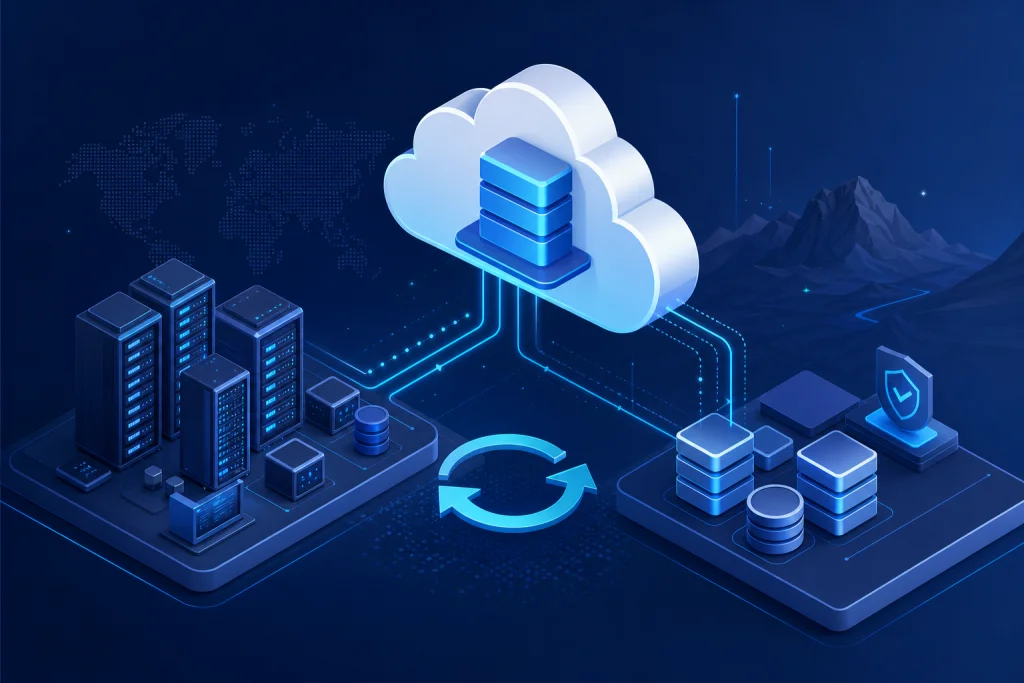
A robust private cloud architecture consists of multiple layers: physical infrastructure, virtualization, orchestration, and management. The physical layer includes servers (e.g., Lenovo ThinkSystem or HP ProLiant), storage arrays (e.g., Dell PowerStore), and network switches (e.g., Cisco Nexus). Virtualization platforms like VMware vSphere or Microsoft Hyper-V abstract hardware resources, while software-defined networking (SDN) and storage (SDS) enable policy-driven automation. Orchestration tools such as VMware vRealize Automation or OpenStack Heat provide self-service portals and workflow automation. Management layers include monitoring (e.g., VMware vRealize Operations) and backup (e.g., Veeam). To ensure high availability, clusters are configured with redundant paths, and disaster recovery is implemented via replication to a secondary site, often leveraging Backup & Disaster Recovery solutions.
Security is embedded through micro-segmentation with VMware NSX or Cisco ACI, and identity management via Microsoft Active Directory. For compliance, audit logs are centralized using SIEM tools like Fortinet FortiSIEM. The architecture also supports hybrid cloud extensions to AWS or Azure, enabling burst capacity. Intilogy recommends a minimum of three compute nodes for production, with storage configured in RAID 6 or erasure coding for data protection. Network bandwidth should be at least 10GbE, with 25GbE for latency-sensitive workloads. This architecture ensures scalability, with the ability to add nodes without downtime.
Industry Use Cases for Private Cloud
Private cloud is ideal for industries with strict regulatory requirements and high-performance needs. In finance, banks in Jakarta use private cloud for core banking systems, ensuring low latency and data sovereignty. For example, a leading bank reduced transaction processing time by 30% by migrating from legacy infrastructure to a VMware-based private cloud with IT Infrastructure from Dell and networking from Cisco. In healthcare, hospitals deploy private cloud for electronic medical records (EMR) and telemedicine, achieving HIPAA-like compliance. A hospital in Surabaya implemented a private cloud with Synology storage and Veeam backup, resulting in 99.99% uptime for critical systems.
Manufacturing companies use private cloud for IoT data processing and ERP systems. A automotive manufacturer in Bekasi reduced data processing latency by 50% using a private cloud with HCI from Nutanix. E-commerce platforms leverage private cloud for secure payment processing and inventory management. A retail company in Bandung deployed a private cloud with Microsoft Hyper-V and Fortinet security, cutting operational costs by 25%. Media and entertainment firms use private cloud for video rendering and content delivery, benefiting from predictable performance. These use cases demonstrate private cloud's versatility in handling diverse workloads while maintaining control.
Private Cloud vs Traditional Alternatives
Compared to public cloud, private cloud offers greater control, predictable costs, and compliance for sensitive data. While public cloud provides elasticity, private cloud eliminates data egress fees and provides consistent performance for steady-state workloads. A TCO analysis shows that for workloads running 24/7, private cloud can be 30-50% cheaper over three years. Compared to traditional on-premises infrastructure, private cloud reduces provisioning time from weeks to minutes through self-service portals. For example, a company with 500 VMs can reduce management overhead by 40% using automation tools like VMware vRealize.
Traditional three-tier architectures require separate teams for server, storage, and network management, whereas private cloud converges these into a unified platform. However, private cloud requires upfront investment in hardware and software. For organizations with variable workloads, a Hybrid Cloud approach is recommended, combining private cloud for core workloads and public cloud for burst capacity. Security-wise, private cloud offers better isolation than multi-tenant public cloud, but requires robust internal security measures, including Firewall and intrusion prevention. Ultimately, private cloud is optimal for enterprises with mature IT teams and compliance needs.
Case Study & Implementation Methodology
Financial Services Company in Jakarta: Challenge – Legacy infrastructure caused 15% downtime monthly, with 4-hour recovery time; needed to comply with OJK regulations. Solution – Deployed a private cloud using VMware vSphere on HP ProLiant servers, with Dell PowerVault storage and Cisco networking. Implemented Veeam for backup and Fortinet for security. Result – Achieved 99.999% uptime, reduced recovery time to 15 minutes, and lowered TCO by 35% over three years.
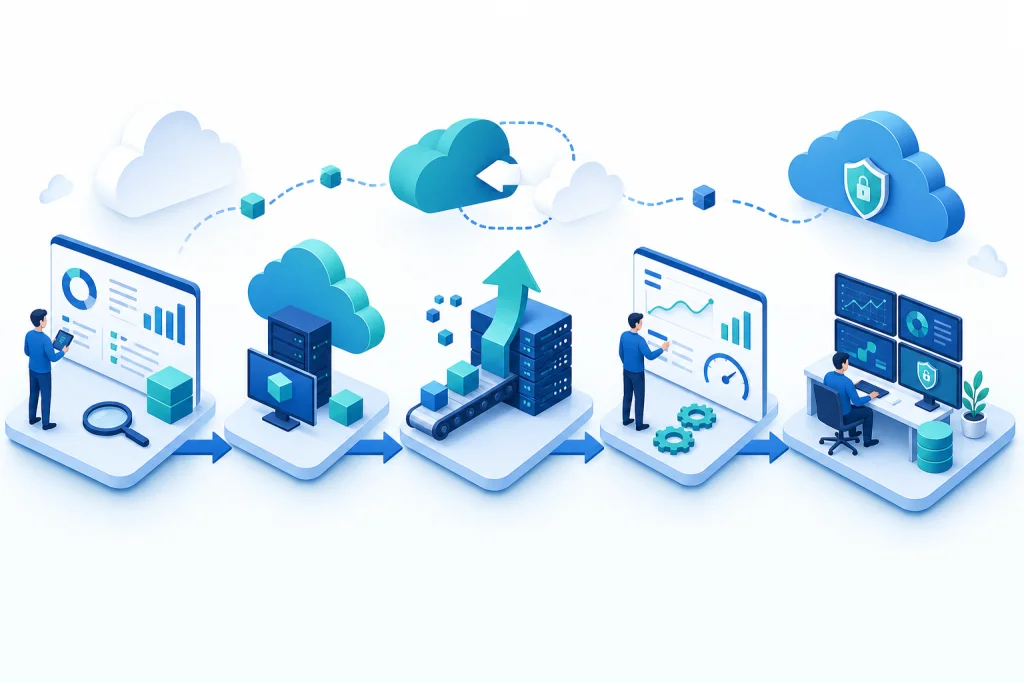
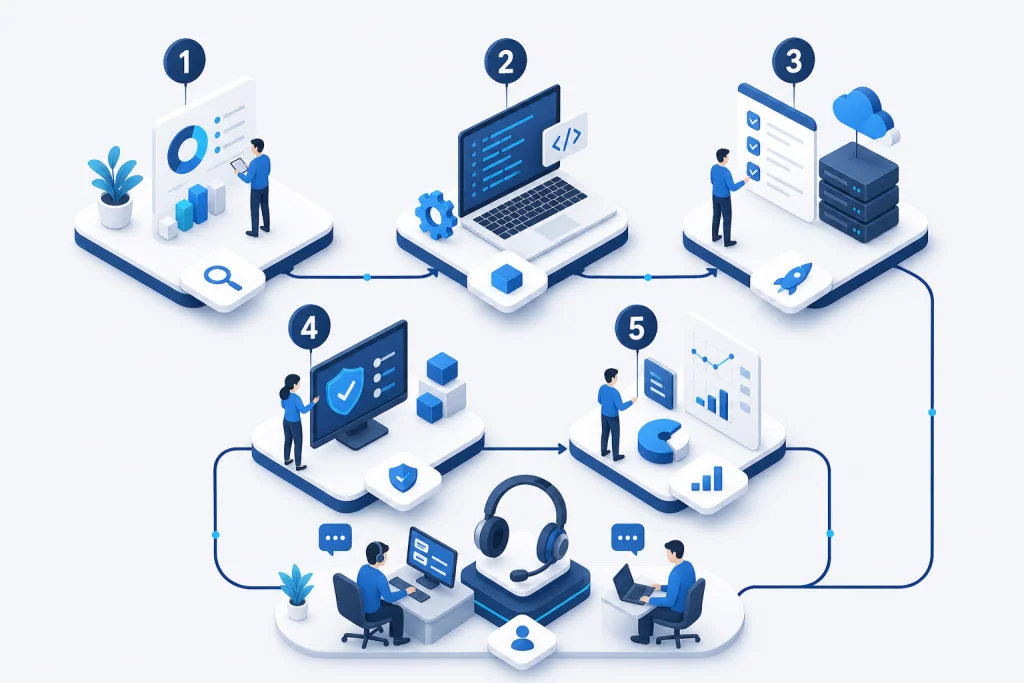
Healthcare Provider in Surabaya: Challenge – EMR system latency exceeded 5 seconds; data sovereignty required on-premises storage. Solution – Built a private cloud with Synology RS3617RPxs for storage, Microsoft Hyper-V for virtualization, and Enterprise WiFi for mobile access. Result – Latency reduced to under 1 second, storage costs cut by 40%, and compliance achieved. Implementation methodology follows a phased approach: assessment, design, proof-of-concept, deployment, and optimization. Intilogy uses ITIL-based project management with milestones and KPIs. Post-deployment, ongoing support includes 24/7 monitoring and quarterly reviews.