Enterprise IT Solutions

SD WAN Solution for Enterprise

Software-Defined Wide Area Networking (SD WAN) is revolutionizing enterprise connectivity in Indonesia by decoupling the network control plane from the hardware forwarding plane. This technology enables dynamic, policy-based traffic steering across multiple WAN links—MPLS, broadband LTE, or satellite—ensuring optimal application performance and resilience. For enterprises operating across the archipelago, SD WAN addresses challenges like high latency, jitter, and packet loss that plague traditional WANs. By leveraging centralized orchestration, IT teams can instantly provision new branches, enforce security policies, and prioritize critical applications such as VoIP, ERP, or video conferencing. Key vendors like Cisco, Fortinet, and VMware offer integrated SD WAN solutions with built-in security, WAN optimization, and cloud connectivity. In Indonesia, where cloud adoption (SaaS, IaaS) is accelerating, SD WAN provides direct-to-cloud access, bypassing backhaul to data centers. This reduces latency for applications like Microsoft 365 or AWS. Furthermore, SD WAN integrates with cybersecurity frameworks, enabling micro-segmentation and encrypted overlays. For enterprises in Jakarta, Surabaya, or Bandung, SD WAN reduces operational costs by up to 40% compared to MPLS, while improving bandwidth utilization. Intilogy’s SD WAN solutions are tailored for multi-site retailers, financial institutions, and logistics firms requiring high availability and SLA-backed performance. With zero-touch provisioning and AI-driven analytics, SD WAN is the backbone of digital transformation in Indonesia.

SD WAN Solution Architecture

SD WAN architecture comprises three planes: data, control, and management. The data plane uses overlay tunnels (IPsec, GRE) over any transport—MPLS, broadband, 4G/5G—with intelligent path selection based on real-time metrics like loss, latency, and jitter. The control plane centralizes routing policies, while the management plane provides a single pane of glass for configuration and monitoring. In Indonesia, where internet quality varies, SD WAN appliances from Cisco or Fortinet can bond multiple links for seamless failover and load balancing. Advanced features include Forward Error Correction (FEC) to mitigate packet loss and traffic shaping for QoS. Integration with networking infrastructure ensures compatibility with existing switches and routers. For hybrid cloud environments, SD WAN supports direct cloud on-ramp to AWS, Azure, or Google Cloud, reducing latency by 30-50%. The architecture also incorporates security functions like next-gen firewall (NGFW), URL filtering, and intrusion prevention, often via cybersecurity platforms. In Indonesia, enterprises deploy SD WAN with redundant hubs in Jakarta and Singapore for disaster recovery. Virtual SD WAN instances can run on hyperconverged infrastructure for branch offices with limited hardware. The result is a scalable, resilient WAN that adapts to changing business needs.

Industry Use Cases for SD WAN Solution

In Indonesia, SD WAN is transforming industries like retail, banking, and logistics. For retail chains with hundreds of stores across Java and Sumatra, SD WAN ensures reliable connectivity for POS systems, inventory management, and digital signage. A major retailer in Jakarta deployed Cisco SD WAN to replace MPLS, reducing WAN costs by 45% while improving transaction speed by 20%. In banking, SD WAN enables secure branch connectivity for ATM networks and real-time transactions, with built-in encryption and compliance. A bank in Surabaya used Fortinet SD WAN to connect 50 branches, achieving 99.99% uptime and cutting latency to data centers by 35%. For logistics and warehousing, SD WAN supports IoT devices for asset tracking and video surveillance. A logistics company in Bandung integrated SD WAN with enterprise CCTV for real-time monitoring, reducing theft by 15%. Additionally, SD WAN facilitates cloud migration for SaaS applications like Microsoft 365 and Salesforce, with direct internet access bypassing backhaul. In the hospitality sector, hotels use SD WAN to provide reliable guest Wi-Fi and integrate property management systems. Overall, SD WAN drives operational efficiency and customer satisfaction across Indonesian enterprises.

SD WAN Solution vs Traditional Alternatives

Traditional WAN technologies like MPLS and IPsec VPNs are static, expensive, and ill-suited for cloud-centric traffic. MPLS requires long provisioning times (weeks to months) and high per-Mbps costs, especially for inter-island links in Indonesia. In contrast, SD WAN offers zero-touch provisioning, lower cost (up to 50% savings), and agility. While MPLS provides deterministic performance, SD WAN achieves comparable reliability through intelligent path selection and link bonding. For example, VMware SD WAN can dynamically route traffic over broadband if MPLS degrades, maintaining application performance. IPsec VPNs, though cheaper, lack centralized management and traffic optimization. SD WAN integrates with backup and disaster recovery solutions to ensure business continuity. Additionally, SD WAN's built-in security (NGFW, segmentation) reduces the need for separate firewall appliances at each branch. For enterprises in Indonesia, the choice is clear: SD WAN provides flexibility, scalability, and lower TCO compared to traditional alternatives. Hybrid WAN strategies combining SD WAN with MPLS for critical traffic are also common, offering the best of both worlds. As cloud adoption grows, SD WAN's direct-to-cloud architecture outperforms traditional hub-and-spoke models.

Case Study & Implementation Methodology

Our implementation methodology follows a phased approach: assessment, design, pilot, rollout, and optimization. For a retail enterprise in Jakarta with 200 branches, Challenge: 30% of branches experienced frequent outages due to unreliable MPLS, with 500ms latency to cloud apps. Solution: Deployed Cisco SD WAN with broadband backup and FEC. Result: 99.9% uptime, 40% reduction in WAN costs, and 60% improvement in application response time. Another case: A manufacturing company in Batam with 10 factories, Challenge: High latency (300ms) for ERP system access from remote sites. Solution: Implemented Fortinet SD WAN with direct cloud on-ramp to AWS. Result: Latency reduced to 50ms, bandwidth utilization increased by 70%, and IT management time cut by 80%. For a financial services firm in Surabaya with 30 branches, Challenge: Compliance required encrypted traffic and segmentation. Solution: VMware SD WAN with integrated security. Result: Achieved PCI-DSS compliance, reduced firewall costs by 35%, and improved branch deployment time from weeks to hours. Our methodology includes proof-of-concept with key vendors, ensuring alignment with existing infrastructure. Post-deployment, we provide 24/7 monitoring and analytics for continuous optimization.

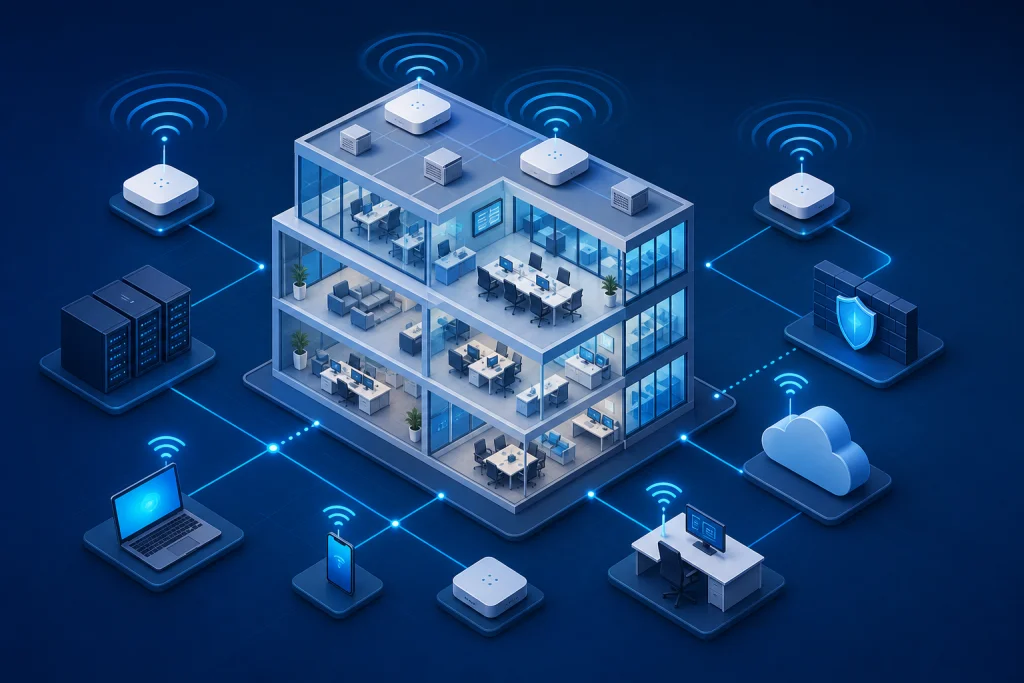
SD WAN Solution Architecture

SD WAN architecture comprises three planes: data, control, and management. The data plane uses overlay tunnels (IPsec, GRE) over any transport—MPLS, broadband, 4G/5G—with intelligent path selection based on real-time metrics like loss, latency, and jitter. The control plane centralizes routing policies, while the management plane provides a single pane of glass for configuration and monitoring. In Indonesia, where internet quality varies, SD WAN appliances from Cisco or Fortinet can bond multiple links for seamless failover and load balancing. Advanced features include Forward Error Correction (FEC) to mitigate packet loss and traffic shaping for QoS. Integration with networking infrastructure ensures compatibility with existing switches and routers. For hybrid cloud environments, SD WAN supports direct cloud on-ramp to AWS, Azure, or Google Cloud, reducing latency by 30-50%. The architecture also incorporates security functions like next-gen firewall (NGFW), URL filtering, and intrusion prevention, often via cybersecurity platforms. In Indonesia, enterprises deploy SD WAN with redundant hubs in Jakarta and Singapore for disaster recovery. Virtual SD WAN instances can run on hyperconverged infrastructure for branch offices with limited hardware. The result is a scalable, resilient WAN that adapts to changing business needs.

Industry Use Cases for SD WAN Solution

In Indonesia, SD WAN is transforming industries like retail, banking, and logistics. For retail chains with hundreds of stores across Java and Sumatra, SD WAN ensures reliable connectivity for POS systems, inventory management, and digital signage. A major retailer in Jakarta deployed Cisco SD WAN to replace MPLS, reducing WAN costs by 45% while improving transaction speed by 20%. In banking, SD WAN enables secure branch connectivity for ATM networks and real-time transactions, with built-in encryption and compliance. A bank in Surabaya used Fortinet SD WAN to connect 50 branches, achieving 99.99% uptime and cutting latency to data centers by 35%. For logistics and warehousing, SD WAN supports IoT devices for asset tracking and video surveillance. A logistics company in Bandung integrated SD WAN with enterprise CCTV for real-time monitoring, reducing theft by 15%. Additionally, SD WAN facilitates cloud migration for SaaS applications like Microsoft 365 and Salesforce, with direct internet access bypassing backhaul. In the hospitality sector, hotels use SD WAN to provide reliable guest Wi-Fi and integrate property management systems. Overall, SD WAN drives operational efficiency and customer satisfaction across Indonesian enterprises.

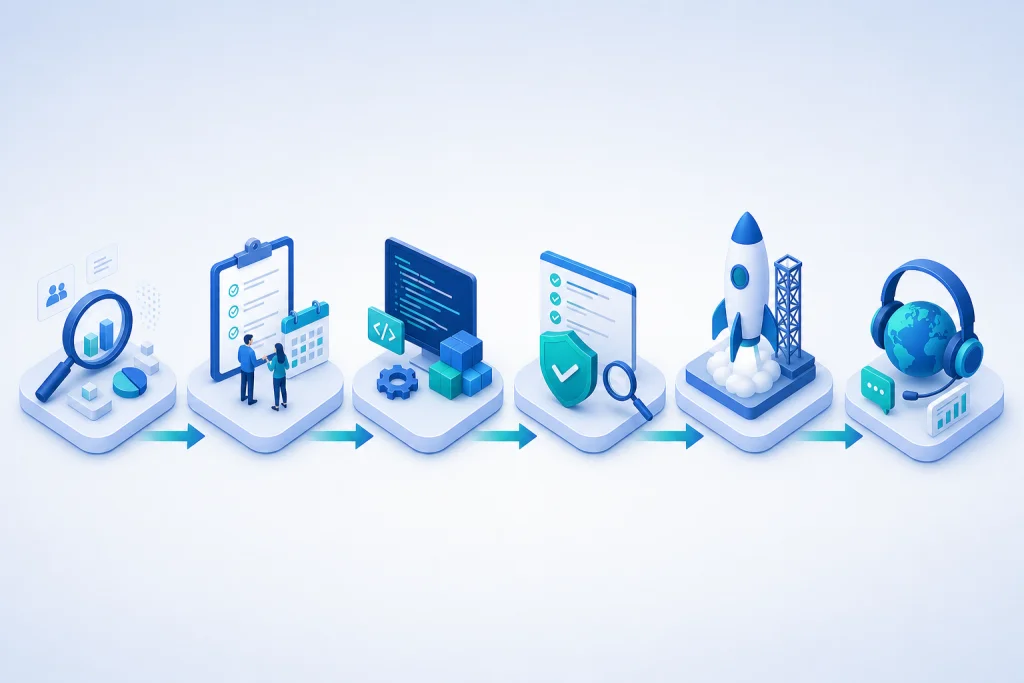
How we work

Structured delivery from assessment to handover

Each phase has clear deliverables, owners, and acceptance criteria aligned to enterprise IT practice.

Approach

SD WAN Solution vs Traditional Alternatives

Traditional WAN technologies like MPLS and IPsec VPNs are static, expensive, and ill-suited for cloud-centric traffic. MPLS requires long provisioning times (weeks to months) and high per-Mbps costs, especially for inter-island links in Indonesia. In contrast, SD WAN offers zero-touch provisioning, lower cost (up to 50% savings), and agility. While MPLS provides deterministic performance, SD WAN achieves comparable reliability through intelligent path selection and link bonding. For example, VMware SD WAN can dynamically route traffic over broadband if MPLS degrades, maintaining application performance. IPsec VPNs, though cheaper, lack centralized management and traffic optimization. SD WAN integrates with backup and disaster recovery solutions to ensure business continuity. Additionally, SD WAN's built-in security (NGFW, segmentation) reduces the need for separate firewall appliances at each branch. For enterprises in Indonesia, the choice is clear: SD WAN provides flexibility, scalability, and lower TCO compared to traditional alternatives. Hybrid WAN strategies combining SD WAN with MPLS for critical traffic are also common, offering the best of both worlds. As cloud adoption grows, SD WAN's direct-to-cloud architecture outperforms traditional hub-and-spoke models.

Capabilities

Case Study & Implementation Methodology

Our implementation methodology follows a phased approach: assessment, design, pilot, rollout, and optimization. For a retail enterprise in Jakarta with 200 branches, Challenge: 30% of branches experienced frequent outages due to unreliable MPLS, with 500ms latency to cloud apps. Solution: Deployed Cisco SD WAN with broadband backup and FEC. Result: 99.9% uptime, 40% reduction in WAN costs, and 60% improvement in application response time. Another case: A manufacturing company in Batam with 10 factories, Challenge: High latency (300ms) for ERP system access from remote sites. Solution: Implemented Fortinet SD WAN with direct cloud on-ramp to AWS. Result: Latency reduced to 50ms, bandwidth utilization increased by 70%, and IT management time cut by 80%. For a financial services firm in Surabaya with 30 branches, Challenge: Compliance required encrypted traffic and segmentation. Solution: VMware SD WAN with integrated security. Result: Achieved PCI-DSS compliance, reduced firewall costs by 35%, and improved branch deployment time from weeks to hours. Our methodology includes proof-of-concept with key vendors, ensuring alignment with existing infrastructure. Post-deployment, we provide 24/7 monitoring and analytics for continuous optimization.
Use cases

MPLS augmentation

Branch internet breakout

Retail chain WAN

Hybrid WAN

SD WAN Solution for Enterprise

Our engineers help design, deploy, and support enterprise IT solutions across Indonesia.

Request a quote Contact our team

Related pages

E-E-A-T · Expertise & trust

Implementation expertise & enterprise trust

Intilogy (PT. Inti Jaya Teknologi) supports IT and procurement teams across Indonesia — from technical assessment and BoQ through deployment, documentation, and post go-live support.

  • 500+ Infrastructure deployments
  • 24/7 Operational support
  • SLA Enterprise SLA
  • 150+ Clients & institutions

Engineering & delivery expertise

Engineer-led assessment

Requirements workshops, sizing, and architecture — not catalogue selling without context.

Documented deployment

Commissioning checklists, as-built diagrams, IP plans, and escalation runbooks.

Audit-ready procurement

BoQ/BOM, quotations, POs, and handover packs for tenders and IT audits.

Multi-vendor coordination

One project partner for servers, networks, security, backup, and licensing.

Vendor ecosystem & sourcing channels

We source through official distributors/resellers per brand and project. Specific partnership tiers are confirmed per RFP — see our credentials page.

Vendor Status / tier Scope Notes
Dell Technologies Authorized channel PowerEdge, storage BoQ & manufacturer warranty
HPE Authorized channel ProLiant Enterprise servers
Fortinet Implementation partner NGFW, SD-WAN Licensing & deployment
Veeam Implementation partner Backup, replication Immutable design
VMware Implementation partner vSphere Cluster & migration

Tiers vary by SKU/region. Contact sales@intilogy.com for distributor letters or engineer certificates.

Enterprise implementation methodology

Standard flow for infrastructure, security, and backup projects — scoped per contract.

  1. Discovery & assessment

    Duration: 1–2 weeks

    Deliverables Requirements & risk report

  2. Architecture & BoQ

    Duration: 1–2 weeks

    Deliverables HLD, BoQ, rollout plan

  3. Procurement & staging

    Duration: 2–4 weeks

    Deliverables Asset register

  4. Implementation & UAT

    Duration: 2–6 weeks

    Deliverables As-built, UAT sign-off

  5. Handover & operations

    Duration: Ongoing

    Deliverables SOPs, training, SLA if contracted

Support & SLA (per project contract)

Service levels are defined in agreement — example framework below.

Standard maintenance

Response
Next business day (remote)
Coverage
Firmware advisory, tickets, RMA
Notes
Indonesia business hours

Project warranty

Response
Per implementation contract
Coverage
Defects in Intilogy deployment scope
Notes
Not 24/7 unless agreed

Critical incident (optional)

Response
4–8 hours if contracted
Coverage
Production-critical escalation
Notes
Requires separate MSA

Response times are illustrative — binding only when written in contract.

Technical documentation delivered

  • Topology & rack diagrams (as-built)
  • Asset list, serials, warranty status
  • Critical config summary & change log
  • Basic operations runbook & escalation contacts
  • Restore / DR drill reports (if in scope)
  • Tender packs: distributor letters & engineer certs (on request)

Competency & certifications

Engineers train on vendor technologies per project. Individual certs (Fortinet NSE, VMware VCP, Veeam VMCE, etc.) are provided for tenders — not all listed publicly.

  • Engineer certifications — Per project technology — on request
  • Distributor letters — For procurement audit
  • Client references — See Clients page for logos & scope

View certifications & partnerships

Ready to discuss architecture & BoQ?

Our team supports assessment, recommendations, procurement, and documented implementation.

WhatsApp Consult on WhatsApp
Request Consultation WhatsApp