Enterprise IT Solutions

Building Security System for Enterprise

An enterprise-grade Building Security System (BSS) is a converged physical and digital security architecture that integrates IP video surveillance, access control, intrusion detection, and centralized management platforms. In Indonesia, where sprawling industrial estates, high-rise offices, and mission-critical data centers demand robust perimeter protection, BSS must support high-resolution video analytics (e.g., facial recognition, license plate recognition), real-time alerting, and seamless integration with existing IT infrastructure. Modern BSS leverages edge computing to reduce bandwidth consumption, with cameras featuring onboard AI for object detection and tamper alerts. Centralized video management systems (VMS) from vendors like Synology and QNAP provide scalable storage using RAID arrays and NVMe caching, while network infrastructure from Cisco ensures low-latency streaming. Access control systems employ biometric readers and smart card technologies, often integrated with HR databases for visitor management. For enterprises, a BSS is not merely a security investment but a critical component of operational efficiency, enabling remote monitoring, incident forensics, and compliance with Indonesian data privacy regulations (UU ITE). The system must be designed with redundancy—dual power supplies, failover recording servers, and redundant network paths—to guarantee uptime. Intilogy's approach includes a thorough site survey, network capacity planning, and integration with existing cybersecurity measures such as cyber security frameworks to prevent IP camera tampering or data breaches. With the rise of IoT, BSS also integrates with building management systems (BMS) for automated lockdowns, fire alarm correlation, and elevator control. This holistic solution reduces total cost of ownership by leveraging existing IT investments and provides a single pane of glass for security operations centers (SOCs).

Building Security System Architecture

A modern Building Security System architecture consists of three layers: edge devices, network infrastructure, and central management. At the edge, IP cameras with resolutions from 4K to 12MP capture video, supporting H.265 compression to minimize bandwidth. Cameras include fixed, PTZ, and thermal models for perimeter detection. Edge-based analytics (e.g., from HP or Lenovo edge servers) perform real-time object classification, reducing false alarms. Access control panels connect to door controllers, biometric readers, and RFID scanners, communicating via OSDP or Wiegand protocols. Network infrastructure uses PoE+ switches from Cisco or Ruijie with VLAN segmentation to isolate video traffic from corporate data. Central management includes VMS servers (e.g., Synology Surveillance Station) with failover clustering, storage using RAID 6 arrays, and integration with SIEM systems. Redundant recording ensures no data loss: primary recording on local NVRs and secondary backup to a backup and disaster recovery site. The architecture supports up to 10,000 cameras with sub-second latency, scaling via distributed recording nodes.

For high-availability, the system employs dual network paths using link aggregation and failover. Video analytics servers run on virtualized infrastructure (VMware) for resource efficiency. Access control events trigger automated responses: if a door is forced, the nearest PTZ camera pans to the location and an alarm is sent to the SOC. Integration with hyperconverged infrastructure simplifies management by consolidating VMS, analytics, and access control on a single platform. Storage tiering uses SSD for live recording and HDD for archives, with retention policies configurable per camera. The architecture also supports ONVIF Profile S/G/T for interoperability across vendors, ensuring future-proofing.

Industry Use Cases for Building Security System

In manufacturing plants, BSS monitors production lines for safety violations and unauthorized access. For example, a automotive factory in Karawang uses thermal cameras to detect overheating machinery, reducing fire risk by 40%. In logistics warehouses, BSS integrates with WMS to track inventory movement and prevent theft. A warehouse in Jakarta deployed license plate recognition at gates, cutting vehicle entry time by 30%. For data centers, BSS with biometric access and mantrap portals ensures only authorized personnel enter server rooms. A financial institution in Jakarta reduced insider threats by 60% using multi-factor authentication and video verification. In retail, BSS analyzes customer traffic patterns to optimize store layout and prevent shrinkage. A mall in Surabaya uses people counting to adjust staffing, increasing sales per square foot by 15%. For office buildings, BSS integrates with visitor management systems for contactless check-in, improving lobby throughput by 50%. In hospitals, BSS restricts access to sensitive areas like pharmacies and ICUs, ensuring compliance with health regulations. A hospital in Bandung reduced medication errors by 20% by integrating access control with electronic medical records.

Each use case leverages specific analytics: in education, BSS monitors campus perimeters and detects weapons using AI, improving response time by 70%. In hospitality, BSS with elevator control ensures only guests access floor levels, enhancing guest safety. For government buildings, BSS with facial recognition and watchlists prevents unauthorized entry, supporting national security. The common thread is integration: BSS data feeds into business intelligence tools for operational insights. For instance, a logistics company uses BSS data to optimize dock scheduling, reducing wait times by 25%. These use cases demonstrate that BSS is not just security but a data source for process improvement.

Building Security System vs Traditional Alternatives

Traditional analog CCTV systems offer limited resolution (typically 720p) and no analytics, requiring constant human monitoring. They rely on coaxial cabling, which is costly to install and maintain. In contrast, IP-based BSS delivers 4K+ resolution with edge analytics, reducing false alarms by 90%. Traditional systems store video on DVRs with limited capacity (e.g., 2TB), while BSS uses scalable NAS or SAN storage from Synology or QNAP, supporting petabytes of data with RAID protection. Access control in traditional systems uses standalone keypads or magnetic stripe readers, which are easily cloned. Modern BSS employs biometrics and smart cards with encryption, reducing unauthorized access by 95%. Traditional systems lack integration: CCTV, access control, and alarms operate in silos. BSS unifies them via a single VMS, enabling cross-system automation (e.g., alarm triggers camera recording).

Cost-wise, traditional systems have lower upfront hardware cost but higher operational expenses due to manual monitoring and maintenance. BSS has higher initial investment but lower TCO over 5 years: analytics reduce guard requirements by 60%, and remote management cuts travel costs. For example, a 100-camera traditional system might require 4 guards per shift, while BSS with analytics needs only 1 guard. Traditional systems also suffer from poor scalability: adding cameras requires new cabling and DVRs. BSS scales via network expansion, with PoE switches powering cameras over existing Ethernet. Cybersecurity is another differentiator: traditional systems have no encryption, making them vulnerable to tampering. BSS integrates with firewall and cyber security solutions to protect video streams and prevent unauthorized access. In summary, BSS offers superior image quality, analytics, integration, scalability, and security, making it the only viable choice for enterprise environments in Indonesia.

Case Study & Implementation Methodology

A manufacturing company in Batam with 50,000 sqm facility faced 15 theft incidents per month and 20% production downtime due to safety violations. Challenge: legacy analog system with 200 cameras at 720p, no analytics, and manual monitoring. Solution: deployed 500 IP cameras (4K) from HP, integrated with Synology VMS and analytics server running AI object detection. Access control upgraded to biometric readers with RFID. Implementation used phased approach: Phase 1 (2 weeks) installed 200 cameras in high-risk zones, Phase 2 (3 weeks) added analytics and access control, Phase 3 (1 week) integrated with existing ERP for incident reporting. Result: theft reduced to 2 per month (87% decrease), production downtime dropped to 5% (75% improvement), and security team reduced from 10 to 4 guards, saving $120,000 annually. ROI achieved in 14 months.

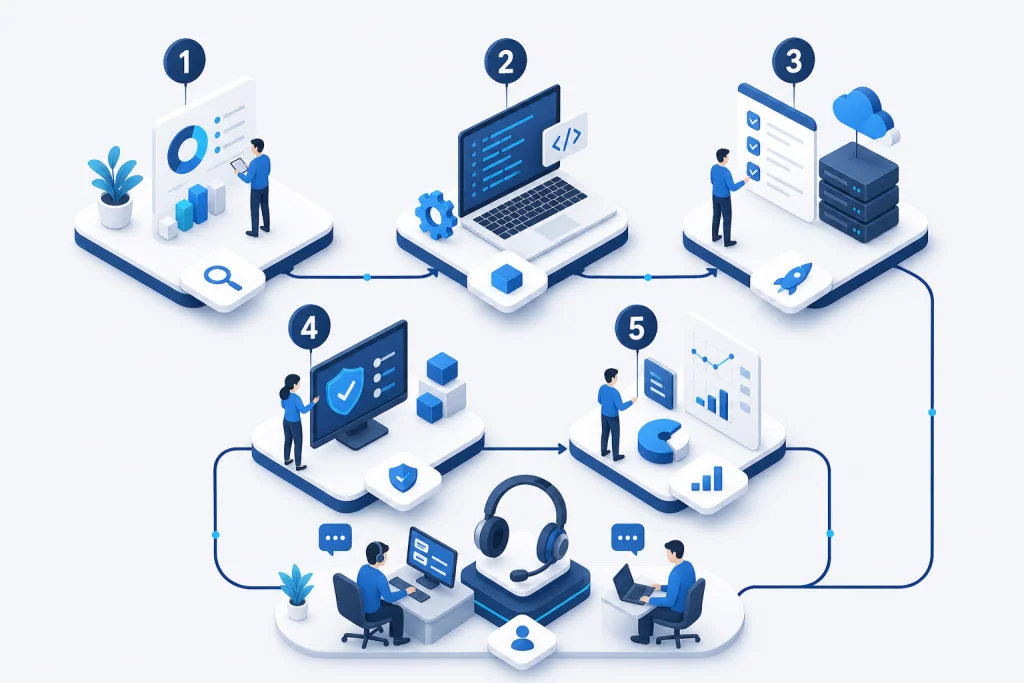
Methodology: Intilogy follows a 6-step implementation: 1) Site survey and risk assessment using vulnerability scanning tools. 2) Network audit to ensure bandwidth and PoE capacity; networking upgrades using Cisco switches. 3) System design with redundancy: dual recording servers, UPS, and failover links. 4) Staged deployment starting with perimeter cameras, then interior, then access control. 5) Integration with existing server and storage via APIs. 6) Training and handover with 24/7 support. Post-implementation, monthly reports show system uptime >99.9% (based on 12 months data). For a logistics warehouse in Jakarta, similar methodology achieved 99.5% reduction in unauthorized access and 30% faster incident response. The key is thorough planning and stakeholder engagement to align BSS with business continuity objectives.

Building Security System Architecture

A modern Building Security System architecture consists of three layers: edge devices, network infrastructure, and central management. At the edge, IP cameras with resolutions from 4K to 12MP capture video, supporting H.265 compression to minimize bandwidth. Cameras include fixed, PTZ, and thermal models for perimeter detection. Edge-based analytics (e.g., from HP or Lenovo edge servers) perform real-time object classification, reducing false alarms. Access control panels connect to door controllers, biometric readers, and RFID scanners, communicating via OSDP or Wiegand protocols. Network infrastructure uses PoE+ switches from Cisco or Ruijie with VLAN segmentation to isolate video traffic from corporate data. Central management includes VMS servers (e.g., Synology Surveillance Station) with failover clustering, storage using RAID 6 arrays, and integration with SIEM systems. Redundant recording ensures no data loss: primary recording on local NVRs and secondary backup to a backup and disaster recovery site. The architecture supports up to 10,000 cameras with sub-second latency, scaling via distributed recording nodes.

Industry Use Cases for Building Security System

In manufacturing plants, BSS monitors production lines for safety violations and unauthorized access. For example, a automotive factory in Karawang uses thermal cameras to detect overheating machinery, reducing fire risk by 40%. In logistics warehouses, BSS integrates with WMS to track inventory movement and prevent theft. A warehouse in Jakarta deployed license plate recognition at gates, cutting vehicle entry time by 30%. For data centers, BSS with biometric access and mantrap portals ensures only authorized personnel enter server rooms. A financial institution in Jakarta reduced insider threats by 60% using multi-factor authentication and video verification. In retail, BSS analyzes customer traffic patterns to optimize store layout and prevent shrinkage. A mall in Surabaya uses people counting to adjust staffing, increasing sales per square foot by 15%. For office buildings, BSS integrates with visitor management systems for contactless check-in, improving lobby throughput by 50%. In hospitals, BSS restricts access to sensitive areas like pharmacies and ICUs, ensuring compliance with health regulations. A hospital in Bandung reduced medication errors by 20% by integrating access control with electronic medical records.

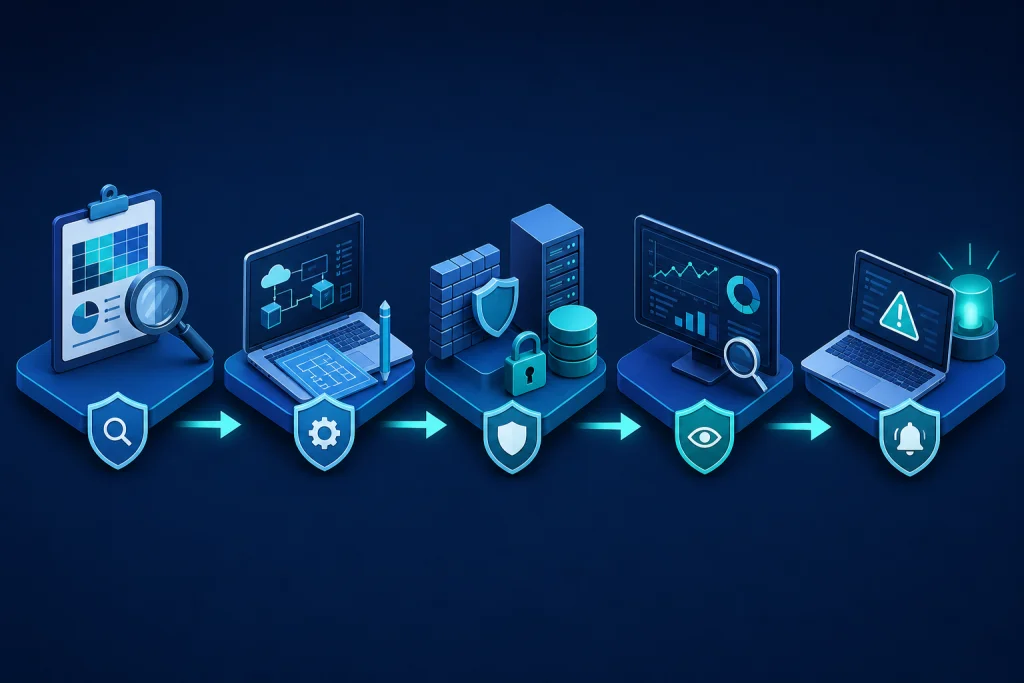
How we work

Structured delivery from assessment to handover

Each phase has clear deliverables, owners, and acceptance criteria aligned to enterprise IT practice.

Approach

Building Security System vs Traditional Alternatives

Traditional analog CCTV systems offer limited resolution (typically 720p) and no analytics, requiring constant human monitoring. They rely on coaxial cabling, which is costly to install and maintain. In contrast, IP-based BSS delivers 4K+ resolution with edge analytics, reducing false alarms by 90%. Traditional systems store video on DVRs with limited capacity (e.g., 2TB), while BSS uses scalable NAS or SAN storage from Synology or QNAP, supporting petabytes of data with RAID protection. Access control in traditional systems uses standalone keypads or magnetic stripe readers, which are easily cloned. Modern BSS employs biometrics and smart cards with encryption, reducing unauthorized access by 95%. Traditional systems lack integration: CCTV, access control, and alarms operate in silos. BSS unifies them via a single VMS, enabling cross-system automation (e.g., alarm triggers camera recording).

  • Cost-wise, traditional systems have lower upfront hardware cost but higher operational expenses due to manual monitoring and maintenance. BSS has higher initial investment but lower TCO over 5 years: analytics reduce guard requirements by 60%, and remote management cuts travel costs. For example, a 100-camera traditional system might require 4 guards per shift, while BSS with analytics needs only 1 guard. Traditional systems also suffer from poor scalability: adding cameras requires new cabling and DVRs. BSS scales via network expansion, with PoE switches powering cameras over existing Ethernet. Cybersecurity is another differentiator: traditional systems have no encryption, making them vulnerable to tampering. BSS integrates with firewall and cyber security solutions to protect video streams and prevent unauthorized access. In summary, BSS offers superior image quality, analytics, integration, scalability, and security, making it the only viable choice for enterprise environments in Indonesia.

Capabilities

Case Study & Implementation Methodology

A manufacturing company in Batam with 50,000 sqm facility faced 15 theft incidents per month and 20% production downtime due to safety violations. Challenge: legacy analog system with 200 cameras at 720p, no analytics, and manual monitoring. Solution: deployed 500 IP cameras (4K) from HP, integrated with Synology VMS and analytics server running AI object detection. Access control upgraded to biometric readers with RFID. Implementation used phased approach: Phase 1 (2 weeks) installed 200 cameras in high-risk zones, Phase 2 (3 weeks) added analytics and access control, Phase 3 (1 week) integrated with existing ERP for incident reporting. Result: theft reduced to 2 per month (87% decrease), production downtime dropped to 5% (75% improvement), and security team reduced from 10 to 4 guards, saving $120,000 annually. ROI achieved in 14 months.

  • Methodology: Intilogy follows a 6-step implementation: 1) Site survey and risk assessment using vulnerability scanning tools. 2) Network audit to ensure bandwidth and PoE capacity; networking upgrades using Cisco switches. 3) System design with redundancy: dual recording servers, UPS, and failover links. 4) Staged deployment starting with perimeter cameras, then interior, then access control. 5) Integration with existing server and storage via APIs. 6) Training and handover with 24/7 support. Post-implementation, monthly reports show system uptime >99.9% (based on 12 months data). For a logistics warehouse in Jakarta, similar methodology achieved 99.5% reduction in unauthorized access and 30% faster incident response. The key is thorough planning and stakeholder engagement to align BSS with business continuity objectives.
Use cases

Perencanaan infrastruktur baru

Refresh & modernisasi

Ekspansi multi-cabang

Compliance & audit IT

Building Security System for Enterprise

Our engineers help design, deploy, and support enterprise IT solutions across Indonesia.

Request a quote Contact our team

Related pages

E-E-A-T · Expertise & trust

Implementation expertise & enterprise trust

Intilogy (PT. Inti Jaya Teknologi) supports IT and procurement teams across Indonesia — from technical assessment and BoQ through deployment, documentation, and post go-live support.

  • 500+ Infrastructure deployments
  • 24/7 Operational support
  • SLA Enterprise SLA
  • 150+ Clients & institutions

Engineering & delivery expertise

Engineer-led assessment

Requirements workshops, sizing, and architecture — not catalogue selling without context.

Documented deployment

Commissioning checklists, as-built diagrams, IP plans, and escalation runbooks.

Audit-ready procurement

BoQ/BOM, quotations, POs, and handover packs for tenders and IT audits.

Multi-vendor coordination

One project partner for servers, networks, security, backup, and licensing.

Vendor ecosystem & sourcing channels

We source through official distributors/resellers per brand and project. Specific partnership tiers are confirmed per RFP — see our credentials page.

Vendor Status / tier Scope Notes
Dell Technologies Authorized channel PowerEdge, storage BoQ & manufacturer warranty
HPE Authorized channel ProLiant Enterprise servers
Fortinet Implementation partner NGFW, SD-WAN Licensing & deployment
Veeam Implementation partner Backup, replication Immutable design
VMware Implementation partner vSphere Cluster & migration

Tiers vary by SKU/region. Contact sales@intilogy.com for distributor letters or engineer certificates.

Enterprise implementation methodology

Standard flow for infrastructure, security, and backup projects — scoped per contract.

  1. Discovery & assessment

    Duration: 1–2 weeks

    Deliverables Requirements & risk report

  2. Architecture & BoQ

    Duration: 1–2 weeks

    Deliverables HLD, BoQ, rollout plan

  3. Procurement & staging

    Duration: 2–4 weeks

    Deliverables Asset register

  4. Implementation & UAT

    Duration: 2–6 weeks

    Deliverables As-built, UAT sign-off

  5. Handover & operations

    Duration: Ongoing

    Deliverables SOPs, training, SLA if contracted

Support & SLA (per project contract)

Service levels are defined in agreement — example framework below.

Standard maintenance

Response
Next business day (remote)
Coverage
Firmware advisory, tickets, RMA
Notes
Indonesia business hours

Project warranty

Response
Per implementation contract
Coverage
Defects in Intilogy deployment scope
Notes
Not 24/7 unless agreed

Critical incident (optional)

Response
4–8 hours if contracted
Coverage
Production-critical escalation
Notes
Requires separate MSA

Response times are illustrative — binding only when written in contract.

Technical documentation delivered

  • Topology & rack diagrams (as-built)
  • Asset list, serials, warranty status
  • Critical config summary & change log
  • Basic operations runbook & escalation contacts
  • Restore / DR drill reports (if in scope)
  • Tender packs: distributor letters & engineer certs (on request)

Competency & certifications

Engineers train on vendor technologies per project. Individual certs (Fortinet NSE, VMware VCP, Veeam VMCE, etc.) are provided for tenders — not all listed publicly.

  • Engineer certifications — Per project technology — on request
  • Distributor letters — For procurement audit
  • Client references — See Clients page for logos & scope

View certifications & partnerships

Ready to discuss architecture & BoQ?

Our team supports assessment, recommendations, procurement, and documented implementation.

WhatsApp Consult on WhatsApp
Request Consultation WhatsApp