Infrastructure Health Check Architecture
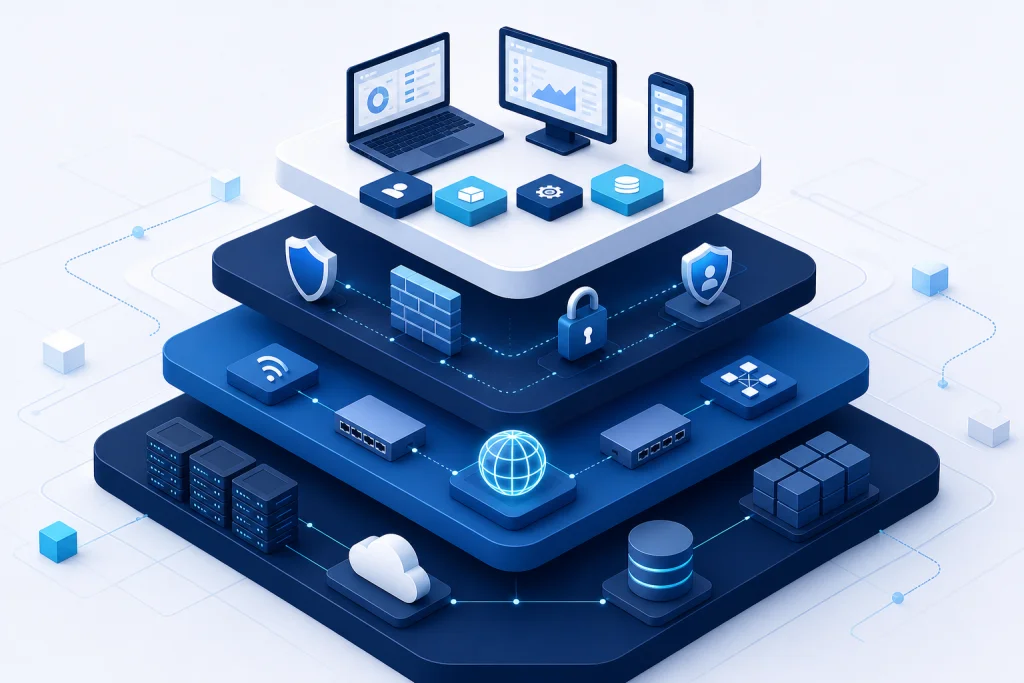
The architecture of a comprehensive Infrastructure Health Check (IHC) is multi-layered, covering all critical domains of enterprise IT. At the core, the assessment begins with network infrastructure, evaluating switches, routers, and firewalls from vendors like Cisco and Fortinet. We analyze throughput, latency, packet loss, and configuration compliance against best practices. Tools like SolarWinds and PRTG are used for real-time monitoring, while we perform traffic flow analysis to detect bottlenecks. The next layer focuses on server and storage systems, including Dell PowerEdge servers and Synology NAS. We assess CPU utilization, memory pressure, disk I/O, and RAID health. Virtualization platforms such as VMware vSphere are scrutinized for cluster resource balancing, HA/DRS settings, and snapshot management. Storage area networks (SAN) are tested for latency and redundancy. The security layer involves firewall rule audits, intrusion prevention system (IPS) effectiveness, and endpoint protection coverage. Backup and disaster recovery solutions, including Veeam, are validated for restore success rates and RTO/RPO compliance. Finally, we integrate findings into a unified dashboard, highlighting interdependencies and critical risks. This architectural approach ensures that no component is overlooked, providing a holistic view of infrastructure health.
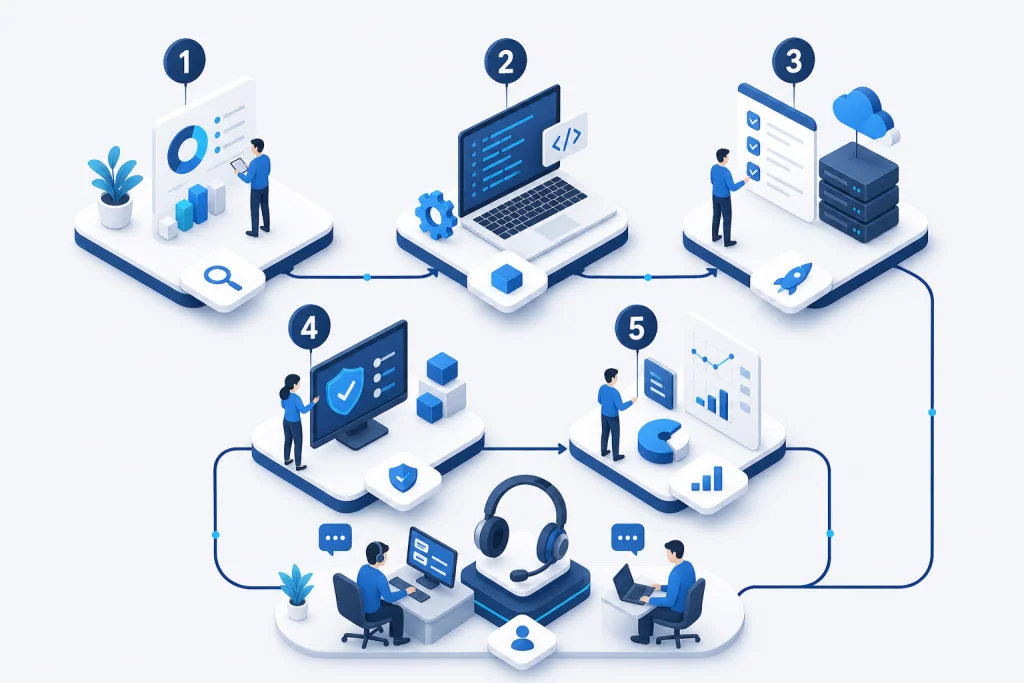
The IHC architecture also includes a phased execution plan: discovery, data collection, analysis, and reporting. During discovery, we inventory all hardware, software, and licenses. Data collection uses agent-based and agentless methods to minimize impact. Analysis leverages proprietary algorithms to benchmark performance against industry standards. The final report includes executive summaries, technical appendices, and a prioritized remediation roadmap. This structured methodology enables enterprises to address issues before they escalate, ensuring high availability and performance.
Industry Use Cases for Infrastructure Health Check
In the manufacturing sector, an Infrastructure Health Check is critical for maintaining operational technology (OT) and IT convergence. For example, a large automotive plant in Jakarta experienced frequent network outages due to unmanaged switch loops. An IHC identified the root cause and recommended network segmentation using Cisco switches, reducing downtime by 40%. Similarly, in financial services, a bank in Surabaya faced compliance issues due to outdated firewall rules. The IHC revealed 200+ unused rules and misconfigured IPS policies, leading to a 30% improvement in security posture after remediation. For logistics and warehousing, an IHC in a distribution center in Bandung uncovered storage latency issues caused by improper RAID configuration on Synology NAS. After reconfiguration, file transfer speeds increased by 50%, enhancing supply chain efficiency. Healthcare providers also benefit; a hospital in Medan used IHC to assess its backup system, finding that 15% of backups were failing. Implementing Veeam best practices improved backup success rates to 99.9%, ensuring patient data integrity.
Retail enterprises with multiple branches often struggle with inconsistent network performance. An IHC for a retail chain in Jakarta analyzed WAN links and recommended SD-WAN adoption, reducing latency by 35% and saving 20% on bandwidth costs. Educational institutions, such as a university in Yogyakarta, used IHC to optimize their virtualization environment, consolidating 50 physical servers into 10 hosts, cutting power consumption by 60%. These use cases demonstrate that IHC is not a one-size-fits-all service; it is tailored to address specific industry pain points, delivering quantifiable ROI.
Infrastructure Health Check vs Traditional Alternatives
Traditional infrastructure management often relies on reactive break-fix approaches or periodic manual audits. These methods are time-consuming, error-prone, and lack comprehensive visibility. In contrast, an Infrastructure Health Check (IHC) provides a proactive, data-driven assessment using automated tools and expert analysis. For instance, traditional audits might only check hardware status, while IHC examines configuration drift, security vulnerabilities, and performance bottlenecks. A common alternative is using basic monitoring tools like Nagios or PRTG, which offer alerts but not deep analysis. IHC goes further by correlating data across layers—network, server, storage, and security—to identify root causes. Another alternative is vendor-specific health checks, which are siloed and may miss cross-vendor issues. IHC integrates findings from Cisco, Dell, VMware, and Fortinet into a unified report. Additionally, traditional methods often lack benchmarking against industry standards, whereas IHC uses metrics like ITIL and ISO 27001 to gauge maturity.
Cost-wise, traditional reactive maintenance can lead to higher downtime costs. A study shows that every hour of downtime costs enterprises an average of $300,000. IHC, performed quarterly, costs a fraction of that and prevents incidents. For example, a manufacturing company in Indonesia avoided a major outage by acting on IHC recommendations to upgrade aging UPS systems. In contrast, a competitor relying on traditional methods suffered a 12-hour outage due to power failure, losing millions in production. IHC also provides a roadmap for modernization, such as migrating to hyperconverged infrastructure, which traditional audits rarely address. Ultimately, IHC delivers a strategic advantage by aligning IT with business continuity and growth.
Case Study & Implementation Methodology
A leading logistics company in Jakarta faced recurring server crashes and slow application performance. Challenge: 30% of virtual machines were over-provisioned, causing resource contention; backup success rate was only 85%. Solution: Intilogy conducted an IHC using VMware vRealize Operations and Veeam ONE. We identified 20 VMs with CPU over-allocation and 15 with memory ballooning. Storage analysis revealed misaligned LUNs on a Dell SAN. We implemented right-sizing, storage reconfiguration, and backup job optimization. Result: CPU utilization dropped by 25%, application response time improved by 40%, and backup success rate reached 99.5%. The client achieved a 3-month ROI through reduced licensing costs and avoided downtime.
Implementation methodology follows a 6-phase approach: 1) Discovery & Scoping: Inventory all assets and define assessment scope. 2) Data Collection: Deploy agents and configure monitoring for 2 weeks. 3) Analysis: Use automated tools and manual review to identify issues. 4) Reporting: Deliver a comprehensive report with findings, risk ratings, and recommendations. 5) Remediation Planning: Prioritize actions based on business impact. 6) Follow-up: Conduct a re-assessment after 3 months to verify improvements. This methodology ensures that IHC is not just a snapshot but a continuous improvement cycle. For example, a financial services firm in Surabaya followed this process and reduced security incidents by 60% within 6 months. By embedding cybersecurity checks into the IHC, we ensure holistic health across all domains.