Server Solution Architecture
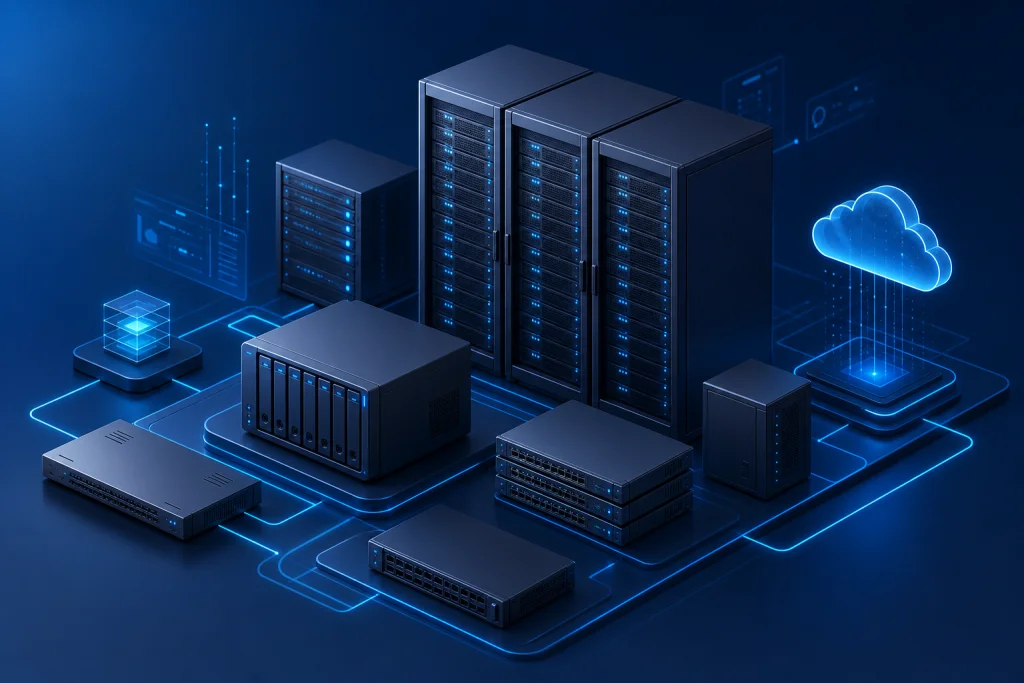
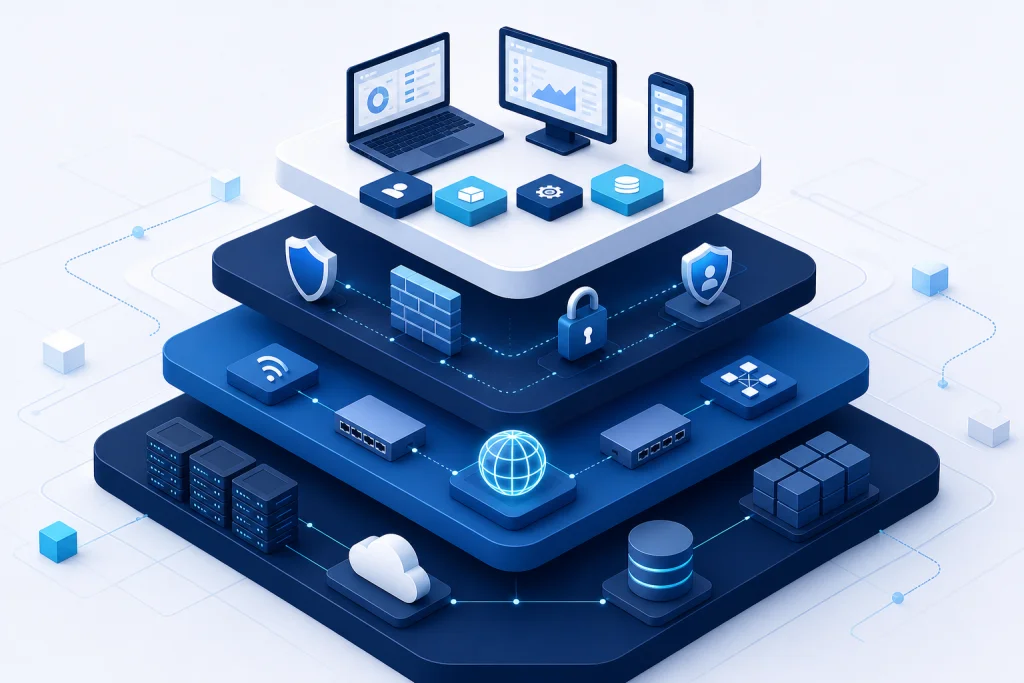
A modern server solution architecture for enterprises in Indonesia typically follows a three-tier or hyperconverged model. The compute tier consists of x86 servers from Dell PowerEdge, HPE ProLiant, or Lenovo ThinkSystem, equipped with Intel Xeon Scalable processors and large memory capacities (up to 6TB per node). These servers run virtualization platforms like VMware vSphere or Microsoft Hyper-V, enabling efficient resource utilization. The storage tier can be SAN (Fibre Channel or iSCSI) from Dell EMC or HPE, or NAS from Synology or QNAP for file-level access. Alternatively, hyperconverged infrastructure (HCI) from VMware vSAN or Nutanix combines compute and storage into a single cluster, simplifying management and scaling linearly.
Networking is critical for low-latency communication; Cisco or Arista switches provide high-speed connectivity (10/25/40/100GbE). For high availability, redundant power supplies, RAID configurations, and failover clustering are standard. Management tools like Dell OpenManage, HPE OneView, or Lenovo XClarity automate provisioning and monitoring. Additionally, integrating with backup and disaster recovery solutions ensures data protection. For edge computing, ruggedized servers from HPE or Lenovo can be deployed in remote locations. Overall, the architecture is designed for scalability, resilience, and security, meeting the demands of Indonesian enterprises.
Industry Use Cases for Server Solution
Server solutions in Indonesia serve diverse industries with specific requirements. In banking and finance, servers must comply with BI and OJK regulations, requiring high-security features like hardware security modules (HSMs) and encrypted data storage. For example, a Jakarta-based bank deployed HPE Synergy composable infrastructure to support real-time transaction processing, achieving 50% faster provisioning and 99.999% uptime. In manufacturing, servers power ERP systems (SAP, Oracle) and IoT data processing. A Surabaya factory used Dell PowerEdge servers with NVIDIA GPUs for predictive maintenance, reducing downtime by 30%.
In healthcare, servers host electronic medical records (EMR) and telemedicine platforms. A hospital in Bandung implemented Lenovo ThinkSystem with VMware vSAN for high availability, ensuring patient data access within milliseconds. For e-commerce, servers handle high-traffic workloads during flash sales. A Jakarta-based e-commerce company scaled its infrastructure using Cisco UCS servers with Kubernetes, handling 100,000 concurrent users. Lastly, in education, servers support e-learning platforms and research computing. A university in Yogyakarta deployed HPE Apollo for high-performance computing (HPC), accelerating research simulations by 40%.
Server Solution vs Traditional Alternatives
Traditional server architectures often involve siloed hardware—separate compute, storage, and networking—leading to high capital expenditure, complex management, and underutilization. In contrast, modern server solutions like hyperconverged infrastructure (HCI) or composable infrastructure offer unified management and elastic scalability. For instance, HCI from HCI vendors (Nutanix, VMware) eliminates the need for separate SAN, reducing hardware footprint by 40% and operational costs by 30%. Traditional servers also require manual provisioning and maintenance, while software-defined solutions enable automation through APIs and orchestration tools.
Another key difference is resilience. Traditional setups often rely on single points of failure, whereas modern solutions incorporate built-in redundancy, self-healing, and disaster recovery. For example, Veeam backup integrated with HCI provides instant VM recovery. Additionally, traditional servers may struggle with security compliance, whereas modern solutions include encryption, role-based access control, and audit logging. For Indonesian enterprises, the shift to modern server solutions is driven by the need for agility, cost efficiency, and compliance with regulations like UU ITE and PDP Law.
Case Study & Implementation Methodology
Case Study: Financial Services Company in Jakarta. Challenge: Legacy infrastructure caused 15% downtime monthly, unable to handle 10,000 transactions per second during peak hours. Solution: Deployed HPE ProLiant DL380 Gen10 servers with VMware vSAN and Veeam backup, integrated with IT infrastructure monitoring. Result: 99.999% uptime, 50% faster transaction processing, and 40% reduction in IT operational costs within 6 months.
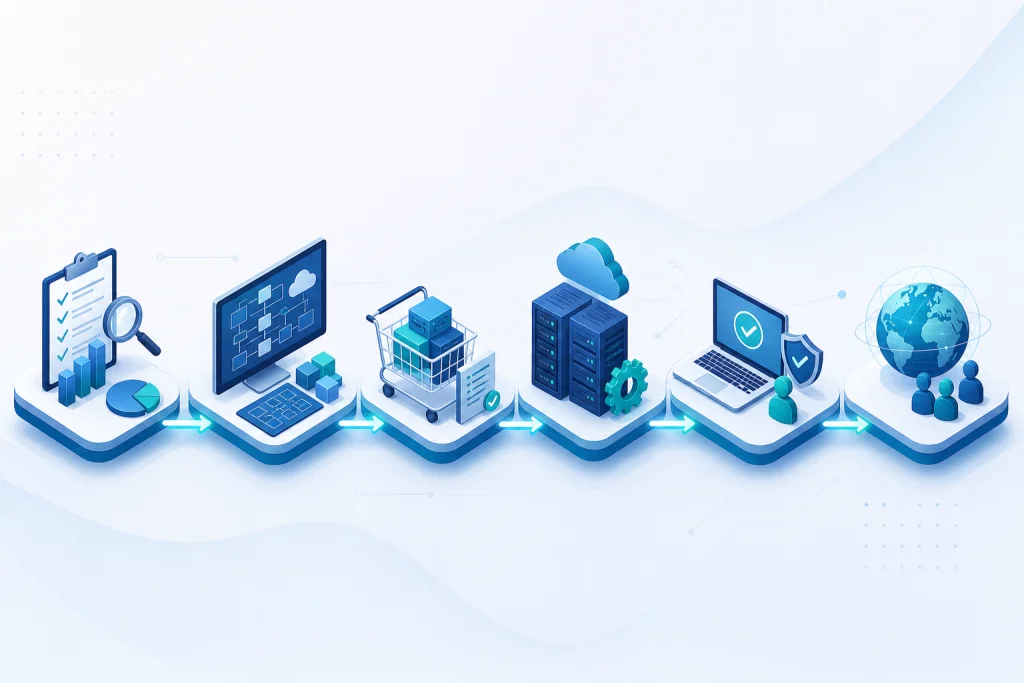
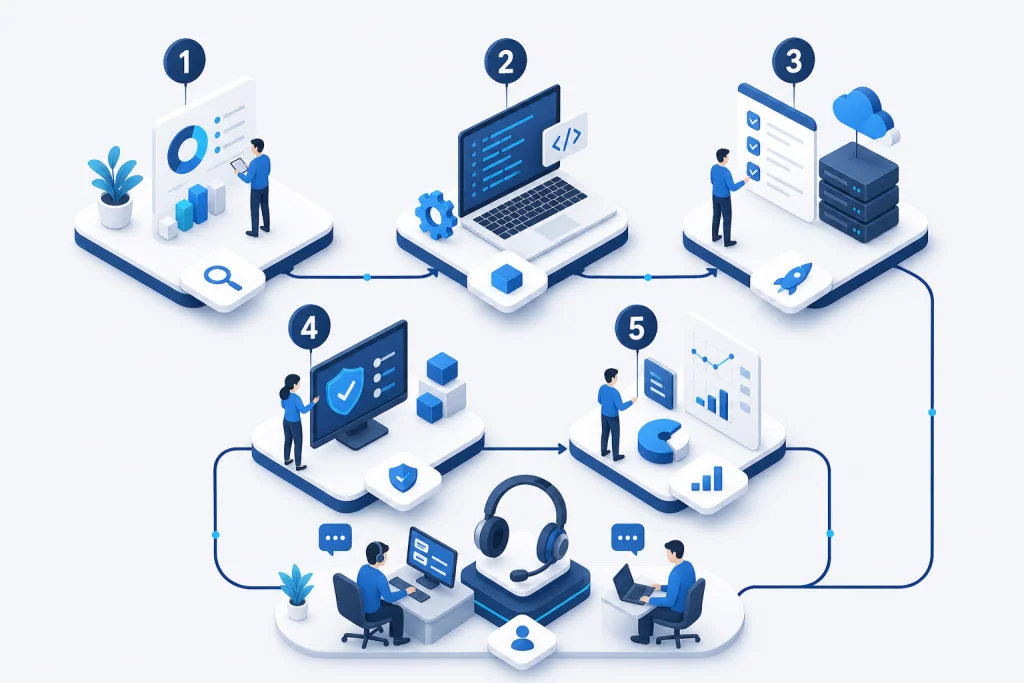
Implementation Methodology: Intilogy follows a structured approach: 1) Assessment: Analyze current workloads, performance metrics, and growth projections. 2) Design: Architect a solution using best-fit hardware (e.g., Dell PowerEdge for compute, Synology for NAS) and software (VMware, Hyper-V). 3) Deployment: Rack-and-stack, network configuration, and virtualization setup. 4) Migration: Live migration of VMs using tools like VMware vMotion with zero downtime. 5) Validation: Stress testing and failover drills. 6) Handover: Documentation and training. For example, a manufacturing company in Batam migrated 200 VMs to a new HCI cluster over a weekend, achieving 30% performance improvement.