Storage Solution Architecture
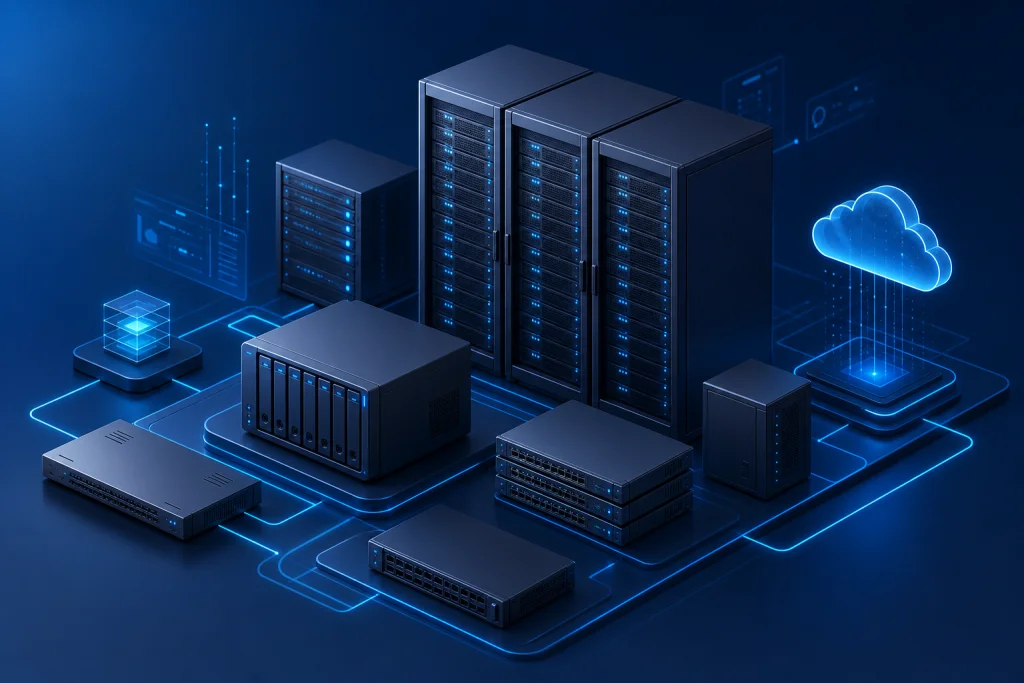
A robust enterprise storage architecture is built on a layered design that separates compute, network, and storage resources. At the core are storage controllers with dual-active or active-passive redundancy, supporting protocols like iSCSI, Fibre Channel (16/32 Gbps), and NVMe-oF for low-latency connectivity. All-flash arrays use NAND flash with wear-leveling and over-provisioning to sustain high IOPS, while hybrid arrays combine SSDs with HDDs for cost-effective capacity. Software-defined storage abstracts hardware, enabling features like automated tiering, thin provisioning, and snapshots. For example, a typical SAN deployment includes redundant fabrics with Cisco MDS switches, connecting to hosts via multipath I/O. Data protection is achieved through RAID 6, erasure coding, or replication to a secondary site. In hyperconverged setups, storage is integrated with compute using VMware vSAN or Nutanix, providing simplicity and scalability. Enterprise storage architecture must also consider backup integration, with snapshot offload to Veeam or Commvault for rapid recovery.
Industry Use Cases for Storage Solution
Storage solutions serve critical roles across industries in Indonesia. In financial services, high-frequency trading requires sub-millisecond latency, achieved with all-flash arrays and NVMe over Fabrics. Banks use synchronous replication for zero RPO between data centers. In healthcare, PACS (Picture Archiving and Communication Systems) demand massive capacity for MRI and CT scans, with tiered storage to balance performance and cost. Manufacturing leverages storage for IoT data ingestion from sensors, often using object storage like MinIO or Dell EMC ECS for scalability. Retail enterprises rely on storage for real-time inventory and point-of-sale systems, requiring high availability and quick failover. Media and entertainment use high-throughput storage for video editing, with parallel file systems like Lustre or Dell EMC Isilon. For disaster recovery, storage arrays support replication to a secondary site, ensuring business continuity. Each use case demands specific performance metrics: IOPS, bandwidth, and capacity, which are addressed through proper storage tiering and protocol selection.
Storage Solution vs Traditional Alternatives
Traditional storage, such as direct-attached storage (DAS) or legacy SAN with spinning disks, cannot meet modern demands for agility and performance. DAS lacks shared access, leading to silos and underutilization. Legacy SANs with 8 Gbps Fibre Channel and 15K RPM HDDs deliver only a few thousand IOPS, while modern all-flash arrays achieve millions of IOPS with sub-millisecond latency. Traditional storage also lacks automation, requiring manual provisioning and tuning. In contrast, software-defined storage enables policy-based management and self-service. Hyperconverged infrastructure (HCI) collapses storage and compute, simplifying deployment and scaling. However, HCI may have higher overhead for compute-intensive workloads. For large-scale unstructured data, object storage like Dell EMC ECS or MinIO offers unlimited scalability with HTTP APIs, outperforming traditional NAS in metadata operations. Hyperconverged solutions integrate storage seamlessly, reducing complexity. The choice between traditional and modern storage depends on workload requirements: latency-sensitive apps favor all-flash, while capacity-driven archives may still use HDDs with caching.
Case Study & Implementation Methodology
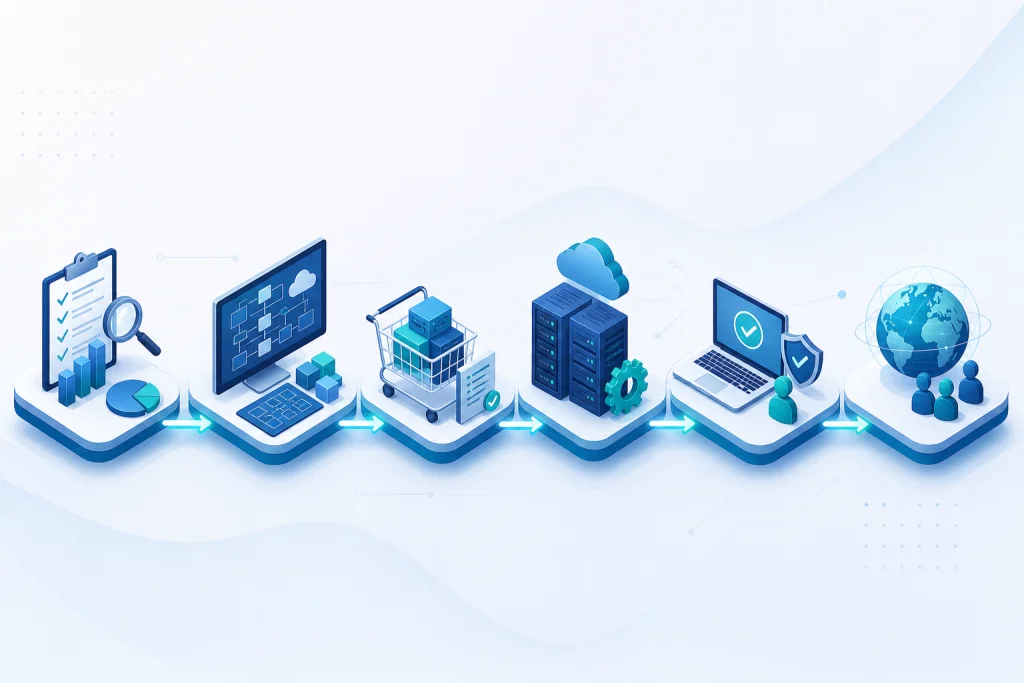
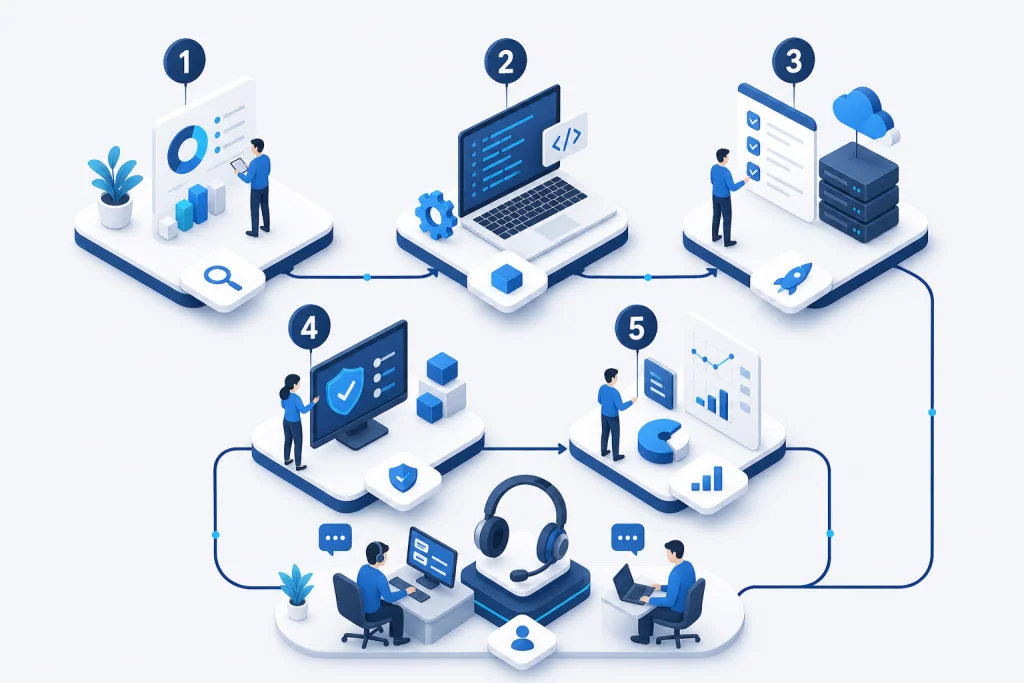
Client: A leading Indonesian bank (Industry: Financial Services). Location: Jakarta. Challenge: The bank's legacy SAN (IBM XIV) could not handle peak transaction volumes, causing 500ms latency during peak hours and 2 hours of downtime per month due to controller failures. Solution: Intilogy deployed a Dell EMC PowerStore 5000T all-flash array with dual-active controllers, 32 Gbps Fibre Channel, and synchronous replication to a secondary data center. Implementation followed a phased methodology: assessment, design (including zoning and masking), migration using Dell's automated tools, and testing. Result: Latency reduced to 0.5ms, IOPS improved from 50,000 to 1.2 million, and downtime eliminated. The bank achieved a 40% reduction in storage TCO over 3 years due to deduplication and lower power consumption. The methodology included a pre-migration audit of LUNs, a cutover plan with rollback, and post-migration performance tuning. For Dell storage, Intilogy's certified engineers ensured seamless integration with existing VMware vSphere environment.