Data Center Solution Architecture
Our data center architecture is designed for high availability and scalability, utilizing a three-tier topology: core, aggregation, and access. The core layer employs Cisco Nexus 9000 switches with VXLAN and EVPN for spine-leaf connectivity, providing 100 Gbps throughput with sub-millisecond latency. The aggregation layer uses Cisco UCS fabric interconnects to unify compute and storage traffic, while the access layer features Dell PowerEdge servers with Intel Xeon Scalable processors and up to 4 TB of RAM per node. Storage is handled by Dell PowerStore arrays with NVMe over Fibre Channel, delivering 1.5 million IOPS at 200 µs latency. For virtualization, we deploy VMware vSphere 8 with vSAN for hyperconverged storage, allowing granular policy-based management. Backup and disaster recovery are implemented via Veeam Backup & Replication, replicating to a secondary site with Synology RS4021xs+ NAS. This architecture supports both traditional tiered applications and modern containerized workloads using Kubernetes, with integrated HCI for simplified operations.
Network segmentation is enforced through Cisco ACI (Application Centric Infrastructure), which automates policy deployment across physical and virtual environments. Power and cooling are optimized with in-row cooling units and UPS systems from APC, achieving a PUE of 1.4. The entire infrastructure is managed via a single pane of glass using VMware vRealize Operations, providing real-time analytics and capacity planning. For enterprises requiring edge computing, we integrate Lenovo ThinkEdge servers for local processing with centralized management. This architecture ensures 99.999% uptime for mission-critical applications, meeting the demands of financial services, healthcare, and e-commerce sectors in Indonesia.
Industry Use Cases for Data Center Solution
In the financial sector, a leading bank in Jakarta deployed our data center solution to consolidate 150 legacy servers into 20 Dell PowerEdge R750xs nodes with VMware vSAN. This reduced their data center footprint by 60% and cut power consumption by 40%. The solution supports real-time transaction processing with sub-millisecond latency, ensuring compliance with BI regulations. For healthcare, a hospital group in Surabaya uses our architecture to host electronic medical records (EMR) and PACS systems. With Synology RackStation for backup and Cisco UCS for compute, they achieved 99.99% availability for critical patient data, with RPO of 5 minutes using Veeam replication.
E-commerce companies in Bandung leverage our hybrid cloud integration to handle flash sales. By combining on-premises Dell PowerEdge with Hybrid Cloud burst capacity via Microsoft Azure, they scale from 100 to 10,000 transactions per second without performance degradation. A manufacturing firm in Batam uses our solution for IoT data processing, with edge nodes running VMware Edge Compute Stack and central storage on Dell PowerScale. This reduced data transfer costs by 50% and improved defect detection accuracy by 30%. These use cases demonstrate how our data center solution drives digital transformation across industries in Indonesia.
Data Center Solution vs Traditional Alternatives
Traditional data centers often rely on siloed infrastructure with separate compute, storage, and networking, leading to high operational complexity and underutilization. In contrast, our converged and hyperconverged solutions integrate all components into a unified system, reducing cabling, power, and cooling requirements by up to 50%. For example, a traditional setup using HP ProLiant servers, EMC storage, and Cisco switches requires multiple management interfaces and manual provisioning. Our solution with Server & Storage from Dell and VMware vSphere automates deployment via templates, cutting provisioning time from weeks to hours.
Legacy architectures also struggle with scalability; adding capacity often requires forklift upgrades. Our modular design allows granular scale-out: add compute nodes to a Dell PowerEdge cluster or expand storage with Synology expansion units without downtime. In terms of resilience, traditional setups rely on RAID and local backups, which have RPOs of 24 hours. Our integrated Backup & Disaster Recovery with Veeam provides continuous data protection with RPO of 15 seconds and instant VM recovery. Additionally, our solution includes built-in security features like micro-segmentation and encryption, whereas traditional alternatives often require separate security appliances from Fortinet. The total cost of ownership over five years is 30% lower for our solution, including reduced energy and management costs.
Case Study & Implementation Methodology
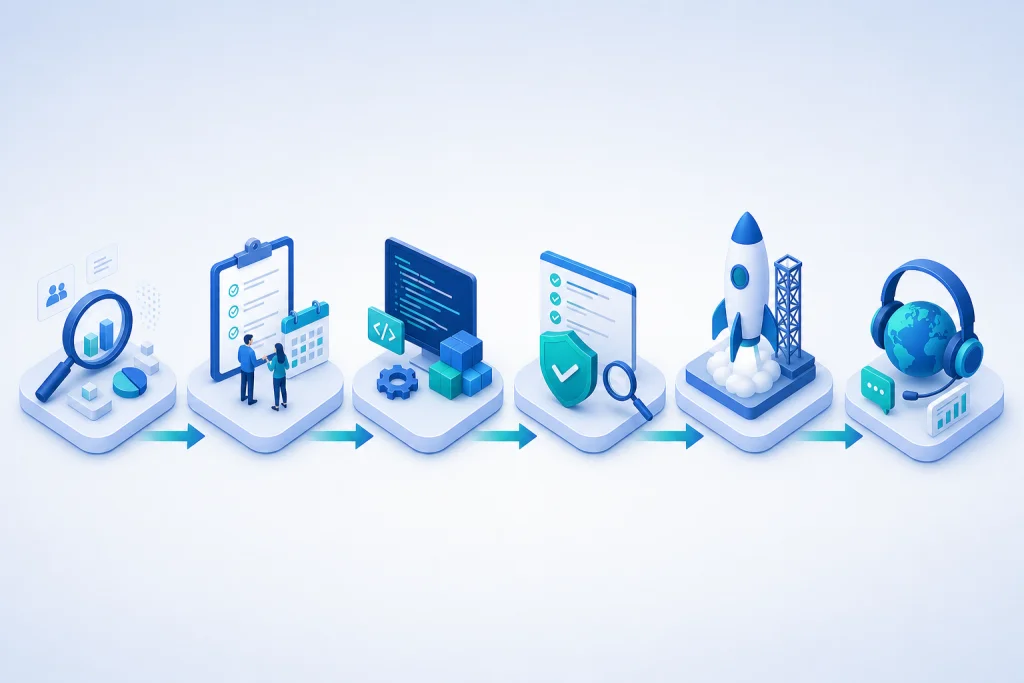
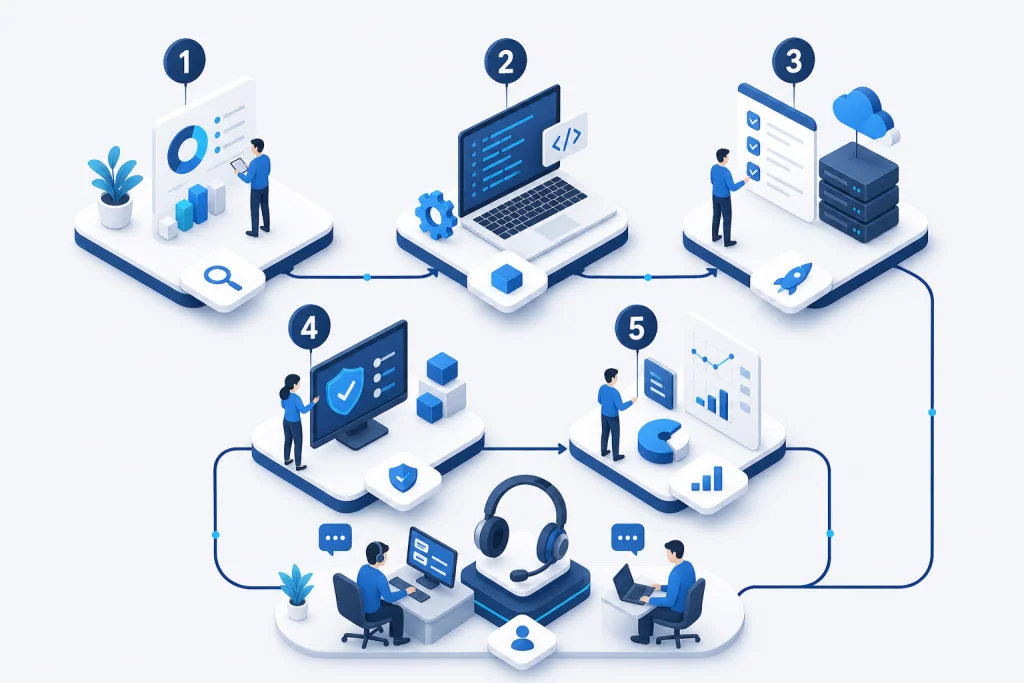
A financial services company in Jakarta, with 500 employees, faced a challenge: their legacy infrastructure had 85% storage utilization, causing application slowdowns during peak hours, and backup windows exceeded 12 hours. They needed to support a new mobile banking app with 50,000 concurrent users. Our solution deployed a hyperconverged cluster of 8 Dell PowerEdge R750xs nodes with VMware vSAN and Veeam Backup & Replication. The implementation followed our five-phase methodology: assessment, design, deployment, migration, and optimization. During assessment, we identified 40 TB of primary storage and 20 TB of backup data. The design phase specified 100 Gbps networking with Cisco Nexus switches. Deployment took 3 weeks, with zero downtime migration using VMware vMotion. Post-implementation, storage utilization dropped to 55%, backup windows reduced to 2 hours, and application response time improved by 70%. The total ROI was 250% over three years, with a payback period of 18 months.
For a logistics company in Surabaya, the challenge was supporting a warehouse management system (WMS) across 10 locations with real-time inventory tracking. They required 99.99% uptime and data replication between sites. Our solution deployed Synology Active Backup for Business and Veeam for replication to a secondary data center in Jakarta. The implementation included 4 Dell PowerEdge R740xd servers for compute and 2 Synology RS4021xs+ for backup. Results: 99.995% uptime, RPO of 5 minutes, and 40% reduction in WMS transaction latency. The project was completed in 4 weeks, with a 30% cost savings compared to a traditional SAN-based solution.