Enterprise IT Solutions

IT Procurement Service for Enterprise

IT Procurement Service is a strategic approach to acquiring technology assets and services that align with enterprise business objectives, ensuring cost efficiency, compliance, and scalability. In Indonesia, where digital transformation accelerates across industries, enterprises face challenges such as vendor fragmentation, contract complexity, and rapid technology obsolescence. Our IT Procurement Service encompasses end-to-end lifecycle management, from needs assessment and vendor selection to negotiation, deployment, and asset disposal. We leverage deep partnerships with leading vendors including Lenovo, HP, Dell, Cisco, and Fortinet to deliver optimized pricing, warranty management, and tailored configurations. By integrating procurement with IT infrastructure planning, we help enterprises reduce total cost of ownership (TCO) by up to 30%, improve procurement cycle times by 50%, and ensure compliance with local regulations (e.g., Kominfo standards). Our service covers hardware (servers, storage, networking, endpoints), software licensing (Microsoft, VMware), and cloud services (AWS, Azure). With centralized procurement, enterprises gain visibility into spending, eliminate maverick buying, and align technology investments with business growth. Whether deploying a new data center, upgrading network infrastructure, or managing remote workforce endpoints, our procurement experts provide technical validation, price benchmarking, and logistics coordination. This ensures that every purchase delivers maximum ROI and operational resilience.

IT Procurement Service Architecture

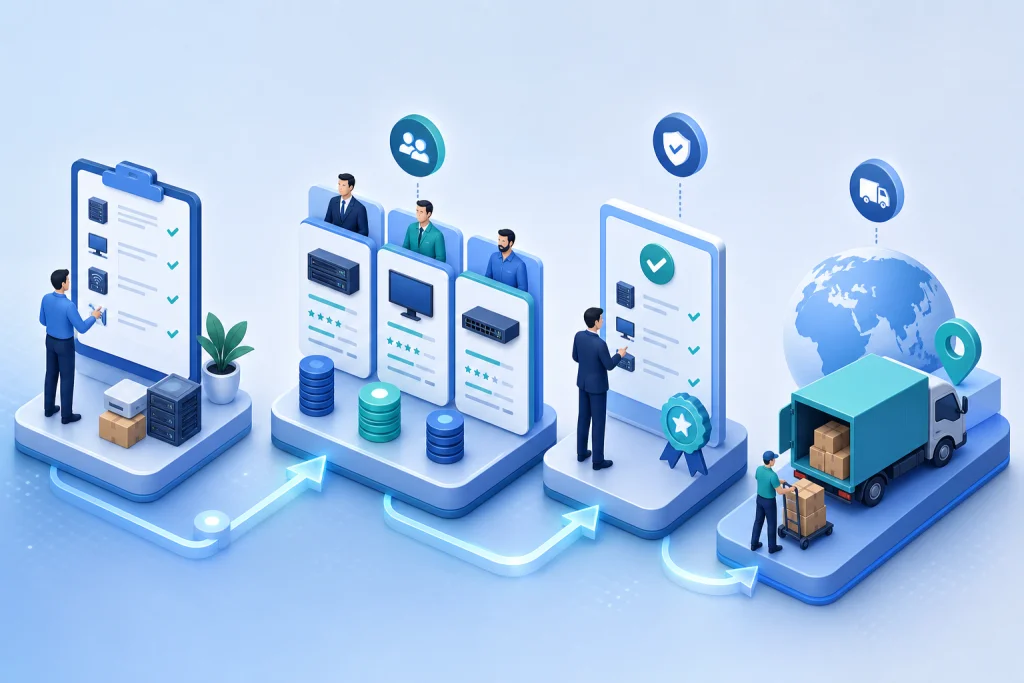
The architecture of our IT Procurement Service is built on a multi-layered framework that integrates strategic sourcing, vendor management, and lifecycle automation. At the core is a centralized procurement platform that connects enterprise requirements to a curated ecosystem of OEMs, distributors, and service providers. The architecture includes a needs assessment engine that analyzes technical specifications, capacity planning, and budget constraints to generate optimized bill of materials (BOM). This engine interfaces with real-time pricing databases from vendors like Dell and Cisco, enabling dynamic price comparisons and volume discounts.

The second layer focuses on compliance and risk management. It ensures all procured assets meet Indonesian regulatory standards (e.g., SNI, Postel) and enterprise security policies. Automated workflows handle contract review, SLA validation, and warranty registration. The third layer is logistics and deployment coordination, managing warehousing, staging, and last-mile delivery across Indonesia's archipelago. Finally, the lifecycle management layer tracks asset depreciation, refresh cycles, and disposal, integrating with IT asset management (ITAM) tools. This architecture reduces procurement overhead by 40% and accelerates time-to-deployment by 60%.

Industry Use Cases for IT Procurement Service

In the financial sector, a Jakarta-based bank needed to standardize IT hardware across 200 branches while complying with OJK regulations. Our procurement service sourced Lenovo ThinkSystem servers and Fortinet firewalls, negotiated a 3-year lease with buyback options, and managed phased deployment. The result was a 25% reduction in hardware costs and 99.99% uptime for core banking systems.

For a manufacturing company in Surabaya, we orchestrated procurement of industrial IoT gateways, Cisco industrial switches, and HP workstations for a smart factory initiative. By consolidating purchases from multiple vendors, we achieved 18% cost savings and reduced procurement cycle from 12 weeks to 5 weeks. The standardized hardware enabled seamless integration with MES and SCADA systems, improving production efficiency by 15%.

In healthcare, a hospital group in Bandung required a unified IT infrastructure for electronic medical records. Our service procured Dell PowerEdge servers, Synology NAS for backup, and Microsoft SQL Server licenses. We ensured compliance with BPJS Kesehatan data security standards, resulting in 30% faster patient data access and 20% lower IT operational costs.

IT Procurement Service vs Traditional Alternatives

Traditional IT procurement relies on ad-hoc purchasing from multiple suppliers, leading to inconsistent pricing, compatibility issues, and administrative burden. In contrast, our IT Procurement Service offers a unified approach with strategic vendor consolidation, technical validation, and lifecycle management. Traditional methods often lack price benchmarking, resulting in overpayment by 15-25%. Our service leverages aggregated buying power and direct OEM partnerships to secure best-in-class pricing.

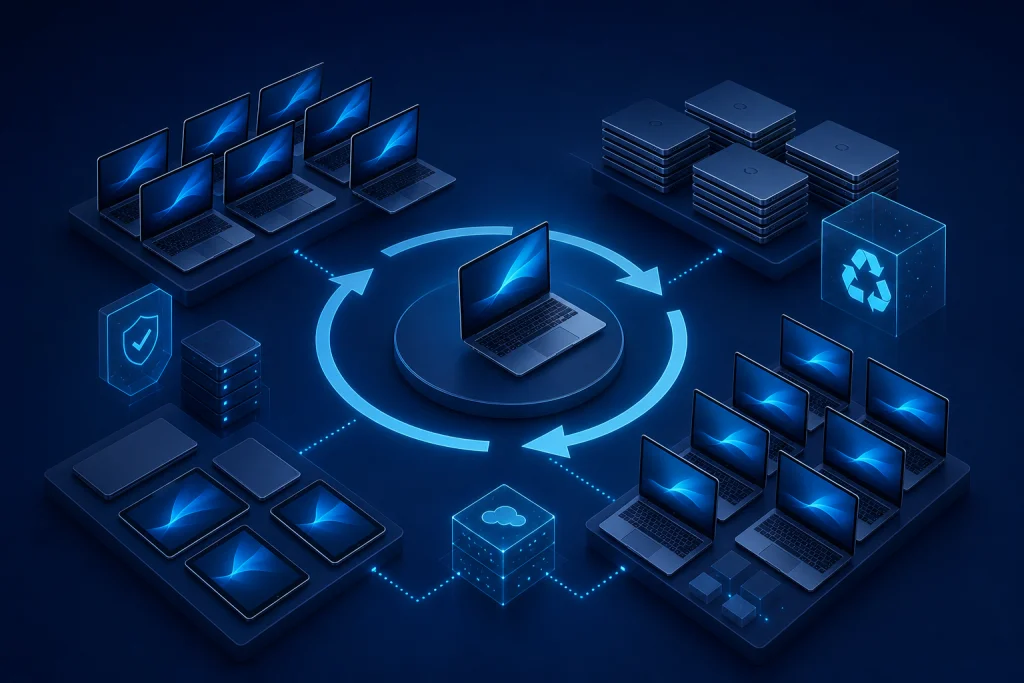
Another key difference is compliance and risk mitigation. Traditional procurement may overlook regulatory requirements (e.g., Kominfo certification) or warranty terms, exposing enterprises to legal and operational risks. Our service includes automated compliance checks and SLA management. Additionally, traditional procurement is reactive, whereas our service proactively aligns with IT roadmap and budget cycles. For example, a traditional approach to upgrading network infrastructure might involve separate purchases of switches, routers, and firewalls from different vendors, causing integration delays. Our service coordinates a single bill of materials from Cisco and Fortinet, ensuring interoperability and reducing deployment time by 50%. Finally, traditional procurement lacks asset tracking, leading to lost or underutilized equipment. Our service provides full lifecycle visibility, enabling better refresh planning and reducing e-waste.

Case Study & Implementation Methodology

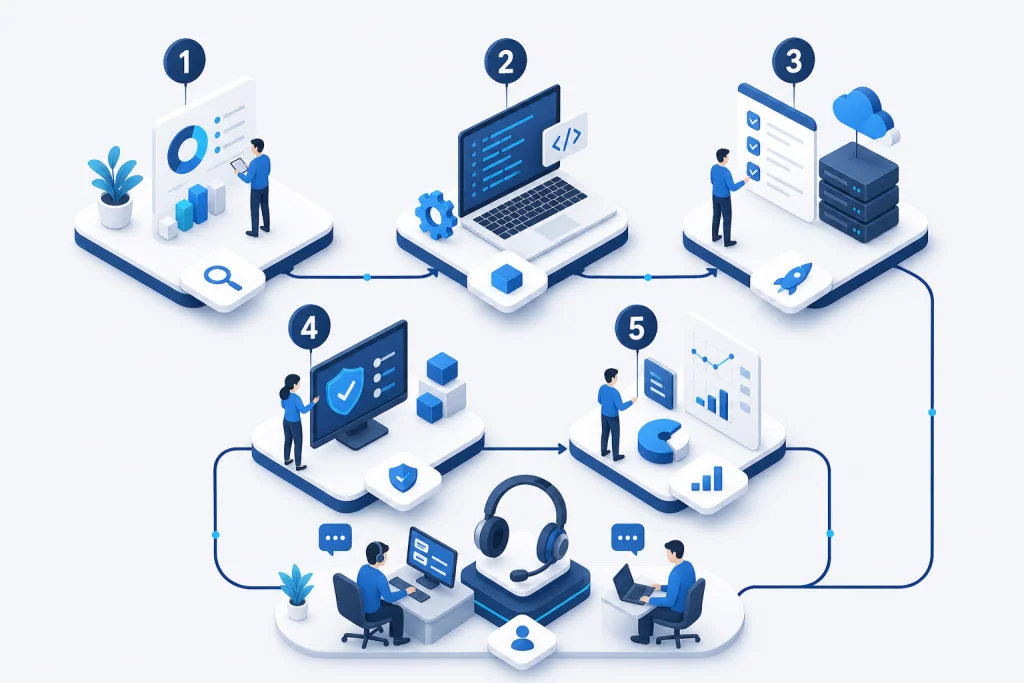
Case Study: A logistics company in Jakarta faced challenges with aging IT infrastructure causing 12% annual downtime and high maintenance costs. Challenge: Outdated servers and network switches led to 200 hours of downtime per year, costing IDR 5 billion in lost productivity. Solution: We implemented a phased procurement plan sourcing HP ProLiant servers, Cisco Catalyst switches, and Synology backup appliances. The methodology included: Phase 1 – Needs assessment and BOM creation (2 weeks); Phase 2 – Vendor negotiation and contract signing (3 weeks); Phase 3 – Staging and configuration at our facility (2 weeks); Phase 4 – Deployment and testing (4 weeks); Phase 5 – Asset tagging and warranty registration (1 week). Result: Downtime reduced to 15 hours/year (98% improvement), maintenance costs cut by 40%, and ROI achieved within 18 months.

Implementation Methodology: Our five-phase methodology ensures predictable outcomes. Phase 1 (Discovery): Technical audit, capacity planning, and budget alignment. Phase 2 (Sourcing): RFQ to multiple vendors, price benchmarking, and technical validation. Phase 3 (Procurement): Contract negotiation, purchase order management, and logistics coordination. Phase 4 (Deployment): Staging, configuration, and installation with minimal business disruption. Phase 5 (Lifecycle Management): Warranty tracking, asset management, and refresh planning. Throughout, we provide transparent reporting and KPIs such as procurement cycle time, cost savings, and compliance rate. This methodology has consistently delivered 20-30% TCO reduction and 50% faster procurement cycles for enterprises in Indonesia.

IT Procurement Service Architecture

The architecture of our IT Procurement Service is built on a multi-layered framework that integrates strategic sourcing, vendor management, and lifecycle automation. At the core is a centralized procurement platform that connects enterprise requirements to a curated ecosystem of OEMs, distributors, and service providers. The architecture includes a needs assessment engine that analyzes technical specifications, capacity planning, and budget constraints to generate optimized bill of materials (BOM). This engine interfaces with real-time pricing databases from vendors like Dell and Cisco, enabling dynamic price comparisons and volume discounts.

Industry Use Cases for IT Procurement Service

In the financial sector, a Jakarta-based bank needed to standardize IT hardware across 200 branches while complying with OJK regulations. Our procurement service sourced Lenovo ThinkSystem servers and Fortinet firewalls, negotiated a 3-year lease with buyback options, and managed phased deployment. The result was a 25% reduction in hardware costs and 99.99% uptime for core banking systems.

How we work

Structured delivery from assessment to handover

Each phase has clear deliverables, owners, and acceptance criteria aligned to enterprise IT practice.

Approach

IT Procurement Service vs Traditional Alternatives

Traditional IT procurement relies on ad-hoc purchasing from multiple suppliers, leading to inconsistent pricing, compatibility issues, and administrative burden. In contrast, our IT Procurement Service offers a unified approach with strategic vendor consolidation, technical validation, and lifecycle management. Traditional methods often lack price benchmarking, resulting in overpayment by 15-25%. Our service leverages aggregated buying power and direct OEM partnerships to secure best-in-class pricing.

  • Another key difference is compliance and risk mitigation. Traditional procurement may overlook regulatory requirements (e.g., Kominfo certification) or warranty terms, exposing enterprises to legal and operational risks. Our service includes automated compliance checks and SLA management. Additionally, traditional procurement is reactive, whereas our service proactively aligns with IT roadmap and budget cycles. For example, a traditional approach to upgrading network infrastructure might involve separate purchases of switches, routers, and firewalls from different vendors, causing integration delays. Our service coordinates a single bill of materials from Cisco and Fortinet, ensuring interoperability and reducing deployment time by 50%. Finally, traditional procurement lacks asset tracking, leading to lost or underutilized equipment. Our service provides full lifecycle visibility, enabling better refresh planning and reducing e-waste.

Capabilities

Case Study & Implementation Methodology

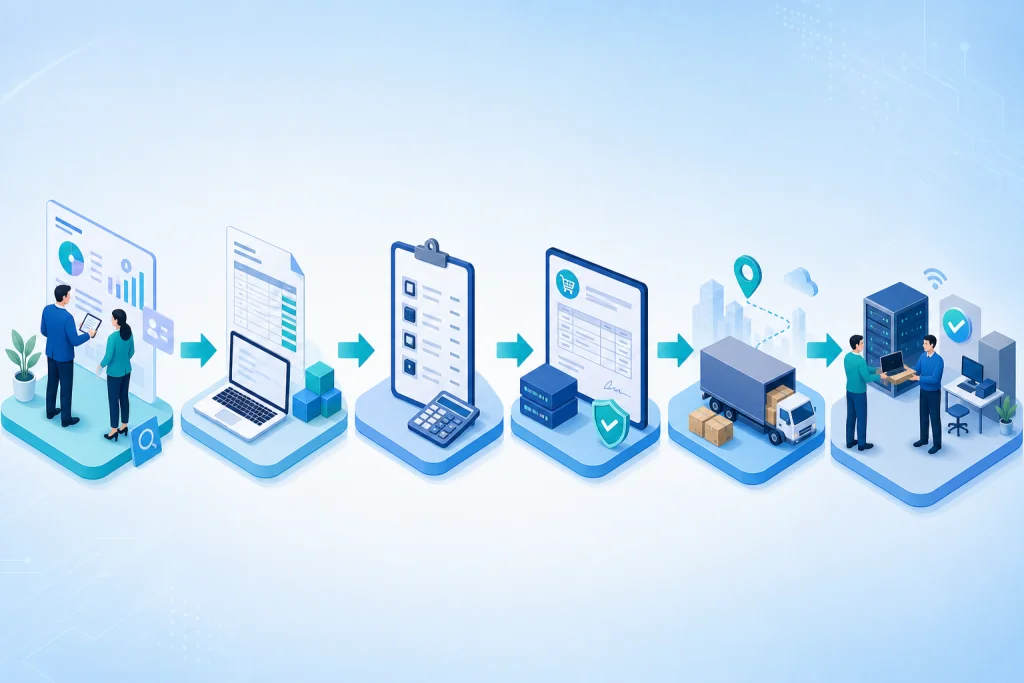
Case Study: A logistics company in Jakarta faced challenges with aging IT infrastructure causing 12% annual downtime and high maintenance costs. Challenge: Outdated servers and network switches led to 200 hours of downtime per year, costing IDR 5 billion in lost productivity. Solution: We implemented a phased procurement plan sourcing HP ProLiant servers, Cisco Catalyst switches, and Synology backup appliances. The methodology included: Phase 1 – Needs assessment and BOM creation (2 weeks); Phase 2 – Vendor negotiation and contract signing (3 weeks); Phase 3 – Staging and configuration at our facility (2 weeks); Phase 4 – Deployment and testing (4 weeks); Phase 5 – Asset tagging and warranty registration (1 week). Result: Downtime reduced to 15 hours/year (98% improvement), maintenance costs cut by 40%, and ROI achieved within 18 months.

  • Implementation Methodology: Our five-phase methodology ensures predictable outcomes. Phase 1 (Discovery): Technical audit, capacity planning, and budget alignment. Phase 2 (Sourcing): RFQ to multiple vendors, price benchmarking, and technical validation. Phase 3 (Procurement): Contract negotiation, purchase order management, and logistics coordination. Phase 4 (Deployment): Staging, configuration, and installation with minimal business disruption. Phase 5 (Lifecycle Management): Warranty tracking, asset management, and refresh planning. Throughout, we provide transparent reporting and KPIs such as procurement cycle time, cost savings, and compliance rate. This methodology has consistently delivered 20-30% TCO reduction and 50% faster procurement cycles for enterprises in Indonesia.
Use cases

Pengadaan greenfield

Refresh infrastruktur

Multi-vendor consolidation

Renewal lisensi

Ekspansi cabang

IT Procurement Service for Enterprise

Our engineers help design, deploy, and support enterprise IT solutions across Indonesia.

Request a quote Contact our team

Related pages

E-E-A-T · Expertise & trust

Implementation expertise & enterprise trust

Intilogy (PT. Inti Jaya Teknologi) supports IT and procurement teams across Indonesia — from technical assessment and BoQ through deployment, documentation, and post go-live support.

  • 500+ Infrastructure deployments
  • 24/7 Operational support
  • SLA Enterprise SLA
  • 150+ Clients & institutions

Engineering & delivery expertise

Engineer-led assessment

Requirements workshops, sizing, and architecture — not catalogue selling without context.

Documented deployment

Commissioning checklists, as-built diagrams, IP plans, and escalation runbooks.

Audit-ready procurement

BoQ/BOM, quotations, POs, and handover packs for tenders and IT audits.

Multi-vendor coordination

One project partner for servers, networks, security, backup, and licensing.

Vendor ecosystem & sourcing channels

We source through official distributors/resellers per brand and project. Specific partnership tiers are confirmed per RFP — see our credentials page.

Vendor Status / tier Scope Notes
Dell Technologies Authorized channel PowerEdge, storage BoQ & manufacturer warranty
HPE Authorized channel ProLiant Enterprise servers
Fortinet Implementation partner NGFW, SD-WAN Licensing & deployment
Veeam Implementation partner Backup, replication Immutable design
VMware Implementation partner vSphere Cluster & migration

Tiers vary by SKU/region. Contact sales@intilogy.com for distributor letters or engineer certificates.

Enterprise implementation methodology

Standard flow for infrastructure, security, and backup projects — scoped per contract.

  1. Discovery & assessment

    Duration: 1–2 weeks

    Deliverables Requirements & risk report

  2. Architecture & BoQ

    Duration: 1–2 weeks

    Deliverables HLD, BoQ, rollout plan

  3. Procurement & staging

    Duration: 2–4 weeks

    Deliverables Asset register

  4. Implementation & UAT

    Duration: 2–6 weeks

    Deliverables As-built, UAT sign-off

  5. Handover & operations

    Duration: Ongoing

    Deliverables SOPs, training, SLA if contracted

Support & SLA (per project contract)

Service levels are defined in agreement — example framework below.

Standard maintenance

Response
Next business day (remote)
Coverage
Firmware advisory, tickets, RMA
Notes
Indonesia business hours

Project warranty

Response
Per implementation contract
Coverage
Defects in Intilogy deployment scope
Notes
Not 24/7 unless agreed

Critical incident (optional)

Response
4–8 hours if contracted
Coverage
Production-critical escalation
Notes
Requires separate MSA

Response times are illustrative — binding only when written in contract.

Technical documentation delivered

  • Topology & rack diagrams (as-built)
  • Asset list, serials, warranty status
  • Critical config summary & change log
  • Basic operations runbook & escalation contacts
  • Restore / DR drill reports (if in scope)
  • Tender packs: distributor letters & engineer certs (on request)

Competency & certifications

Engineers train on vendor technologies per project. Individual certs (Fortinet NSE, VMware VCP, Veeam VMCE, etc.) are provided for tenders — not all listed publicly.

  • Engineer certifications — Per project technology — on request
  • Distributor letters — For procurement audit
  • Client references — See Clients page for logos & scope

View certifications & partnerships

Ready to discuss architecture & BoQ?

Our team supports assessment, recommendations, procurement, and documented implementation.

WhatsApp Consult on WhatsApp
Request Consultation WhatsApp