Enterprise IT Solutions

Email Security for Enterprise

Email remains the primary attack vector for enterprise cyber threats, with 94% of malware delivered via email (Verizon 2023 DBIR). For Indonesian enterprises, the challenge is compounded by increasing sophisticated phishing, business email compromise (BEC), and ransomware attacks targeting critical infrastructure. A robust email security architecture must integrate multiple layers: gateway filtering, sandboxing, authentication protocols (DMARC, DKIM, SPF), data loss prevention (DLP), and encryption. Solutions from leading vendors such as Fortinet (FortiMail), Microsoft (Defender for Office 365), and Cisco (Email Security Appliance) provide advanced threat intelligence and AI-driven detection. Beyond blocking malicious payloads, enterprise email security must enforce granular access controls, protect against internal threats, and ensure compliance with Indonesia’s PDP law. Deploying a multi-layered defense reduces risk of data breaches, financial loss, and reputational damage. Intilogy’s email security solutions are designed for B2B enterprises in Indonesia, offering on-premises, cloud, or hybrid deployments tailored to specific industry needs.

Email Security Architecture

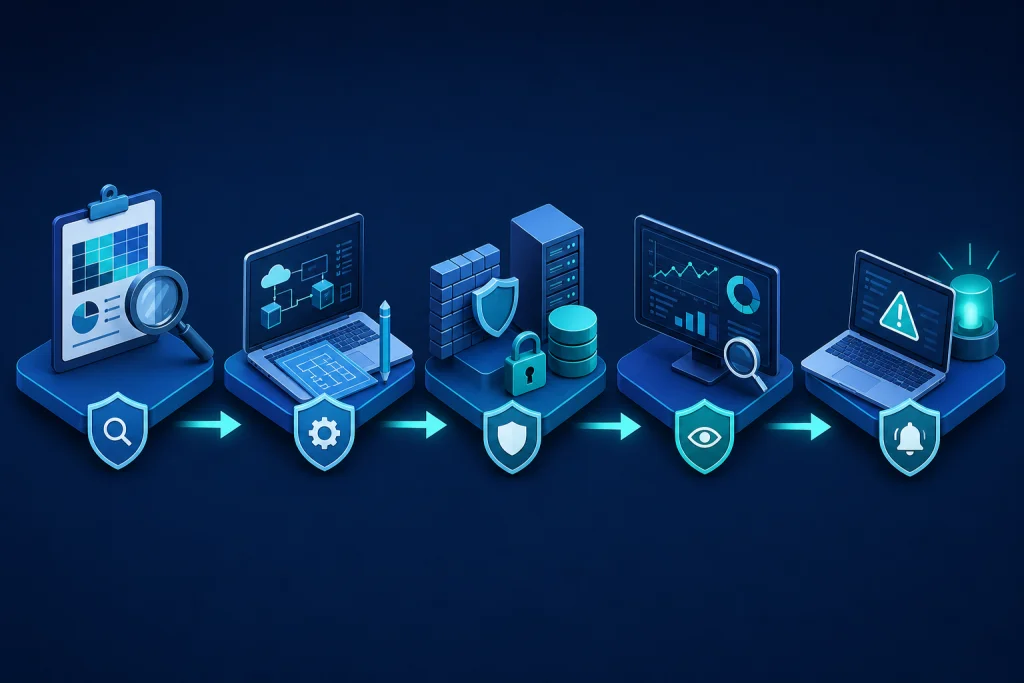
A comprehensive email security architecture for enterprises consists of multiple defense layers. The first layer is perimeter filtering via secure email gateways (SEGs) that inspect inbound and outbound traffic for spam, malware, and phishing. Solutions like FortiMail or Cisco ESA use real-time threat intelligence and sandboxing to detect zero-day attacks. The second layer employs email authentication standards: SPF, DKIM, and DMARC to prevent domain spoofing and impersonation. Enterprises must also enforce TLS encryption for data in transit and integrate with backup & disaster recovery systems to ensure email continuity.

Internally, data loss prevention (DLP) policies scan email content and attachments for sensitive data such as PII or financial records. Integration with cybersecurity frameworks like SIEM enables centralized logging and incident response. Advanced solutions incorporate AI/ML models to detect anomalous behavior, such as unusual login locations or forwarding rules. For hybrid environments, cloud-based email security from Microsoft Defender for Office 365 or Cisco Cloud Mailbox Defense provides scalable protection. On-premises options are critical for industries with strict data residency requirements. The architecture must also include user awareness training and simulated phishing campaigns to reduce human error.

Industry Use Cases for Email Security

In the financial services sector, email security is vital to protect against BEC attacks that target wire transfers and sensitive client data. A bank in Jakarta implemented FortiMail with advanced DLP to block unauthorized sharing of account numbers, reducing data leakage incidents by 70%. For healthcare, compliance with Indonesia’s PDP law requires encryption of patient emails. A hospital in Surabaya deployed Microsoft Defender for Office 365 with automated encryption for any email containing medical records, achieving full compliance.

Manufacturing enterprises face ransomware threats via phishing emails that can halt production lines. A manufacturing company in Batam integrated Cisco Email Security with sandboxing, preventing a ransomware outbreak that could have cost IDR 5 billion. E-commerce platforms must protect customer payment data and prevent account takeover. An e-commerce firm in Bandung used DMARC enforcement and multi-factor authentication (MFA) for email access, reducing phishing success rates by 90%. These use cases demonstrate how tailored email security solutions address specific industry risks.

Email Security vs Traditional Alternatives

Traditional email security often relied on basic spam filters and signature-based antivirus, which are ineffective against modern targeted attacks. Legacy solutions cannot detect zero-day malware or sophisticated social engineering. In contrast, modern email security leverages AI and threat intelligence to analyze behavior and content. For example, Fortinet’s FortiMail uses machine learning to detect anomalies in email patterns, while traditional filters would miss them.

Another key difference is integration with broader security ecosystems. Traditional alternatives operate in silos, whereas modern solutions integrate with firewall and hyperconverged infrastructure for unified threat management. Cloud-native email security offers scalability and automatic updates, while on-premises solutions provide full control. For Indonesian enterprises, modern email security also supports multi-cloud environments and compliance with local regulations, which traditional options often lack. The shift from reactive to proactive defense reduces mean time to detect (MTTD) and respond (MTTR).

Case Study & Implementation Methodology

A financial services company in Jakarta, with 2,000 employees, faced 500+ phishing attempts daily and a BEC incident that caused IDR 1.2 billion loss. Challenge: lack of DMARC enforcement and no DLP for outbound emails. Solution: deployed FortiMail with DMARC, sandboxing, and DLP, integrated with existing server & storage infrastructure. Implementation followed a phased approach: assessment, pilot, full rollout, and user training. Result: phishing blocks increased to 98%, BEC attempts reduced by 95%, and data leakage incidents dropped from 12 to 1 per quarter within 6 months.

A healthcare provider in Surabaya, with 500 users, needed to comply with PDP law for patient email encryption. Challenge: manual encryption processes caused delays and errors. Solution: Microsoft Defender for Office 365 with automatic encryption policies and integration with Microsoft 365. Implementation: configured mail flow rules, trained staff, and enabled audit logging. Result: 100% of sensitive emails encrypted automatically, compliance audit passed with zero findings, and user productivity improved by 30% due to reduced manual overhead.

Email Security Architecture

A comprehensive email security architecture for enterprises consists of multiple defense layers. The first layer is perimeter filtering via secure email gateways (SEGs) that inspect inbound and outbound traffic for spam, malware, and phishing. Solutions like FortiMail or Cisco ESA use real-time threat intelligence and sandboxing to detect zero-day attacks. The second layer employs email authentication standards: SPF, DKIM, and DMARC to prevent domain spoofing and impersonation. Enterprises must also enforce TLS encryption for data in transit and integrate with backup & disaster recovery systems to ensure email continuity.

Industry Use Cases for Email Security

In the financial services sector, email security is vital to protect against BEC attacks that target wire transfers and sensitive client data. A bank in Jakarta implemented FortiMail with advanced DLP to block unauthorized sharing of account numbers, reducing data leakage incidents by 70%. For healthcare, compliance with Indonesia’s PDP law requires encryption of patient emails. A hospital in Surabaya deployed Microsoft Defender for Office 365 with automated encryption for any email containing medical records, achieving full compliance.

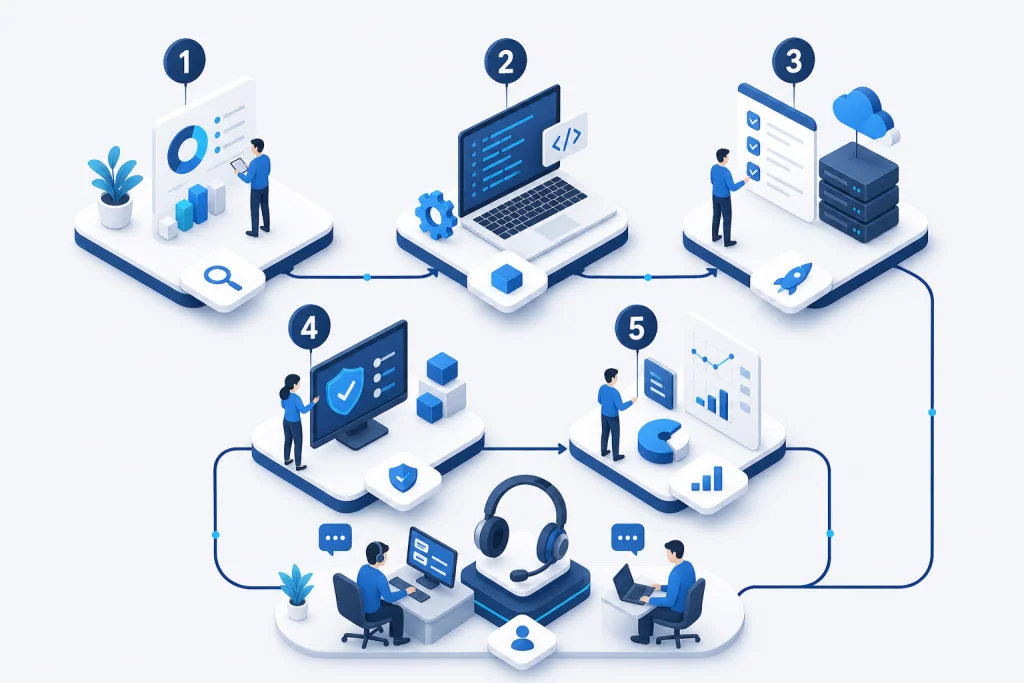
How we work

Structured delivery from assessment to handover

Each phase has clear deliverables, owners, and acceptance criteria aligned to enterprise IT practice.

Approach

Email Security vs Traditional Alternatives

Traditional email security often relied on basic spam filters and signature-based antivirus, which are ineffective against modern targeted attacks. Legacy solutions cannot detect zero-day malware or sophisticated social engineering. In contrast, modern email security leverages AI and threat intelligence to analyze behavior and content. For example, Fortinet’s FortiMail uses machine learning to detect anomalies in email patterns, while traditional filters would miss them.

  • Another key difference is integration with broader security ecosystems. Traditional alternatives operate in silos, whereas modern solutions integrate with firewall and hyperconverged infrastructure for unified threat management. Cloud-native email security offers scalability and automatic updates, while on-premises solutions provide full control. For Indonesian enterprises, modern email security also supports multi-cloud environments and compliance with local regulations, which traditional options often lack. The shift from reactive to proactive defense reduces mean time to detect (MTTD) and respond (MTTR).

Capabilities

Case Study & Implementation Methodology

A financial services company in Jakarta, with 2,000 employees, faced 500+ phishing attempts daily and a BEC incident that caused IDR 1.2 billion loss. Challenge: lack of DMARC enforcement and no DLP for outbound emails. Solution: deployed FortiMail with DMARC, sandboxing, and DLP, integrated with existing server & storage infrastructure. Implementation followed a phased approach: assessment, pilot, full rollout, and user training. Result: phishing blocks increased to 98%, BEC attempts reduced by 95%, and data leakage incidents dropped from 12 to 1 per quarter within 6 months.

  • A healthcare provider in Surabaya, with 500 users, needed to comply with PDP law for patient email encryption. Challenge: manual encryption processes caused delays and errors. Solution: Microsoft Defender for Office 365 with automatic encryption policies and integration with Microsoft 365. Implementation: configured mail flow rules, trained staff, and enabled audit logging. Result: 100% of sensitive emails encrypted automatically, compliance audit passed with zero findings, and user productivity improved by 30% due to reduced manual overhead.
Use cases

Perencanaan infrastruktur baru

Refresh & modernisasi

Ekspansi multi-cabang

Compliance & audit IT

Email Security for Enterprise

Our engineers help design, deploy, and support enterprise IT solutions across Indonesia.

Request a quote Contact our team

Related pages

E-E-A-T · Expertise & trust

IT infrastructure & data center expertise

Infrastructure engineers support server/storage sizing, VMware, rack & stack, and operational handover.

  • 500+ Infrastructure deployments
  • 24/7 Operational support
  • SLA Enterprise SLA
  • 150+ Clients & institutions

Engineering & delivery expertise

Engineer-led assessment

Requirements workshops, sizing, and architecture — not catalogue selling without context.

Documented deployment

Commissioning checklists, as-built diagrams, IP plans, and escalation runbooks.

Audit-ready procurement

BoQ/BOM, quotations, POs, and handover packs for tenders and IT audits.

Multi-vendor coordination

One project partner for servers, networks, security, backup, and licensing.

Vendor ecosystem & sourcing channels

We source through official distributors/resellers per brand and project. Specific partnership tiers are confirmed per RFP — see our credentials page.

Vendor Status / tier Scope Notes
Dell Technologies Authorized channel PowerEdge, storage BoQ & manufacturer warranty
HPE Authorized channel ProLiant Enterprise servers
Fortinet Implementation partner NGFW, SD-WAN Licensing & deployment
Veeam Implementation partner Backup, replication Immutable design
VMware Implementation partner vSphere Cluster & migration

Tiers vary by SKU/region. Contact sales@intilogy.com for distributor letters or engineer certificates.

Enterprise implementation methodology

Standard flow for infrastructure, security, and backup projects — scoped per contract.

  1. Discovery & assessment

    Duration: 1–2 weeks

    Deliverables Requirements & risk report

  2. Architecture & BoQ

    Duration: 1–2 weeks

    Deliverables HLD, BoQ, rollout plan

  3. Procurement & staging

    Duration: 2–4 weeks

    Deliverables Asset register

  4. Implementation & UAT

    Duration: 2–6 weeks

    Deliverables As-built, UAT sign-off

  5. Handover & operations

    Duration: Ongoing

    Deliverables SOPs, training, SLA if contracted

Support & SLA (per project contract)

Service levels are defined in agreement — example framework below.

Standard maintenance

Response
Next business day (remote)
Coverage
Firmware advisory, tickets, RMA
Notes
Indonesia business hours

Project warranty

Response
Per implementation contract
Coverage
Defects in Intilogy deployment scope
Notes
Not 24/7 unless agreed

Critical incident (optional)

Response
4–8 hours if contracted
Coverage
Production-critical escalation
Notes
Requires separate MSA

Response times are illustrative — binding only when written in contract.

Technical documentation delivered

  • Topology & rack diagrams (as-built)
  • Asset list, serials, warranty status
  • Critical config summary & change log
  • Basic operations runbook & escalation contacts
  • Restore / DR drill reports (if in scope)
  • Tender packs: distributor letters & engineer certs (on request)

Competency & certifications

Engineers train on vendor technologies per project. Individual certs (Fortinet NSE, VMware VCP, Veeam VMCE, etc.) are provided for tenders — not all listed publicly.

  • Engineer certifications — Per project technology — on request
  • Distributor letters — For procurement audit
  • Client references — See Clients page for logos & scope

View certifications & partnerships

Ready to discuss architecture & BoQ?

Our team supports assessment, recommendations, procurement, and documented implementation.

WhatsApp Consult on WhatsApp
Request Consultation WhatsApp