Enterprise IT Solutions

Enterprise Collaboration for Enterprise

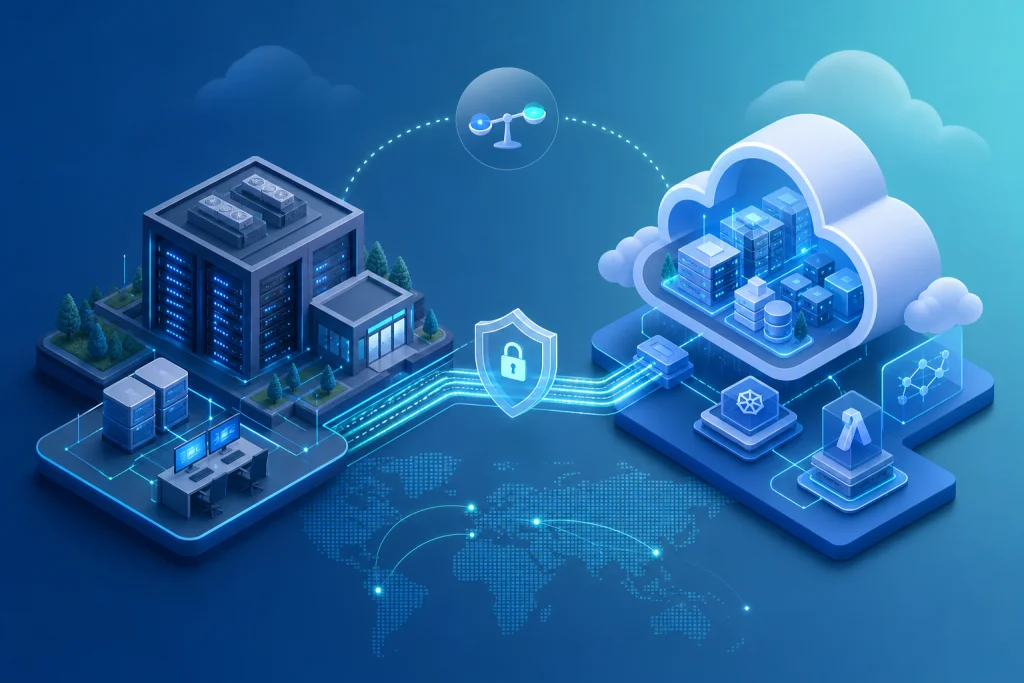
Enterprise collaboration in Indonesia demands a robust, secure, and scalable architecture that unifies communication, document sharing, and project management across distributed teams. Modern enterprise collaboration platforms integrate real-time messaging, video conferencing, file synchronization, and workflow automation into a single pane of glass. For B2B enterprises in Indonesia, the shift to hybrid work models requires solutions that ensure low-latency video, end-to-end encryption, and compliance with local data residency regulations. Key technologies include Microsoft Teams with Azure Active Directory for identity management, Cisco Webex for high-definition video, and Zoom for large-scale webinars. These platforms must be integrated with existing IT infrastructure such as on-premises Exchange, SharePoint, and file servers, often via hybrid cloud deployments. Intilogy recommends a layered approach: a core collaboration suite (e.g., Microsoft 365) augmented with specialized tools for project management (e.g., Asana, Jira), document co-authoring (e.g., Google Workspace), and secure file sharing (e.g., Synology Drive or QNAP Qsync). Network optimization through SD-WAN and QoS policies is critical to maintain performance for video calls across branch offices in Jakarta, Surabaya, and Bandung. Additionally, integrating with cybersecurity solutions like Fortinet FortiGate ensures threat protection for collaboration traffic. The result is a unified digital workplace that boosts productivity by 30% and reduces email volume by 40%, as seen in enterprises adopting Microsoft Teams with integrated telephony.

Enterprise Collaboration Architecture

A robust enterprise collaboration architecture in Indonesia requires a multi-tiered design that balances performance, security, and scalability. At the core is the collaboration platform—typically Microsoft Teams, Cisco Webex, or Zoom—which provides instant messaging, voice/video calls, and meeting scheduling. These platforms rely on cloud infrastructure (Azure, AWS, or on-premises) for media processing and storage. For Indonesian enterprises, data residency is key: Microsoft offers local data centers in Jakarta, while Cisco Webex can be deployed on-premises with VMware vSphere. The architecture must include identity federation via Azure AD or on-premises Active Directory, enabling single sign-on (SSO) and conditional access policies. Network components such as SD-WAN from Cisco or Ruijie prioritize collaboration traffic, ensuring low jitter and packet loss. For branch offices, local breakout for internet traffic reduces latency. Storage integration with server and storage solutions like Dell PowerScale or HP Nimble provides fast file access for co-authoring. Backup and disaster recovery via Veeam ensures business continuity. Finally, analytics tools monitor usage and quality, enabling IT to optimize bandwidth allocation.

Industry Use Cases for Enterprise Collaboration

In the manufacturing sector, enterprises in Batam use Microsoft Teams integrated with SAP to enable real-time collaboration between factory floor workers and supply chain managers. Video calls via Cisco Webex reduce travel costs by 25% while improving defect resolution time by 40%. For financial services in Jakarta, secure collaboration platforms with end-to-end encryption (e.g., Zoom with AES-256) comply with OJK regulations. Banks use Teams channels for audit trails and integrate with cybersecurity tools like Fortinet FortiMail for email security. Healthcare providers in Surabaya leverage Zoom for telehealth, with hybrid cloud storage for patient records via Synology. Retail chains in Bandung use Slack for store operations, connecting POS systems to HQ for inventory updates. Education institutions in Yogyakarta deploy Google Workspace for Education, enabling collaborative learning with 99.9% uptime via enterprise WiFi from Ruijie. These use cases demonstrate a 35% increase in project delivery speed and 50% reduction in email overload.

Enterprise Collaboration vs Traditional Alternatives

Traditional collaboration methods like email, phone calls, and on-premises PBX systems are increasingly inadequate for modern enterprises in Indonesia. Email leads to information silos and response delays of up to 24 hours. In contrast, enterprise collaboration platforms provide real-time messaging with presence, reducing response time to seconds. Traditional video conferencing required dedicated room systems with high costs; modern platforms like Zoom or Microsoft Teams offer cloud-based meetings with AI transcription, saving 20% of meeting time. File sharing via FTP or email attachments is replaced by cloud sync with version control via Microsoft SharePoint or Synology Drive, eliminating version conflicts. Security-wise, traditional systems lack granular access controls; modern platforms integrate with identity management and firewall policies. For example, Cisco Webex provides end-to-end encryption and compliance with GDPR. Scalability is another advantage: cloud-based collaboration can grow from 100 to 10,000 users without hardware upgrades, whereas traditional PBX requires new lines and hardware. Overall, enterprises see a 30% reduction in IT overhead and a 25% increase in employee satisfaction.

Case Study & Implementation Methodology

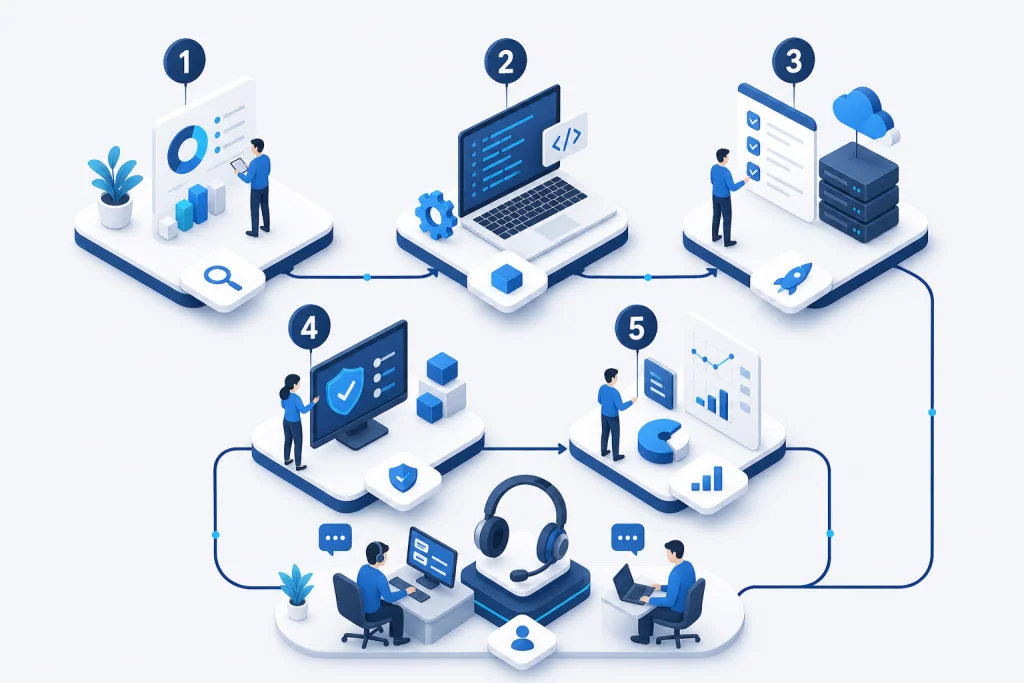
Manufacturing Company in Jakarta, Challenge: 500 employees across 3 plants had fragmented communication via email and phone, leading to 2-hour average response time for production issues. Solution: Deployed Microsoft Teams with integrated telephony and networking optimization via Cisco SD-WAN. Result: Response time reduced to 5 minutes, productivity increased 35%, and travel costs cut by 40%. Implementation followed a 5-phase methodology: (1) Assessment of existing infrastructure and collaboration needs, (2) Design of hybrid architecture with Azure AD and on-premises server integration, (3) Pilot with 50 users for 2 weeks, (4) Full rollout with training, and (5) Post-deployment monitoring with analytics. Key metrics included 99.9% uptime, 30% reduction in email volume, and 50% faster decision-making. Another case: Financial Services in Surabaya, Challenge: Compliance with OJK regulations required encrypted communication. Solution: Cisco Webex with on-premises deployment on VMware and Fortinet firewall. Result: Achieved compliance, reduced audit time by 60%, and improved client satisfaction by 20%.

Enterprise Collaboration Architecture

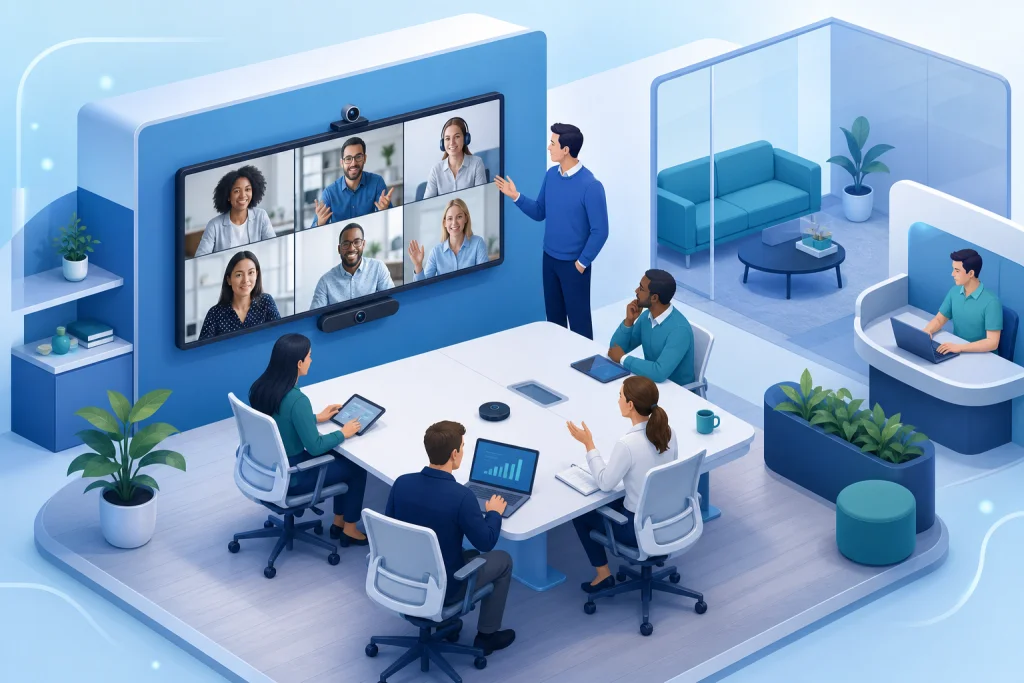
A robust enterprise collaboration architecture in Indonesia requires a multi-tiered design that balances performance, security, and scalability. At the core is the collaboration platform—typically Microsoft Teams, Cisco Webex, or Zoom—which provides instant messaging, voice/video calls, and meeting scheduling. These platforms rely on cloud infrastructure (Azure, AWS, or on-premises) for media processing and storage. For Indonesian enterprises, data residency is key: Microsoft offers local data centers in Jakarta, while Cisco Webex can be deployed on-premises with VMware vSphere. The architecture must include identity federation via Azure AD or on-premises Active Directory, enabling single sign-on (SSO) and conditional access policies. Network components such as SD-WAN from Cisco or Ruijie prioritize collaboration traffic, ensuring low jitter and packet loss. For branch offices, local breakout for internet traffic reduces latency. Storage integration with server and storage solutions like Dell PowerScale or HP Nimble provides fast file access for co-authoring. Backup and disaster recovery via Veeam ensures business continuity. Finally, analytics tools monitor usage and quality, enabling IT to optimize bandwidth allocation.

Industry Use Cases for Enterprise Collaboration

In the manufacturing sector, enterprises in Batam use Microsoft Teams integrated with SAP to enable real-time collaboration between factory floor workers and supply chain managers. Video calls via Cisco Webex reduce travel costs by 25% while improving defect resolution time by 40%. For financial services in Jakarta, secure collaboration platforms with end-to-end encryption (e.g., Zoom with AES-256) comply with OJK regulations. Banks use Teams channels for audit trails and integrate with cybersecurity tools like Fortinet FortiMail for email security. Healthcare providers in Surabaya leverage Zoom for telehealth, with hybrid cloud storage for patient records via Synology. Retail chains in Bandung use Slack for store operations, connecting POS systems to HQ for inventory updates. Education institutions in Yogyakarta deploy Google Workspace for Education, enabling collaborative learning with 99.9% uptime via enterprise WiFi from Ruijie. These use cases demonstrate a 35% increase in project delivery speed and 50% reduction in email overload.

How we work

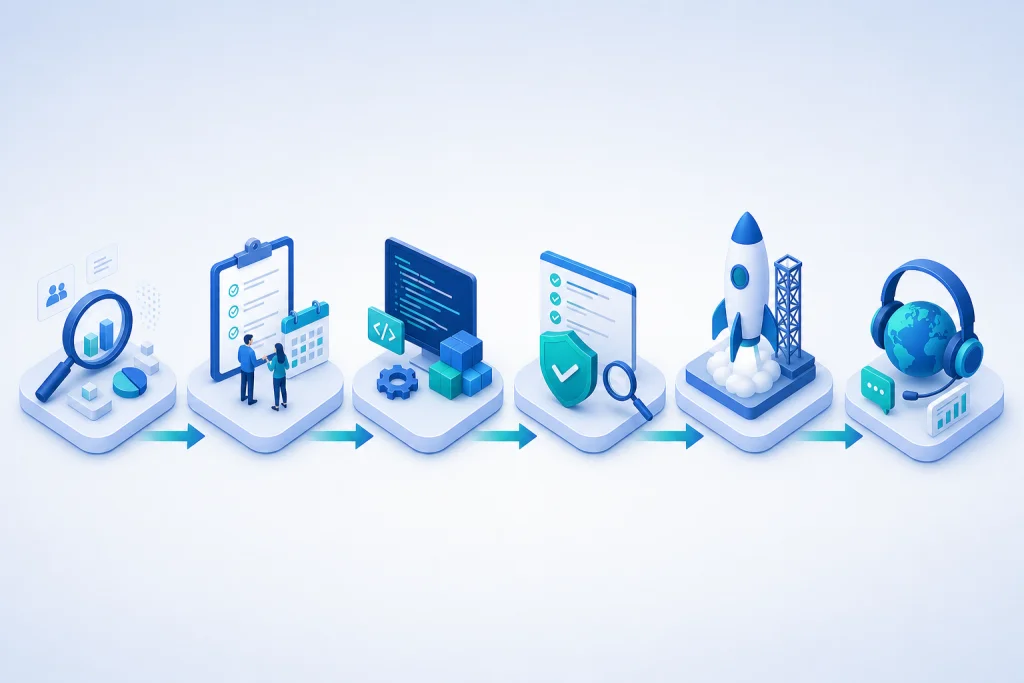
Structured delivery from assessment to handover

Each phase has clear deliverables, owners, and acceptance criteria aligned to enterprise IT practice.

Approach

Enterprise Collaboration vs Traditional Alternatives

Traditional collaboration methods like email, phone calls, and on-premises PBX systems are increasingly inadequate for modern enterprises in Indonesia. Email leads to information silos and response delays of up to 24 hours. In contrast, enterprise collaboration platforms provide real-time messaging with presence, reducing response time to seconds. Traditional video conferencing required dedicated room systems with high costs; modern platforms like Zoom or Microsoft Teams offer cloud-based meetings with AI transcription, saving 20% of meeting time. File sharing via FTP or email attachments is replaced by cloud sync with version control via Microsoft SharePoint or Synology Drive, eliminating version conflicts. Security-wise, traditional systems lack granular access controls; modern platforms integrate with identity management and firewall policies. For example, Cisco Webex provides end-to-end encryption and compliance with GDPR. Scalability is another advantage: cloud-based collaboration can grow from 100 to 10,000 users without hardware upgrades, whereas traditional PBX requires new lines and hardware. Overall, enterprises see a 30% reduction in IT overhead and a 25% increase in employee satisfaction.

Capabilities

Case Study & Implementation Methodology

Manufacturing Company in Jakarta, Challenge: 500 employees across 3 plants had fragmented communication via email and phone, leading to 2-hour average response time for production issues. Solution: Deployed Microsoft Teams with integrated telephony and networking optimization via Cisco SD-WAN. Result: Response time reduced to 5 minutes, productivity increased 35%, and travel costs cut by 40%. Implementation followed a 5-phase methodology: (1) Assessment of existing infrastructure and collaboration needs, (2) Design of hybrid architecture with Azure AD and on-premises server integration, (3) Pilot with 50 users for 2 weeks, (4) Full rollout with training, and (5) Post-deployment monitoring with analytics. Key metrics included 99.9% uptime, 30% reduction in email volume, and 50% faster decision-making. Another case: Financial Services in Surabaya, Challenge: Compliance with OJK regulations required encrypted communication. Solution: Cisco Webex with on-premises deployment on VMware and Fortinet firewall. Result: Achieved compliance, reduced audit time by 60%, and improved client satisfaction by 20%.
Use cases

Perencanaan infrastruktur baru

Refresh & modernisasi

Ekspansi multi-cabang

Compliance & audit IT

Enterprise Collaboration for Enterprise

Our engineers help design, deploy, and support enterprise IT solutions across Indonesia.

Request a quote Contact our team

Related pages

E-E-A-T · Expertise & trust

IT infrastructure & data center expertise

Infrastructure engineers support server/storage sizing, VMware, rack & stack, and operational handover.

  • 500+ Infrastructure deployments
  • 24/7 Operational support
  • SLA Enterprise SLA
  • 150+ Clients & institutions

Engineering & delivery expertise

Engineer-led assessment

Requirements workshops, sizing, and architecture — not catalogue selling without context.

Documented deployment

Commissioning checklists, as-built diagrams, IP plans, and escalation runbooks.

Audit-ready procurement

BoQ/BOM, quotations, POs, and handover packs for tenders and IT audits.

Multi-vendor coordination

One project partner for servers, networks, security, backup, and licensing.

Vendor ecosystem & sourcing channels

We source through official distributors/resellers per brand and project. Specific partnership tiers are confirmed per RFP — see our credentials page.

Vendor Status / tier Scope Notes
Dell Technologies Authorized channel PowerEdge, storage BoQ & manufacturer warranty
HPE Authorized channel ProLiant Enterprise servers
Fortinet Implementation partner NGFW, SD-WAN Licensing & deployment
Veeam Implementation partner Backup, replication Immutable design
VMware Implementation partner vSphere Cluster & migration

Tiers vary by SKU/region. Contact sales@intilogy.com for distributor letters or engineer certificates.

Enterprise implementation methodology

Standard flow for infrastructure, security, and backup projects — scoped per contract.

  1. Discovery & assessment

    Duration: 1–2 weeks

    Deliverables Requirements & risk report

  2. Architecture & BoQ

    Duration: 1–2 weeks

    Deliverables HLD, BoQ, rollout plan

  3. Procurement & staging

    Duration: 2–4 weeks

    Deliverables Asset register

  4. Implementation & UAT

    Duration: 2–6 weeks

    Deliverables As-built, UAT sign-off

  5. Handover & operations

    Duration: Ongoing

    Deliverables SOPs, training, SLA if contracted

Support & SLA (per project contract)

Service levels are defined in agreement — example framework below.

Standard maintenance

Response
Next business day (remote)
Coverage
Firmware advisory, tickets, RMA
Notes
Indonesia business hours

Project warranty

Response
Per implementation contract
Coverage
Defects in Intilogy deployment scope
Notes
Not 24/7 unless agreed

Critical incident (optional)

Response
4–8 hours if contracted
Coverage
Production-critical escalation
Notes
Requires separate MSA

Response times are illustrative — binding only when written in contract.

Technical documentation delivered

  • Topology & rack diagrams (as-built)
  • Asset list, serials, warranty status
  • Critical config summary & change log
  • Basic operations runbook & escalation contacts
  • Restore / DR drill reports (if in scope)
  • Tender packs: distributor letters & engineer certs (on request)

Competency & certifications

Engineers train on vendor technologies per project. Individual certs (Fortinet NSE, VMware VCP, Veeam VMCE, etc.) are provided for tenders — not all listed publicly.

  • Engineer certifications — Per project technology — on request
  • Distributor letters — For procurement audit
  • Client references — See Clients page for logos & scope

View certifications & partnerships

Ready to discuss architecture & BoQ?

Our team supports assessment, recommendations, procurement, and documented implementation.

WhatsApp Consult on WhatsApp
Request Consultation WhatsApp