Enterprise IT Procurement Architecture
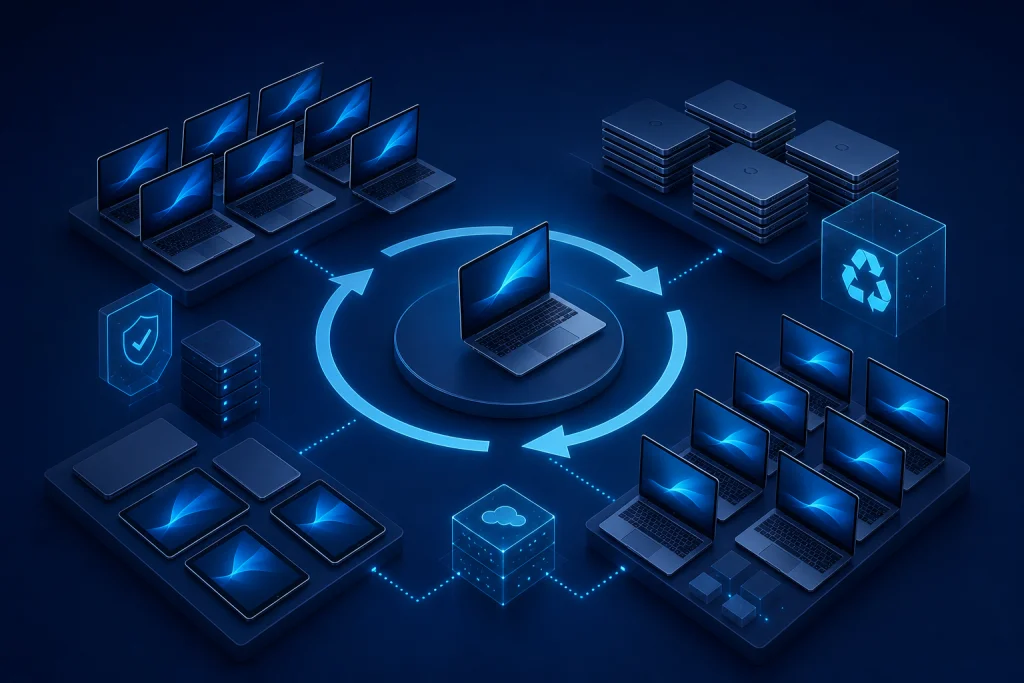
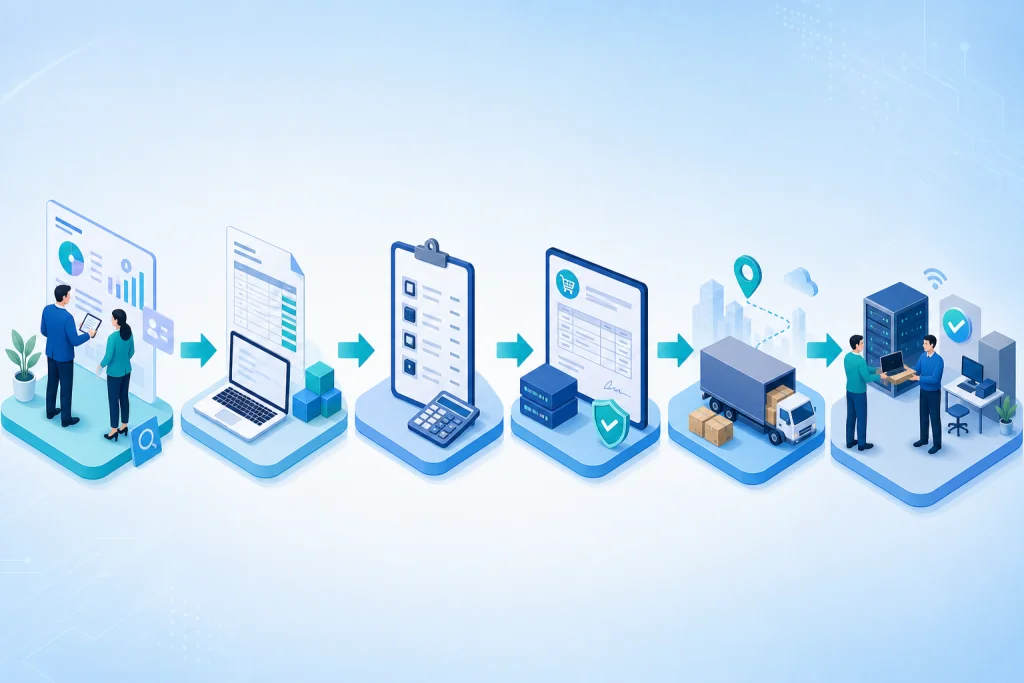
Enterprise IT procurement architecture involves a structured framework to align technology acquisitions with business goals. It begins with a comprehensive assessment of existing infrastructure, capacity planning, and compliance requirements. For example, a typical procurement cycle includes: (1) requirements gathering with stakeholders, (2) technical specification development, (3) vendor RFQ/RFP management, (4) evaluation of proposals based on TCO, performance, and support SLAs, (5) contract negotiation with legal and finance, (6) order placement and logistics coordination, (7) installation and integration, and (8) lifecycle management including warranty renewals and end-of-life planning.
Key architectural components include centralized procurement portals for tracking orders, inventory management systems, and vendor scorecards. Integration with ERP systems like SAP or Oracle ensures budget control and automated approvals. For Indonesian enterprises, import duty calculations and tax exemptions (e.g., for BKPM-approved projects) are critical. Intilogy’s architecture incorporates these local nuances, leveraging our partnerships with global vendors such as Lenovo, HP, and Dell for servers, Cisco and Ruijie for networking, and Fortinet for security. We also manage software licensing for Microsoft and VMware under Enterprise Agreements, ensuring compliance and cost optimization.
Industry Use Cases for Enterprise IT Procurement
Enterprise IT procurement spans multiple industries. In banking and finance, procurement focuses on high-availability server clusters, storage area networks (SAN), and cybersecurity solutions to meet BI and OJK regulations. For example, a bank may procure Dell PowerEdge servers with VMware vSAN for core banking systems, along with Fortinet firewalls for network segmentation. In manufacturing, procurement includes ruggedized edge servers, industrial networking switches, and backup appliances for factory automation. A manufacturer in Batam might source Lenovo ThinkSystem servers and Synology NAS for on-premises data storage, integrated with Cisco industrial switches.
In logistics and warehousing, procurement prioritizes RFID readers, barcode scanners, and enterprise WiFi infrastructure. A logistics company in Jakarta may procure Ruijie access points and QNAP storage for real-time tracking. Healthcare providers require HIPAA-compliant storage and backup solutions. A hospital in Surabaya could procure HP servers with Veeam backup for electronic medical records. Retail chains need scalable POS systems and networking. Intilogy’s procurement services cover all these use cases, ensuring technical specifications match operational demands. We also provide enterprise WiFi solutions for large campuses and enterprise CCTV systems for security.
Enterprise IT Procurement vs Traditional Alternatives
Traditional IT procurement often involves multiple vendors, manual processes, and fragmented support. Enterprises may buy servers from one reseller, networking from another, and software from a third, leading to compatibility issues, longer lead times, and higher total cost of ownership (TCO). In contrast, enterprise IT procurement through a single partner like Intilogy offers integrated solutions, volume discounts, and end-to-end lifecycle management. For example, a traditional approach might require separate RFPs for servers, storage, and networking, each with different SLAs and warranty terms. With Intilogy, we provide a unified procurement plan, including hyperconverged infrastructure that combines compute, storage, and networking in one appliance, simplifying deployment and reducing power consumption.
Another key difference is in software licensing. Traditional procurement often leads to over-licensing or non-compliance. Intilogy manages Microsoft and VMware Enterprise Agreements, optimizing license allocation. Additionally, traditional procurement may lack post-sale support, causing downtime during failures. Intilogy includes warranty management and RMA services, with 4-hour replacement options for critical components. For cybersecurity, traditional procurement might involve separate firewalls, antivirus, and SIEM tools, whereas we offer integrated cybersecurity solutions from Fortinet and Veeam. Overall, enterprise IT procurement reduces procurement cycles by 30–50% and cuts TCO by 15–25%.
Case Study & Implementation Methodology
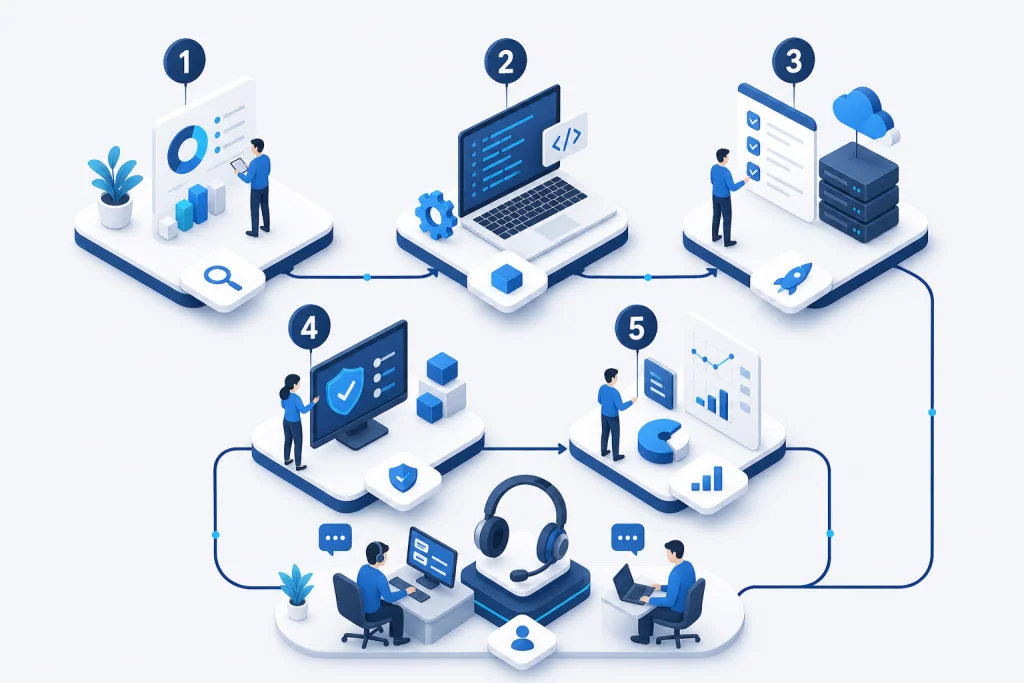
Implementation methodology follows a five-phase approach: Assessment, Design, Procurement, Deployment, and Optimization. In the Assessment phase, we conduct a technical audit of existing infrastructure, including network bandwidth, storage capacity, and compute utilization. For example, a manufacturing company in Batam had 200 TB of unstructured data growing 20% annually, with legacy NAS causing latency. Our Design phase proposed a hybrid storage architecture using Synology RackStation for active data and QNAP for archival, integrated with Veeam backup. The Procurement phase involved sourcing 10 Synology RS3617xs+ units and 5 QNAP TS-1685 units with 10GbE connectivity, along with Cisco switches for network segmentation.
Deployment was completed in 4 weeks with zero downtime, using a phased migration. Post-deployment, the company achieved 40% faster data access and 50% reduction in backup windows. Another case: a logistics firm in Jakarta needed to upgrade its network for 500+ IoT devices. We procured Ruijie RG-AP720-I access points and RG-S2928G switches, along with Fortinet FortiGate 100F firewalls. Implementation included site surveys and channel optimization. Result: 99.9% network uptime and 30% reduction in latency. These cases demonstrate our structured methodology and measurable outcomes. For Indonesian enterprises, we also handle import permits and tax exemptions, ensuring smooth customs clearance. Our methodology is ISO 9001 compliant and adaptable to any industry.