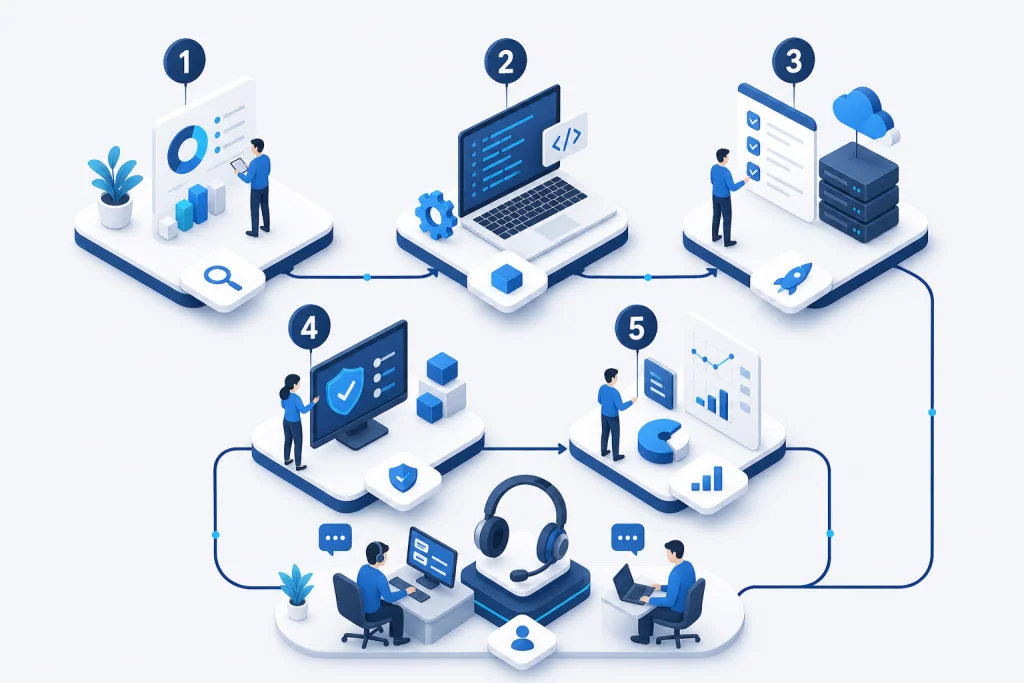
Enterprise IT Solutions

IT Software Procurement for Enterprise

IT software procurement for enterprise organizations in Indonesia demands a strategic approach to licensing, compliance, and lifecycle management. Unlike off-the-shelf consumer software, enterprise agreements involve volume licensing (e.g., Microsoft Enterprise Agreement), subscription models (SaaS), and perpetual licenses with Software Assurance. Key vendors include Microsoft (Azure, Office 365, Dynamics 365), VMware (vSphere, vSAN), and Veeam (backup solutions). Procurement must align with IT architecture—whether on-premises, hybrid cloud, or multi-cloud—to avoid over-licensing or compliance gaps. For Indonesian enterprises, factors like local data residency, BPJS Ketenagakerjaan integration, and government regulations (e.g., Permenkominfo 5/2020) influence software selection. A robust procurement process includes needs assessment, RFQ/RFP management, contract negotiation, and license optimization. Intilogy assists in navigating complex vendor ecosystems, ensuring cost-effective procurement that scales with business growth. This article explores the architecture, use cases, comparative advantages, and implementation methodology for enterprise software procurement in Indonesia.

IT Software Procurement Architecture

Enterprise software procurement architecture encompasses licensing models, deployment options, and compliance frameworks. Centralized procurement via a Software Asset Management (SAM) tool is recommended to track licenses across the organization. Key architectural components include: (1) Licensing Models: Perpetual (one-time cost + annual maintenance), Subscription (monthly/yearly, includes updates), and Consumption-based (pay-as-you-go, e.g., Azure). (2) Deployment: On-premises (requires infrastructure like server & storage), Cloud (IaaS/PaaS/SaaS), or Hybrid. (3) Compliance: True-up audits (e.g., Microsoft SAM) require accurate usage data. For Indonesian enterprises, integrating with hybrid cloud environments is common to balance control and scalability.

A typical architecture involves a procurement portal or marketplace (e.g., Microsoft Volume Licensing Service Center) linked to internal IT systems. License pools are allocated to departments via Active Directory groups. For SaaS, single sign-on (SSO) via Azure AD ensures access control. Backup and disaster recovery licensing (e.g., Veeam) must align with data replication strategies. The architecture must also support license mobility (e.g., Microsoft License Mobility through Software Assurance) for hybrid workloads. Proper architecture reduces costs by 15-30% through license optimization and eliminates compliance risks.

Industry Use Cases for IT Software Procurement

In manufacturing, enterprises procure ERP software (e.g., SAP, Oracle) along with Microsoft SQL Server licenses for production databases. A Jakarta-based automotive parts manufacturer reduced licensing costs by 20% by switching from per-core SQL Server licensing to per-user licensing after workload analysis. In healthcare, hospitals in Surabaya procure electronic medical record (EMR) software with VMware vSphere for server virtualization, ensuring high availability for patient data. Compliance with Indonesia's UU Kesehatan requires data localization, so they use Azure Indonesia regions.

For financial services, banks in Jakarta procure Microsoft 365 E5 for compliance and advanced threat protection, alongside Veeam Backup for Office 365 to meet OJK regulations. Retail chains in Bandung use Dynamics 365 for inventory management, procuring per-app licenses to avoid over-licensing. The education sector, such as universities in Yogyakarta, procures Microsoft Azure Dev Tools for Teaching and VMware vSphere for research clusters. Each use case highlights the need for tailored procurement strategies that align with industry-specific regulations and operational demands.

IT Software Procurement vs Traditional Alternatives

Traditional procurement involved buying perpetual licenses upfront with annual maintenance, often leading to shelf-ware (unused licenses) and high capital expenditure. In contrast, modern enterprise procurement emphasizes subscription models, cloud marketplaces, and usage-based pricing. For example, Microsoft's shift from perpetual Office to Microsoft 365 subscriptions provides automatic updates and cloud storage. However, for on-premises workloads, perpetual licenses with Software Assurance may still be cost-effective for long-term deployments.

Another alternative is open-source software (e.g., LibreOffice, PostgreSQL), which eliminates licensing costs but requires internal expertise for support and integration. For Indonesian enterprises, the total cost of ownership (TCO) comparison must include training, localization, and compliance. A Jakarta-based logistics company saved 40% by migrating from Oracle Database to PostgreSQL with support from local partners, but faced initial migration challenges. Ultimately, enterprise procurement offers vendor support, SLAs, and compliance assurance, which are critical for regulated industries. Intilogy helps evaluate these trade-offs, recommending hybrid approaches where appropriate.

Case Study & Implementation Methodology

Manufacturing Company in Bekasi: Challenge: Over-licensed Microsoft SQL Server by 30%, leading to $50k annual waste. Solution: Implemented SAM tool and re-licensed to per-user model with Microsoft. Result: 25% cost reduction ($12.5k/year) and 100% compliance.

Hospital in Bandung: Challenge: Unmanaged VMware licenses caused audit risk and $20k penalty. Solution: Consolidated vSphere licenses under Enterprise Plus Agreement with VMware. Result: 15% savings and audit pass.

Implementation methodology follows a 4-phase approach: (1) Assessment: Inventory current licenses, usage, and compliance gaps using tools like Snow License Manager. (2) Strategy: Align procurement with business goals, negotiate with vendors (e.g., Microsoft, Veeam). (3) Procurement: Execute agreements via Microsoft Volume Licensing or AWS Marketplace. (4) Management: Ongoing SAM with quarterly reviews. This methodology ensures 20-30% cost optimization and zero compliance issues.

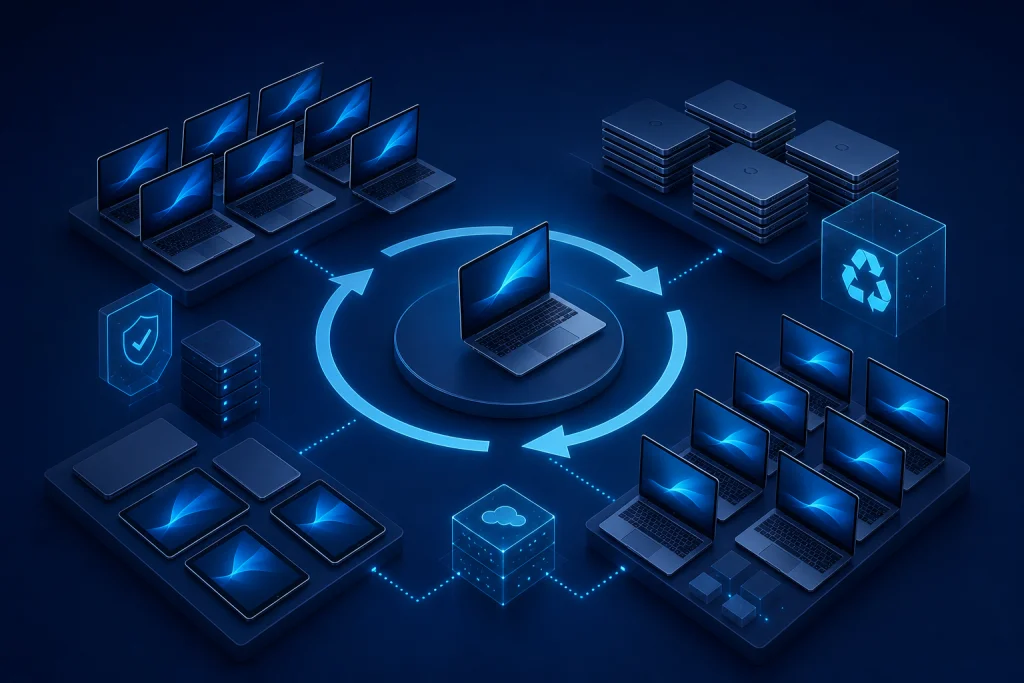
IT Software Procurement Architecture

Enterprise software procurement architecture encompasses licensing models, deployment options, and compliance frameworks. Centralized procurement via a Software Asset Management (SAM) tool is recommended to track licenses across the organization. Key architectural components include: (1) Licensing Models: Perpetual (one-time cost + annual maintenance), Subscription (monthly/yearly, includes updates), and Consumption-based (pay-as-you-go, e.g., Azure). (2) Deployment: On-premises (requires infrastructure like server & storage), Cloud (IaaS/PaaS/SaaS), or Hybrid. (3) Compliance: True-up audits (e.g., Microsoft SAM) require accurate usage data. For Indonesian enterprises, integrating with hybrid cloud environments is common to balance control and scalability.

Industry Use Cases for IT Software Procurement

In manufacturing, enterprises procure ERP software (e.g., SAP, Oracle) along with Microsoft SQL Server licenses for production databases. A Jakarta-based automotive parts manufacturer reduced licensing costs by 20% by switching from per-core SQL Server licensing to per-user licensing after workload analysis. In healthcare, hospitals in Surabaya procure electronic medical record (EMR) software with VMware vSphere for server virtualization, ensuring high availability for patient data. Compliance with Indonesia's UU Kesehatan requires data localization, so they use Azure Indonesia regions.

How we work

Structured delivery from assessment to handover

Each phase has clear deliverables, owners, and acceptance criteria aligned to enterprise IT practice.

Approach

IT Software Procurement vs Traditional Alternatives

Traditional procurement involved buying perpetual licenses upfront with annual maintenance, often leading to shelf-ware (unused licenses) and high capital expenditure. In contrast, modern enterprise procurement emphasizes subscription models, cloud marketplaces, and usage-based pricing. For example, Microsoft's shift from perpetual Office to Microsoft 365 subscriptions provides automatic updates and cloud storage. However, for on-premises workloads, perpetual licenses with Software Assurance may still be cost-effective for long-term deployments.

  • Another alternative is open-source software (e.g., LibreOffice, PostgreSQL), which eliminates licensing costs but requires internal expertise for support and integration. For Indonesian enterprises, the total cost of ownership (TCO) comparison must include training, localization, and compliance. A Jakarta-based logistics company saved 40% by migrating from Oracle Database to PostgreSQL with support from local partners, but faced initial migration challenges. Ultimately, enterprise procurement offers vendor support, SLAs, and compliance assurance, which are critical for regulated industries. Intilogy helps evaluate these trade-offs, recommending hybrid approaches where appropriate.

Capabilities

Case Study & Implementation Methodology

Manufacturing Company in Bekasi: Challenge: Over-licensed Microsoft SQL Server by 30%, leading to $50k annual waste. Solution: Implemented SAM tool and re-licensed to per-user model with Microsoft. Result: 25% cost reduction ($12.5k/year) and 100% compliance.

  • Hospital in Bandung: Challenge: Unmanaged VMware licenses caused audit risk and $20k penalty. Solution: Consolidated vSphere licenses under Enterprise Plus Agreement with VMware. Result: 15% savings and audit pass.
  • Implementation methodology follows a 4-phase approach: (1) Assessment: Inventory current licenses, usage, and compliance gaps using tools like Snow License Manager. (2) Strategy: Align procurement with business goals, negotiate with vendors (e.g., Microsoft, Veeam). (3) Procurement: Execute agreements via Microsoft Volume Licensing or AWS Marketplace. (4) Management: Ongoing SAM with quarterly reviews. This methodology ensures 20-30% cost optimization and zero compliance issues.
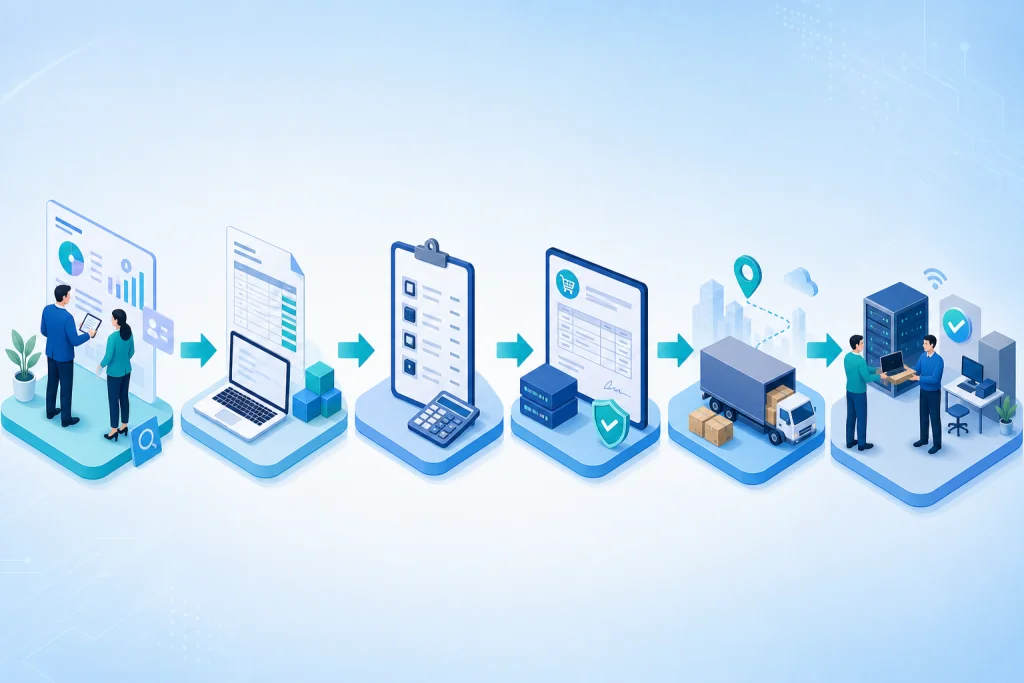
Use cases

Pengadaan greenfield

Refresh infrastruktur

Multi-vendor consolidation

Renewal lisensi

Ekspansi cabang

IT Software Procurement for Enterprise

Our engineers help design, deploy, and support enterprise IT solutions across Indonesia.

Request a quote Contact our team

Related pages

E-E-A-T · Expertise & trust

Implementation expertise & enterprise trust

Intilogy (PT. Inti Jaya Teknologi) supports IT and procurement teams across Indonesia — from technical assessment and BoQ through deployment, documentation, and post go-live support.

  • 500+ Infrastructure deployments
  • 24/7 Operational support
  • SLA Enterprise SLA
  • 150+ Clients & institutions

Engineering & delivery expertise

Engineer-led assessment

Requirements workshops, sizing, and architecture — not catalogue selling without context.

Documented deployment

Commissioning checklists, as-built diagrams, IP plans, and escalation runbooks.

Audit-ready procurement

BoQ/BOM, quotations, POs, and handover packs for tenders and IT audits.

Multi-vendor coordination

One project partner for servers, networks, security, backup, and licensing.

Vendor ecosystem & sourcing channels

We source through official distributors/resellers per brand and project. Specific partnership tiers are confirmed per RFP — see our credentials page.

Vendor Status / tier Scope Notes
Dell Technologies Authorized channel PowerEdge, storage BoQ & manufacturer warranty
HPE Authorized channel ProLiant Enterprise servers
Fortinet Implementation partner NGFW, SD-WAN Licensing & deployment
Veeam Implementation partner Backup, replication Immutable design
VMware Implementation partner vSphere Cluster & migration

Tiers vary by SKU/region. Contact sales@intilogy.com for distributor letters or engineer certificates.

Enterprise implementation methodology

Standard flow for infrastructure, security, and backup projects — scoped per contract.

  1. Discovery & assessment

    Duration: 1–2 weeks

    Deliverables Requirements & risk report

  2. Architecture & BoQ

    Duration: 1–2 weeks

    Deliverables HLD, BoQ, rollout plan

  3. Procurement & staging

    Duration: 2–4 weeks

    Deliverables Asset register

  4. Implementation & UAT

    Duration: 2–6 weeks

    Deliverables As-built, UAT sign-off

  5. Handover & operations

    Duration: Ongoing

    Deliverables SOPs, training, SLA if contracted

Support & SLA (per project contract)

Service levels are defined in agreement — example framework below.

Standard maintenance

Response
Next business day (remote)
Coverage
Firmware advisory, tickets, RMA
Notes
Indonesia business hours

Project warranty

Response
Per implementation contract
Coverage
Defects in Intilogy deployment scope
Notes
Not 24/7 unless agreed

Critical incident (optional)

Response
4–8 hours if contracted
Coverage
Production-critical escalation
Notes
Requires separate MSA

Response times are illustrative — binding only when written in contract.

Technical documentation delivered

  • Topology & rack diagrams (as-built)
  • Asset list, serials, warranty status
  • Critical config summary & change log
  • Basic operations runbook & escalation contacts
  • Restore / DR drill reports (if in scope)
  • Tender packs: distributor letters & engineer certs (on request)

Competency & certifications

Engineers train on vendor technologies per project. Individual certs (Fortinet NSE, VMware VCP, Veeam VMCE, etc.) are provided for tenders — not all listed publicly.

  • Engineer certifications — Per project technology — on request
  • Distributor letters — For procurement audit
  • Client references — See Clients page for logos & scope

View certifications & partnerships

Ready to discuss architecture & BoQ?

Our team supports assessment, recommendations, procurement, and documented implementation.

WhatsApp Consult on WhatsApp
Request Consultation WhatsApp