Enterprise IT Solutions

Vendor Consolidation for Enterprise

Vendor consolidation is a strategic IT procurement approach that reduces the number of suppliers an enterprise engages with, centralizing hardware, software, and services under a unified management framework. In Indonesia, where enterprises often grapple with fragmented vendor ecosystems spanning networking, security, storage, and cloud, consolidation offers a path to operational efficiency, cost reduction, and enhanced governance. By partnering with a single integrator like Intilogy, organizations can standardize on leading brands such as Cisco for networking, Fortinet for cybersecurity, VMware for virtualization, and Synology for storage, eliminating the complexity of managing dozens of separate contracts, support tiers, and compliance requirements. This approach not only simplifies procurement but also enables volume discounts, consistent service-level agreements (SLAs), and integrated solutions that reduce total cost of ownership (TCO) by up to 30%. For Indonesian enterprises in sectors like banking, manufacturing, and logistics, vendor consolidation addresses critical pain points such as interoperability issues, redundant licensing, and fragmented support. It aligns with digital transformation initiatives by providing a single point of accountability for IT infrastructure, from hyperconverged infrastructure (HCI) to hybrid cloud deployments. Furthermore, consolidated vendor relationships improve security posture through unified threat management and streamlined patch cycles. As businesses scale, vendor consolidation becomes essential for maintaining agility without sacrificing control. Intilogy’s expertise in architecting consolidated environments ensures seamless migration, minimal downtime, and long-term scalability, making it the preferred choice for enterprises seeking to optimize their IT investments in Indonesia.

Vendor Consolidation Architecture

A robust vendor consolidation architecture begins with a comprehensive audit of existing IT assets, contracts, and performance metrics. The goal is to identify redundancies, compatibility gaps, and opportunities for standardization. For instance, an enterprise might consolidate multiple firewall vendors into a single Fortinet security fabric, unifying threat intelligence and policy management. Similarly, server and storage consolidation can be achieved through hyperconverged infrastructure from vendors like Dell or Lenovo, combining compute, storage, and networking into a single platform. The architecture leverages software-defined networking (SDN) and centralized orchestration tools to manage heterogeneous environments, ensuring that legacy systems integrate seamlessly with new deployments. Key components include a unified monitoring dashboard, automated provisioning via Infrastructure as Code (IaC), and a single support portal for all hardware and software. This architecture reduces operational overhead by eliminating siloed management consoles and disparate update cycles. For example, consolidating backup solutions under Veeam ensures consistent data protection policies across on-premises and cloud workloads. The architecture also incorporates cybersecurity frameworks like NIST or ISO 27001, with consolidated logging and SIEM integration. By standardizing on a limited set of vendors, enterprises can negotiate better terms, reduce training costs, and accelerate incident response. The result is a lean, high-performance IT environment that scales efficiently.

Industry Use Cases for Vendor Consolidation

In the Indonesian banking sector, vendor consolidation is critical for meeting regulatory compliance and reducing operational risk. A major bank in Jakarta consolidated its network infrastructure from multiple vendors to Cisco and Ruijie, achieving a 25% reduction in network latency and a 40% decrease in support ticket volume. For manufacturing companies in Surabaya, consolidating industrial IoT and edge computing platforms under a single HCI solution enabled real-time production monitoring with 99.9% uptime. In logistics, a distribution center in Batam consolidated its warehouse management systems, barcode scanners, and RFID readers into a unified asset tracking platform using enterprise Wi-Fi from Ruijie and storage from QNAP, reducing inventory discrepancies by 60%. Healthcare providers in Bandung have consolidated medical imaging storage and backup onto Synology NAS devices, cutting data retrieval times by 50% and ensuring HIPAA compliance. Retail chains in Medan consolidated point-of-sale systems, security cameras, and customer analytics onto a single enterprise CCTV and networking backbone, improving loss prevention and customer experience. These use cases demonstrate how vendor consolidation streamlines operations, enhances security, and drives measurable ROI across diverse industries.

Vendor Consolidation vs Traditional Alternatives

Traditional multi-vendor environments often lead to higher TCO due to overlapping licensing, incompatible hardware, and fragmented support. For example, an enterprise might use separate vendors for firewalls, switches, and wireless access points, each requiring individual management consoles and training. In contrast, vendor consolidation reduces TCO by up to 30% through volume discounts, unified support contracts, and reduced training overhead. Performance-wise, consolidated architectures enable end-to-end optimization, such as networking with quality of service (QoS) policies that span from core to edge. Security is also enhanced: a single vendor like Fortinet provides integrated threat intelligence across firewall, endpoint, and cloud, whereas multi-vendor setups often have gaps in coverage. Scalability is simpler with consolidation, as adding capacity involves scaling within a known ecosystem rather than integrating new vendors. However, consolidation requires careful planning to avoid vendor lock-in. Intilogy mitigates this by designing open, standards-based architectures that allow future flexibility. Compared to best-of-breed approaches, consolidation offers faster deployment, simpler compliance, and better operational efficiency. For Indonesian enterprises, the trade-off is clear: reduced complexity and lower costs outweigh the perceived benefits of cherry-picking individual point products.

Case Study & Implementation Methodology

A financial services company in Jakarta with 2,000 employees faced challenges with 15 different IT vendors, leading to 30% higher operational costs and 40% slower incident resolution. Intilogy implemented a vendor consolidation strategy over 12 weeks, standardizing on Cisco for networking, Fortinet for security, VMware for virtualization, and Lenovo for servers. The methodology included four phases: assessment (audit of 200+ assets), design (unified architecture with SDN), migration (phased cutover with zero downtime), and optimization (automated monitoring via HCI). Results: 25% reduction in annual IT spend, 50% faster provisioning, 99.95% network uptime, and a 35% decrease in security incidents. The implementation also integrated backup and disaster recovery using Veeam, achieving RPO of 15 minutes and RTO of 2 hours. This case study demonstrates the tangible benefits of vendor consolidation for Indonesian enterprises.


Vendor Consolidation Architecture

A robust vendor consolidation architecture begins with a comprehensive audit of existing IT assets, contracts, and performance metrics. The goal is to identify redundancies, compatibility gaps, and opportunities for standardization. For instance, an enterprise might consolidate multiple firewall vendors into a single Fortinet security fabric, unifying threat intelligence and policy management. Similarly, server and storage consolidation can be achieved through hyperconverged infrastructure from vendors like Dell or Lenovo, combining compute, storage, and networking into a single platform. The architecture leverages software-defined networking (SDN) and centralized orchestration tools to manage heterogeneous environments, ensuring that legacy systems integrate seamlessly with new deployments. Key components include a unified monitoring dashboard, automated provisioning via Infrastructure as Code (IaC), and a single support portal for all hardware and software. This architecture reduces operational overhead by eliminating siloed management consoles and disparate update cycles. For example, consolidating backup solutions under Veeam ensures consistent data protection policies across on-premises and cloud workloads. The architecture also incorporates cybersecurity frameworks like NIST or ISO 27001, with consolidated logging and SIEM integration. By standardizing on a limited set of vendors, enterprises can negotiate better terms, reduce training costs, and accelerate incident response. The result is a lean, high-performance IT environment that scales efficiently.

Industry Use Cases for Vendor Consolidation

In the Indonesian banking sector, vendor consolidation is critical for meeting regulatory compliance and reducing operational risk. A major bank in Jakarta consolidated its network infrastructure from multiple vendors to Cisco and Ruijie, achieving a 25% reduction in network latency and a 40% decrease in support ticket volume. For manufacturing companies in Surabaya, consolidating industrial IoT and edge computing platforms under a single HCI solution enabled real-time production monitoring with 99.9% uptime. In logistics, a distribution center in Batam consolidated its warehouse management systems, barcode scanners, and RFID readers into a unified asset tracking platform using enterprise Wi-Fi from Ruijie and storage from QNAP, reducing inventory discrepancies by 60%. Healthcare providers in Bandung have consolidated medical imaging storage and backup onto Synology NAS devices, cutting data retrieval times by 50% and ensuring HIPAA compliance. Retail chains in Medan consolidated point-of-sale systems, security cameras, and customer analytics onto a single enterprise CCTV and networking backbone, improving loss prevention and customer experience. These use cases demonstrate how vendor consolidation streamlines operations, enhances security, and drives measurable ROI across diverse industries.

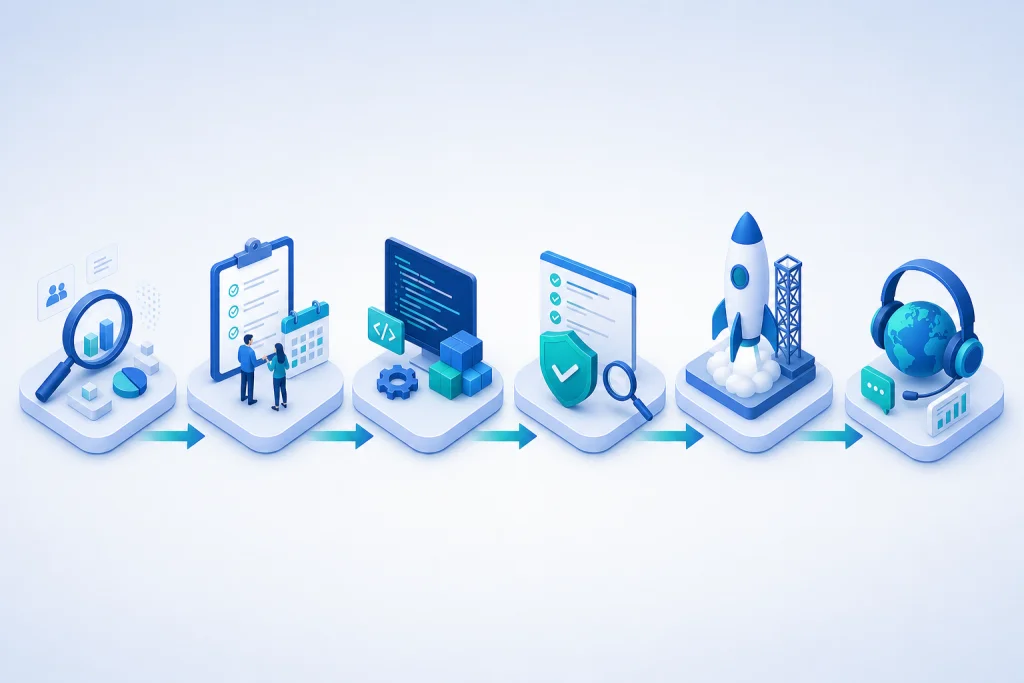
How we work

Structured delivery from assessment to handover

Each phase has clear deliverables, owners, and acceptance criteria aligned to enterprise IT practice.

Approach

Vendor Consolidation vs Traditional Alternatives

Traditional multi-vendor environments often lead to higher TCO due to overlapping licensing, incompatible hardware, and fragmented support. For example, an enterprise might use separate vendors for firewalls, switches, and wireless access points, each requiring individual management consoles and training. In contrast, vendor consolidation reduces TCO by up to 30% through volume discounts, unified support contracts, and reduced training overhead. Performance-wise, consolidated architectures enable end-to-end optimization, such as networking with quality of service (QoS) policies that span from core to edge. Security is also enhanced: a single vendor like Fortinet provides integrated threat intelligence across firewall, endpoint, and cloud, whereas multi-vendor setups often have gaps in coverage. Scalability is simpler with consolidation, as adding capacity involves scaling within a known ecosystem rather than integrating new vendors. However, consolidation requires careful planning to avoid vendor lock-in. Intilogy mitigates this by designing open, standards-based architectures that allow future flexibility. Compared to best-of-breed approaches, consolidation offers faster deployment, simpler compliance, and better operational efficiency. For Indonesian enterprises, the trade-off is clear: reduced complexity and lower costs outweigh the perceived benefits of cherry-picking individual point products.

Capabilities

Case Study & Implementation Methodology

A financial services company in Jakarta with 2,000 employees faced challenges with 15 different IT vendors, leading to 30% higher operational costs and 40% slower incident resolution. Intilogy implemented a vendor consolidation strategy over 12 weeks, standardizing on Cisco for networking, Fortinet for security, VMware for virtualization, and Lenovo for servers. The methodology included four phases: assessment (audit of 200+ assets), design (unified architecture with SDN), migration (phased cutover with zero downtime), and optimization (automated monitoring via HCI). Results: 25% reduction in annual IT spend, 50% faster provisioning, 99.95% network uptime, and a 35% decrease in security incidents. The implementation also integrated backup and disaster recovery using Veeam, achieving RPO of 15 minutes and RTO of 2 hours. This case study demonstrates the tangible benefits of vendor consolidation for Indonesian enterprises.
Use cases

Pengadaan greenfield

Refresh infrastruktur

Multi-vendor consolidation

Renewal lisensi

Ekspansi cabang

Vendor Consolidation for Enterprise

Our engineers help design, deploy, and support enterprise IT solutions across Indonesia.

Request a quote Contact our team

Related pages

E-E-A-T · Expertise & trust

Implementation expertise & enterprise trust

Intilogy (PT. Inti Jaya Teknologi) supports IT and procurement teams across Indonesia — from technical assessment and BoQ through deployment, documentation, and post go-live support.

  • 500+ Infrastructure deployments
  • 24/7 Operational support
  • SLA Enterprise SLA
  • 150+ Clients & institutions

Engineering & delivery expertise

Engineer-led assessment

Requirements workshops, sizing, and architecture — not catalogue selling without context.

Documented deployment

Commissioning checklists, as-built diagrams, IP plans, and escalation runbooks.

Audit-ready procurement

BoQ/BOM, quotations, POs, and handover packs for tenders and IT audits.

Multi-vendor coordination

One project partner for servers, networks, security, backup, and licensing.

Vendor ecosystem & sourcing channels

We source through official distributors/resellers per brand and project. Specific partnership tiers are confirmed per RFP — see our credentials page.

Vendor Status / tier Scope Notes
Dell Technologies Authorized channel PowerEdge, storage BoQ & manufacturer warranty
HPE Authorized channel ProLiant Enterprise servers
Fortinet Implementation partner NGFW, SD-WAN Licensing & deployment
Veeam Implementation partner Backup, replication Immutable design
VMware Implementation partner vSphere Cluster & migration

Tiers vary by SKU/region. Contact sales@intilogy.com for distributor letters or engineer certificates.

Enterprise implementation methodology

Standard flow for infrastructure, security, and backup projects — scoped per contract.

  1. Discovery & assessment

    Duration: 1–2 weeks

    Deliverables Requirements & risk report

  2. Architecture & BoQ

    Duration: 1–2 weeks

    Deliverables HLD, BoQ, rollout plan

  3. Procurement & staging

    Duration: 2–4 weeks

    Deliverables Asset register

  4. Implementation & UAT

    Duration: 2–6 weeks

    Deliverables As-built, UAT sign-off

  5. Handover & operations

    Duration: Ongoing

    Deliverables SOPs, training, SLA if contracted

Support & SLA (per project contract)

Service levels are defined in agreement — example framework below.

Standard maintenance

Response
Next business day (remote)
Coverage
Firmware advisory, tickets, RMA
Notes
Indonesia business hours

Project warranty

Response
Per implementation contract
Coverage
Defects in Intilogy deployment scope
Notes
Not 24/7 unless agreed

Critical incident (optional)

Response
4–8 hours if contracted
Coverage
Production-critical escalation
Notes
Requires separate MSA

Response times are illustrative — binding only when written in contract.

Technical documentation delivered

  • Topology & rack diagrams (as-built)
  • Asset list, serials, warranty status
  • Critical config summary & change log
  • Basic operations runbook & escalation contacts
  • Restore / DR drill reports (if in scope)
  • Tender packs: distributor letters & engineer certs (on request)

Competency & certifications

Engineers train on vendor technologies per project. Individual certs (Fortinet NSE, VMware VCP, Veeam VMCE, etc.) are provided for tenders — not all listed publicly.

  • Engineer certifications — Per project technology — on request
  • Distributor letters — For procurement audit
  • Client references — See Clients page for logos & scope

View certifications & partnerships

Ready to discuss architecture & BoQ?

Our team supports assessment, recommendations, procurement, and documented implementation.

WhatsApp Consult on WhatsApp
Request Consultation WhatsApp