RFID Solution Architecture
An enterprise RFID architecture consists of three layers: the physical layer (tags, readers, antennas), the edge layer (middleware, filters, aggregators), and the application layer (ERP/WMS integration, analytics). At the physical layer, passive UHF tags are preferred for high-volume asset tracking due to their low cost (USD 0.05–0.15 per tag) and no battery requirement. Readers can be fixed portal readers for dock doors or handheld readers for cycle counting. The edge layer runs on industrial PCs or edge servers, often from HP or Dell, to process raw tag data, filter duplicates, and apply business rules before sending to the cloud or on-premise servers. For high-speed operations, the middleware must support EPCglobal Gen2v2 and ISO 18000-6C standards. Network connectivity is critical; networking infrastructure from Cisco or Ruijie ensures reliable data transmission. The application layer integrates via REST APIs or SOAP to systems like SAP EWM or Oracle WMS. In Indonesia, where internet connectivity can be inconsistent, a hybrid architecture with local edge processing and cloud sync is recommended. This setup ensures continuous operation even during network outages, with data buffered locally and synchronized later.
For large-scale deployments, site surveys are essential to determine optimal reader placement, antenna polarization, and power settings. Metal and liquid environments require specialized tags like on-metal or high-dielectric tags. The system must also handle dense reader environments to avoid interference. Using Fortinet firewalls ensures secure data transmission between layers. Additionally, RFID solutions can be integrated with enterprise CCTV systems for visual verification of tagged assets, providing a dual-layer of security.
Industry Use Cases for RFID Solution
In manufacturing, RFID enables real-time tracking of work-in-progress (WIP), reducing production delays by 30% and improving inventory accuracy to 99.5%. For example, an automotive parts manufacturer in Jakarta used RFID to track 50,000 components across assembly lines, cutting manual scanning time by 90%. In logistics and warehousing, RFID automates inbound and outbound processes, with dock door portals reading pallets as they pass, updating inventory in real-time. This reduces truck turnaround time by 50% and eliminates shipping errors. In healthcare, RFID tracks medical equipment, pharmaceuticals, and patient wristbands, reducing equipment loss by 70% and preventing medication errors. In retail, RFID enables omnichannel fulfillment with real-time stock visibility, reducing out-of-stocks by 50% and increasing sales by 10%. In Indonesia's growing e-commerce sector, RFID is used for sortation and returns management, improving processing speed by 3x. For asset tracking in oil and gas, ruggedized RFID tags withstand extreme temperatures and pressures, ensuring accurate tracking of tools and equipment across remote sites.
RFID also plays a key role in cold chain monitoring, where temperature-sensitive tags log environmental conditions. Integration with backup and disaster recovery systems ensures data integrity. Furthermore, combining RFID with cybersecurity solutions protects against tag cloning and unauthorized reads.
RFID Solution vs Traditional Alternatives
Traditional asset tracking methods include barcodes, QR codes, and manual entry. Barcodes require line-of-sight scanning, limiting read range to a few inches and requiring individual item handling. In contrast, RFID can read multiple tags simultaneously without line-of-sight, at distances up to 10 meters, and with high speed (up to 1000 tags/second). This makes RFID 5-10x faster for inventory counting. Barcodes also suffer from wear and tear, while RFID tags are durable and can be reused. Manual entry is error-prone, with error rates of 1-3%, whereas RFID achieves 99.9% accuracy. However, RFID has higher upfront costs: a passive tag costs USD 0.05–0.15 vs. barcode label costs of USD 0.001–0.01. But the ROI is realized through labor savings, reduced shrinkage, and improved asset utilization. For example, a warehouse processing 10,000 items/day can save 200 labor hours per month with RFID. Another alternative is GPS tracking, which is suitable for outdoor assets but has higher power consumption and lacks indoor precision. RFID is ideal for indoor and controlled environments. For enterprises in Indonesia, where labor costs are rising, RFID offers a faster payback period of 6-18 months.
When comparing to Bluetooth Low Energy (BLE) beacons, RFID provides longer read range and lower tag cost, but BLE offers better integration with mobile devices. For high-volume, low-cost items, RFID is superior. For high-value assets requiring real-time location, active RFID or RTLS may be preferred. Ultimately, the choice depends on the use case: for warehouse automation, RFID is the gold standard. Enterprises can also combine RFID with hybrid cloud solutions for scalable data storage and analytics.
Case Study & Implementation Methodology
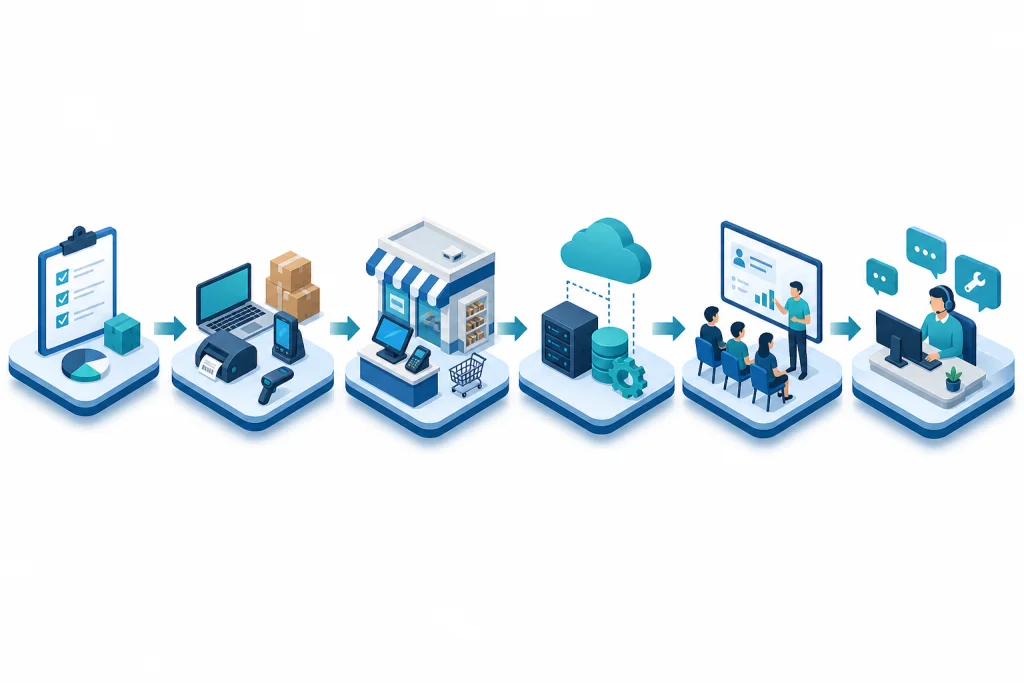
Implementation methodology follows a phased approach: Phase 1 – Assessment & Site Survey (2-4 weeks): Analyze current processes, identify pain points, measure read zones, and select appropriate tags and readers. Phase 2 – Pilot Deployment (4-6 weeks): Deploy a small-scale system (e.g., 1,000 tags, 2 readers) to validate accuracy and integration. Phase 3 – Full Rollout (8-12 weeks): Scale to all locations, integrate with ERP/WMS, and train staff. Phase 4 – Optimization & Support (ongoing): Fine-tune settings, perform periodic audits, and provide maintenance. Concrete example: A logistics company in Surabaya with 50,000 pallets/month faced 15% inventory inaccuracy and 3-hour truck turnaround. They implemented UHF RFID with 10 portal readers and 50 handhelds, integrated with SAP EWM. Result: Inventory accuracy improved to 99.7%, truck turnaround reduced to 45 minutes (75% reduction), and labor costs decreased by 35%. ROI achieved in 10 months. Another example: A hospital in Bandung tracked 5,000 medical devices, reducing loss from 8% to 0.5% and saving USD 200,000 annually. They used RFID cabinets and real-time location system (RTLS) with active tags.
Key success factors include executive sponsorship, clear KPIs, and change management. It is crucial to involve IT and operations teams from the start. Post-implementation, continuous monitoring using dashboards and analytics ensures sustained benefits. For data protection, integrate with cybersecurity solutions and use Veeam for backup. Additionally, linking with server and storage infrastructure ensures high availability of RFID data.