Facial Recognition Architecture
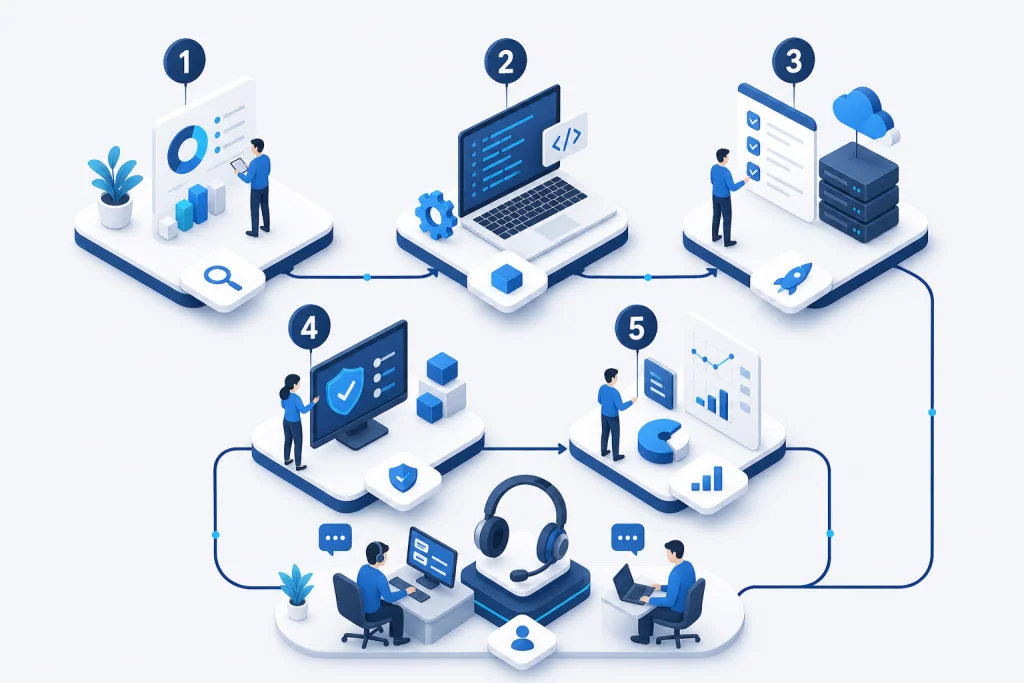
Enterprise facial recognition architecture is a multi-layered system combining edge computing, server-side processing, and cloud analytics. At the edge, cameras equipped with AI chips (e.g., Intel Movidius or NVIDIA Jetson) perform initial face detection and feature extraction using lightweight models like MobileNet or TinyYOLO. This reduces the data sent to central servers, minimizing bandwidth usage and latency. The extracted face embeddings (typically 128-512 dimensional vectors) are then transmitted to a matching server via secure protocols (HTTPS, WebSockets). The server, often running on high-performance infrastructure from Dell or HP, uses approximate nearest neighbor (ANN) libraries such as FAISS or ScaNN to search against a database of enrolled faces in milliseconds. For large-scale deployments, a distributed architecture with load balancers and database sharding is essential. Storage systems from Synology or QNAP can store face embeddings and associated metadata, while HCI solutions provide scalable compute and storage convergence. The system also integrates with existing Networking infrastructure, using VLANs and firewalls to segment traffic. Advanced architectures incorporate liveness detection to prevent spoofing attacks, using infrared cameras or depth sensors. This multi-tier design ensures high availability, fault tolerance, and compliance with Indonesian data protection laws, making it suitable for enterprises with thousands of users.
Industry Use Cases for Facial Recognition
Facial recognition is transforming multiple industries in Indonesia by automating identity verification and enhancing security. In manufacturing and warehousing, it enables touchless access control and time tracking, reducing labor costs and preventing buddy punching. For example, a factory can integrate facial recognition with Enterprise CCTV and Server & Storage to monitor restricted areas and log entry events. In the banking and finance sector, facial recognition is used for customer authentication at ATMs and branch offices, complying with OJK regulations. Retail enterprises deploy it for personalized marketing and loss prevention, analyzing customer demographics and behavior. Healthcare facilities use it for patient identification and staff attendance, ensuring accurate records and reducing wait times. Additionally, hospitality and property management leverage facial recognition for seamless guest check-in and building access. All these use cases rely on robust IT infrastructure, including IT Infrastructure components from Cisco for networking and Fortinet for security. The technology also integrates with Hybrid Cloud for scalable analytics and backup. By adopting facial recognition, enterprises can improve operational efficiency, enhance safety, and gain valuable insights, all while maintaining a high level of data security.
Facial Recognition vs Traditional Alternatives
Compared to traditional access control methods like keycards, PINs, or fingerprint scanners, facial recognition offers superior convenience, hygiene, and accuracy. Keycards can be lost or stolen, PINs can be observed, and fingerprints may fail due to dirt or moisture. Facial recognition is contactless and non-intrusive, making it ideal for high-traffic areas and post-pandemic hygiene protocols. It also provides faster throughput—typically under 0.3 seconds per match—compared to fingerprint readers (1-2 seconds). In terms of security, facial recognition with liveness detection is harder to spoof than traditional biometrics. However, it requires more sophisticated infrastructure: high-resolution cameras, edge AI processors, and powerful servers. Traditional alternatives like CCTV with manual monitoring are less accurate and require human intervention. For enterprises, the total cost of ownership (TCO) of facial recognition can be lower over time due to reduced labor and fraud costs. Integration with existing systems like Backup & Disaster Recovery ensures data resilience. While initial setup costs are higher, the ROI from increased security and efficiency justifies the investment. Moreover, facial recognition can be combined with Cyber Security measures to protect biometric data, addressing privacy concerns. In Indonesia, where mobile and digital adoption is high, facial recognition aligns with the trend toward seamless, tech-driven solutions.
Case Study & Implementation Methodology
A manufacturing company in Batam with 2,000 employees implemented facial recognition for access control and attendance. Challenge: 15% buddy punching rate and 10-minute daily delays at gates. Solution: Deployed 20 edge cameras with on-device AI, integrated with Lenovo servers running a FAISS-based matching engine, and connected to existing Networking infrastructure. Result: 98% attendance accuracy, 30% reduction in unauthorized access incidents, and 50% faster entry times (from 20 seconds to under 5 seconds). ROI achieved within 8 months. Implementation methodology: Phase 1—Site survey and camera placement optimization (lighting, angles). Phase 2—Pilot with 100 employees to calibrate algorithms. Phase 3—Full rollout with enrollment kiosks and integration with HR systems. Phase 4—Continuous monitoring and model retraining using on-premises Server & Storage. Data is backed up via Backup & Disaster Recovery to ensure business continuity. This structured approach ensures minimal disruption and maximum adoption, providing a blueprint for other Indonesian enterprises considering facial recognition.