Enterprise IT Solutions

Remote Monitoring for Enterprise

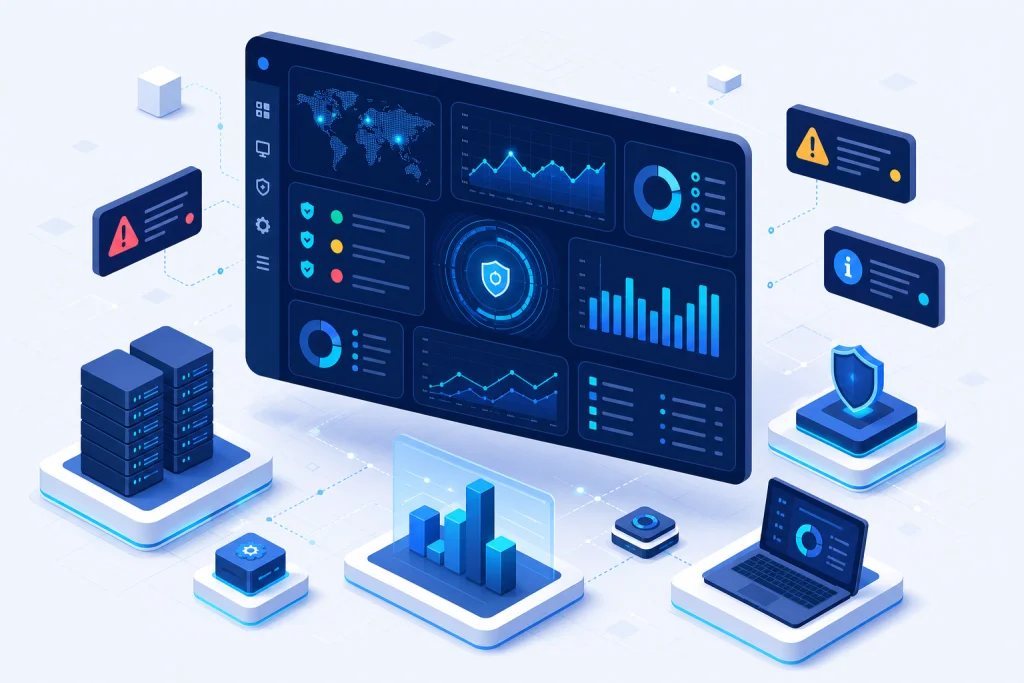
Remote monitoring is a critical IT infrastructure capability that enables enterprises to oversee and manage distributed assets, equipment, and environments from a centralized location. In Indonesia, where industries span manufacturing, logistics, energy, and telecommunications, remote monitoring solutions leverage IoT sensors, SCADA systems, and cloud-based analytics to provide real-time visibility into operational technology (OT) and IT assets. This technology is essential for predictive maintenance, reducing downtime, optimizing energy consumption, and ensuring compliance with regulatory standards. A robust remote monitoring architecture integrates edge computing devices, such as those from Dell and Lenovo, with network infrastructure from Cisco and Ruijie, and data storage solutions from Synology and QNAP. These systems collect telemetry data—temperature, humidity, vibration, power usage, and network performance—and transmit it securely to centralized platforms for analysis. By implementing remote monitoring, enterprises in Indonesia can achieve up to 30% reduction in maintenance costs, 50% faster incident response times, and improved asset utilization. This approach is particularly vital for industries with remote or hazardous locations, such as palm oil plantations, mining sites, and offshore oil rigs, where on-site personnel are limited. Additionally, integration with cybersecurity frameworks ensures data integrity and protection against cyber threats. The scalability of remote monitoring solutions allows enterprises to start with a few critical assets and expand to thousands of endpoints, making it a cornerstone of digital transformation strategies in Indonesia's competitive business landscape.

Remote Monitoring Architecture

A typical remote monitoring architecture consists of three layers: the perception layer (sensors and actuators), the network layer (communication protocols and gateways), and the application layer (data processing and visualization). At the perception layer, IoT sensors measure parameters like temperature, pressure, flow, and vibration. These sensors are often connected to edge gateways that perform initial data filtering and aggregation. The network layer uses protocols such as MQTT, Modbus, or OPC-UA over wired (Ethernet) or wireless (LoRaWAN, 4G/5G) connections. For enterprise-grade deployments, redundant network paths are essential, often utilizing networking solutions from Cisco and Ruijie to ensure high availability. The application layer includes cloud or on-premises platforms like AWS IoT, Azure IoT Hub, or SCADA systems that store, analyze, and visualize data. Integration with hybrid cloud environments allows enterprises to balance latency and cost. For example, time-critical alerts can be processed at the edge, while historical analytics run in the cloud. Data storage is managed by server and storage solutions from Dell and Synology, ensuring data retention policies are met. Security is paramount, with end-to-end encryption, certificate-based authentication, and regular firmware updates. This architecture supports scalability, allowing enterprises to add new sensors and devices without disrupting existing operations.

Industry Use Cases for Remote Monitoring

Remote monitoring is transforming multiple industries in Indonesia. In manufacturing, it enables predictive maintenance of CNC machines and conveyor belts, reducing unplanned downtime by up to 40%. For logistics and warehousing, environmental monitoring of cold storage ensures compliance with food safety standards, while asset tracking of forklifts and pallets improves inventory accuracy. In the energy sector, remote monitoring of solar panels and wind turbines optimizes power generation and detects faults early. For oil and gas, pipeline pressure and leak detection systems prevent environmental disasters. In telecommunications, monitoring of base station power and cooling reduces site visits and improves network uptime. Additionally, smart building solutions monitor HVAC, lighting, and access control to reduce energy consumption by 20-30%. These use cases rely on a combination of IT infrastructure components, including servers, storage, and networking, to handle the data volume. For instance, a manufacturing plant in Bekasi implemented remote monitoring for 500 machines, resulting in a 25% increase in overall equipment effectiveness (OEE). The integration with enterprise CCTV systems provides visual verification of alarms, enhancing security and operational awareness.

Remote Monitoring vs Traditional Alternatives

Traditional monitoring methods rely on manual inspections, periodic data logging, and on-premises control rooms. These approaches are labor-intensive, prone to human error, and provide delayed insights. In contrast, remote monitoring offers real-time data collection, automated alerts, and centralized dashboards accessible from anywhere. For example, traditional temperature monitoring in a warehouse requires staff to manually check thermometers and log readings, while remote monitoring uses IoT sensors that send data every minute and trigger alerts if thresholds are exceeded. This reduces response time from hours to seconds. Additionally, remote monitoring enables predictive analytics, using machine learning to forecast equipment failures, whereas traditional methods are reactive. Cost-wise, remote monitoring reduces operational expenses by minimizing site visits and optimizing maintenance schedules. However, it requires an upfront investment in sensors, gateways, and software platforms. For enterprises in Indonesia, the total cost of ownership (TCO) is often lower when considering reduced downtime and labor savings. Security is another differentiator: remote monitoring solutions incorporate encryption and access controls, while traditional systems may lack robust cybersecurity. Integration with backup and disaster recovery solutions ensures data resilience, a feature absent in traditional approaches. Overall, remote monitoring provides a competitive advantage by enabling data-driven decision-making and operational agility.

Case Study & Implementation Methodology

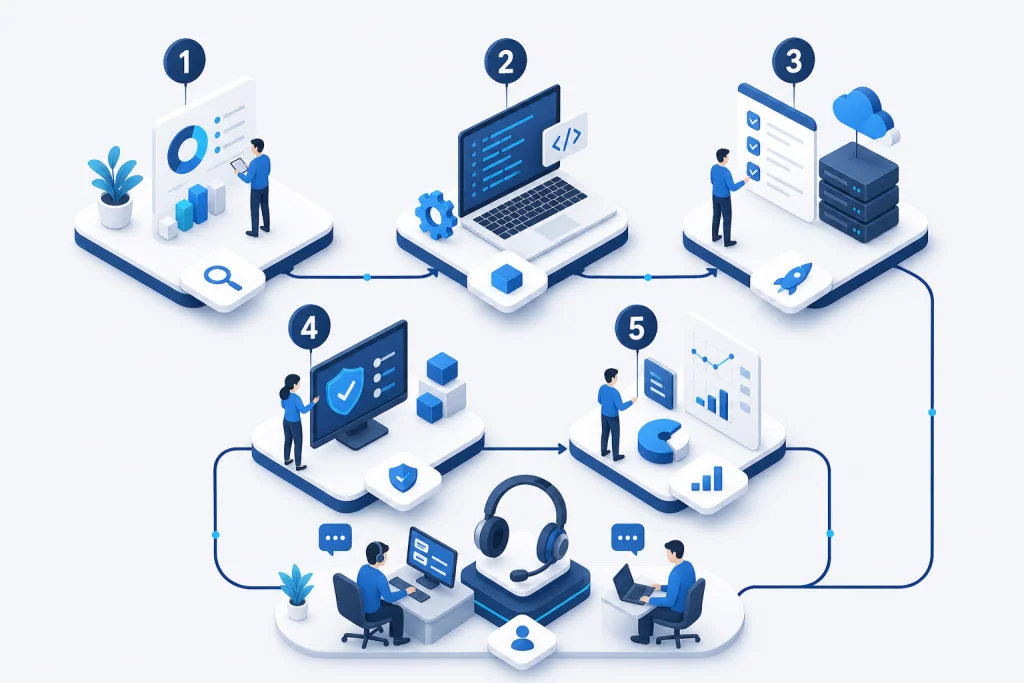
A manufacturing company in Surabaya with 200+ CNC machines faced 15% unplanned downtime due to spindle bearing failures. Challenge: Manual inspections every 4 hours missed early signs of wear, leading to catastrophic failures costing IDR 500 million per incident. Solution: Deployed vibration and temperature sensors on each machine, connected via MQTT to an on-premises SCADA system running on Dell PowerEdge servers and Synology NAS for data storage. Implemented predictive analytics using Azure Machine Learning to detect anomalies. Result: Reduced unplanned downtime by 60%, saving IDR 1.2 billion annually. Maintenance costs dropped by 35% as parts were replaced based on condition rather than schedule. Implementation followed a phased methodology: Phase 1 (2 weeks) assessed critical assets and installed sensors on 50 machines; Phase 2 (4 weeks) integrated data streams and trained ML models; Phase 3 (2 weeks) deployed dashboards and trained operators. The project was completed in 8 weeks with a payback period of 10 months. This methodology can be replicated across industries, leveraging hyperconverged infrastructure for simplified management. The key success factors were executive sponsorship, cross-functional team collaboration, and robust change management.

Remote Monitoring Architecture

A typical remote monitoring architecture consists of three layers: the perception layer (sensors and actuators), the network layer (communication protocols and gateways), and the application layer (data processing and visualization). At the perception layer, IoT sensors measure parameters like temperature, pressure, flow, and vibration. These sensors are often connected to edge gateways that perform initial data filtering and aggregation. The network layer uses protocols such as MQTT, Modbus, or OPC-UA over wired (Ethernet) or wireless (LoRaWAN, 4G/5G) connections. For enterprise-grade deployments, redundant network paths are essential, often utilizing networking solutions from Cisco and Ruijie to ensure high availability. The application layer includes cloud or on-premises platforms like AWS IoT, Azure IoT Hub, or SCADA systems that store, analyze, and visualize data. Integration with hybrid cloud environments allows enterprises to balance latency and cost. For example, time-critical alerts can be processed at the edge, while historical analytics run in the cloud. Data storage is managed by server and storage solutions from Dell and Synology, ensuring data retention policies are met. Security is paramount, with end-to-end encryption, certificate-based authentication, and regular firmware updates. This architecture supports scalability, allowing enterprises to add new sensors and devices without disrupting existing operations.

Industry Use Cases for Remote Monitoring

Remote monitoring is transforming multiple industries in Indonesia. In manufacturing, it enables predictive maintenance of CNC machines and conveyor belts, reducing unplanned downtime by up to 40%. For logistics and warehousing, environmental monitoring of cold storage ensures compliance with food safety standards, while asset tracking of forklifts and pallets improves inventory accuracy. In the energy sector, remote monitoring of solar panels and wind turbines optimizes power generation and detects faults early. For oil and gas, pipeline pressure and leak detection systems prevent environmental disasters. In telecommunications, monitoring of base station power and cooling reduces site visits and improves network uptime. Additionally, smart building solutions monitor HVAC, lighting, and access control to reduce energy consumption by 20-30%. These use cases rely on a combination of IT infrastructure components, including servers, storage, and networking, to handle the data volume. For instance, a manufacturing plant in Bekasi implemented remote monitoring for 500 machines, resulting in a 25% increase in overall equipment effectiveness (OEE). The integration with enterprise CCTV systems provides visual verification of alarms, enhancing security and operational awareness.

How we work

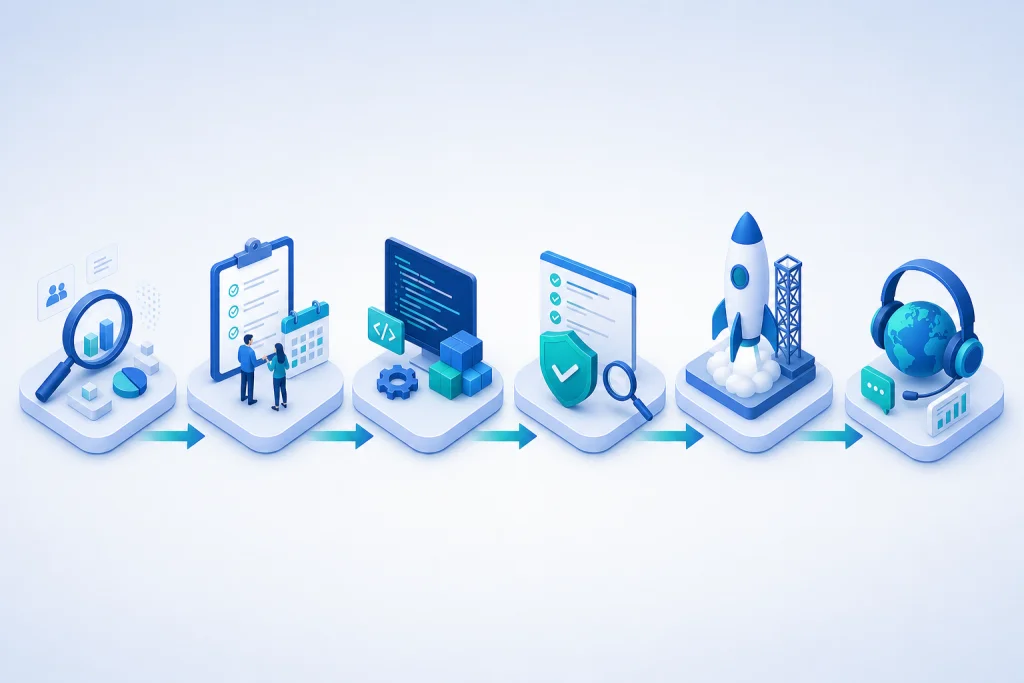
Structured delivery from assessment to handover

Each phase has clear deliverables, owners, and acceptance criteria aligned to enterprise IT practice.

Approach

Remote Monitoring vs Traditional Alternatives

Traditional monitoring methods rely on manual inspections, periodic data logging, and on-premises control rooms. These approaches are labor-intensive, prone to human error, and provide delayed insights. In contrast, remote monitoring offers real-time data collection, automated alerts, and centralized dashboards accessible from anywhere. For example, traditional temperature monitoring in a warehouse requires staff to manually check thermometers and log readings, while remote monitoring uses IoT sensors that send data every minute and trigger alerts if thresholds are exceeded. This reduces response time from hours to seconds. Additionally, remote monitoring enables predictive analytics, using machine learning to forecast equipment failures, whereas traditional methods are reactive. Cost-wise, remote monitoring reduces operational expenses by minimizing site visits and optimizing maintenance schedules. However, it requires an upfront investment in sensors, gateways, and software platforms. For enterprises in Indonesia, the total cost of ownership (TCO) is often lower when considering reduced downtime and labor savings. Security is another differentiator: remote monitoring solutions incorporate encryption and access controls, while traditional systems may lack robust cybersecurity. Integration with backup and disaster recovery solutions ensures data resilience, a feature absent in traditional approaches. Overall, remote monitoring provides a competitive advantage by enabling data-driven decision-making and operational agility.

Capabilities

Case Study & Implementation Methodology

A manufacturing company in Surabaya with 200+ CNC machines faced 15% unplanned downtime due to spindle bearing failures. Challenge: Manual inspections every 4 hours missed early signs of wear, leading to catastrophic failures costing IDR 500 million per incident. Solution: Deployed vibration and temperature sensors on each machine, connected via MQTT to an on-premises SCADA system running on Dell PowerEdge servers and Synology NAS for data storage. Implemented predictive analytics using Azure Machine Learning to detect anomalies. Result: Reduced unplanned downtime by 60%, saving IDR 1.2 billion annually. Maintenance costs dropped by 35% as parts were replaced based on condition rather than schedule. Implementation followed a phased methodology: Phase 1 (2 weeks) assessed critical assets and installed sensors on 50 machines; Phase 2 (4 weeks) integrated data streams and trained ML models; Phase 3 (2 weeks) deployed dashboards and trained operators. The project was completed in 8 weeks with a payback period of 10 months. This methodology can be replicated across industries, leveraging hyperconverged infrastructure for simplified management. The key success factors were executive sponsorship, cross-functional team collaboration, and robust change management.
Use cases

Perencanaan infrastruktur baru

Refresh & modernisasi

Ekspansi multi-cabang

Compliance & audit IT

Remote Monitoring for Enterprise

Our engineers help design, deploy, and support enterprise IT solutions across Indonesia.

Request a quote Contact our team

Related pages

E-E-A-T · Expertise & trust

Implementation expertise & enterprise trust

Intilogy (PT. Inti Jaya Teknologi) supports IT and procurement teams across Indonesia — from technical assessment and BoQ through deployment, documentation, and post go-live support.

  • 500+ Infrastructure deployments
  • 24/7 Operational support
  • SLA Enterprise SLA
  • 150+ Clients & institutions

Engineering & delivery expertise

Engineer-led assessment

Requirements workshops, sizing, and architecture — not catalogue selling without context.

Documented deployment

Commissioning checklists, as-built diagrams, IP plans, and escalation runbooks.

Audit-ready procurement

BoQ/BOM, quotations, POs, and handover packs for tenders and IT audits.

Multi-vendor coordination

One project partner for servers, networks, security, backup, and licensing.

Vendor ecosystem & sourcing channels

We source through official distributors/resellers per brand and project. Specific partnership tiers are confirmed per RFP — see our credentials page.

Vendor Status / tier Scope Notes
Dell Technologies Authorized channel PowerEdge, storage BoQ & manufacturer warranty
HPE Authorized channel ProLiant Enterprise servers
Fortinet Implementation partner NGFW, SD-WAN Licensing & deployment
Veeam Implementation partner Backup, replication Immutable design
VMware Implementation partner vSphere Cluster & migration

Tiers vary by SKU/region. Contact sales@intilogy.com for distributor letters or engineer certificates.

Enterprise implementation methodology

Standard flow for infrastructure, security, and backup projects — scoped per contract.

  1. Discovery & assessment

    Duration: 1–2 weeks

    Deliverables Requirements & risk report

  2. Architecture & BoQ

    Duration: 1–2 weeks

    Deliverables HLD, BoQ, rollout plan

  3. Procurement & staging

    Duration: 2–4 weeks

    Deliverables Asset register

  4. Implementation & UAT

    Duration: 2–6 weeks

    Deliverables As-built, UAT sign-off

  5. Handover & operations

    Duration: Ongoing

    Deliverables SOPs, training, SLA if contracted

Support & SLA (per project contract)

Service levels are defined in agreement — example framework below.

Standard maintenance

Response
Next business day (remote)
Coverage
Firmware advisory, tickets, RMA
Notes
Indonesia business hours

Project warranty

Response
Per implementation contract
Coverage
Defects in Intilogy deployment scope
Notes
Not 24/7 unless agreed

Critical incident (optional)

Response
4–8 hours if contracted
Coverage
Production-critical escalation
Notes
Requires separate MSA

Response times are illustrative — binding only when written in contract.

Technical documentation delivered

  • Topology & rack diagrams (as-built)
  • Asset list, serials, warranty status
  • Critical config summary & change log
  • Basic operations runbook & escalation contacts
  • Restore / DR drill reports (if in scope)
  • Tender packs: distributor letters & engineer certs (on request)

Competency & certifications

Engineers train on vendor technologies per project. Individual certs (Fortinet NSE, VMware VCP, Veeam VMCE, etc.) are provided for tenders — not all listed publicly.

  • Engineer certifications — Per project technology — on request
  • Distributor letters — For procurement audit
  • Client references — See Clients page for logos & scope

View certifications & partnerships

Ready to discuss architecture & BoQ?

Our team supports assessment, recommendations, procurement, and documented implementation.

WhatsApp Consult on WhatsApp
Request Consultation WhatsApp