Enterprise IT Solutions

Business Continuity Solution for Enterprise

In today's hyper-connected enterprise landscape, Business Continuity (BC) is not merely a compliance checkbox but a strategic imperative that safeguards revenue, reputation, and operational resilience. A comprehensive Business Continuity Solution encompasses disaster recovery (DR), high availability (HA), data replication, and failover orchestration across on-premises, hybrid, and multi-cloud environments. For Indonesian enterprises, where digital transformation accelerates and regulatory demands (e.g., OJK, BI) mandate stringent uptime, the choice of BC architecture directly impacts business survival. Intilogy's enterprise-grade BC solution integrates leading technologies from VMware for virtualization and vSphere HA, Veeam for backup and replication, Synology for NAS-based snapshot and sync, and Cisco for network resilience and SD-WAN failover. This stack ensures Recovery Time Objectives (RTO) under 15 minutes and Recovery Point Objectives (RPO) as low as 5 seconds for mission-critical databases. Beyond technology, BC requires rigorous testing, automated runbooks, and continuous monitoring. Intilogy's methodology follows the NIST SP 800-34 framework, adapted for Indonesian regulatory context, covering risk assessment, business impact analysis (BIA), and iterative tabletop exercises. The solution is essential for sectors like banking, manufacturing, and logistics where downtime costs exceed IDR 1 billion per hour. By implementing a tiered BC architecture—from local HA clusters to geo-redundant DR sites—enterprises can achieve 99.999% availability. Intilogy also integrates cybersecurity measures to protect BC infrastructure from ransomware, ensuring that recovery itself is not compromised. This holistic approach transforms BC from a reactive cost center into a competitive advantage, enabling continuous operations amid disruptions, whether natural disasters, cyberattacks, or human errors.

Business Continuity Solution Architecture

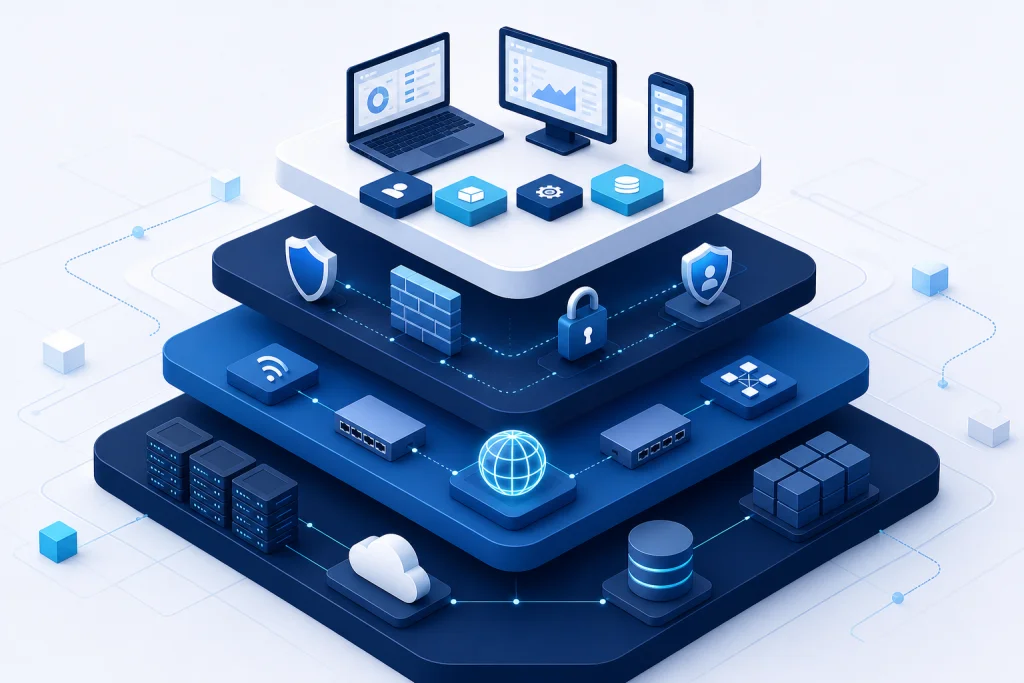
The architecture of an enterprise Business Continuity Solution is layered and modular, designed to eliminate single points of failure while ensuring rapid recovery. At the core is the production environment, typically virtualized on VMware vSphere with vSAN or HCI from Dell or Lenovo. Local high availability is achieved through vSphere HA and Fault Tolerance for critical VMs, providing automatic restart within minutes. For data protection, Veeam Backup & Replication performs image-level backups every 15 minutes, with instant VM recovery and verified recoverability. Replication to a secondary site—either on-premises or via Hybrid Cloud to AWS or Azure—uses asynchronous replication with WAN acceleration. Network resilience is handled by Cisco SD-WAN, which provides automatic failover between MPLS, broadband, and LTE links. The DR site runs a standby environment with pre-staged VMs, leveraging Server & Storage from HP or Synology for cost-effective capacity. Orchestration via Veeam Availability Orchestrator or VMware Site Recovery Manager automates failover and failback, ensuring consistent RTO. Monitoring and alerting are integrated with SIEM and ITSM tools for proactive incident response. This architecture supports both active-passive and active-active models, with data replication using synchronous or asynchronous modes depending on latency and RPO requirements. For Indonesian enterprises with distributed operations, a hub-and-spoke model with local backup appliances at branch offices and centralized DR in Jakarta or Batam optimizes bandwidth and compliance.

The architecture also incorporates cybersecurity resilience, with Fortinet firewalls at both sites to prevent attacks from spreading during failover. Immutable backups on QNAP or Synology appliances protect against ransomware encryption. Regular DR drills using automated scripts validate RTO/RPO and update runbooks. Intilogy's reference architecture includes a minimum of two sites separated by at least 50 km, with redundant power and network paths. For mission-critical workloads like ERP and core banking, a third site or cloud burst capability is recommended. The entire stack is managed via a single pane of glass, with role-based access control for audit trails. This architecture aligns with ISO 22301 and BCM standards, providing a defensible posture for regulatory audits.

Industry Use Cases for Business Continuity Solution

Indonesian enterprises across sectors leverage Business Continuity Solutions to maintain operations during disruptions. In the banking and finance sector, where OJK regulations mandate zero downtime for core systems, a tiered BC architecture with synchronous replication to a DR site ensures RPO of seconds and RTO under 5 minutes. For example, a bank in Jakarta uses VMware vSphere with Veeam replication to a secondary data center in BSD City, with automated failover triggered by network heartbeat loss. This setup protects against fiber cuts or power outages, preventing transaction losses that could exceed IDR 500 billion per day. In manufacturing, especially automotive and electronics, production lines rely on MES and SCADA systems. A manufacturer in Batam implemented Backup & Disaster Recovery using Synology Active Backup for Business, with local HA clusters handling machine control. When a ransomware attack encrypted on-premise servers, the company restored from immutable snapshots within 2 hours, avoiding production downtime that would have cost IDR 2 billion per hour. For logistics and warehousing, where real-time inventory tracking is critical, a logistics provider in Surabaya uses Cisco SD-WAN with automatic failover to LTE during fiber cuts, combined with QNAP NAS for local backup. This ensures warehouse management systems remain online, preventing shipment delays and contractual penalties. In healthcare, hospitals in Bandung deploy HCI from Dell with built-in replication for electronic medical records, achieving RTO under 10 minutes for critical patient data. The solution integrates with cybersecurity to protect against data breaches, ensuring compliance with UU PDP. Each use case demonstrates that BC is not one-size-fits-all; Intilogy customizes the architecture based on industry-specific RTO/RPO, regulatory requirements, and budget constraints.

Business Continuity Solution vs Traditional Alternatives

Traditional business continuity approaches often rely on manual tape backups, cold standby sites, or basic RAID redundancy. These methods fall short in today's fast-paced digital environment. Tape backups, while cost-effective for archival, have RTOs measured in days due to manual retrieval and restoration. Cold standby sites require hours to power up and configure servers, leading to extended downtime. In contrast, modern Business Continuity Solutions leverage virtualization, automation, and replication to achieve near-zero downtime. For instance, VMware vSphere HA provides automatic restart of VMs on healthy hosts within minutes, while Veeam Instant VM Recovery allows restoration from backups in under 15 minutes. Traditional alternatives also lack orchestration; failover is manual and error-prone, increasing recovery time. Modern solutions use runbooks and automated workflows via Site Recovery Manager or Veeam Availability Orchestrator, reducing human error. Another key difference is data consistency: traditional backups may not capture application-consistent states, leading to corrupt databases. Modern solutions use VSS-aware snapshots and transaction log shipping for consistent recovery points. Additionally, traditional approaches often ignore cybersecurity, leaving backup data vulnerable to ransomware. Modern BC solutions incorporate immutable storage on Synology or QNAP with Write Once Read Many (WORM) capabilities, and integrate with Fortinet for network segmentation. Cost-wise, while traditional setups have lower upfront costs, they incur higher operational expenses from manual labor and prolonged downtime. Modern BC solutions offer lower total cost of ownership (TCO) when factoring in avoided revenue loss. For Indonesian enterprises, the shift to modern BC is driven by digital transformation and regulatory mandates. Intilogy helps organizations assess their current state and migrate to a resilient architecture, ensuring competitive advantage through continuous availability.

Case Study & Implementation Methodology

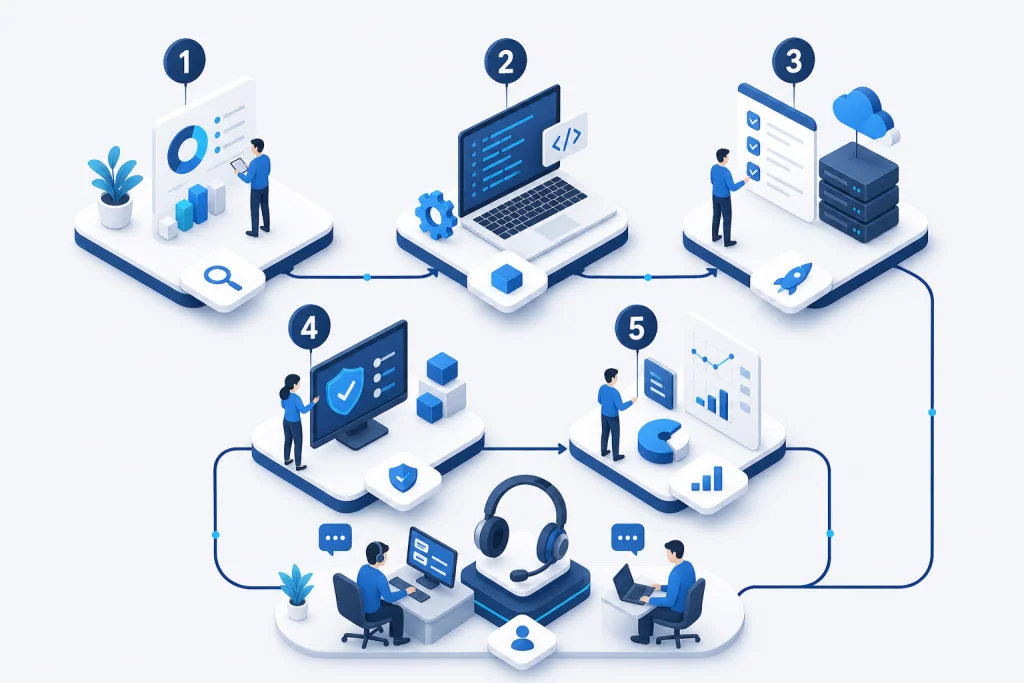
A financial services company in Jakarta faced a critical challenge: its core banking system experienced 4 hours of downtime per month due to storage failures, causing losses of IDR 12 billion annually. The solution implemented was a multi-site BC architecture using VMware vSAN for local HA, Veeam for replication to a DR site 30 km away, and Cisco SD-WAN for network failover. The result: RTO reduced to 5 minutes and RPO to 1 second, with zero unplanned downtime in 12 months. Implementation followed Intilogy's 5-phase methodology: (1) Assessment & BIA: identified critical applications with RTO/RPO of 15 min/5 sec; (2) Design: architected active-passive DR with synchronous replication; (3) Deployment: installed Server & Storage from Lenovo at both sites; (4) Testing: executed 10 automated failover drills with 100% success; (5) Operations: integrated monitoring with cybersecurity SIEM. A manufacturing company in Batam with 500 employees faced ransomware that encrypted 80% of servers. Their legacy tape backup required 3 days to restore. Intilogy deployed Synology Active Backup for Business with immutable snapshots and Veeam for offsite replication. Result: recovery in 2 hours, data loss limited to 15 minutes. The project delivered ROI of 300% in avoided downtime costs within 6 months. A logistics firm in Surabaya with 24/7 warehouse operations experienced 10+ network outages per month due to fiber cuts. Implementation of Ruijie SD-WAN with LTE failover and QNAP local backup reduced outages to 0, saving IDR 1.5 billion annually in penalty fees. These cases demonstrate Intilogy's structured approach: every deployment begins with a BIA and risk assessment, followed by architecture design, proof-of-concept, phased rollout, and continuous optimization. The methodology ensures that BC solutions are not only technically robust but also aligned with business priorities and regulatory requirements.

Business Continuity Solution Architecture

The architecture of an enterprise Business Continuity Solution is layered and modular, designed to eliminate single points of failure while ensuring rapid recovery. At the core is the production environment, typically virtualized on VMware vSphere with vSAN or HCI from Dell or Lenovo. Local high availability is achieved through vSphere HA and Fault Tolerance for critical VMs, providing automatic restart within minutes. For data protection, Veeam Backup & Replication performs image-level backups every 15 minutes, with instant VM recovery and verified recoverability. Replication to a secondary site—either on-premises or via Hybrid Cloud to AWS or Azure—uses asynchronous replication with WAN acceleration. Network resilience is handled by Cisco SD-WAN, which provides automatic failover between MPLS, broadband, and LTE links. The DR site runs a standby environment with pre-staged VMs, leveraging Server & Storage from HP or Synology for cost-effective capacity. Orchestration via Veeam Availability Orchestrator or VMware Site Recovery Manager automates failover and failback, ensuring consistent RTO. Monitoring and alerting are integrated with SIEM and ITSM tools for proactive incident response. This architecture supports both active-passive and active-active models, with data replication using synchronous or asynchronous modes depending on latency and RPO requirements. For Indonesian enterprises with distributed operations, a hub-and-spoke model with local backup appliances at branch offices and centralized DR in Jakarta or Batam optimizes bandwidth and compliance.

Industry Use Cases for Business Continuity Solution

Indonesian enterprises across sectors leverage Business Continuity Solutions to maintain operations during disruptions. In the banking and finance sector, where OJK regulations mandate zero downtime for core systems, a tiered BC architecture with synchronous replication to a DR site ensures RPO of seconds and RTO under 5 minutes. For example, a bank in Jakarta uses VMware vSphere with Veeam replication to a secondary data center in BSD City, with automated failover triggered by network heartbeat loss. This setup protects against fiber cuts or power outages, preventing transaction losses that could exceed IDR 500 billion per day. In manufacturing, especially automotive and electronics, production lines rely on MES and SCADA systems. A manufacturer in Batam implemented Backup & Disaster Recovery using Synology Active Backup for Business, with local HA clusters handling machine control. When a ransomware attack encrypted on-premise servers, the company restored from immutable snapshots within 2 hours, avoiding production downtime that would have cost IDR 2 billion per hour. For logistics and warehousing, where real-time inventory tracking is critical, a logistics provider in Surabaya uses Cisco SD-WAN with automatic failover to LTE during fiber cuts, combined with QNAP NAS for local backup. This ensures warehouse management systems remain online, preventing shipment delays and contractual penalties. In healthcare, hospitals in Bandung deploy HCI from Dell with built-in replication for electronic medical records, achieving RTO under 10 minutes for critical patient data. The solution integrates with cybersecurity to protect against data breaches, ensuring compliance with UU PDP. Each use case demonstrates that BC is not one-size-fits-all; Intilogy customizes the architecture based on industry-specific RTO/RPO, regulatory requirements, and budget constraints.

How we work

Structured delivery from assessment to handover

Each phase has clear deliverables, owners, and acceptance criteria aligned to enterprise IT practice.

Approach

Business Continuity Solution vs Traditional Alternatives

Traditional business continuity approaches often rely on manual tape backups, cold standby sites, or basic RAID redundancy. These methods fall short in today's fast-paced digital environment. Tape backups, while cost-effective for archival, have RTOs measured in days due to manual retrieval and restoration. Cold standby sites require hours to power up and configure servers, leading to extended downtime. In contrast, modern Business Continuity Solutions leverage virtualization, automation, and replication to achieve near-zero downtime. For instance, VMware vSphere HA provides automatic restart of VMs on healthy hosts within minutes, while Veeam Instant VM Recovery allows restoration from backups in under 15 minutes. Traditional alternatives also lack orchestration; failover is manual and error-prone, increasing recovery time. Modern solutions use runbooks and automated workflows via Site Recovery Manager or Veeam Availability Orchestrator, reducing human error. Another key difference is data consistency: traditional backups may not capture application-consistent states, leading to corrupt databases. Modern solutions use VSS-aware snapshots and transaction log shipping for consistent recovery points. Additionally, traditional approaches often ignore cybersecurity, leaving backup data vulnerable to ransomware. Modern BC solutions incorporate immutable storage on Synology or QNAP with Write Once Read Many (WORM) capabilities, and integrate with Fortinet for network segmentation. Cost-wise, while traditional setups have lower upfront costs, they incur higher operational expenses from manual labor and prolonged downtime. Modern BC solutions offer lower total cost of ownership (TCO) when factoring in avoided revenue loss. For Indonesian enterprises, the shift to modern BC is driven by digital transformation and regulatory mandates. Intilogy helps organizations assess their current state and migrate to a resilient architecture, ensuring competitive advantage through continuous availability.

Capabilities

Case Study & Implementation Methodology

A financial services company in Jakarta faced a critical challenge: its core banking system experienced 4 hours of downtime per month due to storage failures, causing losses of IDR 12 billion annually. The solution implemented was a multi-site BC architecture using VMware vSAN for local HA, Veeam for replication to a DR site 30 km away, and Cisco SD-WAN for network failover. The result: RTO reduced to 5 minutes and RPO to 1 second, with zero unplanned downtime in 12 months. Implementation followed Intilogy's 5-phase methodology: (1) Assessment & BIA: identified critical applications with RTO/RPO of 15 min/5 sec; (2) Design: architected active-passive DR with synchronous replication; (3) Deployment: installed Server & Storage from Lenovo at both sites; (4) Testing: executed 10 automated failover drills with 100% success; (5) Operations: integrated monitoring with cybersecurity SIEM. A manufacturing company in Batam with 500 employees faced ransomware that encrypted 80% of servers. Their legacy tape backup required 3 days to restore. Intilogy deployed Synology Active Backup for Business with immutable snapshots and Veeam for offsite replication. Result: recovery in 2 hours, data loss limited to 15 minutes. The project delivered ROI of 300% in avoided downtime costs within 6 months. A logistics firm in Surabaya with 24/7 warehouse operations experienced 10+ network outages per month due to fiber cuts. Implementation of Ruijie SD-WAN with LTE failover and QNAP local backup reduced outages to 0, saving IDR 1.5 billion annually in penalty fees. These cases demonstrate Intilogy's structured approach: every deployment begins with a BIA and risk assessment, followed by architecture design, proof-of-concept, phased rollout, and continuous optimization. The methodology ensures that BC solutions are not only technically robust but also aligned with business priorities and regulatory requirements.
Use cases

BCP & DR alignment

Tier-1 workload protection

Tabletop exercise

Regulatory readiness

Business Continuity Solution for Enterprise

Our engineers help design, deploy, and support enterprise IT solutions across Indonesia.

Request a quote Contact our team

Related pages

E-E-A-T · Expertise & trust

IT infrastructure & data center expertise

Infrastructure engineers support server/storage sizing, VMware, rack & stack, and operational handover.

  • 500+ Infrastructure deployments
  • 24/7 Operational support
  • SLA Enterprise SLA
  • 150+ Clients & institutions

Engineering & delivery expertise

Engineer-led assessment

Requirements workshops, sizing, and architecture — not catalogue selling without context.

Documented deployment

Commissioning checklists, as-built diagrams, IP plans, and escalation runbooks.

Audit-ready procurement

BoQ/BOM, quotations, POs, and handover packs for tenders and IT audits.

Multi-vendor coordination

One project partner for servers, networks, security, backup, and licensing.

Vendor ecosystem & sourcing channels

We source through official distributors/resellers per brand and project. Specific partnership tiers are confirmed per RFP — see our credentials page.

Vendor Status / tier Scope Notes
Dell Technologies Authorized channel PowerEdge, storage BoQ & manufacturer warranty
HPE Authorized channel ProLiant Enterprise servers
Fortinet Implementation partner NGFW, SD-WAN Licensing & deployment
Veeam Implementation partner Backup, replication Immutable design
VMware Implementation partner vSphere Cluster & migration

Tiers vary by SKU/region. Contact sales@intilogy.com for distributor letters or engineer certificates.

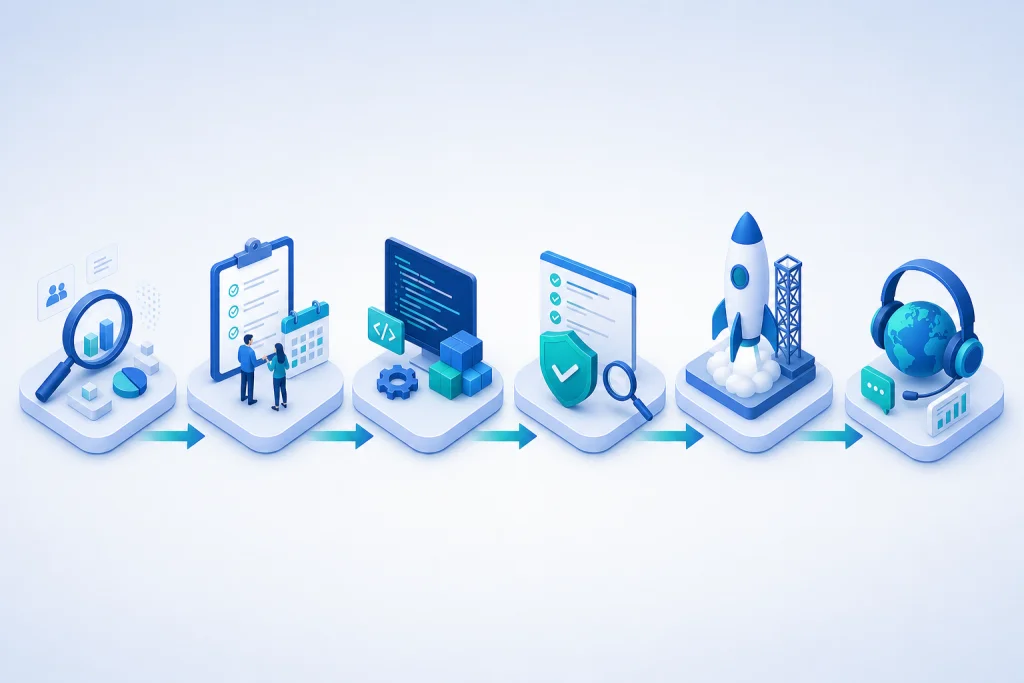
Enterprise implementation methodology

Standard flow for infrastructure, security, and backup projects — scoped per contract.

  1. Discovery & assessment

    Duration: 1–2 weeks

    Deliverables Requirements & risk report

  2. Architecture & BoQ

    Duration: 1–2 weeks

    Deliverables HLD, BoQ, rollout plan

  3. Procurement & staging

    Duration: 2–4 weeks

    Deliverables Asset register

  4. Implementation & UAT

    Duration: 2–6 weeks

    Deliverables As-built, UAT sign-off

  5. Handover & operations

    Duration: Ongoing

    Deliverables SOPs, training, SLA if contracted

Support & SLA (per project contract)

Service levels are defined in agreement — example framework below.

Standard maintenance

Response
Next business day (remote)
Coverage
Firmware advisory, tickets, RMA
Notes
Indonesia business hours

Project warranty

Response
Per implementation contract
Coverage
Defects in Intilogy deployment scope
Notes
Not 24/7 unless agreed

Critical incident (optional)

Response
4–8 hours if contracted
Coverage
Production-critical escalation
Notes
Requires separate MSA

Response times are illustrative — binding only when written in contract.

Technical documentation delivered

  • Topology & rack diagrams (as-built)
  • Asset list, serials, warranty status
  • Critical config summary & change log
  • Basic operations runbook & escalation contacts
  • Restore / DR drill reports (if in scope)
  • Tender packs: distributor letters & engineer certs (on request)

Competency & certifications

Engineers train on vendor technologies per project. Individual certs (Fortinet NSE, VMware VCP, Veeam VMCE, etc.) are provided for tenders — not all listed publicly.

  • Engineer certifications — Per project technology — on request
  • Distributor letters — For procurement audit
  • Client references — See Clients page for logos & scope

View certifications & partnerships

Ready to discuss architecture & BoQ?

Our team supports assessment, recommendations, procurement, and documented implementation.

WhatsApp Consult on WhatsApp
Request Consultation WhatsApp