Infrastructure Consulting Architecture
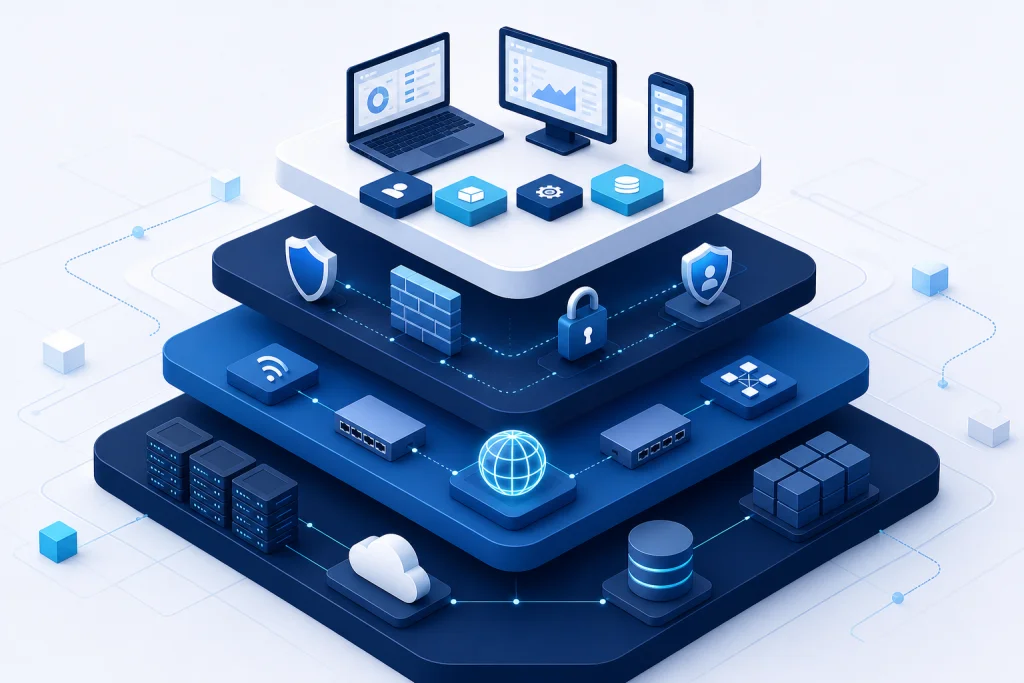
Our infrastructure consulting architecture is built on a layered model that separates compute, storage, networking, and security while ensuring seamless integration. At the core, we design hyperconverged clusters using VMware vSAN and HCI appliances from Lenovo and Dell, providing scale-out storage and compute with centralized management. The network layer employs Cisco Catalyst switches and Fortinet firewalls for segmentation and threat prevention, with SD-WAN capabilities for branch connectivity. For storage, we recommend Synology or QNAP NAS for file services and Veeam backup repositories, ensuring data resilience. Security is embedded via zero-trust principles, with Fortinet FortiGate next-gen firewalls and endpoint protection. This architecture supports hybrid cloud integration with Hybrid Cloud solutions, enabling burst capacity for peak loads. Each component is selected for interoperability and performance, with redundancy at every tier to achieve SLAs above 99.99%.
Key architectural decisions include choosing between SAN and HCI based on workload characteristics, implementing network virtualization with VMware NSX, and designing disaster recovery sites with synchronous replication. Our consultants use automated tools for capacity planning and performance modeling, ensuring the architecture meets both current and future demands. For enterprises in Indonesia, we also consider local factors like power stability and cooling efficiency, recommending UPS and in-row cooling solutions. The result is a resilient, agile infrastructure that reduces total cost of ownership by up to 25% compared to traditional three-tier architectures.
Industry Use Cases for Infrastructure Consulting
In the manufacturing sector, a multinational company in Batam faced production downtime due to legacy storage latency. Our consulting team redesigned their infrastructure with Dell PowerEdge servers and Server & Storage solutions, implementing VMware vSphere for virtualization and Veeam for backup. This reduced latency by 60% and achieved 99.99% uptime, enabling real-time IoT data processing. For a financial services firm in Jakarta, compliance with OJK regulations required enhanced security and data residency. We deployed Fortinet firewalls and Cisco networking, with encrypted backups to on-premise Synology NAS. The solution passed audit with zero findings and reduced security incidents by 80%.
Retail enterprises in Surabaya with distributed branches benefited from SD-WAN and Enterprise WiFi solutions, centralizing inventory management and POS systems. Our consulting optimized bandwidth usage and provided failover across ISPs, cutting connectivity costs by 35%. In healthcare, a hospital chain needed high-availability for electronic medical records. We architected a hyperconverged cluster with Lenovo HX series and VMware, achieving sub-second failover and 99.999% uptime. These use cases demonstrate how tailored infrastructure consulting drives operational excellence and competitive advantage.
Infrastructure Consulting vs Traditional Alternatives
Traditional infrastructure approaches often involve siloed procurement of servers, storage, and networking from different vendors, leading to integration challenges and higher management overhead. In contrast, our consulting provides a holistic design that optimizes for performance, scalability, and cost. For example, traditional SAN-based storage requires dedicated fiber channel switches and complex zoning, while our HCI solutions eliminate these layers, reducing cabling and power consumption by 40%. Traditional backup methods using tape or external drives are error-prone; we replace them with automated, deduplicated backups via Veeam, cutting recovery time from days to hours.
Another key difference is lifecycle management. Traditional environments often require forklift upgrades every 3-5 years, whereas our modular architecture allows incremental scaling. With HCI, adding compute or storage is as simple as adding a node, minimizing disruption. Security in traditional setups is often an afterthought; we embed zero-trust from day one with Fortinet and Cisco solutions. Finally, our consulting includes ongoing optimization and training, ensuring IT teams can manage the infrastructure effectively. The total cost of ownership over five years is typically 20-30% lower with our approach, while delivering higher agility and reliability.
Case Study & Implementation Methodology
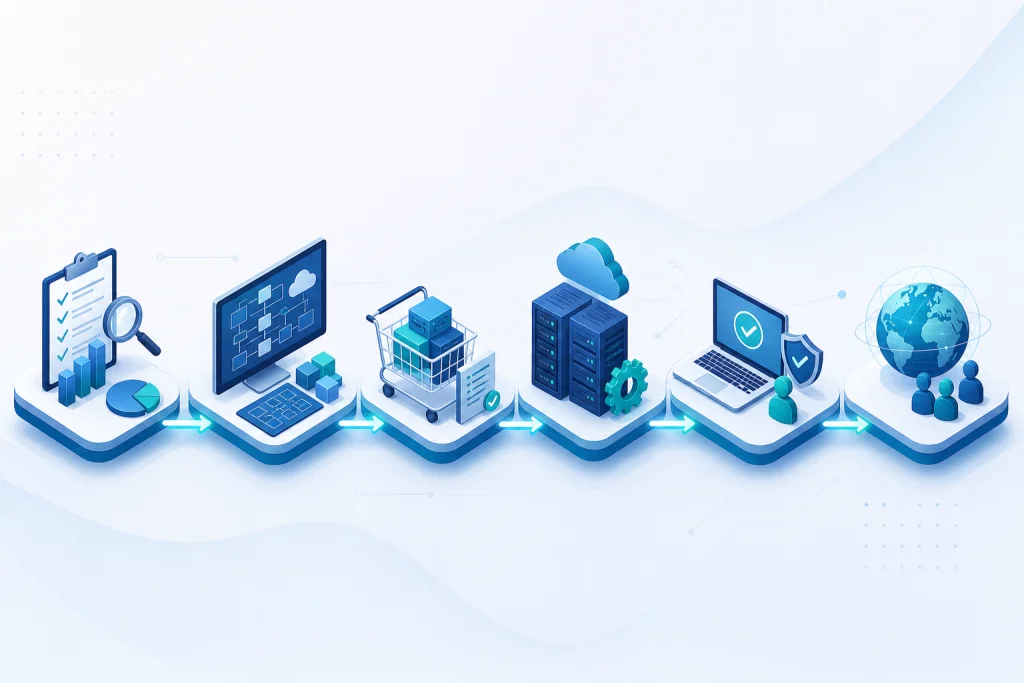
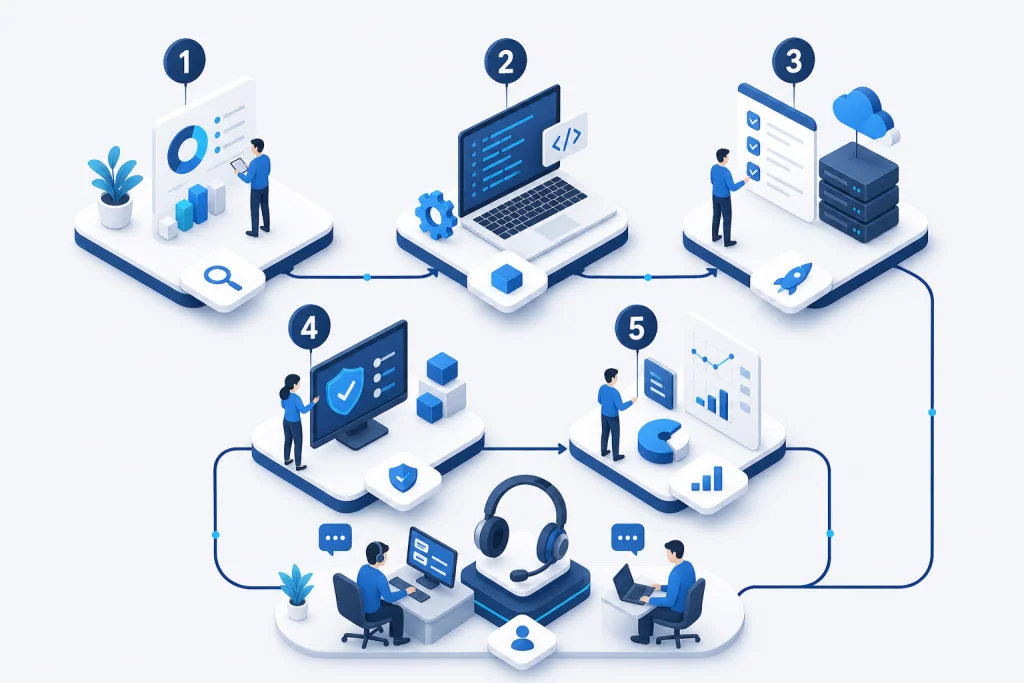
Our implementation methodology follows a structured five-phase process: Discovery, Design, Proof-of-Concept, Deployment, and Optimization. In the Discovery phase, we assess current infrastructure using automated tools and interviews. For example, a logistics company in Jakarta with 500+ employees had 15 legacy servers running at 30% utilization, causing high power costs. Challenge: 70% server sprawl, 40% annual energy waste. Solution: Consolidation onto a 3-node Dell HCI cluster with VMware and Veeam. Result: 80% reduction in physical servers, 45% lower energy costs, 99.99% uptime, and ROI within 18 months.
Another case: a university in Bandung needed to support 10,000 students with online learning. Challenge: Network congestion during peak hours, 50% packet loss. Solution: Deployed Cisco Wi-Fi 6 access points and Fortinet SD-WAN. Result: 95% reduction in packet loss, 300% increase in throughput, and 100% student satisfaction. Our methodology ensures each project delivers measurable outcomes, with post-deployment monitoring and quarterly reviews to maintain optimal performance.