Enterprise IT Solutions

Datacenter Procurement for Enterprise

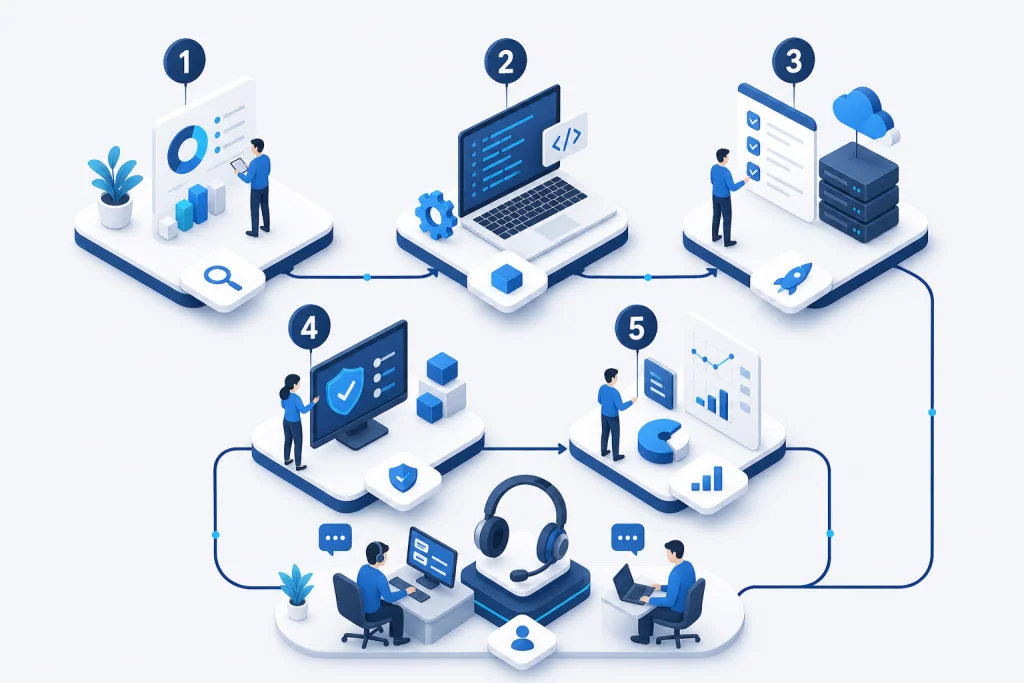
Datacenter procurement for enterprise organizations in Indonesia demands a strategic approach that balances performance, scalability, and total cost of ownership (TCO). As businesses undergo digital transformation, the need for robust IT infrastructure—spanning servers, storage, networking, and security—becomes critical. Intilogy partners with leading vendors such as Lenovo, HP, Dell, and Cisco to deliver tailored datacenter solutions. A modern datacenter architecture incorporates hyperconverged infrastructure (HCI) for simplified management, software-defined networking for agility, and tiered storage for performance optimization. Key considerations include power and cooling efficiency, rack density, and compliance with local regulations. For enterprises in Jakarta, Surabaya, and Bandung, procurement must address high availability (99.999% uptime) and disaster recovery readiness. Integrating backup and disaster recovery solutions from Veeam ensures data resilience. Additionally, cybersecurity measures using Fortinet firewalls protect against threats. This comprehensive approach reduces operational overhead and accelerates time-to-market for new services.

Datacenter Procurement Architecture

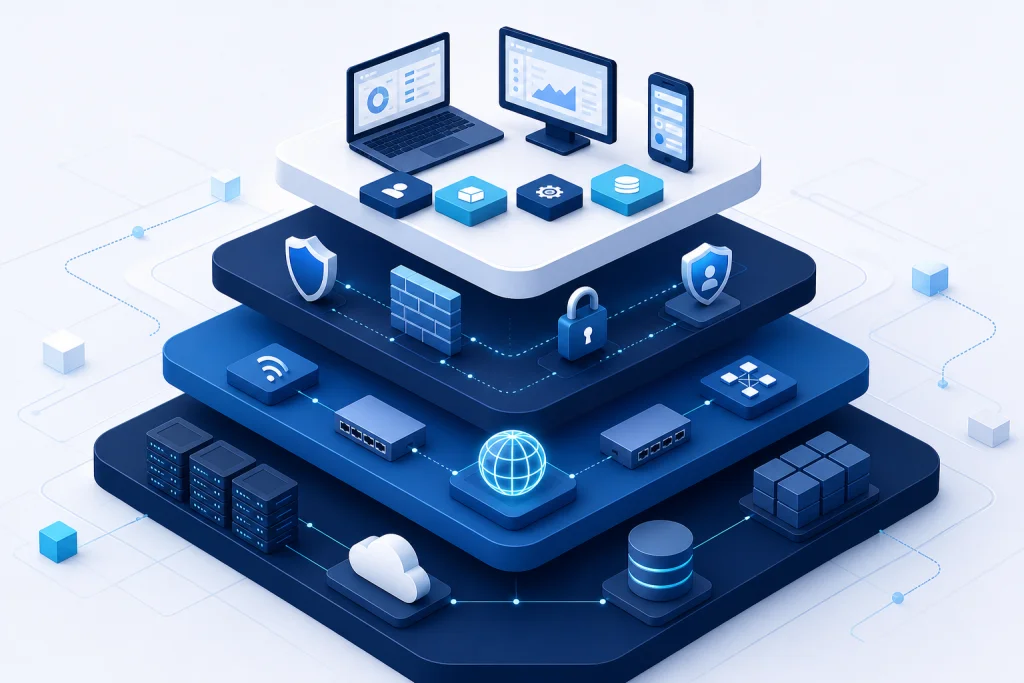
Enterprise datacenter procurement architecture involves selecting and integrating compute, storage, and networking components to meet specific workload requirements. A typical architecture includes blade servers (e.g., HP Synergy or Lenovo ThinkSystem), all-flash or hybrid storage arrays (e.g., Dell PowerStore or Synology FS series), and high-speed switches (e.g., Cisco Nexus). For virtualization, VMware vSphere is commonly deployed. Hyperconverged infrastructure (HCI) solutions like HCI from Nutanix or VMware vSAN converge compute and storage, simplifying procurement and scaling. Network architecture often follows a leaf-spine topology for low-latency east-west traffic. Power distribution units (PDUs) and uninterruptible power supplies (UPS) are critical for uptime. Cooling strategies range from in-row to liquid cooling for high-density racks. Procurement also includes cabling (fiber vs. copper) and rack management systems.

When procuring, enterprises must evaluate performance metrics such as IOPS, throughput, and latency. For example, a financial services firm may require sub-millisecond latency for transaction processing. Storage tiering using NVMe, SAS, and SATA drives optimizes cost. Redundancy at every layer—power, network, storage—ensures high availability. Intilogy assists with vendor selection, benchmarking, and proof-of-concept (PoC) testing. The architecture must also support future scalability, allowing for incremental capacity upgrades without forklift upgrades.

Industry Use Cases for Datacenter Procurement

Datacenter procurement serves diverse industries in Indonesia. In banking and finance, high-frequency trading platforms require low-latency networks and powerful compute clusters. For example, a bank in Jakarta might deploy Cisco Nexus switches and Dell PowerEdge servers with GPU acceleration for risk modeling. In healthcare, hospitals need secure, compliant storage for electronic medical records (EMR), leveraging backup and disaster recovery solutions to meet data retention regulations. E-commerce companies in Surabaya require elastic compute for seasonal traffic spikes, often using HCI for rapid scaling. Manufacturing firms in Batam deploy edge datacenters for IoT data processing, integrating enterprise WiFi for connectivity.

Telecommunications providers in Bandung use datacenter procurement for 5G core networks, requiring high-density compute and networking from Ruijie. Government agencies prioritize sovereignty and compliance, often procuring on-premises infrastructure with hybrid cloud capabilities. Each use case demands tailored architecture: for instance, media streaming companies need high-capacity storage from QNAP or Synology, while research institutions require GPU clusters for AI/ML workloads. Intilogy’s procurement methodology aligns with industry-specific SLAs and regulatory requirements.

Datacenter Procurement vs Traditional Alternatives

Traditional datacenter procurement involved purchasing separate servers, storage, and networking from multiple vendors, leading to integration challenges and higher TCO. Modern procurement favors converged and hyperconverged infrastructure (HCI) that simplifies management and reduces cabling. For instance, a traditional three-tier architecture (compute, storage, network) requires separate teams for each layer, whereas HCI unifies them under a single management pane. Additionally, traditional procurement often led to overprovisioning to avoid capacity shortages, whereas HCI allows granular scaling. Cloud alternatives like public IaaS offer agility but may incur higher long-term costs for predictable workloads, and data sovereignty concerns persist in Indonesia.

On-premises datacenter procurement provides control over security and latency, critical for real-time applications. Compared to colocation, owning the datacenter offers tax benefits and full customization. However, colocation reduces capital expenditure. Intilogy recommends a hybrid approach: use hybrid cloud for bursty workloads while procuring on-premises infrastructure for core applications. For example, a logistics company in Jakarta might use Microsoft Azure for seasonal peaks while maintaining on-premises Lenovo servers for transaction processing. The decision matrix includes factors like data gravity, compliance, and operational maturity.

Case Study & Implementation Methodology

A financial services firm in Jakarta faced challenges with legacy infrastructure causing 15% application downtime and 200ms latency. Challenge: aging servers and storage unable to handle 50,000 transactions per second. Solution: deployed HCI from Nutanix with Lenovo ThinkSystem nodes and Cisco switching. Result: downtime reduced to 0.01%, latency under 1ms, and TCO decreased by 30% over three years. Implementation followed Intilogy's methodology: assessment (2 weeks), design (3 weeks), procurement (4 weeks), deployment (6 weeks), and migration (2 weeks). Key steps included workload profiling, PoC validation, and phased cutover.

A manufacturing company in Surabaya required datacenter expansion for Industry 4.0. Challenge: 40% storage capacity utilization with 20% annual growth. Solution: procured Dell PowerScale storage and Veeam backup. Result: 50% reduction in backup windows, 99.999% availability. Methodology included capacity planning, vendor negotiation, and integration with existing server and storage. Both cases demonstrate the importance of structured procurement with clear milestones and ROI tracking.

Datacenter Procurement Architecture

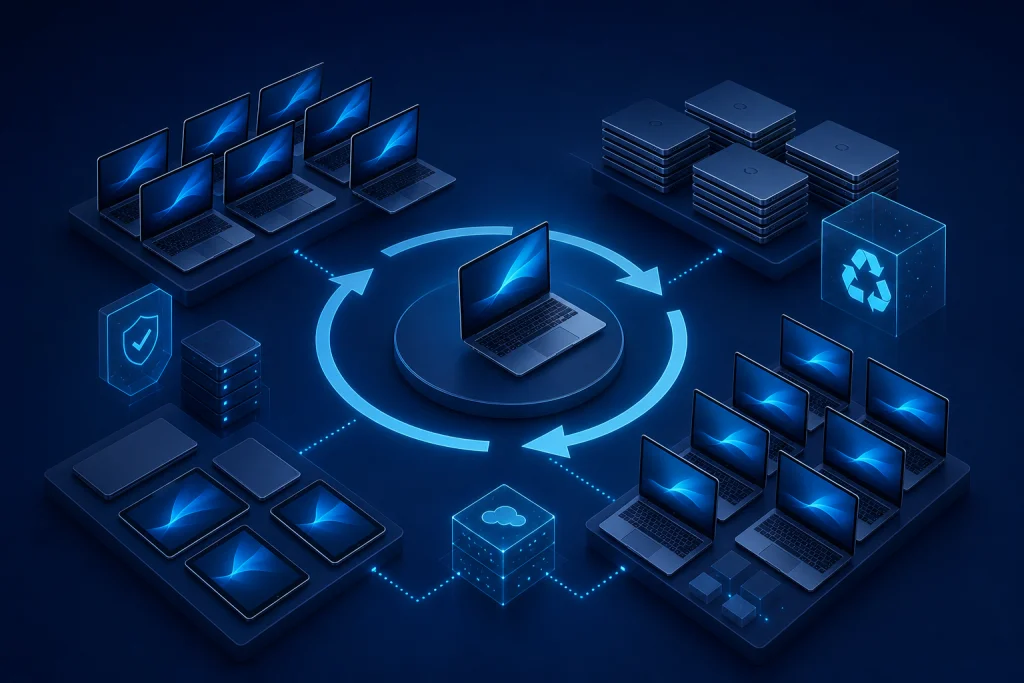
Enterprise datacenter procurement architecture involves selecting and integrating compute, storage, and networking components to meet specific workload requirements. A typical architecture includes blade servers (e.g., HP Synergy or Lenovo ThinkSystem), all-flash or hybrid storage arrays (e.g., Dell PowerStore or Synology FS series), and high-speed switches (e.g., Cisco Nexus). For virtualization, VMware vSphere is commonly deployed. Hyperconverged infrastructure (HCI) solutions like HCI from Nutanix or VMware vSAN converge compute and storage, simplifying procurement and scaling. Network architecture often follows a leaf-spine topology for low-latency east-west traffic. Power distribution units (PDUs) and uninterruptible power supplies (UPS) are critical for uptime. Cooling strategies range from in-row to liquid cooling for high-density racks. Procurement also includes cabling (fiber vs. copper) and rack management systems.

Industry Use Cases for Datacenter Procurement

Datacenter procurement serves diverse industries in Indonesia. In banking and finance, high-frequency trading platforms require low-latency networks and powerful compute clusters. For example, a bank in Jakarta might deploy Cisco Nexus switches and Dell PowerEdge servers with GPU acceleration for risk modeling. In healthcare, hospitals need secure, compliant storage for electronic medical records (EMR), leveraging backup and disaster recovery solutions to meet data retention regulations. E-commerce companies in Surabaya require elastic compute for seasonal traffic spikes, often using HCI for rapid scaling. Manufacturing firms in Batam deploy edge datacenters for IoT data processing, integrating enterprise WiFi for connectivity.

How we work

Structured delivery from assessment to handover

Each phase has clear deliverables, owners, and acceptance criteria aligned to enterprise IT practice.

Approach

Datacenter Procurement vs Traditional Alternatives

Traditional datacenter procurement involved purchasing separate servers, storage, and networking from multiple vendors, leading to integration challenges and higher TCO. Modern procurement favors converged and hyperconverged infrastructure (HCI) that simplifies management and reduces cabling. For instance, a traditional three-tier architecture (compute, storage, network) requires separate teams for each layer, whereas HCI unifies them under a single management pane. Additionally, traditional procurement often led to overprovisioning to avoid capacity shortages, whereas HCI allows granular scaling. Cloud alternatives like public IaaS offer agility but may incur higher long-term costs for predictable workloads, and data sovereignty concerns persist in Indonesia.

  • On-premises datacenter procurement provides control over security and latency, critical for real-time applications. Compared to colocation, owning the datacenter offers tax benefits and full customization. However, colocation reduces capital expenditure. Intilogy recommends a hybrid approach: use hybrid cloud for bursty workloads while procuring on-premises infrastructure for core applications. For example, a logistics company in Jakarta might use Microsoft Azure for seasonal peaks while maintaining on-premises Lenovo servers for transaction processing. The decision matrix includes factors like data gravity, compliance, and operational maturity.

Capabilities

Case Study & Implementation Methodology

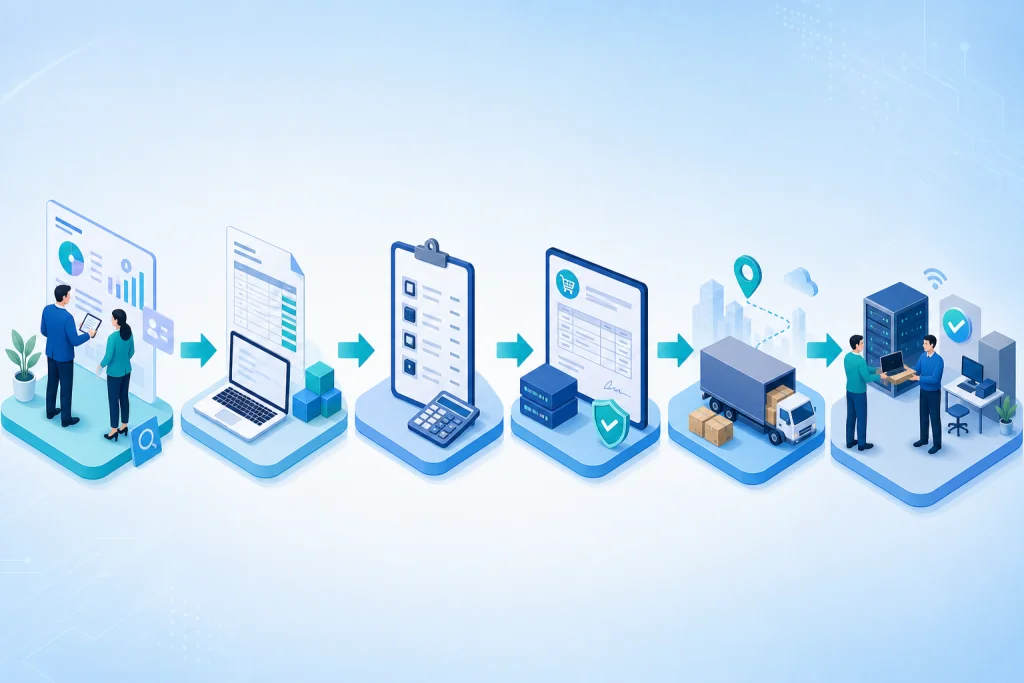
A financial services firm in Jakarta faced challenges with legacy infrastructure causing 15% application downtime and 200ms latency. Challenge: aging servers and storage unable to handle 50,000 transactions per second. Solution: deployed HCI from Nutanix with Lenovo ThinkSystem nodes and Cisco switching. Result: downtime reduced to 0.01%, latency under 1ms, and TCO decreased by 30% over three years. Implementation followed Intilogy's methodology: assessment (2 weeks), design (3 weeks), procurement (4 weeks), deployment (6 weeks), and migration (2 weeks). Key steps included workload profiling, PoC validation, and phased cutover.

  • A manufacturing company in Surabaya required datacenter expansion for Industry 4.0. Challenge: 40% storage capacity utilization with 20% annual growth. Solution: procured Dell PowerScale storage and Veeam backup. Result: 50% reduction in backup windows, 99.999% availability. Methodology included capacity planning, vendor negotiation, and integration with existing server and storage. Both cases demonstrate the importance of structured procurement with clear milestones and ROI tracking.
Use cases

Pengadaan greenfield

Refresh infrastruktur

Multi-vendor consolidation

Renewal lisensi

Ekspansi cabang

Datacenter Procurement for Enterprise

Our engineers help design, deploy, and support enterprise IT solutions across Indonesia.

Request a quote Contact our team

Related pages

E-E-A-T · Expertise & trust

Implementation expertise & enterprise trust

Intilogy (PT. Inti Jaya Teknologi) supports IT and procurement teams across Indonesia — from technical assessment and BoQ through deployment, documentation, and post go-live support.

  • 500+ Infrastructure deployments
  • 24/7 Operational support
  • SLA Enterprise SLA
  • 150+ Clients & institutions

Engineering & delivery expertise

Engineer-led assessment

Requirements workshops, sizing, and architecture — not catalogue selling without context.

Documented deployment

Commissioning checklists, as-built diagrams, IP plans, and escalation runbooks.

Audit-ready procurement

BoQ/BOM, quotations, POs, and handover packs for tenders and IT audits.

Multi-vendor coordination

One project partner for servers, networks, security, backup, and licensing.

Vendor ecosystem & sourcing channels

We source through official distributors/resellers per brand and project. Specific partnership tiers are confirmed per RFP — see our credentials page.

Vendor Status / tier Scope Notes
Dell Technologies Authorized channel PowerEdge, storage BoQ & manufacturer warranty
HPE Authorized channel ProLiant Enterprise servers
Fortinet Implementation partner NGFW, SD-WAN Licensing & deployment
Veeam Implementation partner Backup, replication Immutable design
VMware Implementation partner vSphere Cluster & migration

Tiers vary by SKU/region. Contact sales@intilogy.com for distributor letters or engineer certificates.

Enterprise implementation methodology

Standard flow for infrastructure, security, and backup projects — scoped per contract.

  1. Discovery & assessment

    Duration: 1–2 weeks

    Deliverables Requirements & risk report

  2. Architecture & BoQ

    Duration: 1–2 weeks

    Deliverables HLD, BoQ, rollout plan

  3. Procurement & staging

    Duration: 2–4 weeks

    Deliverables Asset register

  4. Implementation & UAT

    Duration: 2–6 weeks

    Deliverables As-built, UAT sign-off

  5. Handover & operations

    Duration: Ongoing

    Deliverables SOPs, training, SLA if contracted

Support & SLA (per project contract)

Service levels are defined in agreement — example framework below.

Standard maintenance

Response
Next business day (remote)
Coverage
Firmware advisory, tickets, RMA
Notes
Indonesia business hours

Project warranty

Response
Per implementation contract
Coverage
Defects in Intilogy deployment scope
Notes
Not 24/7 unless agreed

Critical incident (optional)

Response
4–8 hours if contracted
Coverage
Production-critical escalation
Notes
Requires separate MSA

Response times are illustrative — binding only when written in contract.

Technical documentation delivered

  • Topology & rack diagrams (as-built)
  • Asset list, serials, warranty status
  • Critical config summary & change log
  • Basic operations runbook & escalation contacts
  • Restore / DR drill reports (if in scope)
  • Tender packs: distributor letters & engineer certs (on request)

Competency & certifications

Engineers train on vendor technologies per project. Individual certs (Fortinet NSE, VMware VCP, Veeam VMCE, etc.) are provided for tenders — not all listed publicly.

  • Engineer certifications — Per project technology — on request
  • Distributor letters — For procurement audit
  • Client references — See Clients page for logos & scope

View certifications & partnerships

Ready to discuss architecture & BoQ?

Our team supports assessment, recommendations, procurement, and documented implementation.

WhatsApp Consult on WhatsApp
Request Consultation WhatsApp