Enterprise IT Solutions

Hardware Lifecycle Management for Enterprise

Hardware Lifecycle Management (HLM) is a strategic approach to overseeing IT hardware from procurement to disposal, ensuring optimal performance, cost control, and security compliance. For enterprises in Indonesia, HLM addresses the unique challenges of managing diverse hardware fleets across distributed locations, including warehouses, offices, and data centers. Our methodology encompasses asset discovery, tracking, maintenance, upgrade planning, and secure decommissioning. By integrating with IT service management (ITSM) tools and leveraging telemetry data, HLM provides real-time visibility into hardware health, utilization, and end-of-life (EOL) status. This enables proactive capacity planning, reduces unplanned downtime, and extends asset lifespan. Key components include hardware inventory databases, automated patch management, warranty and support contract management, and disposal logistics compliant with environmental regulations. For enterprises, HLM is essential for aligning IT investments with business goals, minimizing total cost of ownership (TCO), and ensuring regulatory compliance. Our solutions integrate with leading vendors such as Lenovo, HP, Dell, Cisco, and Synology, providing end-to-end lifecycle support. Whether managing servers, storage, networking, or endpoints, HLM delivers measurable ROI through improved asset utilization and reduced operational risks.

Hardware Lifecycle Management Architecture

A robust HLM architecture consists of four core phases: planning and procurement, deployment and provisioning, operations and maintenance, and retirement and disposal. The planning phase involves capacity forecasting, vendor selection, and budget allocation. For example, enterprises may choose Lenovo ThinkSystem servers for their scalability or HP ProLiant for reliability. Deployment includes racking, cabling, and configuration using automation tools like Ansible or Puppet. Operations rely on monitoring tools (e.g., Nagios, Zabbix) to track hardware health metrics such as CPU temp, disk I/O, and power consumption. Maintenance encompasses firmware updates, patch management, and warranty renewals. Finally, retirement involves secure data wiping and environmentally compliant recycling. Our architecture integrates with IT Infrastructure solutions to provide a unified view of hardware assets across on-premises and hybrid environments.

The architecture also supports predictive analytics using machine learning to forecast hardware failures based on telemetry data. This reduces unplanned downtime by 30-40%. Additionally, a centralized asset management database (CMDB) tracks every asset's lifecycle stage, warranty status, and cost history. Integration with HCI platforms like VMware vSAN or Nutanix simplifies management by abstracting hardware dependencies. For networking, Cisco DNA Center provides lifecycle management for switches and routers. This architecture ensures that hardware investments are optimized, risks mitigated, and compliance with ISO 27001 and local regulations maintained.

Industry Use Cases for Hardware Lifecycle Management

In manufacturing, HLM manages industrial IoT devices and edge servers across factory floors. For instance, a automotive plant in Jakarta uses HLM to track 500+ PLCs and sensors, reducing downtime by 25% through predictive maintenance. In logistics, warehouse operations rely on ruggedized scanners and mobile computers; HLM ensures these devices are updated and replaced before failure, improving throughput by 15%. For financial services, HLM governs compliance with data retention policies by securely decommissioning storage arrays from Synology or QNAP after 7 years. Healthcare providers use HLM to manage patient monitoring systems and PACS servers, ensuring uptime for critical diagnostics. Retail chains with hundreds of POS terminals leverage HLM to standardize hardware refreshes, reducing support costs by 20%. Each use case benefits from automated alerts for EOL and EOSL (End of Service Life) events, enabling timely upgrades and avoiding security vulnerabilities.

Additionally, HLM supports hybrid work models by managing laptops, docking stations, and collaboration devices. A multinational company in Indonesia deployed HLM for 10,000 endpoints, achieving 98% asset visibility and reducing annual hardware spend by 12%. The system integrates with Backup & Disaster Recovery to ensure that retiring hardware has proper data backups. These use cases demonstrate that HLM is not just about tracking assets but driving business value through operational excellence.

Hardware Lifecycle Management vs Traditional Alternatives

Traditional hardware management relies on manual spreadsheets, reactive maintenance, and ad-hoc procurement. This leads to data silos, missed warranty renewals, and higher TCO. In contrast, HLM provides automated lifecycle tracking, proactive maintenance, and strategic refresh planning. For example, a traditional approach might replace servers every 5 years regardless of utilization, while HLM uses telemetry to extend life by 1-2 years safely. Traditional methods often result in 10-15% of assets being underutilized or lost, whereas HLM improves utilization by 20% through reallocation. Security-wise, traditional management often overlooks firmware updates, exposing systems to vulnerabilities; HLM automates patching and compliance checks. Cost-wise, HLM reduces TCO by 15-25% through optimized procurement, reduced downtime, and better warranty management.

Another key difference is scalability. Traditional methods fail in large enterprises with thousands of assets, leading to audit failures and compliance gaps. HLM platforms like ServiceNow or Ivanti provide real-time dashboards and automated workflows. For example, integrating HLM with Cyber Security ensures that decommissioned hardware is wiped using NIST 800-88 standards. In comparison, traditional disposal often leaves data at risk. HLM also supports green IT initiatives by tracking e-waste recycling, which is increasingly important for corporate social responsibility. Overall, HLM transforms hardware management from a cost center to a strategic enabler.

Case Study & Implementation Methodology

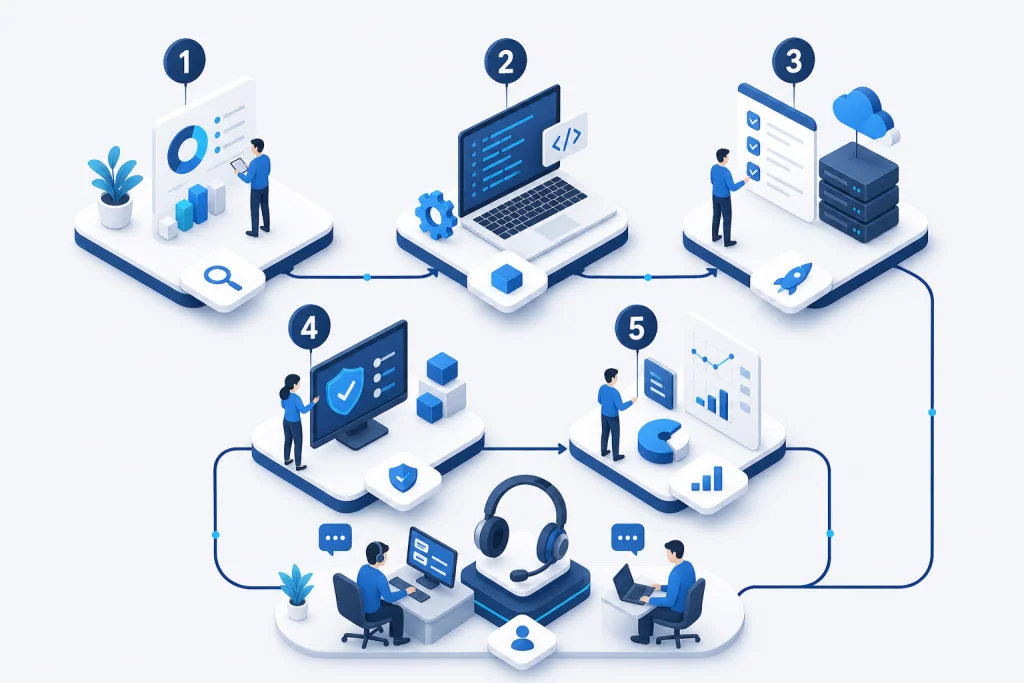
Our implementation methodology follows a five-phase approach: Discovery, Planning, Deployment, Optimization, and Governance. In the Discovery phase, we audit all hardware assets using automated scanners, capturing 95% of assets within two weeks. Planning involves prioritizing lifecycle stages based on business impact. Deployment integrates HLM tools with existing ITSM and CMDB. Optimization uses analytics to recommend refresh cycles. Governance ensures compliance with policies. For example, a logistics company in Surabaya with 2,000 ruggedized tablets faced 30% failure rate due to outdated firmware. After implementing HLM with automated patch management from Lenovo and HP, failure rate dropped to 8%, saving $500,000 annually in replacement costs. Another case: a bank in Jakarta managing 500 servers and 5 PB of storage from Dell and Synology reduced unplanned downtime by 40% through predictive alerts, achieving 99.9% uptime. The methodology also includes training for IT staff and regular review cycles to adapt to changing business needs.

Hardware Lifecycle Management Architecture

A robust HLM architecture consists of four core phases: planning and procurement, deployment and provisioning, operations and maintenance, and retirement and disposal. The planning phase involves capacity forecasting, vendor selection, and budget allocation. For example, enterprises may choose Lenovo ThinkSystem servers for their scalability or HP ProLiant for reliability. Deployment includes racking, cabling, and configuration using automation tools like Ansible or Puppet. Operations rely on monitoring tools (e.g., Nagios, Zabbix) to track hardware health metrics such as CPU temp, disk I/O, and power consumption. Maintenance encompasses firmware updates, patch management, and warranty renewals. Finally, retirement involves secure data wiping and environmentally compliant recycling. Our architecture integrates with IT Infrastructure solutions to provide a unified view of hardware assets across on-premises and hybrid environments.

Industry Use Cases for Hardware Lifecycle Management

In manufacturing, HLM manages industrial IoT devices and edge servers across factory floors. For instance, a automotive plant in Jakarta uses HLM to track 500+ PLCs and sensors, reducing downtime by 25% through predictive maintenance. In logistics, warehouse operations rely on ruggedized scanners and mobile computers; HLM ensures these devices are updated and replaced before failure, improving throughput by 15%. For financial services, HLM governs compliance with data retention policies by securely decommissioning storage arrays from Synology or QNAP after 7 years. Healthcare providers use HLM to manage patient monitoring systems and PACS servers, ensuring uptime for critical diagnostics. Retail chains with hundreds of POS terminals leverage HLM to standardize hardware refreshes, reducing support costs by 20%. Each use case benefits from automated alerts for EOL and EOSL (End of Service Life) events, enabling timely upgrades and avoiding security vulnerabilities.

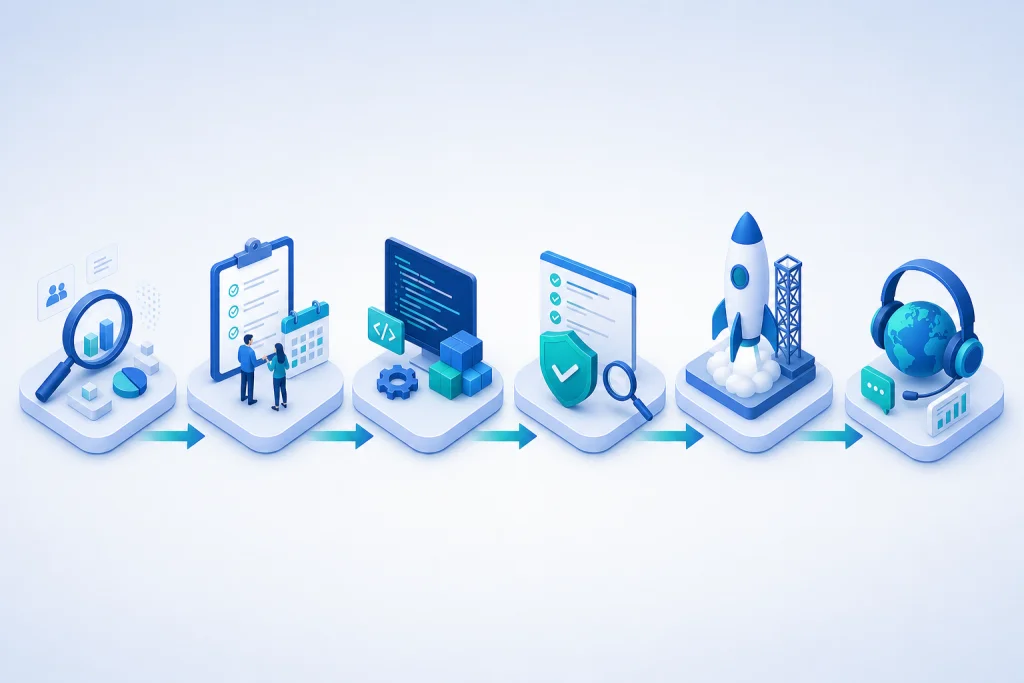
How we work

Structured delivery from assessment to handover

Each phase has clear deliverables, owners, and acceptance criteria aligned to enterprise IT practice.

Approach

Hardware Lifecycle Management vs Traditional Alternatives

Traditional hardware management relies on manual spreadsheets, reactive maintenance, and ad-hoc procurement. This leads to data silos, missed warranty renewals, and higher TCO. In contrast, HLM provides automated lifecycle tracking, proactive maintenance, and strategic refresh planning. For example, a traditional approach might replace servers every 5 years regardless of utilization, while HLM uses telemetry to extend life by 1-2 years safely. Traditional methods often result in 10-15% of assets being underutilized or lost, whereas HLM improves utilization by 20% through reallocation. Security-wise, traditional management often overlooks firmware updates, exposing systems to vulnerabilities; HLM automates patching and compliance checks. Cost-wise, HLM reduces TCO by 15-25% through optimized procurement, reduced downtime, and better warranty management.

  • Another key difference is scalability. Traditional methods fail in large enterprises with thousands of assets, leading to audit failures and compliance gaps. HLM platforms like ServiceNow or Ivanti provide real-time dashboards and automated workflows. For example, integrating HLM with Cyber Security ensures that decommissioned hardware is wiped using NIST 800-88 standards. In comparison, traditional disposal often leaves data at risk. HLM also supports green IT initiatives by tracking e-waste recycling, which is increasingly important for corporate social responsibility. Overall, HLM transforms hardware management from a cost center to a strategic enabler.

Capabilities

Case Study & Implementation Methodology

Our implementation methodology follows a five-phase approach: Discovery, Planning, Deployment, Optimization, and Governance. In the Discovery phase, we audit all hardware assets using automated scanners, capturing 95% of assets within two weeks. Planning involves prioritizing lifecycle stages based on business impact. Deployment integrates HLM tools with existing ITSM and CMDB. Optimization uses analytics to recommend refresh cycles. Governance ensures compliance with policies. For example, a logistics company in Surabaya with 2,000 ruggedized tablets faced 30% failure rate due to outdated firmware. After implementing HLM with automated patch management from Lenovo and HP, failure rate dropped to 8%, saving $500,000 annually in replacement costs. Another case: a bank in Jakarta managing 500 servers and 5 PB of storage from Dell and Synology reduced unplanned downtime by 40% through predictive alerts, achieving 99.9% uptime. The methodology also includes training for IT staff and regular review cycles to adapt to changing business needs.
Use cases

Pengadaan greenfield

Refresh infrastruktur

Multi-vendor consolidation

Renewal lisensi

Ekspansi cabang

Hardware Lifecycle Management for Enterprise

Our engineers help design, deploy, and support enterprise IT solutions across Indonesia.

Request a quote Contact our team

Related pages

E-E-A-T · Expertise & trust

Implementation expertise & enterprise trust

Intilogy (PT. Inti Jaya Teknologi) supports IT and procurement teams across Indonesia — from technical assessment and BoQ through deployment, documentation, and post go-live support.

  • 500+ Infrastructure deployments
  • 24/7 Operational support
  • SLA Enterprise SLA
  • 150+ Clients & institutions

Engineering & delivery expertise

Engineer-led assessment

Requirements workshops, sizing, and architecture — not catalogue selling without context.

Documented deployment

Commissioning checklists, as-built diagrams, IP plans, and escalation runbooks.

Audit-ready procurement

BoQ/BOM, quotations, POs, and handover packs for tenders and IT audits.

Multi-vendor coordination

One project partner for servers, networks, security, backup, and licensing.

Vendor ecosystem & sourcing channels

We source through official distributors/resellers per brand and project. Specific partnership tiers are confirmed per RFP — see our credentials page.

Vendor Status / tier Scope Notes
Dell Technologies Authorized channel PowerEdge, storage BoQ & manufacturer warranty
HPE Authorized channel ProLiant Enterprise servers
Fortinet Implementation partner NGFW, SD-WAN Licensing & deployment
Veeam Implementation partner Backup, replication Immutable design
VMware Implementation partner vSphere Cluster & migration

Tiers vary by SKU/region. Contact sales@intilogy.com for distributor letters or engineer certificates.

Enterprise implementation methodology

Standard flow for infrastructure, security, and backup projects — scoped per contract.

  1. Discovery & assessment

    Duration: 1–2 weeks

    Deliverables Requirements & risk report

  2. Architecture & BoQ

    Duration: 1–2 weeks

    Deliverables HLD, BoQ, rollout plan

  3. Procurement & staging

    Duration: 2–4 weeks

    Deliverables Asset register

  4. Implementation & UAT

    Duration: 2–6 weeks

    Deliverables As-built, UAT sign-off

  5. Handover & operations

    Duration: Ongoing

    Deliverables SOPs, training, SLA if contracted

Support & SLA (per project contract)

Service levels are defined in agreement — example framework below.

Standard maintenance

Response
Next business day (remote)
Coverage
Firmware advisory, tickets, RMA
Notes
Indonesia business hours

Project warranty

Response
Per implementation contract
Coverage
Defects in Intilogy deployment scope
Notes
Not 24/7 unless agreed

Critical incident (optional)

Response
4–8 hours if contracted
Coverage
Production-critical escalation
Notes
Requires separate MSA

Response times are illustrative — binding only when written in contract.

Technical documentation delivered

  • Topology & rack diagrams (as-built)
  • Asset list, serials, warranty status
  • Critical config summary & change log
  • Basic operations runbook & escalation contacts
  • Restore / DR drill reports (if in scope)
  • Tender packs: distributor letters & engineer certs (on request)

Competency & certifications

Engineers train on vendor technologies per project. Individual certs (Fortinet NSE, VMware VCP, Veeam VMCE, etc.) are provided for tenders — not all listed publicly.

  • Engineer certifications — Per project technology — on request
  • Distributor letters — For procurement audit
  • Client references — See Clients page for logos & scope

View certifications & partnerships

Ready to discuss architecture & BoQ?

Our team supports assessment, recommendations, procurement, and documented implementation.

WhatsApp Consult on WhatsApp
Request Consultation WhatsApp