IT Hardware Procurement Architecture
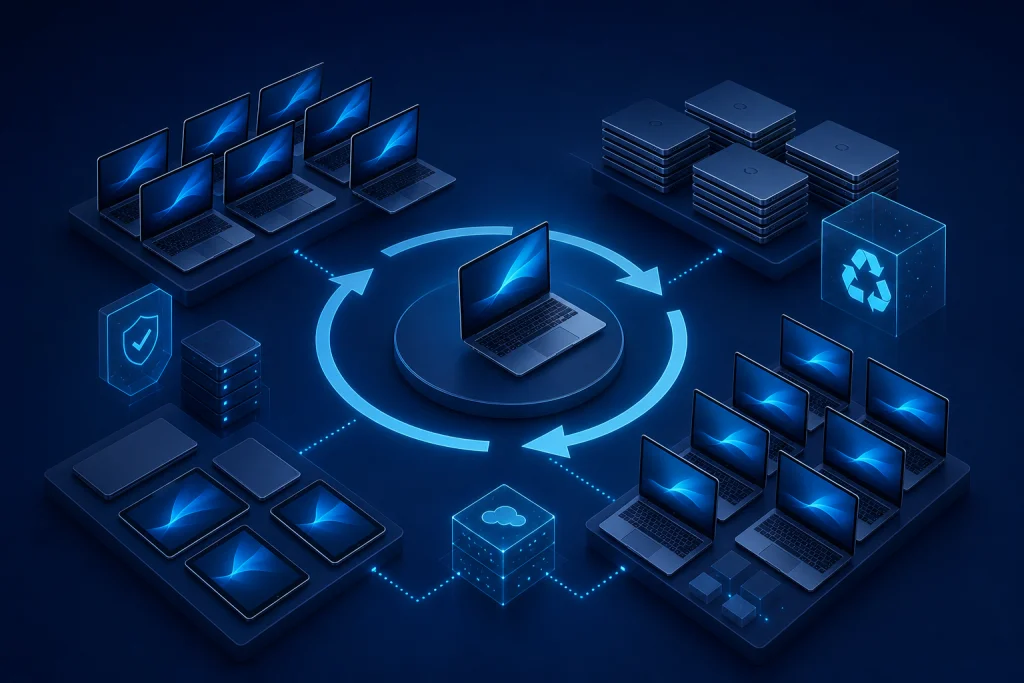
The architecture of enterprise IT hardware procurement involves a multi-layered framework that aligns technical requirements with business objectives. It begins with capacity planning, where compute, storage, and network needs are assessed based on workload profiles. For compute, enterprises choose between rack servers (e.g., Lenovo ThinkSystem), blade servers, or hyperconverged nodes. Storage architecture ranges from direct-attached storage (DAS) to network-attached storage (NAS) and storage area networks (SAN), with vendors like Synology and QNAP offering scalable solutions. Networking architecture includes core switches, access points, and firewalls from Cisco and Ruijie.
Procurement architecture also incorporates vendor management, contract negotiation, and logistics coordination. Standardization on a limited set of hardware models reduces complexity and spares inventory. Lifecycle management ensures that hardware is refreshed every 3-5 years to maintain warranty and performance. Integration with IT infrastructure monitoring tools enables proactive maintenance. For Indonesian enterprises, compliance with local regulations (e.g., SNI standards) and data residency requirements is critical. A well-defined architecture reduces procurement lead times by 20-30% and lowers TCO through bulk purchasing and extended warranties.
Industry Use Cases for IT Hardware Procurement
In the financial sector, banks in Jakarta require high-performance servers and storage for real-time transaction processing and data analytics. A leading bank deployed Dell PowerEdge servers with VMware virtualization, achieving 99.99% uptime and 40% faster transaction processing. For manufacturing, a factory in Batam used ruggedized Lenovo ThinkPad laptops and Cisco industrial switches for IoT data collection, reducing downtime by 25%.
Healthcare providers in Surabaya procured HP ProLiant servers and Synology NAS for electronic medical records (EMR), ensuring HIPAA-compliant data storage with 10TB capacity. In retail, a Jakarta-based e-commerce company scaled its infrastructure with Dell EMC storage and Cisco UCS servers to handle 500,000 daily transactions, improving page load times by 50%. These use cases demonstrate how tailored procurement drives operational efficiency and competitive advantage.
IT Hardware Procurement vs Traditional Alternatives
Traditional procurement often involves ad-hoc purchasing from multiple vendors, leading to compatibility issues, higher costs, and longer deployment times. In contrast, strategic IT hardware procurement centralizes sourcing, standardizes configurations, and leverages volume discounts. For example, buying a complete stack from a single partner like Intilogy ensures that servers, storage, and networking are pre-tested and integrated. This reduces deployment time by 30-50% compared to piecemeal procurement.
Additionally, traditional models lack lifecycle management, resulting in aging hardware that increases support costs and security risks. Strategic procurement includes warranty management, firmware updates, and end-of-life planning. For Indonesian enterprises, the shift from traditional to strategic procurement also improves budget predictability through fixed-price contracts and leasing options. Ultimately, strategic procurement reduces TCO by 15-25% while enhancing system reliability and scalability.
Case Study & Implementation Methodology
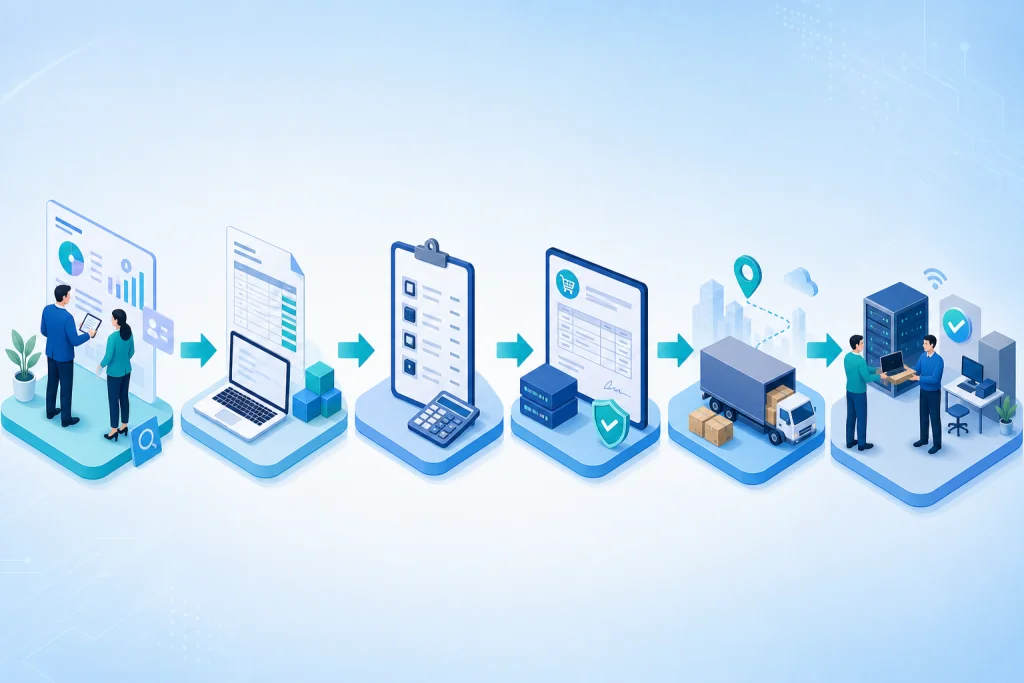
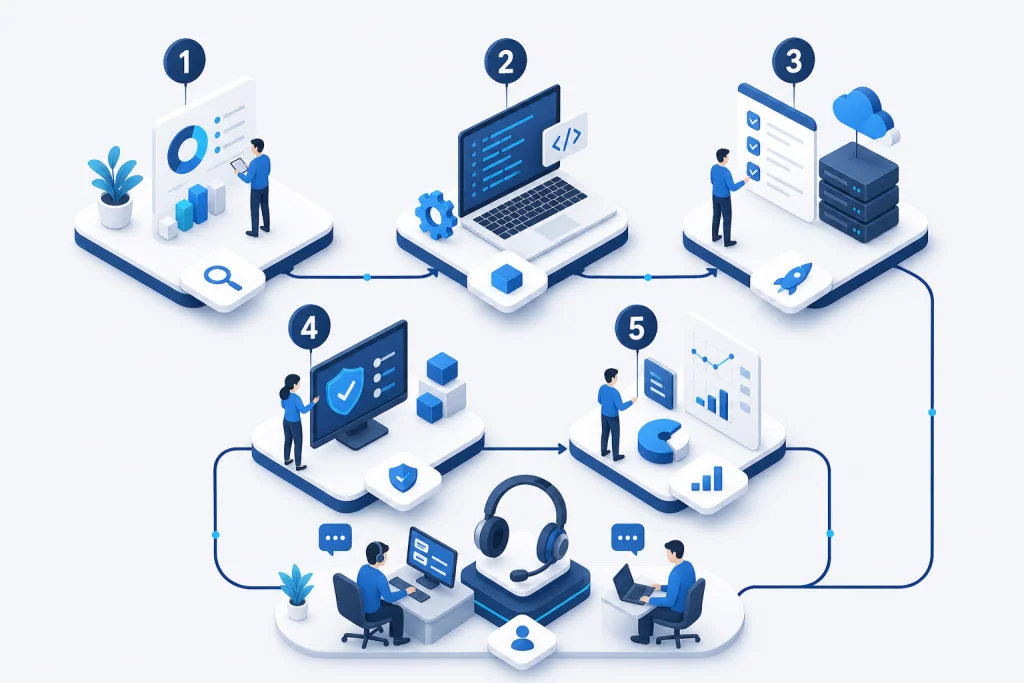
A logistics company in Jakarta faced frequent server crashes and storage bottlenecks, causing 12 hours of downtime monthly. They needed to support 500 users and 2TB of daily data growth. Intilogy implemented a solution using Lenovo ThinkSystem servers, Synology RS3617RPxs NAS, and Cisco Catalyst switches. The deployment followed a phased methodology: assessment, design, procurement, staging, migration, and testing.
Result: Downtime reduced to 2 hours per month (83% improvement), storage capacity expanded to 50TB with 10GbE connectivity, and total cost of ownership decreased by 20% over 3 years. The implementation included 24/7 support and proactive monitoring via IT infrastructure tools. This case illustrates how structured procurement and deployment deliver measurable ROI for Indonesian enterprises.