Project Procurement Architecture
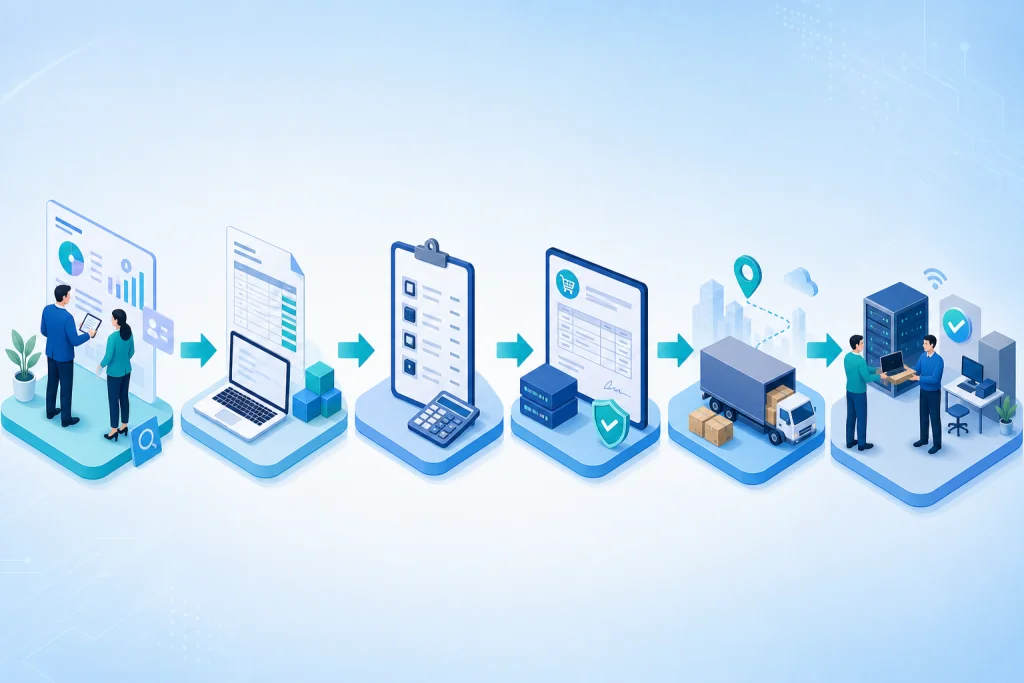
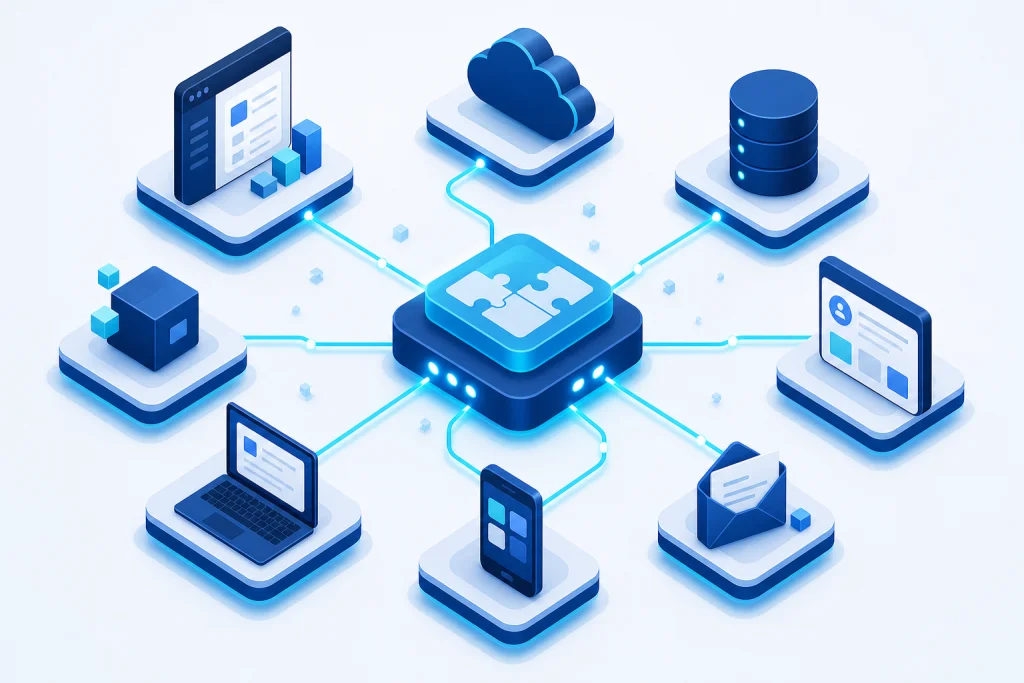
A robust project procurement architecture for enterprise IT involves multiple layers: strategic sourcing, vendor qualification, contract management, and logistics coordination. The process begins with requirements gathering, where technical specifications are defined for hardware (e.g., servers from Lenovo or HP), networking gear (e.g., Cisco switches), and software licenses (e.g., Microsoft or VMware). A centralized procurement system enables real-time tracking of purchase orders, delivery schedules, and budget adherence. For large enterprises, integrating procurement with ERP systems like SAP or Oracle automates approval workflows and reduces manual errors. Key architectural components include a vendor portal for bid submissions, a contract repository with compliance checks, and a logistics module that tracks shipments from global suppliers to Indonesian ports. Risk management is embedded through multi-source strategies to avoid single points of failure. Additionally, procurement architecture must align with ITIL best practices and local tax regulations (e.g., PPn and PPh). By leveraging e-procurement platforms, enterprises can achieve 20-40% cost savings and reduce procurement cycle times by 50%.
The technical backbone of procurement architecture also includes API integrations with supplier systems for automated inventory updates and pricing. For example, when procuring hyperconverged infrastructure, the system can automatically validate compatibility between components. Security is paramount, with encrypted data transmission and role-based access controls. Audit trails ensure transparency for internal and external auditors. In Indonesia, where infrastructure projects often face logistical challenges, architecture must support multi-warehouse management and last-mile delivery tracking. Intilogy's procurement framework incorporates these elements, offering a unified dashboard for IT managers to oversee all procurement activities from requisition to asset tagging.
Industry Use Cases for Project Procurement
Enterprise project procurement is critical across various industries in Indonesia. In manufacturing, companies procure industrial IoT sensors, PLCs, and edge computing devices from vendors like Dell and HP to enable smart factory automation. For example, a automotive parts manufacturer in Jakarta reduced downtime by 25% through just-in-time procurement of replacement parts and predictive maintenance sensors. In the financial sector, banks require stringent procurement for security appliances (e.g., Fortinet firewalls) and compliance software. A bank in Surabaya streamlined its procurement of cybersecurity tools, achieving 99.9% uptime for critical systems. Healthcare organizations, such as hospitals in Bandung, procure medical imaging servers and storage from Synology and QNAP to manage patient data, ensuring HIPAA and local data privacy compliance. The retail sector leverages procurement for POS systems and inventory management hardware, with a retail chain in Medan cutting procurement costs by 15% through centralized vendor negotiations. Telecommunications companies in Indonesia procure networking equipment from Cisco and Ruijie for 5G rollout projects, managing thousands of SKUs across multiple sites. Each use case demonstrates how structured procurement reduces risk, improves scalability, and aligns with business objectives.
Another emerging use case is in the energy sector, where oil and gas companies in Balikpapan procure ruggedized servers and edge computing solutions for remote monitoring. These projects require specialized logistics and compliance with safety standards. By implementing a project procurement framework, they achieved 30% faster deployment times. Similarly, government agencies in Indonesia use procurement for smart city initiatives, sourcing IoT devices and surveillance systems from enterprise CCTV providers. The common thread is the need for a procurement partner that understands local regulations, supplier landscapes, and technical integration challenges.
Project Procurement vs Traditional Alternatives
Traditional procurement methods, such as ad-hoc purchasing or decentralized buying, often lead to higher costs, inconsistent quality, and longer lead times. In contrast, enterprise project procurement employs a structured, technology-driven approach. For example, traditional procurement might involve individual departments buying Lenovo laptops from different resellers, resulting in price variations and incompatible configurations. Project procurement centralizes these purchases, leveraging volume discounts and standardized configurations. Another key difference is vendor management: traditional methods rely on reactive relationships, while project procurement uses formal vendor scorecards and performance metrics. For IT infrastructure projects, traditional procurement often fails to account for lifecycle costs, whereas project procurement includes TCO analysis, considering maintenance, energy, and support costs. Additionally, traditional procurement lacks integration with project management tools, causing delays. Project procurement integrates with PM software like Microsoft Project or Jira, enabling real-time budget tracking and milestone alignment. In Indonesia, where import regulations and customs clearance can be complex, project procurement provides dedicated logistics support, reducing clearance times from weeks to days. Ultimately, project procurement offers 20-30% cost savings and 40% faster delivery compared to traditional methods.
Furthermore, traditional procurement is prone to maverick spending, where employees bypass approved vendors. Project procurement enforces compliance through automated approval workflows and pre-approved catalogs. For example, when procuring server and storage solutions, project procurement ensures that all equipment meets enterprise standards for performance and warranty. It also facilitates better risk management by requiring vendor insurance and service-level agreements (SLAs). In contrast, traditional procurement often lacks these safeguards, exposing organizations to supply chain disruptions. For enterprises in Indonesia transitioning from traditional to project procurement, Intilogy offers consulting services to redesign procurement processes, implement e-procurement platforms, and train staff.
Case Study & Implementation Methodology
Case Study: A manufacturing company in Jakarta with 500 employees needed to upgrade its IT infrastructure to support Industry 4.0 initiatives. Challenge: The existing procurement process was decentralized, causing 30% cost overruns and 45-day lead times for server and storage equipment. Solution: Intilogy implemented a project procurement framework with centralized vendor management, using Lenovo servers and Synology NAS for data storage. The methodology included: (1) Requirements analysis and technical specification; (2) Competitive bidding from 5 pre-qualified vendors; (3) Contract negotiation with SLAs for 4-hour support; (4) Logistics coordination with customs clearance in Tanjung Priok; (5) Implementation and asset tagging. Result: 25% reduction in total procurement costs, 50% faster delivery (22 days), and 99.9% system uptime. The company also achieved 20% improvement in production efficiency due to reduced downtime.
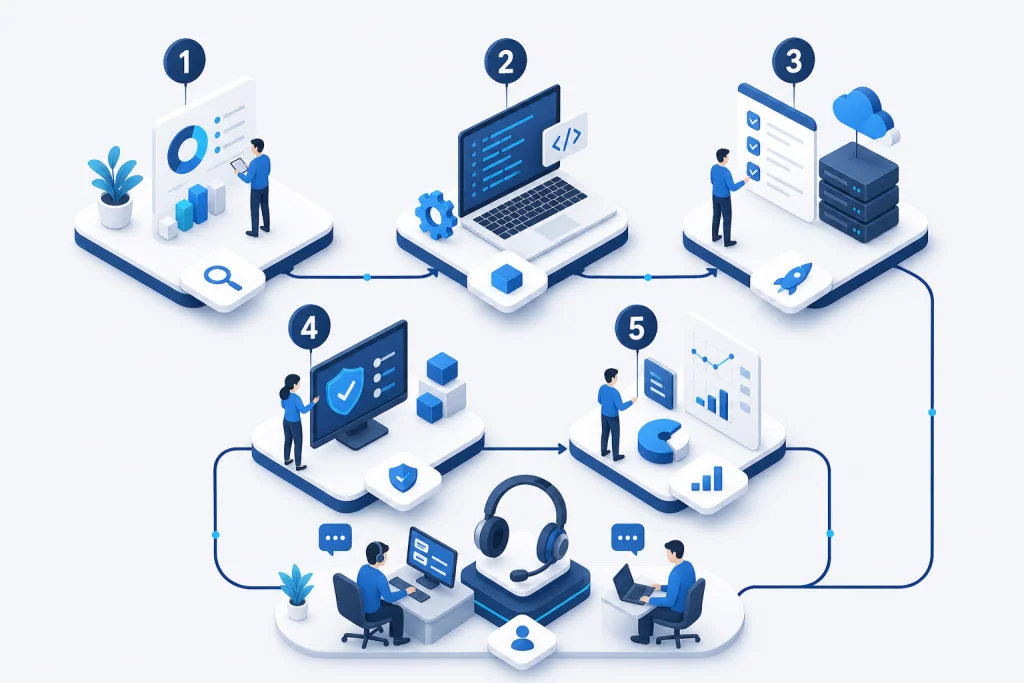
Implementation Methodology: Our approach follows a five-phase model: (1) Discovery & Planning: Assess current procurement maturity, define technical requirements, and create a procurement roadmap. (2) Sourcing & Vendor Selection: Issue RFPs, evaluate vendors based on technical capability, financial stability, and local support. (3) Contracting & Compliance: Negotiate terms, ensure compliance with Indonesian tax laws, and establish performance metrics. (4) Procurement & Logistics: Execute purchase orders, manage shipping from global suppliers, and handle customs clearance. (5) Deployment & Review: Oversee installation, conduct post-implementation audit, and optimize processes. For example, a financial services firm in Surabaya used this methodology to procure Fortinet firewalls and backup solutions, achieving 40% faster procurement cycles and 30% cost savings. The methodology is scalable for projects of any size, from small office upgrades to multi-site data center builds.