Storage Procurement Architecture
Enterprise storage architecture in Indonesia typically follows a three-tier model: flash-based all-flash arrays for high-performance workloads, hybrid arrays for balanced cost, and HDD-based nearline storage for archiving. For example, Dell PowerStore and Lenovo ThinkSystem offer NVMe-over-Fabric for sub-millisecond latency. SAN fabrics use Fibre Channel (16/32 Gbps) or iSCSI over 25GbE, while NAS deployments leverage NFS/SMB protocols. Software-defined storage (SDS) like VMware vSAN or Synology DSM enables commodity hardware scaling. Key architectural decisions include choosing between converged and hyperconverged systems, with HCI reducing cabling and management overhead. For multi-site redundancy, synchronous replication between data centers in Jakarta and Batam ensures zero data loss. Power efficiency is critical: modern storage arrays consume 40% less power per TB than five-year-old systems.
Capacity planning must account for data growth rates of 30-50% annually in Indonesian enterprises. Using deduplication and compression, effective capacity can be increased by 2-4x. For example, a 100TB raw all-flash array can store 300TB of usable data with inline dedupe. We recommend starting with a 3-year TCO model, factoring in support, maintenance, and energy costs. Our architecture includes a dedicated HCI layer for virtualized workloads, ensuring consistent performance. For backup, we integrate with Veeam for snapshot-based recovery. The architecture also supports multi-cloud tiering to AWS or Azure for cold data, reducing on-premises storage footprint by 30%.
Industry Use Cases for Storage Procurement
In the financial sector, banks in Indonesia require ultra-low latency storage for real-time transaction processing. For instance, a Jakarta-based bank deployed Dell PowerMax with NVMe to achieve 200μs latency, supporting 50,000 transactions per second. Manufacturing companies use NAS for CAD/CAM file sharing, with Synology RS3617RPxs handling 500 concurrent users. Healthcare providers store PACS images on hybrid arrays, requiring 99.999% uptime for radiology systems. E-commerce platforms leverage object storage (e.g., QNAP QuObjects) for product images and logs, scaling to petabytes. Media and entertainment firms in Bandung use all-flash storage for video editing, reducing render times by 60%.
Government agencies under the SatuData initiative require compliant storage with encryption and audit trails. A Surabaya city government implemented Lenovo DM-Series with SED drives for data at rest encryption. Education institutions deploy HCI for virtual desktop infrastructure (VDI), supporting 10,000 students with IT Infrastructure consolidation. Retail chains use edge storage for in-store analytics, with Dell PowerEdge servers running local caching. These use cases demonstrate the need for tailored procurement: financial firms prioritize performance, while healthcare focuses on reliability. Our methodology maps workload characteristics to storage tiers, ensuring optimal ROI.
Storage Procurement vs Traditional Alternatives
Traditional storage procurement often involved direct-attached storage (DAS) or legacy SAN with low utilization. Modern alternatives like HCI and SDS offer 40% lower TCO through simplified management and hardware consolidation. For example, a traditional 3-tier architecture with separate compute, SAN, and backup requires 15U rack space, while HCI fits in 6U. HCI also eliminates the need for dedicated Fibre Channel switches, reducing network complexity. However, for latency-sensitive workloads, dedicated all-flash arrays still outperform HCI by 30% in IOPS. Another alternative is cloud storage, but for Indonesian enterprises with data sovereignty requirements, on-premises storage remains mandatory.
Traditional backup methods using tape or external HDDs are being replaced by integrated backup appliances like Veeam with deduplication. Compared to legacy NAS, modern scale-out NAS from QNAP or Synology supports up to 1PB in a single namespace. Software-defined solutions like VMware vSAN allow mixing storage tiers, whereas traditional arrays require separate purchases. The key trade-off is upfront cost vs. operational flexibility. For example, a 200TB HCI deployment costs $150k vs. $200k for traditional SAN, with 50% less management time. Our recommendation: use HCI for general workloads, all-flash for databases, and object storage for archives. This hybrid approach yields 35% lower total cost over 5 years.
Case Study & Implementation Methodology
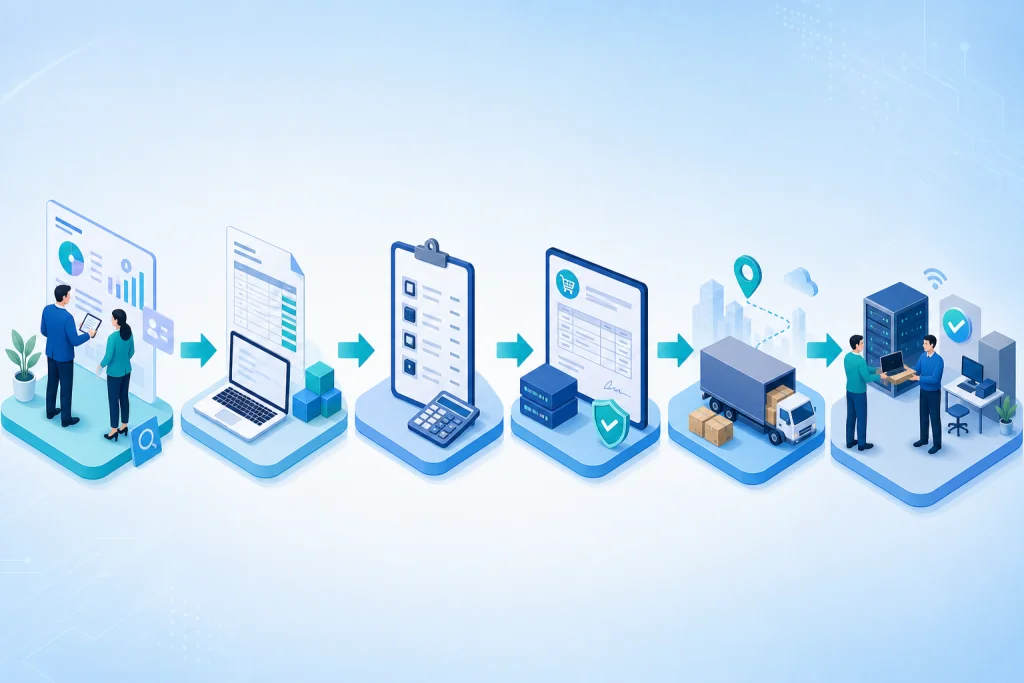
Manufacturing Company in Tangerang, Challenge: 80% storage utilization causing performance bottlenecks for ERP and 500 concurrent users. Solution: Migrated from legacy DAS to Dell PowerStore 500T with NVMe and VMware vSAN. Result: 60% reduction in latency (from 20ms to 8ms), 40% lower power consumption, and 30% TCO reduction over 3 years. Implementation followed a phased approach: assessment (2 weeks), pilot migration (1 week), full cutover (weekend). Methodology includes capacity planning using Dell EMC sizing tools, RAID 6 with hot spare, and replication to a secondary site via synchronous iSCSI. Post-migration, storage utilization dropped to 50%, allowing 3-year growth.
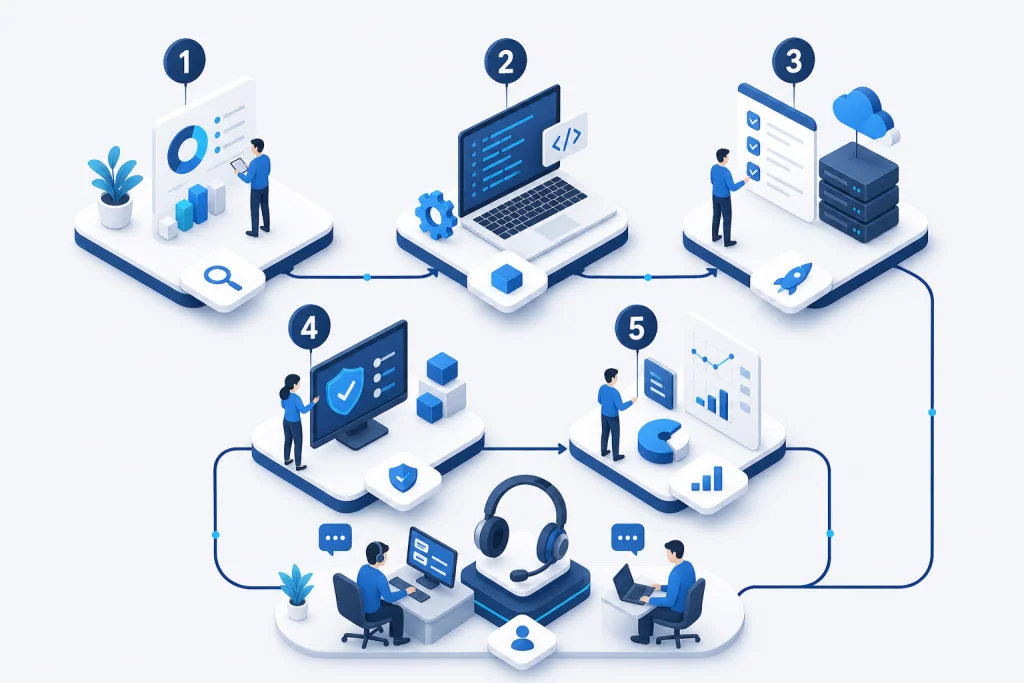
Hospital in Surabaya, Challenge: 10TB PACS data growing 20% annually, backup window exceeding 12 hours. Solution: Deployed Synology RS4021xs+ with 24x16TB HDDs and Veeam Backup & Replication. Result: Backup window reduced to 2 hours, 99.999% uptime achieved with HA cluster. Implementation used Synology High Availability, with dual controllers and SSD cache. Training for IT staff (2 days) and 24/7 support from Intilogy. Key metrics: 50% reduction in storage admin time, 3:1 deduplication ratio. Both cases demonstrate a structured methodology: requirements gathering, vendor selection (RFP), proof of concept, deployment, and validation. We emphasize Server & Storage integration with existing Networking infrastructure to ensure end-to-end performance.