Enterprise IT Solutions

TECHNOLOGY REFRESH PLANNING for Enterprise

Technology Refresh Planning (TRP) is a strategic framework that enables enterprises in Indonesia to systematically retire aging IT assets and deploy modern, high-performance infrastructure. In the context of digital transformation, TRP ensures that hardware and software stacks—ranging from servers and storage to networking and security appliances—are upgraded at optimal intervals to avoid performance degradation, security vulnerabilities, and escalating maintenance costs. For B2B organizations, a well-structured refresh plan aligns with fiscal cycles, minimizes business disruption, and leverages vendor roadmaps from leading OEMs such as Lenovo, HP, Dell, Cisco, Fortinet, and VMware. By integrating TRP with broader IT lifecycle management, enterprises can achieve predictable budgeting, enhanced operational efficiency, and compliance with industry regulations. This approach is particularly critical for sectors like banking, manufacturing, and logistics in Indonesia, where legacy systems can impede agility. Intilogy's TRP methodology combines asset discovery, performance benchmarking, and total cost of ownership (TCO) analysis to deliver a phased refresh roadmap. The result is a future-ready infrastructure that supports hybrid cloud, edge computing, and advanced cybersecurity postures. Without proactive planning, organizations risk unplanned downtime, security breaches, and lost productivity. Therefore, Technology Refresh Planning is not merely a procurement exercise but a core component of enterprise IT governance and digital resilience.

TECHNOLOGY REFRESH PLANNING Architecture

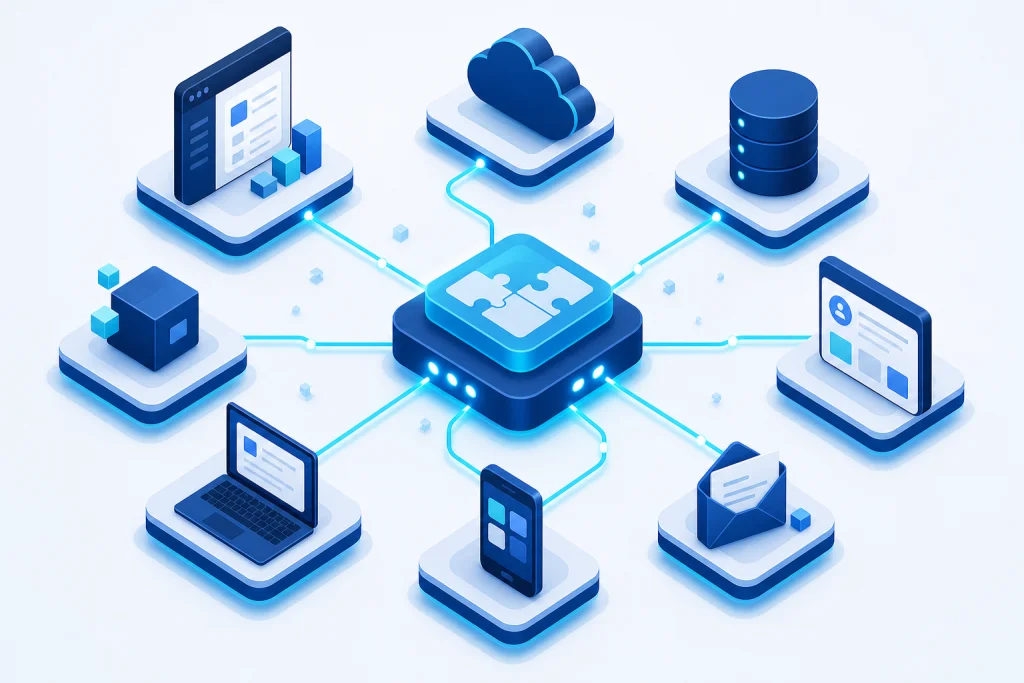
The architecture of Technology Refresh Planning is built on a multi-layered assessment framework that covers hardware, software, and network lifecycle. At the foundation, asset discovery tools inventory every component—from Lenovo and HP servers to Cisco switches and Fortinet firewalls—and map them to business applications. This data feeds into a centralized repository that tracks warranty status, end-of-life (EOL) dates, and performance metrics. The next layer involves TCO modeling, where refresh scenarios compare the cost of maintaining legacy gear versus acquiring new equipment with improved efficiency. For example, replacing a 5-year-old Dell server with a modern hyperconverged node from HCI can reduce power consumption by 40% and increase compute density. The architecture also incorporates risk scoring: assets nearing EOL or with critical CVEs are flagged for immediate refresh. Finally, the planning layer generates a phased roadmap aligned with budget cycles, ensuring zero downtime during migration. This structured approach eliminates ad-hoc purchases and ensures every refresh decision is data-driven.

Key architectural components include lifecycle management dashboards, automated vendor EOL feeds, and integration with IT service management (ITSM) tools. For enterprises in Indonesia, this architecture must account for local regulations and supply chain lead times. By leveraging VMware for virtualization and Microsoft for cloud integration, the architecture supports hybrid deployments. The refresh plan also considers network upgrades, such as migrating from legacy Networking to Wi-Fi 6 from Ruijie or Cisco, to handle increased IoT traffic. Ultimately, the architecture ensures that technology refresh is a continuous, automated process rather than a reactive crisis.

Industry Use Cases for TECHNOLOGY REFRESH PLANNING

In the banking sector, a Jakarta-based financial institution used TRP to replace its end-of-life Server & Storage infrastructure from HP with a modern all-flash array, reducing transaction latency by 60% and achieving 99.999% availability. The refresh plan also included upgrading Fortinet firewalls to meet BI compliance, resulting in a 50% reduction in security incidents. For manufacturing, a Surabaya factory implemented TRP to refresh its edge servers and Cisco switches, enabling real-time IoT data processing. This led to a 30% increase in production uptime and a 25% drop in unplanned maintenance costs. In healthcare, a hospital in Bandung used TRP to migrate from legacy backup solutions to Backup & Disaster Recovery with Veeam, cutting recovery time from 8 hours to 15 minutes. The refresh also included upgrading to Enterprise WiFi from Ruijie to support mobile health applications. Retail chains in Indonesia leverage TRP to refresh point-of-sale (POS) systems and networking, ensuring PCI-DSS compliance and seamless omnichannel experiences. A common thread across these use cases is the elimination of technical debt, improved security posture, and alignment with digital transformation goals. TRP also enables enterprises to adopt Hybrid Cloud strategies by refreshing on-premises hardware to act as a seamless extension of public cloud resources.

TECHNOLOGY REFRESH PLANNING vs Traditional Alternatives

Traditional approaches to technology refresh are often reactive or ad-hoc, such as replacing equipment only after failure or when performance becomes unbearable. This leads to emergency procurement, higher costs, and business disruption. In contrast, TRP is proactive and data-driven. For example, a company using TRP might replace a Dell server after 4 years based on TCO analysis, whereas a traditional approach might run it for 6 years until a crash causes data loss. TRP also incorporates vendor roadmaps, ensuring compatibility with new software like Microsoft Windows Server 2025, while traditional methods often result in unsupported configurations. Financially, TRP enables predictable capital expenditure through phased refresh cycles, while traditional alternatives incur unpredictable costs from emergency purchases and lost productivity. Additionally, TRP includes security risk mitigation by retiring EOL devices before they become vulnerable, whereas traditional methods often leave outdated firewalls or switches in place until a breach occurs. For enterprises in Indonesia, where supply chain delays can be significant, TRP's forward-looking planning ensures equipment is ordered well in advance, avoiding project delays. Ultimately, TRP transforms refresh from a cost center into a strategic enabler, whereas traditional alternatives remain a liability.

Case Study & Implementation Methodology

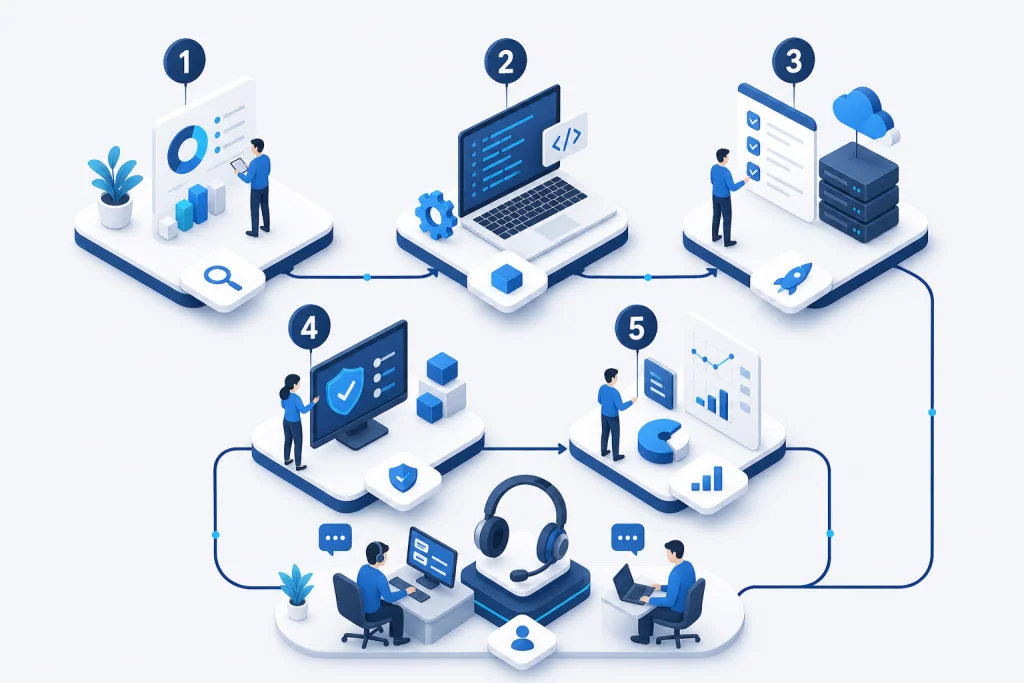
A logistics company in Jakarta with 500+ employees faced frequent network outages and high maintenance costs due to aging Cisco switches and HP servers. Challenge: 40% of network devices were beyond EOL, causing 12 hours of downtime per month and annual maintenance costs of IDR 2.5 billion. Solution: Intilogy deployed a TRP methodology involving full asset audit, TCO analysis, and a 3-phase refresh plan. Phase 1 replaced 80% of Cisco switches with new Cisco Catalyst 9000 series and upgraded Fortinet firewalls. Phase 2 migrated HP servers to HCI from Lenovo, consolidating 20 physical servers into 4 nodes. Phase 3 implemented Backup & Disaster Recovery with Veeam. Result: Network downtime reduced to 30 minutes per month (97% improvement), maintenance costs cut by 60% to IDR 1 billion annually, and application performance improved by 45%. The implementation methodology follows a five-step process: Discovery (asset inventory and performance data), Analysis (TCO and risk scoring), Planning (phased roadmap with budget alignment), Execution (staged migration with minimal disruption), and Optimization (ongoing monitoring and lifecycle management). This structured approach ensures that every refresh decision is justified by measurable business value, not just technical necessity.


TECHNOLOGY REFRESH PLANNING Architecture

The architecture of Technology Refresh Planning is built on a multi-layered assessment framework that covers hardware, software, and network lifecycle. At the foundation, asset discovery tools inventory every component—from Lenovo and HP servers to Cisco switches and Fortinet firewalls—and map them to business applications. This data feeds into a centralized repository that tracks warranty status, end-of-life (EOL) dates, and performance metrics. The next layer involves TCO modeling, where refresh scenarios compare the cost of maintaining legacy gear versus acquiring new equipment with improved efficiency. For example, replacing a 5-year-old Dell server with a modern hyperconverged node from HCI can reduce power consumption by 40% and increase compute density. The architecture also incorporates risk scoring: assets nearing EOL or with critical CVEs are flagged for immediate refresh. Finally, the planning layer generates a phased roadmap aligned with budget cycles, ensuring zero downtime during migration. This structured approach eliminates ad-hoc purchases and ensures every refresh decision is data-driven.

Industry Use Cases for TECHNOLOGY REFRESH PLANNING

In the banking sector, a Jakarta-based financial institution used TRP to replace its end-of-life Server & Storage infrastructure from HP with a modern all-flash array, reducing transaction latency by 60% and achieving 99.999% availability. The refresh plan also included upgrading Fortinet firewalls to meet BI compliance, resulting in a 50% reduction in security incidents. For manufacturing, a Surabaya factory implemented TRP to refresh its edge servers and Cisco switches, enabling real-time IoT data processing. This led to a 30% increase in production uptime and a 25% drop in unplanned maintenance costs. In healthcare, a hospital in Bandung used TRP to migrate from legacy backup solutions to Backup & Disaster Recovery with Veeam, cutting recovery time from 8 hours to 15 minutes. The refresh also included upgrading to Enterprise WiFi from Ruijie to support mobile health applications. Retail chains in Indonesia leverage TRP to refresh point-of-sale (POS) systems and networking, ensuring PCI-DSS compliance and seamless omnichannel experiences. A common thread across these use cases is the elimination of technical debt, improved security posture, and alignment with digital transformation goals. TRP also enables enterprises to adopt Hybrid Cloud strategies by refreshing on-premises hardware to act as a seamless extension of public cloud resources.

How we work

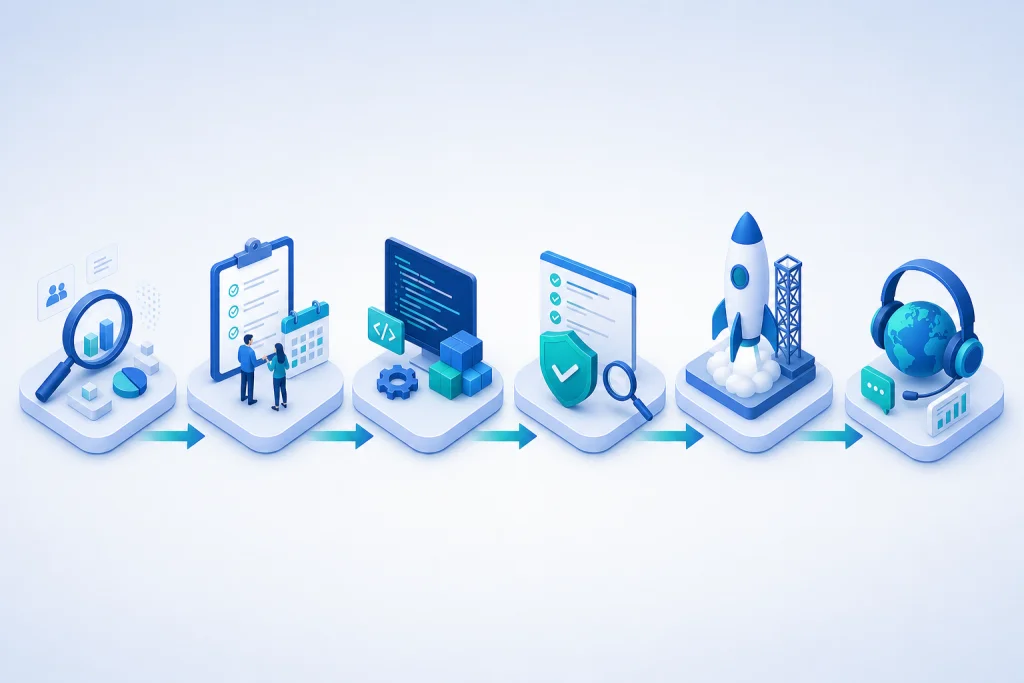
Structured delivery from assessment to handover

Each phase has clear deliverables, owners, and acceptance criteria aligned to enterprise IT practice.

Approach

TECHNOLOGY REFRESH PLANNING vs Traditional Alternatives

Traditional approaches to technology refresh are often reactive or ad-hoc, such as replacing equipment only after failure or when performance becomes unbearable. This leads to emergency procurement, higher costs, and business disruption. In contrast, TRP is proactive and data-driven. For example, a company using TRP might replace a Dell server after 4 years based on TCO analysis, whereas a traditional approach might run it for 6 years until a crash causes data loss. TRP also incorporates vendor roadmaps, ensuring compatibility with new software like Microsoft Windows Server 2025, while traditional methods often result in unsupported configurations. Financially, TRP enables predictable capital expenditure through phased refresh cycles, while traditional alternatives incur unpredictable costs from emergency purchases and lost productivity. Additionally, TRP includes security risk mitigation by retiring EOL devices before they become vulnerable, whereas traditional methods often leave outdated firewalls or switches in place until a breach occurs. For enterprises in Indonesia, where supply chain delays can be significant, TRP's forward-looking planning ensures equipment is ordered well in advance, avoiding project delays. Ultimately, TRP transforms refresh from a cost center into a strategic enabler, whereas traditional alternatives remain a liability.

Capabilities

Case Study & Implementation Methodology

A logistics company in Jakarta with 500+ employees faced frequent network outages and high maintenance costs due to aging Cisco switches and HP servers. Challenge: 40% of network devices were beyond EOL, causing 12 hours of downtime per month and annual maintenance costs of IDR 2.5 billion. Solution: Intilogy deployed a TRP methodology involving full asset audit, TCO analysis, and a 3-phase refresh plan. Phase 1 replaced 80% of Cisco switches with new Cisco Catalyst 9000 series and upgraded Fortinet firewalls. Phase 2 migrated HP servers to HCI from Lenovo, consolidating 20 physical servers into 4 nodes. Phase 3 implemented Backup & Disaster Recovery with Veeam. Result: Network downtime reduced to 30 minutes per month (97% improvement), maintenance costs cut by 60% to IDR 1 billion annually, and application performance improved by 45%. The implementation methodology follows a five-step process: Discovery (asset inventory and performance data), Analysis (TCO and risk scoring), Planning (phased roadmap with budget alignment), Execution (staged migration with minimal disruption), and Optimization (ongoing monitoring and lifecycle management). This structured approach ensures that every refresh decision is justified by measurable business value, not just technical necessity.
Use cases

Pengadaan greenfield

Refresh infrastruktur

Multi-vendor consolidation

Renewal lisensi

Ekspansi cabang

TECHNOLOGY REFRESH PLANNING for Enterprise

Our engineers help design, deploy, and support enterprise IT solutions across Indonesia.

Request a quote Contact our team

Related pages

E-E-A-T · Expertise & trust

Implementation expertise & enterprise trust

Intilogy (PT. Inti Jaya Teknologi) supports IT and procurement teams across Indonesia — from technical assessment and BoQ through deployment, documentation, and post go-live support.

  • 500+ Infrastructure deployments
  • 24/7 Operational support
  • SLA Enterprise SLA
  • 150+ Clients & institutions

Engineering & delivery expertise

Engineer-led assessment

Requirements workshops, sizing, and architecture — not catalogue selling without context.

Documented deployment

Commissioning checklists, as-built diagrams, IP plans, and escalation runbooks.

Audit-ready procurement

BoQ/BOM, quotations, POs, and handover packs for tenders and IT audits.

Multi-vendor coordination

One project partner for servers, networks, security, backup, and licensing.

Vendor ecosystem & sourcing channels

We source through official distributors/resellers per brand and project. Specific partnership tiers are confirmed per RFP — see our credentials page.

Vendor Status / tier Scope Notes
Dell Technologies Authorized channel PowerEdge, storage BoQ & manufacturer warranty
HPE Authorized channel ProLiant Enterprise servers
Fortinet Implementation partner NGFW, SD-WAN Licensing & deployment
Veeam Implementation partner Backup, replication Immutable design
VMware Implementation partner vSphere Cluster & migration

Tiers vary by SKU/region. Contact sales@intilogy.com for distributor letters or engineer certificates.

Enterprise implementation methodology

Standard flow for infrastructure, security, and backup projects — scoped per contract.

  1. Discovery & assessment

    Duration: 1–2 weeks

    Deliverables Requirements & risk report

  2. Architecture & BoQ

    Duration: 1–2 weeks

    Deliverables HLD, BoQ, rollout plan

  3. Procurement & staging

    Duration: 2–4 weeks

    Deliverables Asset register

  4. Implementation & UAT

    Duration: 2–6 weeks

    Deliverables As-built, UAT sign-off

  5. Handover & operations

    Duration: Ongoing

    Deliverables SOPs, training, SLA if contracted

Support & SLA (per project contract)

Service levels are defined in agreement — example framework below.

Standard maintenance

Response
Next business day (remote)
Coverage
Firmware advisory, tickets, RMA
Notes
Indonesia business hours

Project warranty

Response
Per implementation contract
Coverage
Defects in Intilogy deployment scope
Notes
Not 24/7 unless agreed

Critical incident (optional)

Response
4–8 hours if contracted
Coverage
Production-critical escalation
Notes
Requires separate MSA

Response times are illustrative — binding only when written in contract.

Technical documentation delivered

  • Topology & rack diagrams (as-built)
  • Asset list, serials, warranty status
  • Critical config summary & change log
  • Basic operations runbook & escalation contacts
  • Restore / DR drill reports (if in scope)
  • Tender packs: distributor letters & engineer certs (on request)

Competency & certifications

Engineers train on vendor technologies per project. Individual certs (Fortinet NSE, VMware VCP, Veeam VMCE, etc.) are provided for tenders — not all listed publicly.

  • Engineer certifications — Per project technology — on request
  • Distributor letters — For procurement audit
  • Client references — See Clients page for logos & scope

View certifications & partnerships

Ready to discuss architecture & BoQ?

Our team supports assessment, recommendations, procurement, and documented implementation.

WhatsApp Consult on WhatsApp
Request Consultation WhatsApp