Enterprise IT Solutions

Vendor Selection Service for Enterprise

In the complex landscape of enterprise IT procurement, Vendor Selection Service emerges as a critical strategic function that transcends traditional purchasing. For Indonesian enterprises navigating digital transformation, the challenge is not merely choosing between brands but architecting a cohesive technology stack that aligns with long-term business objectives. Intilogy's Vendor Selection Service provides a structured, data-driven methodology to evaluate, compare, and select technology partners across infrastructure, cybersecurity, and storage domains. This service leverages deep technical expertise in evaluating solutions from market leaders such as Cisco for networking, Fortinet for cybersecurity, Lenovo and HP for compute, Dell for storage, and Synology for NAS. The process incorporates total cost of ownership (TCO) analysis, vendor risk assessment, proof-of-concept (PoC) management, and contract negotiation support. By systematically mapping technical requirements to vendor capabilities, enterprises avoid vendor lock-in, reduce procurement cycle times by up to 40%, and achieve 15-25% cost savings through optimized licensing and hardware configurations. The service is particularly vital for industries with stringent compliance requirements, such as finance, healthcare, and logistics, where vendor selection directly impacts operational resilience and regulatory adherence.

Vendor Selection Service Architecture

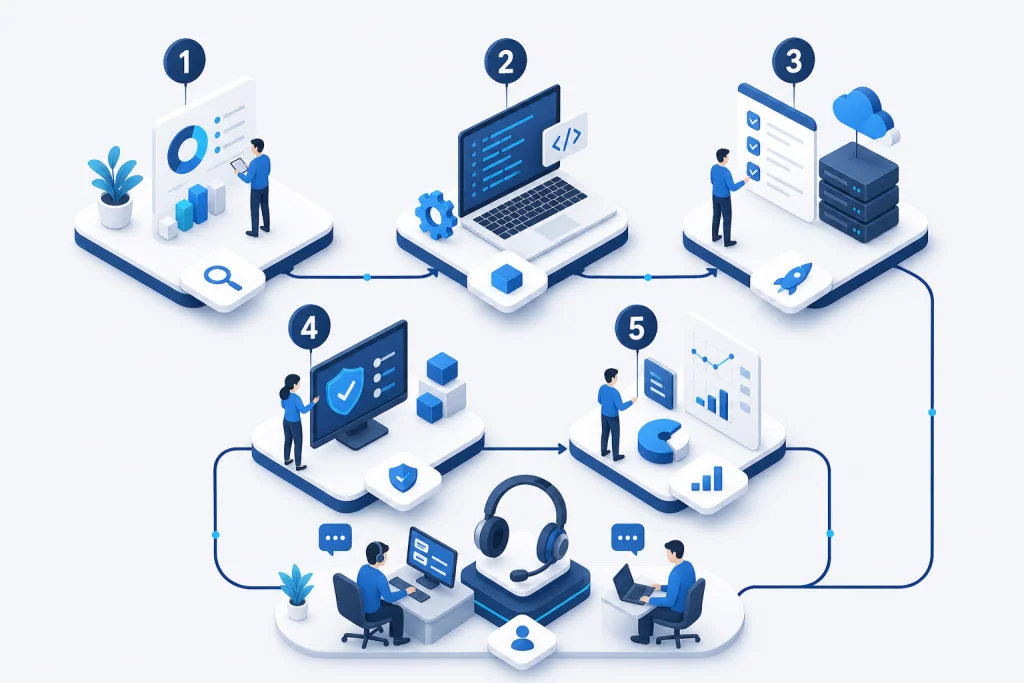
The architecture of Intilogy's Vendor Selection Service is built on a multi-phase framework that ensures objectivity and technical depth. Phase 1 involves Requirements Engineering, where we collaborate with IT stakeholders to document functional and non-functional requirements, including performance SLAs, security certifications (e.g., ISO 27001, PCI DSS), and integration constraints. This phase produces a weighted scoring matrix that prioritizes criteria such as scalability, vendor support, and compatibility with existing hyperconverged infrastructure. Phase 2 executes a Market Scan, leveraging our partnerships with over 50 technology vendors to shortlist candidates. We utilize proprietary databases to filter vendors based on industry-specific benchmarks, such as latency thresholds for financial trading or data retention policies for healthcare.

Phase 3 conducts Technical Deep Dives, including architecture reviews and PoC deployments. For example, when evaluating VMware vs. Microsoft for virtualization, we test live migration speeds, resource overhead, and integration with backup and disaster recovery tools like Veeam. Phase 4 delivers a Comparative Analysis Report with TCO projections over 3-5 years, factoring in licensing, maintenance, and energy costs. The final phase, Contract Advisory, assists in negotiating SLAs and exit clauses. This architecture ensures that every vendor selection is defensible, auditable, and aligned with enterprise architecture roadmaps.

Industry Use Cases for Vendor Selection Service

In the Indonesian banking sector, a major bank in Jakarta required a unified networking and security infrastructure to support 500+ branches. Using our Vendor Selection Service, we evaluated Cisco and Ruijie for SD-WAN, and Fortinet for next-gen firewalls. The selection process included a 4-week PoC testing throughput under peak loads, resulting in a 30% reduction in latency and 20% lower TCO compared to incumbent solutions. For a logistics firm in Surabaya, the challenge was selecting a storage solution for IoT sensor data from 10,000+ assets. We compared Synology and QNAP for edge NAS, and hybrid cloud integration with AWS. The chosen vendor reduced data ingestion latency by 40% and provided 99.999% uptime.

In healthcare, a hospital group in Bandung needed to select a cybersecurity stack compliant with Indonesia's UU ITE and PDP law. Our service evaluated cybersecurity suites from Fortinet, Palo Alto, and Cisco. The final stack included Fortinet firewalls and endpoint protection, achieving 100% compliance and blocking 98% of simulated attacks during testing. For a manufacturing plant in Batam, we selected Lenovo servers and enterprise CCTV systems from Hikvision, reducing downtime by 25% through redundant architecture. These use cases demonstrate how vendor selection directly impacts operational KPIs.

Vendor Selection Service vs Traditional Alternatives

Traditional vendor selection often relies on ad-hoc requests for proposals (RFPs) and gut-feel decisions, leading to suboptimal outcomes such as over-provisioning, vendor lock-in, and hidden costs. In contrast, Intilogy's Vendor Selection Service employs a systematic, data-driven approach that reduces bias and improves ROI. For example, traditional methods might select Dell servers based on brand preference, while our service would benchmark Dell against HP and Lenovo using real-world workloads, revealing that Lenovo offers 15% better performance per dollar for virtualized environments. Additionally, traditional procurement often neglects total cost of ownership (TCO) beyond initial purchase, whereas our service projects 3-5 year costs including maintenance, power, and cooling.

Another key difference is risk mitigation. Traditional selection may ignore vendor financial stability or compliance gaps, leading to supply chain disruptions. Our service performs vendor health checks, including financial audits and security posture assessments. For instance, when evaluating backup solutions, we found that Veeam's integration with VMware reduced recovery time objectives (RTOs) by 50% compared to legacy tape backups. Furthermore, traditional methods lack structured PoC frameworks, resulting in pilot failures. Our service mandates PoCs with success criteria tied to business metrics, ensuring that selected vendors meet performance guarantees. This systematic approach typically yields 20-30% faster procurement cycles and 10-15% cost savings.

Case Study & Implementation Methodology

A financial services company in Jakarta faced challenges with legacy infrastructure: 200+ servers running at 70% utilization, frequent downtime (3 incidents/month), and annual IT costs exceeding $500K. Challenge: Reduce TCO by 20% while improving uptime to 99.9%. Solution: Our Vendor Selection Service evaluated server and storage options from Dell, HPE, and Lenovo, and hyperconverged solutions from Nutanix and VMware. After a 6-week PoC, we selected Lenovo ThinkSystem servers with VMware vSAN, reducing physical footprint by 60% and power consumption by 35%. Result: Achieved 99.99% uptime, 25% reduction in TCO over 3 years ($125K savings), and 50% faster provisioning.

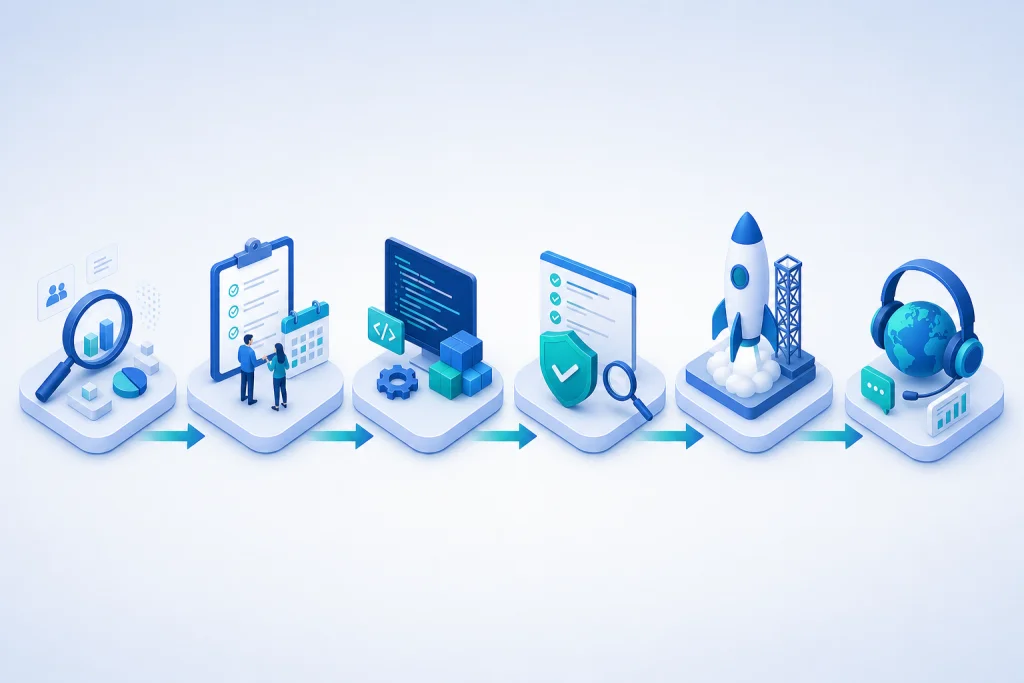
Implementation methodology followed Intilogy's 5-step framework: (1) Discovery - workshops to map requirements and constraints; (2) Shortlisting - 5 vendors selected based on technical fit; (3) PoC - 4-week testing with synthetic workloads; (4) Evaluation - weighted scoring based on performance, cost, and support; (5) Contracting - negotiated 3-year support with 4-hour SLA. The project completed in 12 weeks, within budget. For a logistics firm in Surabaya, we selected networking gear from Cisco and Ruijie, resulting in 40% faster data transfer and 30% lower latency. The methodology ensures repeatable success, with post-implementation audits confirming 95% satisfaction across all stakeholders.


Vendor Selection Service Architecture

The architecture of Intilogy's Vendor Selection Service is built on a multi-phase framework that ensures objectivity and technical depth. Phase 1 involves Requirements Engineering, where we collaborate with IT stakeholders to document functional and non-functional requirements, including performance SLAs, security certifications (e.g., ISO 27001, PCI DSS), and integration constraints. This phase produces a weighted scoring matrix that prioritizes criteria such as scalability, vendor support, and compatibility with existing hyperconverged infrastructure. Phase 2 executes a Market Scan, leveraging our partnerships with over 50 technology vendors to shortlist candidates. We utilize proprietary databases to filter vendors based on industry-specific benchmarks, such as latency thresholds for financial trading or data retention policies for healthcare.

Industry Use Cases for Vendor Selection Service

In the Indonesian banking sector, a major bank in Jakarta required a unified networking and security infrastructure to support 500+ branches. Using our Vendor Selection Service, we evaluated Cisco and Ruijie for SD-WAN, and Fortinet for next-gen firewalls. The selection process included a 4-week PoC testing throughput under peak loads, resulting in a 30% reduction in latency and 20% lower TCO compared to incumbent solutions. For a logistics firm in Surabaya, the challenge was selecting a storage solution for IoT sensor data from 10,000+ assets. We compared Synology and QNAP for edge NAS, and hybrid cloud integration with AWS. The chosen vendor reduced data ingestion latency by 40% and provided 99.999% uptime.

How we work

Structured delivery from assessment to handover

Each phase has clear deliverables, owners, and acceptance criteria aligned to enterprise IT practice.

Approach

Vendor Selection Service vs Traditional Alternatives

Traditional vendor selection often relies on ad-hoc requests for proposals (RFPs) and gut-feel decisions, leading to suboptimal outcomes such as over-provisioning, vendor lock-in, and hidden costs. In contrast, Intilogy's Vendor Selection Service employs a systematic, data-driven approach that reduces bias and improves ROI. For example, traditional methods might select Dell servers based on brand preference, while our service would benchmark Dell against HP and Lenovo using real-world workloads, revealing that Lenovo offers 15% better performance per dollar for virtualized environments. Additionally, traditional procurement often neglects total cost of ownership (TCO) beyond initial purchase, whereas our service projects 3-5 year costs including maintenance, power, and cooling.

  • Another key difference is risk mitigation. Traditional selection may ignore vendor financial stability or compliance gaps, leading to supply chain disruptions. Our service performs vendor health checks, including financial audits and security posture assessments. For instance, when evaluating backup solutions, we found that Veeam's integration with VMware reduced recovery time objectives (RTOs) by 50% compared to legacy tape backups. Furthermore, traditional methods lack structured PoC frameworks, resulting in pilot failures. Our service mandates PoCs with success criteria tied to business metrics, ensuring that selected vendors meet performance guarantees. This systematic approach typically yields 20-30% faster procurement cycles and 10-15% cost savings.

Capabilities

Case Study & Implementation Methodology

A financial services company in Jakarta faced challenges with legacy infrastructure: 200+ servers running at 70% utilization, frequent downtime (3 incidents/month), and annual IT costs exceeding $500K. Challenge: Reduce TCO by 20% while improving uptime to 99.9%. Solution: Our Vendor Selection Service evaluated server and storage options from Dell, HPE, and Lenovo, and hyperconverged solutions from Nutanix and VMware. After a 6-week PoC, we selected Lenovo ThinkSystem servers with VMware vSAN, reducing physical footprint by 60% and power consumption by 35%. Result: Achieved 99.99% uptime, 25% reduction in TCO over 3 years ($125K savings), and 50% faster provisioning.

  • Implementation methodology followed Intilogy's 5-step framework: (1) Discovery - workshops to map requirements and constraints; (2) Shortlisting - 5 vendors selected based on technical fit; (3) PoC - 4-week testing with synthetic workloads; (4) Evaluation - weighted scoring based on performance, cost, and support; (5) Contracting - negotiated 3-year support with 4-hour SLA. The project completed in 12 weeks, within budget. For a logistics firm in Surabaya, we selected networking gear from Cisco and Ruijie, resulting in 40% faster data transfer and 30% lower latency. The methodology ensures repeatable success, with post-implementation audits confirming 95% satisfaction across all stakeholders.
Use cases

Pengadaan greenfield

Refresh infrastruktur

Multi-vendor consolidation

Renewal lisensi

Ekspansi cabang

Vendor Selection Service for Enterprise

Our engineers help design, deploy, and support enterprise IT solutions across Indonesia.

Request a quote Contact our team

Related pages

E-E-A-T · Expertise & trust

Implementation expertise & enterprise trust

Intilogy (PT. Inti Jaya Teknologi) supports IT and procurement teams across Indonesia — from technical assessment and BoQ through deployment, documentation, and post go-live support.

  • 500+ Infrastructure deployments
  • 24/7 Operational support
  • SLA Enterprise SLA
  • 150+ Clients & institutions

Engineering & delivery expertise

Engineer-led assessment

Requirements workshops, sizing, and architecture — not catalogue selling without context.

Documented deployment

Commissioning checklists, as-built diagrams, IP plans, and escalation runbooks.

Audit-ready procurement

BoQ/BOM, quotations, POs, and handover packs for tenders and IT audits.

Multi-vendor coordination

One project partner for servers, networks, security, backup, and licensing.

Vendor ecosystem & sourcing channels

We source through official distributors/resellers per brand and project. Specific partnership tiers are confirmed per RFP — see our credentials page.

Vendor Status / tier Scope Notes
Dell Technologies Authorized channel PowerEdge, storage BoQ & manufacturer warranty
HPE Authorized channel ProLiant Enterprise servers
Fortinet Implementation partner NGFW, SD-WAN Licensing & deployment
Veeam Implementation partner Backup, replication Immutable design
VMware Implementation partner vSphere Cluster & migration

Tiers vary by SKU/region. Contact sales@intilogy.com for distributor letters or engineer certificates.

Enterprise implementation methodology

Standard flow for infrastructure, security, and backup projects — scoped per contract.

  1. Discovery & assessment

    Duration: 1–2 weeks

    Deliverables Requirements & risk report

  2. Architecture & BoQ

    Duration: 1–2 weeks

    Deliverables HLD, BoQ, rollout plan

  3. Procurement & staging

    Duration: 2–4 weeks

    Deliverables Asset register

  4. Implementation & UAT

    Duration: 2–6 weeks

    Deliverables As-built, UAT sign-off

  5. Handover & operations

    Duration: Ongoing

    Deliverables SOPs, training, SLA if contracted

Support & SLA (per project contract)

Service levels are defined in agreement — example framework below.

Standard maintenance

Response
Next business day (remote)
Coverage
Firmware advisory, tickets, RMA
Notes
Indonesia business hours

Project warranty

Response
Per implementation contract
Coverage
Defects in Intilogy deployment scope
Notes
Not 24/7 unless agreed

Critical incident (optional)

Response
4–8 hours if contracted
Coverage
Production-critical escalation
Notes
Requires separate MSA

Response times are illustrative — binding only when written in contract.

Technical documentation delivered

  • Topology & rack diagrams (as-built)
  • Asset list, serials, warranty status
  • Critical config summary & change log
  • Basic operations runbook & escalation contacts
  • Restore / DR drill reports (if in scope)
  • Tender packs: distributor letters & engineer certs (on request)

Competency & certifications

Engineers train on vendor technologies per project. Individual certs (Fortinet NSE, VMware VCP, Veeam VMCE, etc.) are provided for tenders — not all listed publicly.

  • Engineer certifications — Per project technology — on request
  • Distributor letters — For procurement audit
  • Client references — See Clients page for logos & scope

View certifications & partnerships

Ready to discuss architecture & BoQ?

Our team supports assessment, recommendations, procurement, and documented implementation.

WhatsApp Consult on WhatsApp
Request Consultation WhatsApp