Enterprise IT Solutions

POS Integration for Enterprise

Point of Sale (POS) integration is a critical infrastructure component for modern enterprises operating in Indonesia's dynamic retail, hospitality, and logistics sectors. Unlike standalone POS terminals, integrated POS systems connect seamlessly with backend enterprise resource planning (ERP), inventory management, customer relationship management (CRM), and supply chain platforms. This convergence enables real-time data synchronization across all touchpoints—from sales floors to warehouses—eliminating manual reconciliation and reducing latency in decision-making. For large-scale operations, POS integration must support high transaction volumes, multi-location deployments, and compliance with local regulations such as PPN (VAT) reporting. Technical considerations include API-first architectures, middleware compatibility (e.g., Microsoft Dynamics 365, SAP), and robust security protocols to protect payment data (PCI DSS). Intilogy delivers end-to-end POS integration solutions tailored for Indonesian enterprises, leveraging hardware from Lenovo and HP for reliable POS terminals, Synology for on-premise data storage, and cybersecurity measures to safeguard transactions. Our approach ensures that every sale, return, or inventory adjustment is instantly reflected across the enterprise, enabling accurate financial reporting, dynamic pricing, and omnichannel consistency. With Indonesia's digital economy growing rapidly, POS integration is no longer optional—it is a strategic imperative for enterprises aiming to optimize operational efficiency and customer experience.

POS Integration Architecture

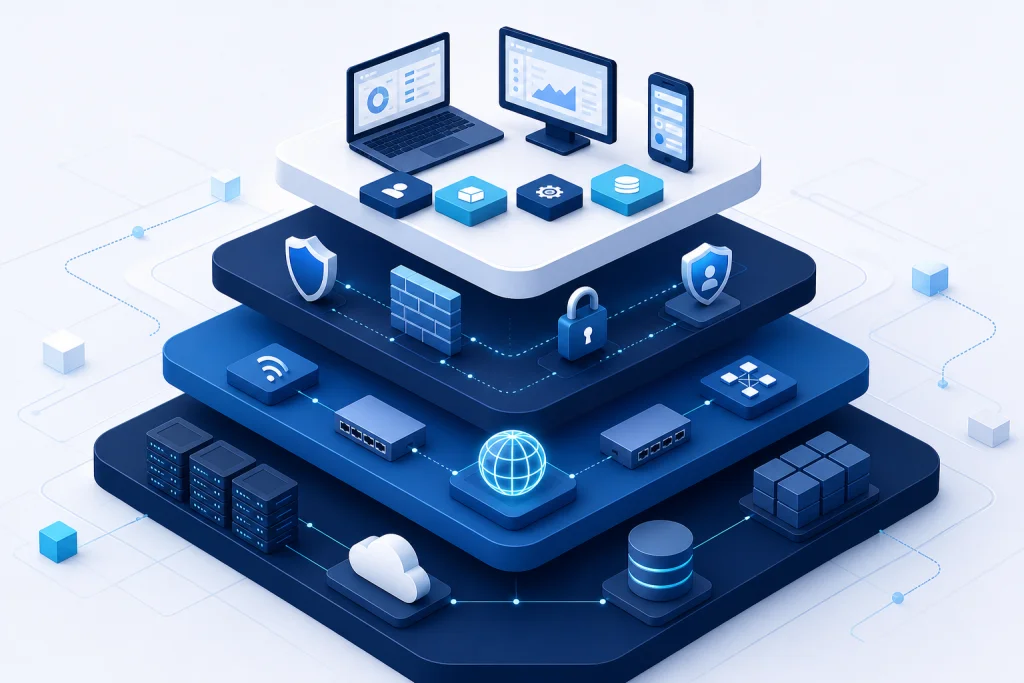
A robust POS integration architecture consists of three layers: the edge layer (POS terminals and peripherals), the middleware layer (integration engine), and the backend layer (ERP, inventory, and analytics systems). The edge layer includes hardware such as barcode scanners, receipt printers, and payment terminals, which must be compatible with the chosen software stack. Middleware acts as the central nervous system, handling API orchestration, data transformation, and message queuing. For high-availability scenarios, a load-balanced cluster of middleware servers is recommended, often virtualized on hyperconverged infrastructure from vendors like VMware. Backend systems typically run on server and storage solutions from Dell or HP, with database replication for disaster recovery. Network connectivity between layers must be low-latency and secure, often leveraging networking equipment from Cisco or Ruijie. Data synchronization protocols like OData or RESTful APIs ensure that inventory levels, pricing, and customer data remain consistent across all locations. For enterprises with multiple outlets, a centralized architecture with regional failover is essential to maintain business continuity.

Industry Use Cases for POS Integration

In the retail sector, POS integration enables omnichannel fulfillment by linking in-store sales with e-commerce platforms. For example, a fashion retailer with 50 stores in Jakarta can automatically update inventory across all channels when a sale occurs, preventing overselling. In the hospitality industry, integrated POS systems connect front-of-house ordering with kitchen display systems and back-office accounting, reducing order errors by up to 30%. For warehouse and logistics, POS integration with barcode scanning and RFID ensures real-time tracking of goods from receipt to dispatch. A distribution company in Surabaya integrated its POS with backup and disaster recovery solutions to protect transaction data. In the healthcare sector, POS integration in hospital pharmacies links prescription management with inventory and billing, improving accuracy and compliance. Each use case demands specific middleware configurations and hardware selection, such as ruggedized POS terminals for industrial environments. Intilogy's expertise spans these verticals, providing tailored integration that aligns with local business processes.

POS Integration vs Traditional Alternatives

Traditional POS systems operate in silos, requiring manual data entry for inventory updates, sales reporting, and financial reconciliation. This leads to delays, errors, and increased labor costs. In contrast, integrated POS systems automate data flow, providing real-time visibility into business performance. For example, a traditional system may require nightly batch uploads, whereas an integrated system updates inventory instantly. From a security perspective, integrated systems can enforce centralized access controls and encryption, reducing the risk of data breaches. Traditional systems often rely on local storage without redundancy, making them vulnerable to hardware failures. Integrated architectures leverage hybrid cloud solutions for backup and scalability. Additionally, traditional POS systems lack the flexibility to adapt to changing business needs, such as adding new payment methods or loyalty programs. Integrated systems, built on modular APIs, can be extended without replacing the entire infrastructure. For enterprises in Indonesia, where business environments are rapidly evolving, the agility of integrated POS far outweighs the lower upfront cost of traditional alternatives.

Case Study & Implementation Methodology

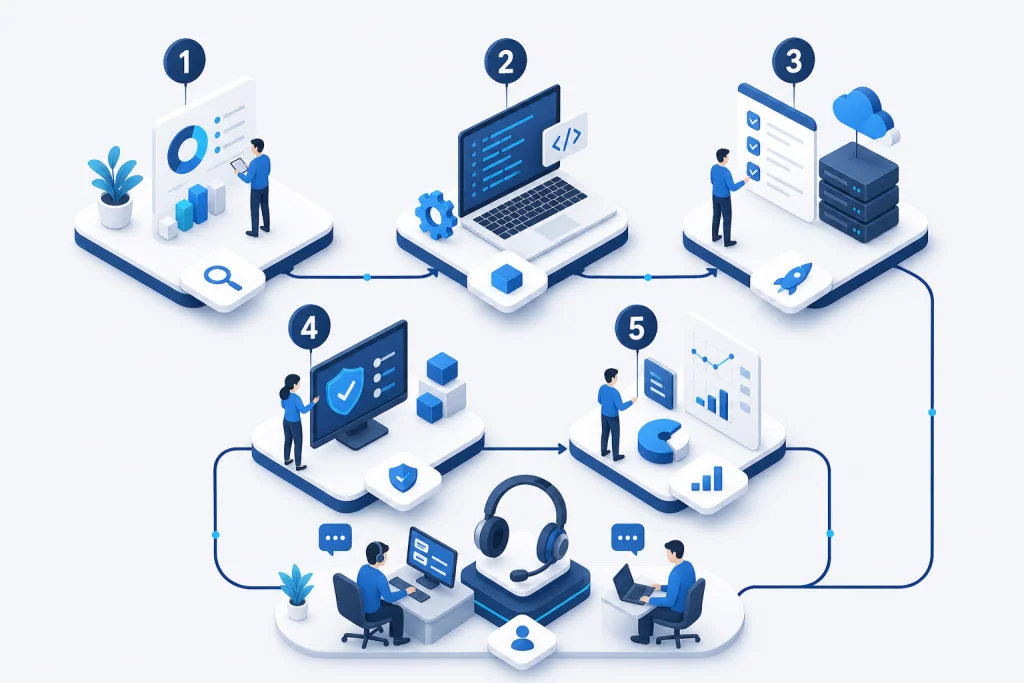
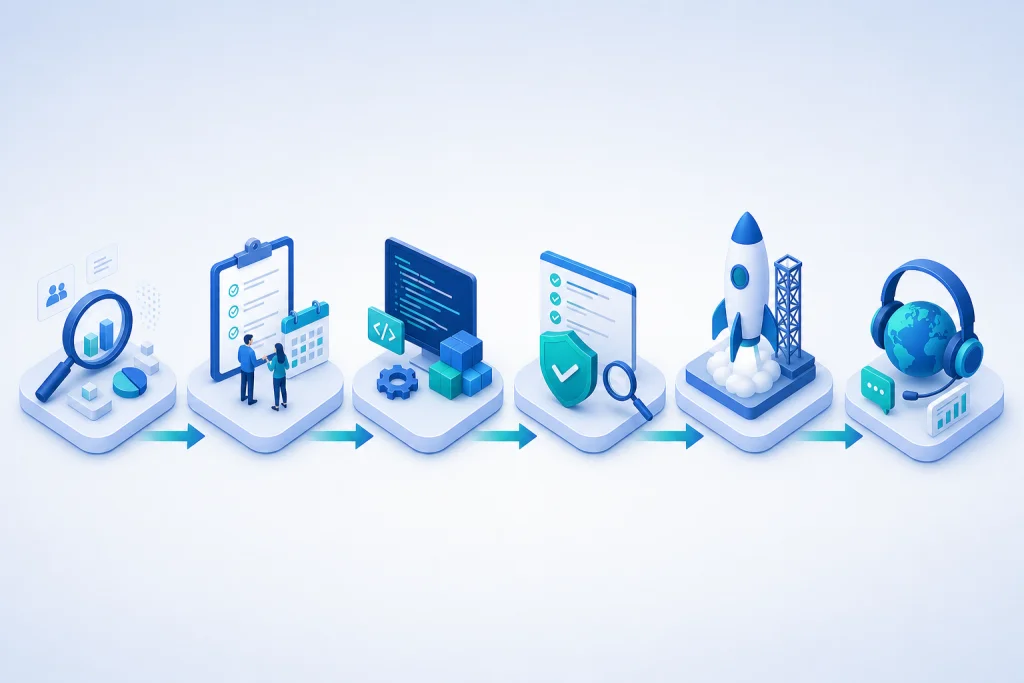
A large retail chain in Jakarta with 120 outlets faced inventory discrepancies of 15% due to delayed data sync between POS and warehouse systems. Challenge: manual reconciliation took 40 hours per week across all stores. Solution: deployed an integrated POS architecture using Microsoft Dynamics 365 as the ERP backbone, IT infrastructure from Lenovo for POS terminals, and Synology NAS for local data caching. Implementation followed a phased rollout: pilot in 5 stores, then iterative expansion with real-time monitoring. Result: inventory accuracy improved to 99.2%, reconciliation time reduced to 2 hours per week, and sales increased by 8% due to better stock availability. Another case: a hospitality group in Bali integrated its POS with property management and accounting systems, reducing checkout time by 50% and eliminating billing errors. Methodology includes discovery (assessing existing systems and transaction volumes), design (API mapping and middleware selection), deployment (staged rollout with rollback plans), and optimization (continuous monitoring and tuning). Intilogy ensures each implementation aligns with Indonesian tax regulations and supports future scalability.

POS Integration Architecture

A robust POS integration architecture consists of three layers: the edge layer (POS terminals and peripherals), the middleware layer (integration engine), and the backend layer (ERP, inventory, and analytics systems). The edge layer includes hardware such as barcode scanners, receipt printers, and payment terminals, which must be compatible with the chosen software stack. Middleware acts as the central nervous system, handling API orchestration, data transformation, and message queuing. For high-availability scenarios, a load-balanced cluster of middleware servers is recommended, often virtualized on hyperconverged infrastructure from vendors like VMware. Backend systems typically run on server and storage solutions from Dell or HP, with database replication for disaster recovery. Network connectivity between layers must be low-latency and secure, often leveraging networking equipment from Cisco or Ruijie. Data synchronization protocols like OData or RESTful APIs ensure that inventory levels, pricing, and customer data remain consistent across all locations. For enterprises with multiple outlets, a centralized architecture with regional failover is essential to maintain business continuity.

Industry Use Cases for POS Integration

In the retail sector, POS integration enables omnichannel fulfillment by linking in-store sales with e-commerce platforms. For example, a fashion retailer with 50 stores in Jakarta can automatically update inventory across all channels when a sale occurs, preventing overselling. In the hospitality industry, integrated POS systems connect front-of-house ordering with kitchen display systems and back-office accounting, reducing order errors by up to 30%. For warehouse and logistics, POS integration with barcode scanning and RFID ensures real-time tracking of goods from receipt to dispatch. A distribution company in Surabaya integrated its POS with backup and disaster recovery solutions to protect transaction data. In the healthcare sector, POS integration in hospital pharmacies links prescription management with inventory and billing, improving accuracy and compliance. Each use case demands specific middleware configurations and hardware selection, such as ruggedized POS terminals for industrial environments. Intilogy's expertise spans these verticals, providing tailored integration that aligns with local business processes.

How we work

Structured delivery from assessment to handover

Each phase has clear deliverables, owners, and acceptance criteria aligned to enterprise IT practice.

Approach

POS Integration vs Traditional Alternatives

Traditional POS systems operate in silos, requiring manual data entry for inventory updates, sales reporting, and financial reconciliation. This leads to delays, errors, and increased labor costs. In contrast, integrated POS systems automate data flow, providing real-time visibility into business performance. For example, a traditional system may require nightly batch uploads, whereas an integrated system updates inventory instantly. From a security perspective, integrated systems can enforce centralized access controls and encryption, reducing the risk of data breaches. Traditional systems often rely on local storage without redundancy, making them vulnerable to hardware failures. Integrated architectures leverage hybrid cloud solutions for backup and scalability. Additionally, traditional POS systems lack the flexibility to adapt to changing business needs, such as adding new payment methods or loyalty programs. Integrated systems, built on modular APIs, can be extended without replacing the entire infrastructure. For enterprises in Indonesia, where business environments are rapidly evolving, the agility of integrated POS far outweighs the lower upfront cost of traditional alternatives.

Capabilities

Case Study & Implementation Methodology

A large retail chain in Jakarta with 120 outlets faced inventory discrepancies of 15% due to delayed data sync between POS and warehouse systems. Challenge: manual reconciliation took 40 hours per week across all stores. Solution: deployed an integrated POS architecture using Microsoft Dynamics 365 as the ERP backbone, IT infrastructure from Lenovo for POS terminals, and Synology NAS for local data caching. Implementation followed a phased rollout: pilot in 5 stores, then iterative expansion with real-time monitoring. Result: inventory accuracy improved to 99.2%, reconciliation time reduced to 2 hours per week, and sales increased by 8% due to better stock availability. Another case: a hospitality group in Bali integrated its POS with property management and accounting systems, reducing checkout time by 50% and eliminating billing errors. Methodology includes discovery (assessing existing systems and transaction volumes), design (API mapping and middleware selection), deployment (staged rollout with rollback plans), and optimization (continuous monitoring and tuning). Intilogy ensures each implementation aligns with Indonesian tax regulations and supports future scalability.
Use cases

Retail chain rollout

Store refresh

Inventory sync

Peripheral standardization

POS Integration for Enterprise

Our engineers help design, deploy, and support enterprise IT solutions across Indonesia.

Request a quote Contact our team

Related pages

E-E-A-T · Expertise & trust

Implementation expertise & enterprise trust

Intilogy (PT. Inti Jaya Teknologi) supports IT and procurement teams across Indonesia — from technical assessment and BoQ through deployment, documentation, and post go-live support.

  • 500+ Infrastructure deployments
  • 24/7 Operational support
  • SLA Enterprise SLA
  • 150+ Clients & institutions

Engineering & delivery expertise

Engineer-led assessment

Requirements workshops, sizing, and architecture — not catalogue selling without context.

Documented deployment

Commissioning checklists, as-built diagrams, IP plans, and escalation runbooks.

Audit-ready procurement

BoQ/BOM, quotations, POs, and handover packs for tenders and IT audits.

Multi-vendor coordination

One project partner for servers, networks, security, backup, and licensing.

Vendor ecosystem & sourcing channels

We source through official distributors/resellers per brand and project. Specific partnership tiers are confirmed per RFP — see our credentials page.

Vendor Status / tier Scope Notes
Dell Technologies Authorized channel PowerEdge, storage BoQ & manufacturer warranty
HPE Authorized channel ProLiant Enterprise servers
Fortinet Implementation partner NGFW, SD-WAN Licensing & deployment
Veeam Implementation partner Backup, replication Immutable design
VMware Implementation partner vSphere Cluster & migration

Tiers vary by SKU/region. Contact sales@intilogy.com for distributor letters or engineer certificates.

Enterprise implementation methodology

Standard flow for infrastructure, security, and backup projects — scoped per contract.

  1. Discovery & assessment

    Duration: 1–2 weeks

    Deliverables Requirements & risk report

  2. Architecture & BoQ

    Duration: 1–2 weeks

    Deliverables HLD, BoQ, rollout plan

  3. Procurement & staging

    Duration: 2–4 weeks

    Deliverables Asset register

  4. Implementation & UAT

    Duration: 2–6 weeks

    Deliverables As-built, UAT sign-off

  5. Handover & operations

    Duration: Ongoing

    Deliverables SOPs, training, SLA if contracted

Support & SLA (per project contract)

Service levels are defined in agreement — example framework below.

Standard maintenance

Response
Next business day (remote)
Coverage
Firmware advisory, tickets, RMA
Notes
Indonesia business hours

Project warranty

Response
Per implementation contract
Coverage
Defects in Intilogy deployment scope
Notes
Not 24/7 unless agreed

Critical incident (optional)

Response
4–8 hours if contracted
Coverage
Production-critical escalation
Notes
Requires separate MSA

Response times are illustrative — binding only when written in contract.

Technical documentation delivered

  • Topology & rack diagrams (as-built)
  • Asset list, serials, warranty status
  • Critical config summary & change log
  • Basic operations runbook & escalation contacts
  • Restore / DR drill reports (if in scope)
  • Tender packs: distributor letters & engineer certs (on request)

Competency & certifications

Engineers train on vendor technologies per project. Individual certs (Fortinet NSE, VMware VCP, Veeam VMCE, etc.) are provided for tenders — not all listed publicly.

  • Engineer certifications — Per project technology — on request
  • Distributor letters — For procurement audit
  • Client references — See Clients page for logos & scope

View certifications & partnerships

Ready to discuss architecture & BoQ?

Our team supports assessment, recommendations, procurement, and documented implementation.

WhatsApp Consult on WhatsApp
Request Consultation WhatsApp