Enterprise IT Solutions

Retail Mobility for Enterprise

Retail mobility refers to the deployment of mobile devices, applications, and wireless infrastructure to empower retail and warehouse staff with real-time data access, communication, and task execution. In Indonesia's fast-growing B2B enterprise sector, retail mobility is critical for optimizing supply chain operations, inventory management, and customer engagement. The architecture typically includes rugged handheld computers (e.g., Lenovo ThinkPad X1 Tablet or HP ElitePad), barcode scanners, mobile printers, and a robust enterprise WiFi network (e.g., Cisco Meraki). Mobile Device Management (MDM) platforms like VMware Workspace ONE ensure security and compliance. Backend integration with ERP and WMS via APIs enables real-time inventory updates. For enterprises, retail mobility reduces picking errors by up to 40% and improves order fulfillment speed by 30%, directly impacting ROI. The solution is essential for omnichannel retail, warehouse logistics, and field service operations in Indonesia.

Retail Mobility Architecture

A robust retail mobility architecture consists of four layers: endpoint devices, connectivity, middleware, and backend systems. Endpoints include ruggedized tablets (e.g., Dell Latitude Rugged), handheld scanners (Zebra TC series), and wearable devices. Connectivity relies on dual-band enterprise WiFi with seamless roaming, often using Cisco Catalyst or Ruijie access points. Middleware includes MDM (e.g., VMware Workspace ONE) and integration platforms like MuleSoft. Backend systems include ERP (SAP S/4HANA), WMS (Manhattan Associates), and cloud databases. For high availability, the architecture often incorporates hyperconverged infrastructure from Lenovo or Dell to run virtualized workloads. Security is enforced via cybersecurity measures like endpoint protection and network segmentation using Fortinet firewalls.

Latency-sensitive applications require edge computing nodes (e.g., Synology or QNAP NAS) to cache inventory data locally. The architecture supports both online and offline modes, with data synchronization via hybrid cloud when connectivity is restored. Power management is critical; hot-swappable batteries and charging cradles ensure 24/7 uptime. For large-scale deployments, site surveys using Ekahau or similar tools optimize WiFi coverage. Redundant controllers and failover links (4G LTE backup) maintain business continuity.

Industry Use Cases for Retail Mobility

In Indonesia, retail mobility is transforming warehouse operations, omnichannel retail, and field services. For warehouse picking, mobile devices with voice-directed workflows reduce errors by 35% and increase throughput by 25%. Inventory cycle counts using barcode scanners integrated with WMS eliminate manual data entry, achieving 99.9% accuracy. In omnichannel retail, associates equipped with tablets (e.g., HP Elite x2) can check stock across stores, process ship-from-store orders, and assist customers with product information. This reduces out-of-stock incidents by 20% and improves customer satisfaction.

Field service teams use rugged smartphones for work order management, parts lookup, and real-time status updates. For example, a large electronics retailer in Jakarta deployed Zebra TC57 scanners with VMware Workspace ONE, resulting in a 30% reduction in service call resolution time. In grocery retail, mobile POS systems on Lenovo tablets enable checkout anywhere, reducing queue times by 50%. Additionally, retail mobility supports asset tracking using RFID and barcode scanning, integrated with server and storage backend for real-time visibility.

Retail Mobility vs Traditional Alternatives

Traditional retail operations rely on fixed POS terminals, paper-based inventory logs, and desktop computers. These methods suffer from data latency, manual errors, and lack of mobility. For instance, paper-based picking in warehouses has error rates of 3-5%, whereas mobile barcode scanning reduces errors to under 0.5%. Traditional WiFi networks often lack the capacity for high-density device connections, causing slowdowns during peak hours. In contrast, enterprise-grade enterprise WiFi from Cisco or Ruijie supports hundreds of concurrent devices with low latency.

Security is another differentiator: traditional systems often lack centralized device management, leading to vulnerabilities. Mobile Device Management (MDM) solutions like VMware Workspace ONE enforce encryption, remote wipe, and compliance policies. Furthermore, retail mobility enables real-time data synchronization with hybrid cloud platforms, whereas traditional batch updates cause delays. The total cost of ownership (TCO) for retail mobility is lower due to reduced labor costs, fewer errors, and higher productivity. For example, a mid-sized retailer can achieve ROI within 12 months by deploying mobile scanners and IT infrastructure upgrades.

Case Study & Implementation Methodology

Implementation follows a phased approach: assessment, pilot, rollout, and optimization. During assessment, network site surveys and device requirements are documented. A pilot is conducted in one warehouse or store to validate performance. For example, a logistics company in Surabaya faced a 15% picking error rate and 2-hour daily reconciliation delays. They deployed 50 Zebra TC26 scanners, Cisco WiFi 6 access points, and VMware Workspace ONE. Result: picking errors dropped to 0.8%, reconciliation time reduced to 15 minutes, and overall productivity increased by 28% within 3 months.

Another case: a fashion retailer in Bandung with 10 stores implemented mobile POS on Lenovo tablets integrated with SAP. They saw a 40% reduction in checkout time and a 15% increase in average transaction value due to upsell prompts. The methodology includes training staff on device usage and MDM policies, and setting up backup and disaster recovery for backend systems. Continuous monitoring using tools like Veeam ensures data integrity. Post-implementation, quarterly reviews optimize workflows and device lifecycle management.

Retail Mobility Architecture

A robust retail mobility architecture consists of four layers: endpoint devices, connectivity, middleware, and backend systems. Endpoints include ruggedized tablets (e.g., Dell Latitude Rugged), handheld scanners (Zebra TC series), and wearable devices. Connectivity relies on dual-band enterprise WiFi with seamless roaming, often using Cisco Catalyst or Ruijie access points. Middleware includes MDM (e.g., VMware Workspace ONE) and integration platforms like MuleSoft. Backend systems include ERP (SAP S/4HANA), WMS (Manhattan Associates), and cloud databases. For high availability, the architecture often incorporates hyperconverged infrastructure from Lenovo or Dell to run virtualized workloads. Security is enforced via cybersecurity measures like endpoint protection and network segmentation using Fortinet firewalls.

Industry Use Cases for Retail Mobility

In Indonesia, retail mobility is transforming warehouse operations, omnichannel retail, and field services. For warehouse picking, mobile devices with voice-directed workflows reduce errors by 35% and increase throughput by 25%. Inventory cycle counts using barcode scanners integrated with WMS eliminate manual data entry, achieving 99.9% accuracy. In omnichannel retail, associates equipped with tablets (e.g., HP Elite x2) can check stock across stores, process ship-from-store orders, and assist customers with product information. This reduces out-of-stock incidents by 20% and improves customer satisfaction.

How we work

Structured delivery from assessment to handover

Each phase has clear deliverables, owners, and acceptance criteria aligned to enterprise IT practice.

Approach

Retail Mobility vs Traditional Alternatives

Traditional retail operations rely on fixed POS terminals, paper-based inventory logs, and desktop computers. These methods suffer from data latency, manual errors, and lack of mobility. For instance, paper-based picking in warehouses has error rates of 3-5%, whereas mobile barcode scanning reduces errors to under 0.5%. Traditional WiFi networks often lack the capacity for high-density device connections, causing slowdowns during peak hours. In contrast, enterprise-grade enterprise WiFi from Cisco or Ruijie supports hundreds of concurrent devices with low latency.

  • Security is another differentiator: traditional systems often lack centralized device management, leading to vulnerabilities. Mobile Device Management (MDM) solutions like VMware Workspace ONE enforce encryption, remote wipe, and compliance policies. Furthermore, retail mobility enables real-time data synchronization with hybrid cloud platforms, whereas traditional batch updates cause delays. The total cost of ownership (TCO) for retail mobility is lower due to reduced labor costs, fewer errors, and higher productivity. For example, a mid-sized retailer can achieve ROI within 12 months by deploying mobile scanners and IT infrastructure upgrades.

Capabilities

Case Study & Implementation Methodology

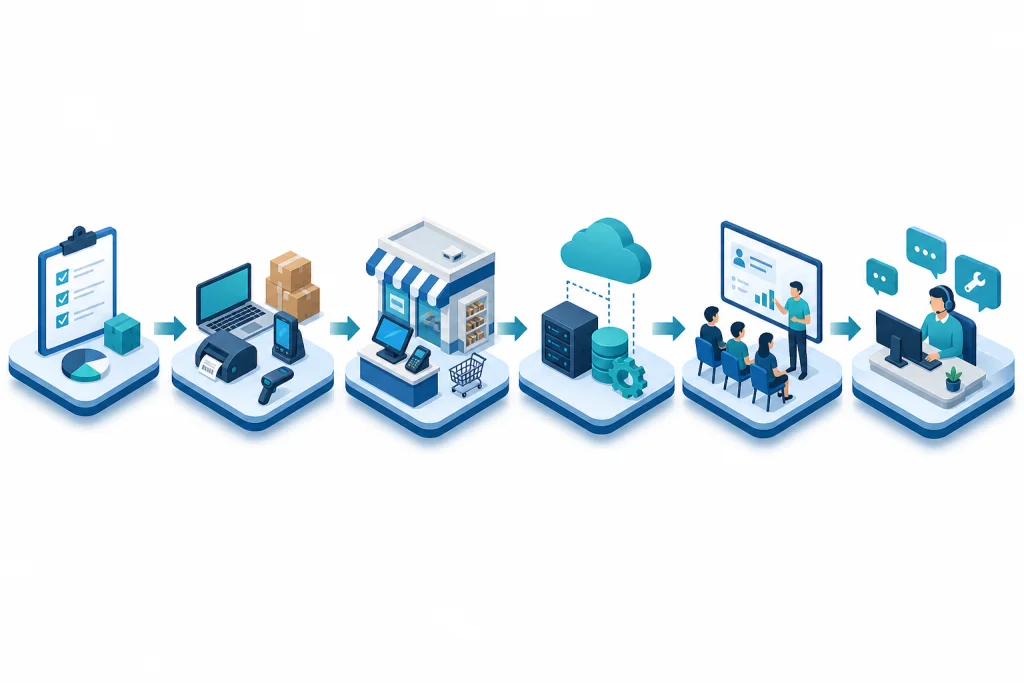
Implementation follows a phased approach: assessment, pilot, rollout, and optimization. During assessment, network site surveys and device requirements are documented. A pilot is conducted in one warehouse or store to validate performance. For example, a logistics company in Surabaya faced a 15% picking error rate and 2-hour daily reconciliation delays. They deployed 50 Zebra TC26 scanners, Cisco WiFi 6 access points, and VMware Workspace ONE. Result: picking errors dropped to 0.8%, reconciliation time reduced to 15 minutes, and overall productivity increased by 28% within 3 months.

  • Another case: a fashion retailer in Bandung with 10 stores implemented mobile POS on Lenovo tablets integrated with SAP. They saw a 40% reduction in checkout time and a 15% increase in average transaction value due to upsell prompts. The methodology includes training staff on device usage and MDM policies, and setting up backup and disaster recovery for backend systems. Continuous monitoring using tools like Veeam ensures data integrity. Post-implementation, quarterly reviews optimize workflows and device lifecycle management.
Use cases

Perencanaan infrastruktur baru

Refresh & modernisasi

Ekspansi multi-cabang

Compliance & audit IT

Retail Mobility for Enterprise

Our engineers help design, deploy, and support enterprise IT solutions across Indonesia.

Request a quote Contact our team

Related pages

E-E-A-T · Expertise & trust

Implementation expertise & enterprise trust

Intilogy (PT. Inti Jaya Teknologi) supports IT and procurement teams across Indonesia — from technical assessment and BoQ through deployment, documentation, and post go-live support.

  • 500+ Infrastructure deployments
  • 24/7 Operational support
  • SLA Enterprise SLA
  • 150+ Clients & institutions

Engineering & delivery expertise

Engineer-led assessment

Requirements workshops, sizing, and architecture — not catalogue selling without context.

Documented deployment

Commissioning checklists, as-built diagrams, IP plans, and escalation runbooks.

Audit-ready procurement

BoQ/BOM, quotations, POs, and handover packs for tenders and IT audits.

Multi-vendor coordination

One project partner for servers, networks, security, backup, and licensing.

Vendor ecosystem & sourcing channels

We source through official distributors/resellers per brand and project. Specific partnership tiers are confirmed per RFP — see our credentials page.

Vendor Status / tier Scope Notes
Dell Technologies Authorized channel PowerEdge, storage BoQ & manufacturer warranty
HPE Authorized channel ProLiant Enterprise servers
Fortinet Implementation partner NGFW, SD-WAN Licensing & deployment
Veeam Implementation partner Backup, replication Immutable design
VMware Implementation partner vSphere Cluster & migration

Tiers vary by SKU/region. Contact sales@intilogy.com for distributor letters or engineer certificates.

Enterprise implementation methodology

Standard flow for infrastructure, security, and backup projects — scoped per contract.

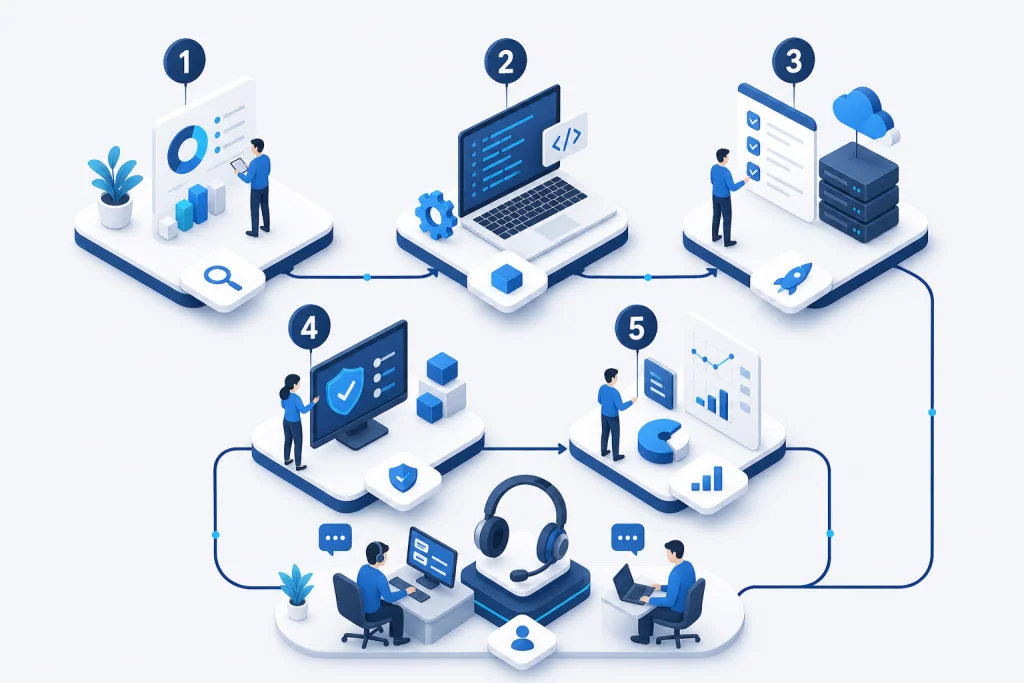
  1. Discovery & assessment

    Duration: 1–2 weeks

    Deliverables Requirements & risk report

  2. Architecture & BoQ

    Duration: 1–2 weeks

    Deliverables HLD, BoQ, rollout plan

  3. Procurement & staging

    Duration: 2–4 weeks

    Deliverables Asset register

  4. Implementation & UAT

    Duration: 2–6 weeks

    Deliverables As-built, UAT sign-off

  5. Handover & operations

    Duration: Ongoing

    Deliverables SOPs, training, SLA if contracted

Support & SLA (per project contract)

Service levels are defined in agreement — example framework below.

Standard maintenance

Response
Next business day (remote)
Coverage
Firmware advisory, tickets, RMA
Notes
Indonesia business hours

Project warranty

Response
Per implementation contract
Coverage
Defects in Intilogy deployment scope
Notes
Not 24/7 unless agreed

Critical incident (optional)

Response
4–8 hours if contracted
Coverage
Production-critical escalation
Notes
Requires separate MSA

Response times are illustrative — binding only when written in contract.

Technical documentation delivered

  • Topology & rack diagrams (as-built)
  • Asset list, serials, warranty status
  • Critical config summary & change log
  • Basic operations runbook & escalation contacts
  • Restore / DR drill reports (if in scope)
  • Tender packs: distributor letters & engineer certs (on request)

Competency & certifications

Engineers train on vendor technologies per project. Individual certs (Fortinet NSE, VMware VCP, Veeam VMCE, etc.) are provided for tenders — not all listed publicly.

  • Engineer certifications — Per project technology — on request
  • Distributor letters — For procurement audit
  • Client references — See Clients page for logos & scope

View certifications & partnerships

Ready to discuss architecture & BoQ?

Our team supports assessment, recommendations, procurement, and documented implementation.

WhatsApp Consult on WhatsApp
Request Consultation WhatsApp