Data Center Migration Architecture
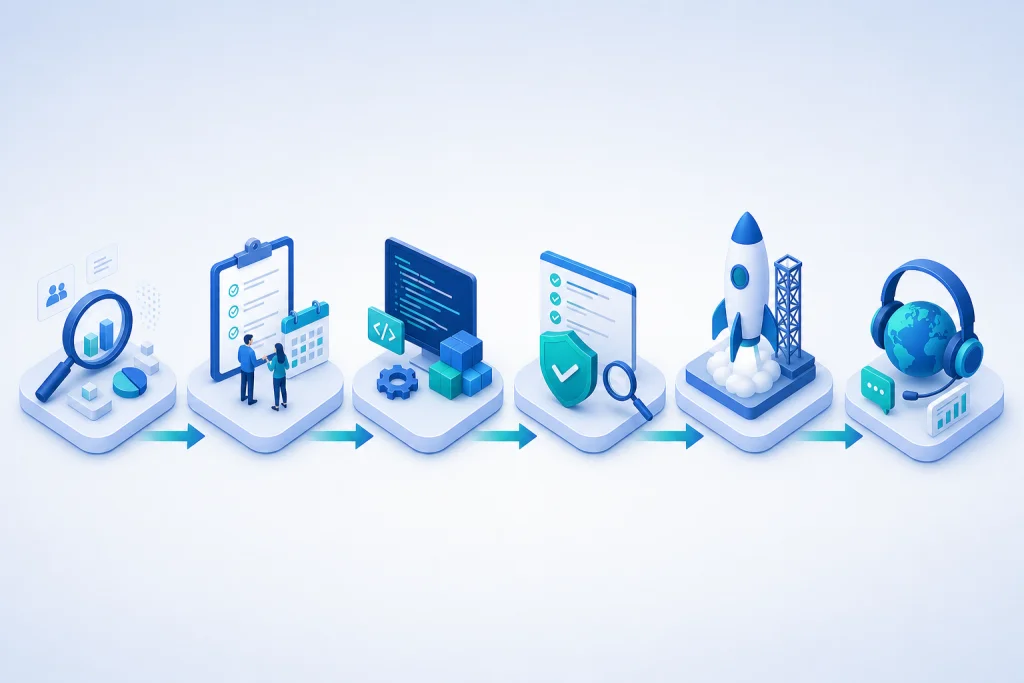
A robust data center migration architecture is built on a phased approach: discovery, planning, execution, and validation. During discovery, tools like VMware vRealize or Microsoft Azure Migrate inventory all assets, including servers, storage, and network dependencies. The planning phase defines the target architecture—whether colocation, private cloud, or hybrid—and establishes migration waves based on criticality. For example, moving non-production workloads first reduces risk. Execution leverages replication technologies such as Veeam Backup & Replication for block-level data sync or VMware vMotion for live migration of VMs. Network segmentation using Cisco ACI or Fortinet firewalls ensures security during cutover. Post-migration validation includes performance benchmarking, security audits, and rollback procedures. This architecture minimizes downtime, with typical RPOs of 15 minutes and RTOs under 4 hours for critical systems.
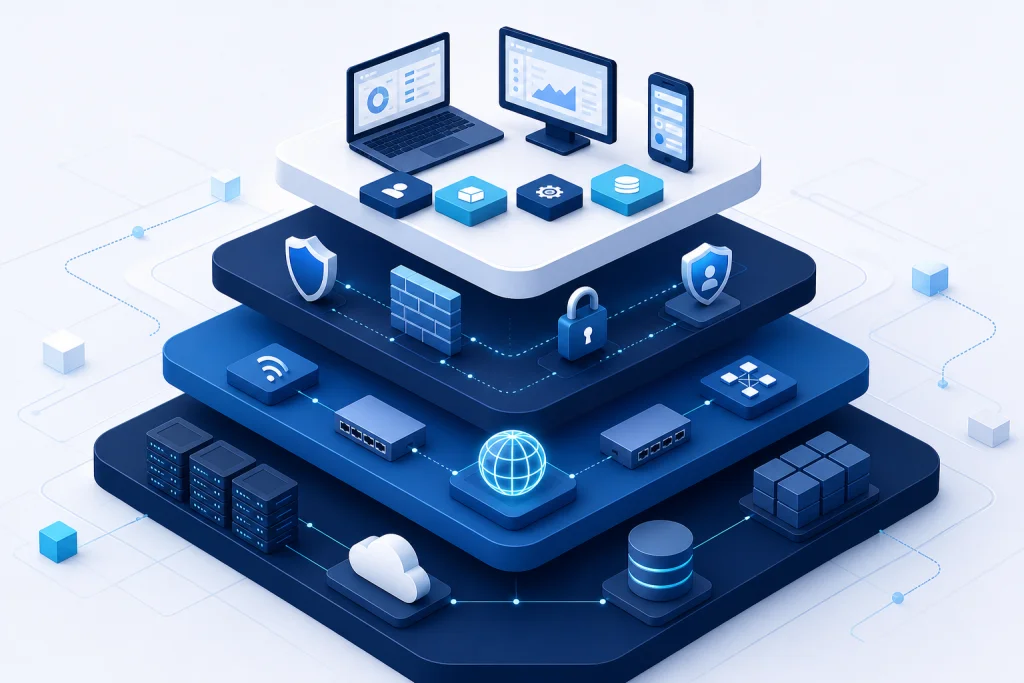
Key architectural components include software-defined networking (SDN) for agility, hyperconverged infrastructure (HCI) for simplified scaling, and hybrid cloud connectivity via dedicated links. For enterprises in Indonesia, latency-sensitive applications may require edge computing nodes. IT Infrastructure solutions from Lenovo and Dell provide the hardware backbone, while Synology or QNAP NAS devices handle backup storage. The architecture must also incorporate disaster recovery (DR) capabilities, such as geo-replication across Indonesian regions like Jakarta and Surabaya. By aligning with Backup & Disaster Recovery best practices, enterprises ensure data durability and compliance.
Industry Use Cases for Data Center Migration
In the financial sector, banks and insurance companies in Indonesia migrate to colocation data centers near the Indonesia Stock Exchange (IDX) to reduce trading latency. For example, a Jakarta-based bank migrated 500+ VMs from a legacy DC to a Tier III facility, achieving 40% lower latency and 99.999% uptime. Manufacturing enterprises leverage migration to consolidate distributed server rooms into centralized HCI clusters, reducing hardware footprint by 60% and energy costs by 30%. E-commerce platforms migrate to hybrid cloud to handle peak traffic, using VMware Cloud on AWS for burst capacity. A retail company in Bandung migrated its ERP and POS systems to a private cloud, improving transaction processing speed by 50% and enabling real-time inventory analytics.
Healthcare providers migrate to comply with data residency laws, moving patient records to on-premise or national cloud. A hospital in Surabaya migrated its EHR system to a HCI platform, achieving 99.99% availability and reducing backup windows from 12 hours to 2 hours. Government agencies adopt migration for digital transformation, such as a city government moving citizen services to a hybrid cloud, cutting service delivery time by 70%. These use cases demonstrate how migration drives operational efficiency, regulatory compliance, and business agility across industries.
Data Center Migration vs Traditional Alternatives
Traditional alternatives like forklift upgrades or manual server replacements involve high capital expenditure and prolonged downtime. In contrast, data center migration offers a phased, low-risk transition with minimal business interruption. For example, a forklift upgrade might require 48 hours of downtime, whereas a live migration using VMware vMotion achieves near-zero downtime. Migration also enables modernization: moving to hyperconverged infrastructure eliminates silos and reduces TCO by up to 40% compared to maintaining legacy three-tier architectures. Additionally, migration to hybrid cloud provides elasticity that traditional on-premise setups cannot match, allowing enterprises to scale resources on demand.
Another alternative is colocation without migration planning, which often leads to 'lift and shift' without optimization. This results in inefficiencies like over-provisioned VMs and redundant licenses. A structured migration includes rightsizing and consolidation, reducing VM sprawl by 30%. Security is also enhanced: migration incorporates modern firewalls and encryption, whereas traditional setups may have outdated controls. For Indonesian enterprises, migration aligns with national initiatives like Making Indonesia 4.0, enabling smart manufacturing and digital services. By choosing migration over traditional methods, organizations gain a future-proof infrastructure that supports AI, IoT, and big data analytics.
Case Study & Implementation Methodology
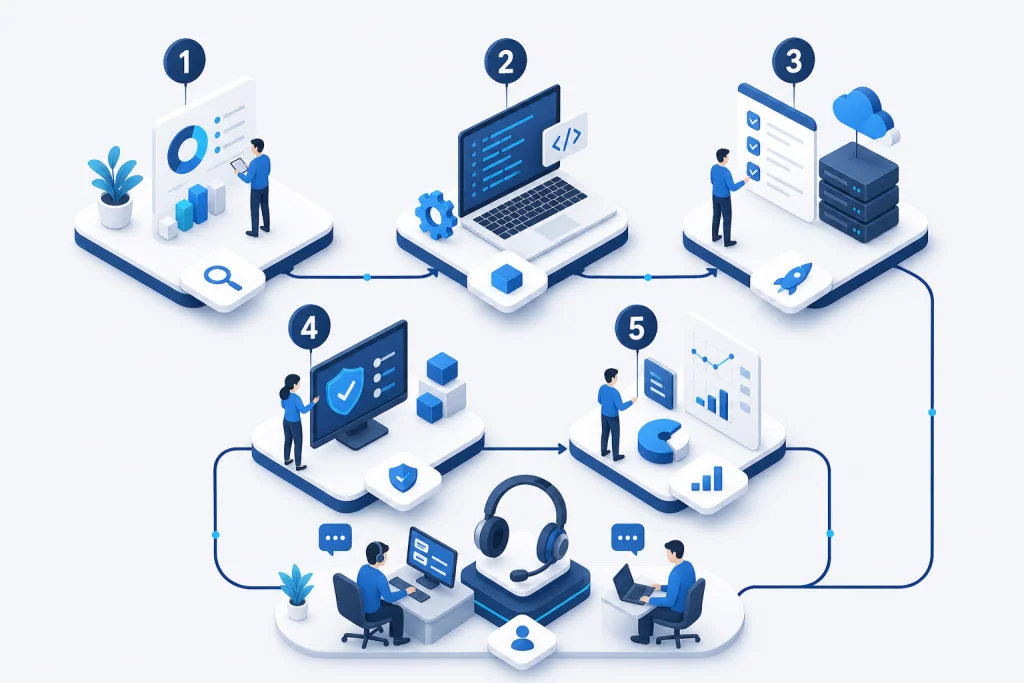
A large financial services company in Jakarta with 1,200 servers and 6,000 VMs faced challenges: 30% annual hardware failures, 15-minute RTO for critical apps, and 8-hour backup windows. The solution involved a phased migration to a colocation facility using Cisco Nexus switches, Lenovo ThinkSystem servers, and Veeam for replication. The methodology followed Intilogy's 5-phase approach: Discovery (2 weeks), Design (3 weeks), Build (4 weeks), Migrate (6 weeks), and Validate (2 weeks). During migration, 200 VMs per wave were moved using vMotion and Veeam replicas, with parallel run environments for critical apps. Results: 99.999% uptime, RTO reduced to 4 minutes, backup windows cut to 30 minutes, and 35% reduction in operational costs. The project was completed on schedule with zero data loss.
Implementation methodology emphasizes automation and testing. Automated scripts using PowerShell and Ansible streamline repetitive tasks. Pre-migration testing includes synthetic transactions and load testing to validate performance. Post-migration, continuous monitoring via Networking tools ensures SLA compliance. For disaster recovery, Backup & Disaster Recovery solutions provide failover to a secondary site in Batam. This structured approach mitigates risks and delivers measurable business outcomes, such as 50% faster application response times and 90% reduction in unplanned downtime.