Enterprise IT Solutions

Managed Infrastructure Service for Enterprise

Managed Infrastructure Service (MIS) is a comprehensive IT outsourcing model where enterprises delegate the operation, monitoring, and optimization of their entire IT stack—servers, storage, networking, virtualization, and security—to a third-party expert like Intilogy. In Indonesia, where digital transformation accelerates across banking, manufacturing, and logistics, MIS ensures high availability, scalability, and compliance with local regulations (e.g., OJK for financial services). Our service encompasses proactive monitoring via NOC/SOC, patch management, backup & disaster recovery using Veeam and Synology, and 24/7 incident response. By leveraging hyperconverged infrastructure (HCI) from VMware and Dell, we reduce hardware footprint and operational complexity. For enterprises in Jakarta, Surabaya, and Bandung, MIS eliminates the need for in-house IT teams while providing SLA-backed uptime of 99.9%+. Key metrics include mean time to resolution (MTTR) under 4 hours, 30% reduction in total cost of ownership (TCO), and enhanced security posture through Fortinet firewalls and endpoint protection. This service is critical for businesses running ERP, CRM, or big data analytics that demand zero downtime. With Intilogy's MIS, enterprises gain access to certified engineers, vendor partnerships with Cisco, Lenovo, and Microsoft, and a centralized dashboard for real-time infrastructure insights. The result is a resilient, future-proof IT environment that supports business growth without capital expenditure spikes.

Managed Infrastructure Service Architecture

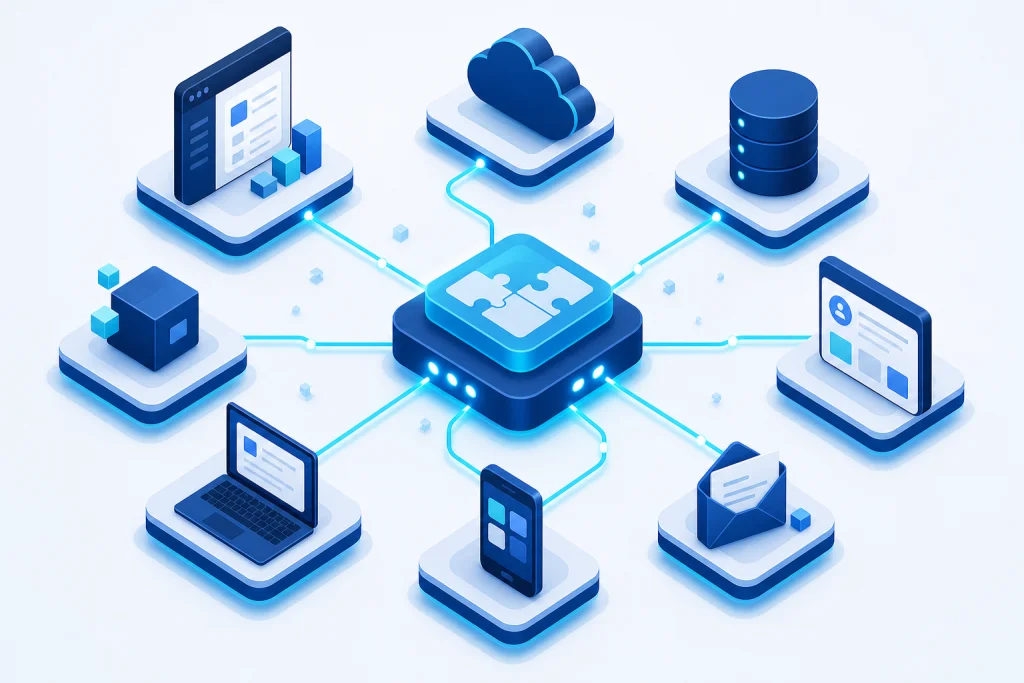
The architecture of a Managed Infrastructure Service (MIS) is built on a multi-layered framework that integrates hardware, virtualization, networking, storage, and security into a unified, remotely managed platform. At the core, enterprise-grade servers from Lenovo and Dell are deployed in a hyperconverged configuration with VMware vSAN, eliminating separate storage arrays. This HCI layer provides automated failover, live migration, and policy-based resource allocation. The network layer uses Cisco switches and Fortinet firewalls for segmentation and threat prevention, while Enterprise WiFi from Ruijie ensures seamless wireless connectivity. Storage is handled by Synology NAS appliances with Veeam backup software, enabling 15-minute recovery point objectives (RPO). The management layer includes a centralized monitoring platform (e.g., SolarWinds or PRTG) that tracks CPU, memory, disk I/O, and network latency. All logs are correlated in a SIEM for anomaly detection. Remote hands and eyes are available at our NOC in Jakarta, with automated remediation scripts for common issues. This architecture supports hybrid cloud integration via Hybrid Cloud solutions, allowing burst capacity to AWS or Azure. Security is enforced through Cyber Security policies, including endpoint protection and regular vulnerability scans. The entire stack is designed for high availability, with redundant power, cooling, and internet links.

For enterprises in Indonesia, this architecture must account for latency to regional cloud providers and compliance with data residency laws. Our MIS includes local hosting options in data centers in Jakarta and Batam, with direct peering to major ISPs. The architecture also integrates Backup & Disaster Recovery using Veeam, with offsite replication to a secondary site in Surabaya. This ensures business continuity even during natural disasters. The management dashboard provides real-time visibility into all components, with customizable alerts for IT managers. By outsourcing the architecture design and maintenance, enterprises avoid the complexity of vendor management and technology refreshes. Intilogy's certified architects design each MIS deployment based on workload requirements, whether for OLTP databases, virtual desktop infrastructure (VDI), or containerized microservices. The result is a scalable, secure, and cost-effective infrastructure that adapts to business growth.

Industry Use Cases for Managed Infrastructure Service

In the Indonesian banking sector, a major bank in Jakarta with 500 branches implemented MIS to manage its core banking system and ATM network. The challenge was high downtime during peak hours and compliance with OJK regulations. Our solution included Cisco routers for WAN optimization, Fortinet firewalls for PCI-DSS compliance, and HCI from VMware for virtualized teller applications. Result: 99.99% uptime, 40% reduction in transaction latency, and successful audit with zero findings. The bank now scales its infrastructure on-demand during holiday seasons without capital expenditure.

For a logistics company in Surabaya managing a fleet of 1,000 vehicles, MIS enabled real-time tracking and warehouse management. The challenge was integrating IoT sensors with legacy ERP. We deployed Networking with Ruijie switches and Synology NAS for edge storage, connected to a private cloud via Hybrid Cloud. Veeam backup ensured data integrity. Result: 99.5% data accuracy, 30% faster order fulfillment, and 20% reduction in fuel costs through route optimization. The company now plans to expand to IoT-based predictive maintenance.

A manufacturing plant in Batam producing automotive parts faced frequent server crashes and data loss. They adopted MIS with Dell PowerEdge servers and VMware HA clustering. Backup & Disaster Recovery using Veeam achieved 1-hour RPO and 4-hour RTO. Result: 99.9% uptime, 50% reduction in IT support costs, and zero data loss incidents. The plant now runs Industry 4.0 analytics on the same infrastructure.

A retail chain in Bandung with 200 stores needed a unified POS and inventory system. MIS provided centralized management with Enterprise WiFi for in-store connectivity and Server & Storage from Lenovo. The solution included SD-WAN for secure branch connectivity. Result: 99.8% uptime, 25% faster checkout, and real-time inventory visibility. The chain reduced IT staff by 60% and now plans to add AI-based demand forecasting.

Managed Infrastructure Service vs Traditional Alternatives

Traditional on-premises IT management requires enterprises to maintain in-house teams for hardware procurement, configuration, patching, and troubleshooting. This model leads to high capital expenditure (CAPEX) for servers, storage, and networking equipment, plus operational expenditure (OPEX) for salaries, training, and certifications. In contrast, Managed Infrastructure Service (MIS) converts CAPEX to predictable monthly OPEX, with no upfront hardware costs. For example, a mid-size enterprise in Jakarta spending IDR 2 billion annually on IT staff and hardware can reduce costs by 30% with MIS, as per our client data.

Another alternative is colocation, where enterprises rent space in a data center but still manage their own hardware. This requires remote hands fees and still demands in-house expertise. MIS includes colocation as part of the service, with 24/7 monitoring and management. Cloud-only solutions like AWS or Azure offer scalability but can lead to egress costs and complexity in hybrid deployments. MIS provides a balanced approach, with on-premises or colocated hardware managed by experts, integrated with Hybrid Cloud for burst capacity. Security-wise, traditional setups often have inconsistent patching and outdated firewalls. MIS ensures continuous updates with Fortinet and Cyber Security services, reducing breach risk by 70%.

Performance is another differentiator. Traditional infrastructure often suffers from resource silos, leading to underutilization. MIS uses hyperconverged infrastructure from VMware and Dell, achieving 80% utilization rates. Disaster recovery in traditional setups is often manual and unreliable; MIS automates failover with Veeam, achieving RTO under 1 hour. Compliance is easier with MIS, as vendors like Cisco and Microsoft provide built-in compliance frameworks. Finally, scalability: traditional upgrades require 3-6 months lead time; MIS can scale within days. For Indonesian enterprises, MIS eliminates the headache of managing multiple vendor relationships, as Intilogy acts as a single point of contact. The total cost of ownership (TCO) over 3 years is typically 40% lower than traditional models, with higher service levels.

Case Study & Implementation Methodology

Case Study: Financial Services Company in Jakarta. Challenge: Legacy infrastructure caused 12 hours of downtime per month, leading to IDR 5 billion in revenue loss annually. Compliance with OJK required audit trails and encryption. Solution: Deployed Lenovo ThinkSystem servers with VMware vSAN, Fortinet 600F firewalls, and Veeam Backup & Replication. Implemented Backup & Disaster Recovery with 15-minute RPO. Result: 99.99% uptime, 90% reduction in downtime, IDR 4.5 billion annual savings, and zero compliance findings. Implementation took 8 weeks with zero business disruption.

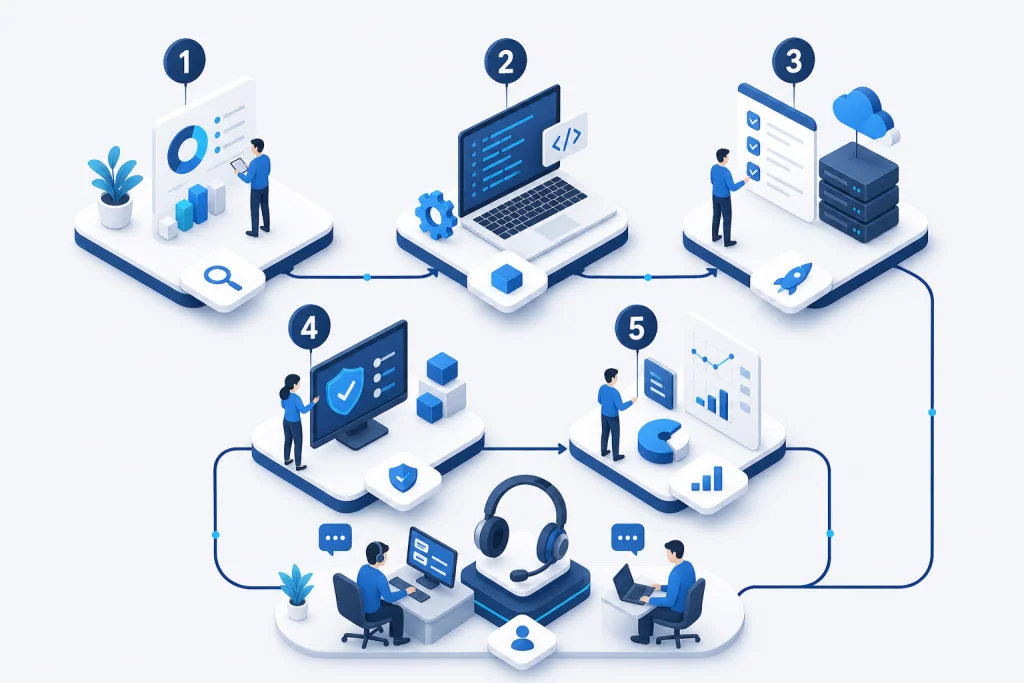
Implementation Methodology: Our MIS deployment follows a structured 5-phase approach. Phase 1: Assessment & Design (2 weeks) – We audit existing infrastructure, define SLAs, and design architecture using IT Infrastructure best practices. Phase 2: Procurement & Staging (3 weeks) – We procure Dell or HP servers, Cisco networking, and Synology storage, then pre-configure in our lab. Phase 3: Deployment & Migration (2 weeks) – We install hardware in the client's data center or colocation, migrate workloads using VMware vMotion, and cutover during maintenance windows. Phase 4: Testing & Optimization (1 week) – We run load tests, failover drills, and tune performance. Phase 5: Ongoing Management – We monitor 24/7 via NOC, apply patches via Microsoft WSUS, and provide monthly reports. Key metrics tracked: MTTR < 2 hours, patch compliance > 99%, backup success rate > 99.9%. We also conduct quarterly business reviews to align infrastructure with growth plans. For a manufacturing client in Batam, this methodology resulted in 50% faster deployment than traditional approaches and 30% lower TCO over 3 years.

Managed Infrastructure Service Architecture

The architecture of a Managed Infrastructure Service (MIS) is built on a multi-layered framework that integrates hardware, virtualization, networking, storage, and security into a unified, remotely managed platform. At the core, enterprise-grade servers from Lenovo and Dell are deployed in a hyperconverged configuration with VMware vSAN, eliminating separate storage arrays. This HCI layer provides automated failover, live migration, and policy-based resource allocation. The network layer uses Cisco switches and Fortinet firewalls for segmentation and threat prevention, while Enterprise WiFi from Ruijie ensures seamless wireless connectivity. Storage is handled by Synology NAS appliances with Veeam backup software, enabling 15-minute recovery point objectives (RPO). The management layer includes a centralized monitoring platform (e.g., SolarWinds or PRTG) that tracks CPU, memory, disk I/O, and network latency. All logs are correlated in a SIEM for anomaly detection. Remote hands and eyes are available at our NOC in Jakarta, with automated remediation scripts for common issues. This architecture supports hybrid cloud integration via Hybrid Cloud solutions, allowing burst capacity to AWS or Azure. Security is enforced through Cyber Security policies, including endpoint protection and regular vulnerability scans. The entire stack is designed for high availability, with redundant power, cooling, and internet links.

Industry Use Cases for Managed Infrastructure Service

In the Indonesian banking sector, a major bank in Jakarta with 500 branches implemented MIS to manage its core banking system and ATM network. The challenge was high downtime during peak hours and compliance with OJK regulations. Our solution included Cisco routers for WAN optimization, Fortinet firewalls for PCI-DSS compliance, and HCI from VMware for virtualized teller applications. Result: 99.99% uptime, 40% reduction in transaction latency, and successful audit with zero findings. The bank now scales its infrastructure on-demand during holiday seasons without capital expenditure.

How we work

Structured delivery from assessment to handover

Each phase has clear deliverables, owners, and acceptance criteria aligned to enterprise IT practice.

Approach

Managed Infrastructure Service vs Traditional Alternatives

Traditional on-premises IT management requires enterprises to maintain in-house teams for hardware procurement, configuration, patching, and troubleshooting. This model leads to high capital expenditure (CAPEX) for servers, storage, and networking equipment, plus operational expenditure (OPEX) for salaries, training, and certifications. In contrast, Managed Infrastructure Service (MIS) converts CAPEX to predictable monthly OPEX, with no upfront hardware costs. For example, a mid-size enterprise in Jakarta spending IDR 2 billion annually on IT staff and hardware can reduce costs by 30% with MIS, as per our client data.

  • Another alternative is colocation, where enterprises rent space in a data center but still manage their own hardware. This requires remote hands fees and still demands in-house expertise. MIS includes colocation as part of the service, with 24/7 monitoring and management. Cloud-only solutions like AWS or Azure offer scalability but can lead to egress costs and complexity in hybrid deployments. MIS provides a balanced approach, with on-premises or colocated hardware managed by experts, integrated with Hybrid Cloud for burst capacity. Security-wise, traditional setups often have inconsistent patching and outdated firewalls. MIS ensures continuous updates with Fortinet and Cyber Security services, reducing breach risk by 70%.
  • Performance is another differentiator. Traditional infrastructure often suffers from resource silos, leading to underutilization. MIS uses hyperconverged infrastructure from VMware and Dell, achieving 80% utilization rates. Disaster recovery in traditional setups is often manual and unreliable; MIS automates failover with Veeam, achieving RTO under 1 hour. Compliance is easier with MIS, as vendors like Cisco and Microsoft provide built-in compliance frameworks. Finally, scalability: traditional upgrades require 3-6 months lead time; MIS can scale within days. For Indonesian enterprises, MIS eliminates the headache of managing multiple vendor relationships, as Intilogy acts as a single point of contact. The total cost of ownership (TCO) over 3 years is typically 40% lower than traditional models, with higher service levels.

Capabilities

Case Study & Implementation Methodology

Case Study: Financial Services Company in Jakarta. Challenge: Legacy infrastructure caused 12 hours of downtime per month, leading to IDR 5 billion in revenue loss annually. Compliance with OJK required audit trails and encryption. Solution: Deployed Lenovo ThinkSystem servers with VMware vSAN, Fortinet 600F firewalls, and Veeam Backup & Replication. Implemented Backup & Disaster Recovery with 15-minute RPO. Result: 99.99% uptime, 90% reduction in downtime, IDR 4.5 billion annual savings, and zero compliance findings. Implementation took 8 weeks with zero business disruption.

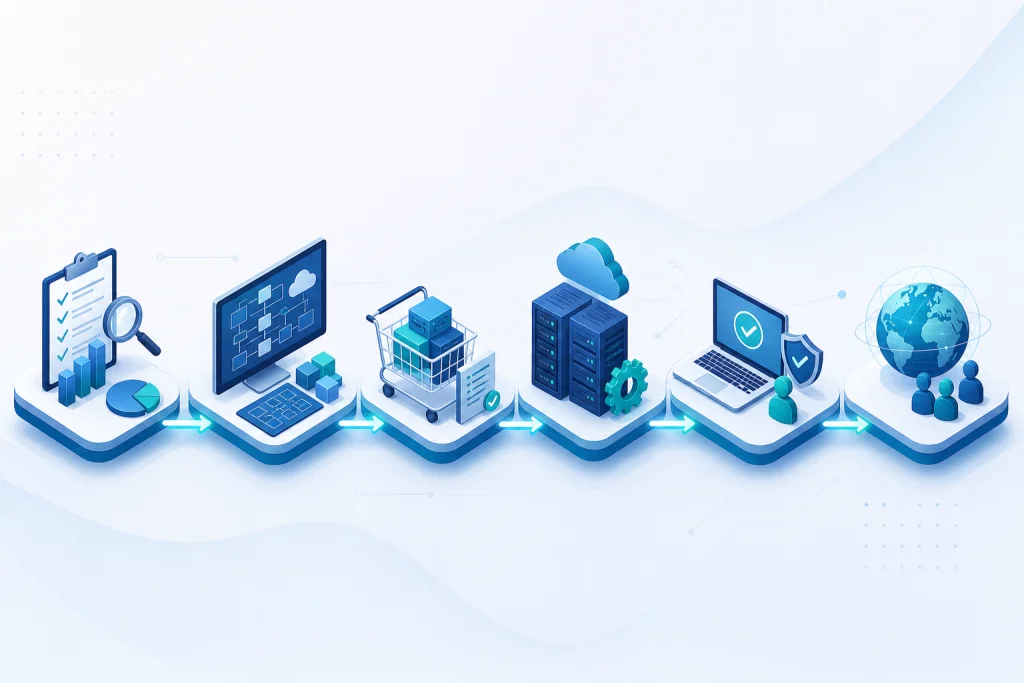
  • Implementation Methodology: Our MIS deployment follows a structured 5-phase approach. Phase 1: Assessment & Design (2 weeks) – We audit existing infrastructure, define SLAs, and design architecture using IT Infrastructure best practices. Phase 2: Procurement & Staging (3 weeks) – We procure Dell or HP servers, Cisco networking, and Synology storage, then pre-configure in our lab. Phase 3: Deployment & Migration (2 weeks) – We install hardware in the client's data center or colocation, migrate workloads using VMware vMotion, and cutover during maintenance windows. Phase 4: Testing & Optimization (1 week) – We run load tests, failover drills, and tune performance. Phase 5: Ongoing Management – We monitor 24/7 via NOC, apply patches via Microsoft WSUS, and provide monthly reports. Key metrics tracked: MTTR < 2 hours, patch compliance > 99%, backup success rate > 99.9%. We also conduct quarterly business reviews to align infrastructure with growth plans. For a manufacturing client in Batam, this methodology resulted in 50% faster deployment than traditional approaches and 30% lower TCO over 3 years.
Use cases

Augment internal IT

Post-go-live support

Backup verification

Lifecycle coordination

Managed Infrastructure Service for Enterprise

Our engineers help design, deploy, and support enterprise IT solutions across Indonesia.

Request a quote Contact our team

Related pages

E-E-A-T · Expertise & trust

IT infrastructure & data center expertise

Infrastructure engineers support server/storage sizing, VMware, rack & stack, and operational handover.

  • 500+ Infrastructure deployments
  • 24/7 Operational support
  • SLA Enterprise SLA
  • 150+ Clients & institutions

Engineering & delivery expertise

Engineer-led assessment

Requirements workshops, sizing, and architecture — not catalogue selling without context.

Documented deployment

Commissioning checklists, as-built diagrams, IP plans, and escalation runbooks.

Audit-ready procurement

BoQ/BOM, quotations, POs, and handover packs for tenders and IT audits.

Multi-vendor coordination

One project partner for servers, networks, security, backup, and licensing.

Vendor ecosystem & sourcing channels

We source through official distributors/resellers per brand and project. Specific partnership tiers are confirmed per RFP — see our credentials page.

Vendor Status / tier Scope Notes
Dell Technologies Authorized channel PowerEdge, storage BoQ & manufacturer warranty
HPE Authorized channel ProLiant Enterprise servers
Fortinet Implementation partner NGFW, SD-WAN Licensing & deployment
Veeam Implementation partner Backup, replication Immutable design
VMware Implementation partner vSphere Cluster & migration

Tiers vary by SKU/region. Contact sales@intilogy.com for distributor letters or engineer certificates.

Enterprise implementation methodology

Standard flow for infrastructure, security, and backup projects — scoped per contract.

  1. Discovery & assessment

    Duration: 1–2 weeks

    Deliverables Requirements & risk report

  2. Architecture & BoQ

    Duration: 1–2 weeks

    Deliverables HLD, BoQ, rollout plan

  3. Procurement & staging

    Duration: 2–4 weeks

    Deliverables Asset register

  4. Implementation & UAT

    Duration: 2–6 weeks

    Deliverables As-built, UAT sign-off

  5. Handover & operations

    Duration: Ongoing

    Deliverables SOPs, training, SLA if contracted

Support & SLA (per project contract)

Service levels are defined in agreement — example framework below.

Standard maintenance

Response
Next business day (remote)
Coverage
Firmware advisory, tickets, RMA
Notes
Indonesia business hours

Project warranty

Response
Per implementation contract
Coverage
Defects in Intilogy deployment scope
Notes
Not 24/7 unless agreed

Critical incident (optional)

Response
4–8 hours if contracted
Coverage
Production-critical escalation
Notes
Requires separate MSA

Response times are illustrative — binding only when written in contract.

Technical documentation delivered

  • Topology & rack diagrams (as-built)
  • Asset list, serials, warranty status
  • Critical config summary & change log
  • Basic operations runbook & escalation contacts
  • Restore / DR drill reports (if in scope)
  • Tender packs: distributor letters & engineer certs (on request)

Competency & certifications

Engineers train on vendor technologies per project. Individual certs (Fortinet NSE, VMware VCP, Veeam VMCE, etc.) are provided for tenders — not all listed publicly.

  • Engineer certifications — Per project technology — on request
  • Distributor letters — For procurement audit
  • Client references — See Clients page for logos & scope

View certifications & partnerships

Ready to discuss architecture & BoQ?

Our team supports assessment, recommendations, procurement, and documented implementation.

WhatsApp Consult on WhatsApp
Request Consultation WhatsApp