Network Operations Center Architecture
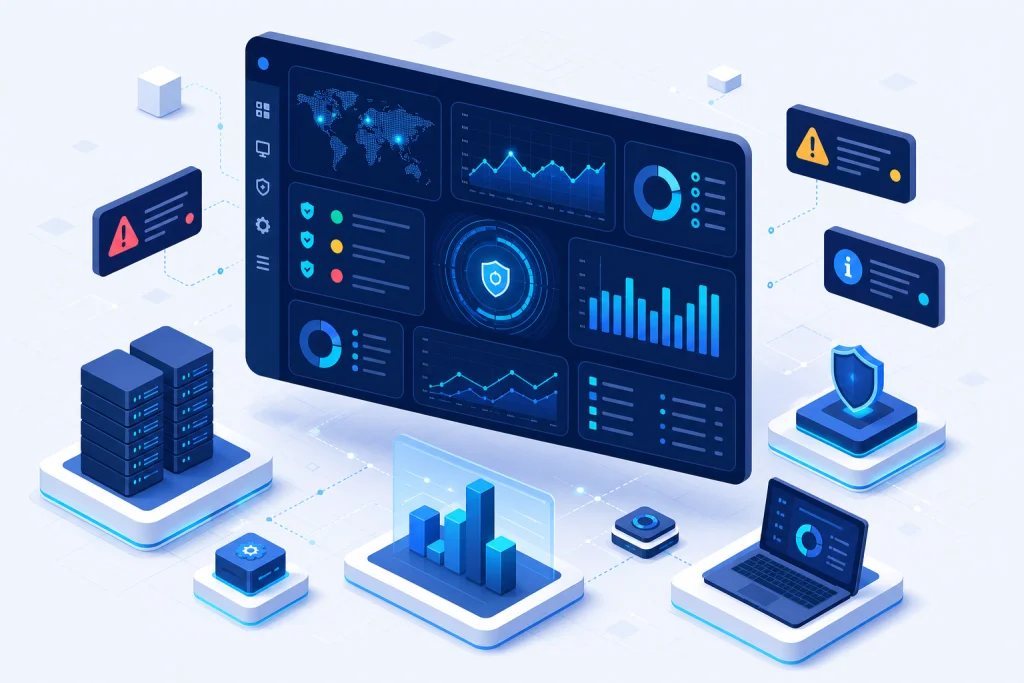
A modern NOC architecture is built on three core layers: data collection, analysis, and action. At the data collection layer, network devices such as routers, switches, firewalls, and servers are monitored via SNMP, syslog, and streaming telemetry. Tools like Cisco DNA Center and SolarWinds Orion aggregate metrics on bandwidth utilization, latency, packet loss, and device health. The analysis layer employs machine learning algorithms to detect anomalies and predict failures, reducing false positives. For example, a spike in CPU usage on a core switch can trigger automated workflows that isolate the device or reroute traffic. The action layer includes ticketing systems like ServiceNow and automated remediation via Ansible or Python scripts. In Indonesia, where network latency to global cloud providers can be high, a distributed NOC with local probes ensures accurate monitoring. Intilogy integrates Networking solutions from Ruijie and HP Aruba to provide cost-effective yet high-performance monitoring. The architecture also supports multi-tenancy for managed service providers, allowing separate dashboards for each enterprise customer. Redundant communication channels (e.g., 4G failover) ensure NOC connectivity even during primary network outages. This layered approach achieves 99.99% network availability and sub-5-minute alert-to-acknowledgment times.
Key components include a centralized dashboard for real-time visibility, historical reporting for trend analysis, and integration with IT service management (ITSM) platforms. For example, a bank in Jakarta uses Intilogy's NOC to monitor 500+ network devices across 50 branches, with automated alerts sent to field engineers via WhatsApp. The architecture also incorporates security monitoring by correlating NOC alerts with Cyber Security tools like Fortinet FortiSIEM, enabling rapid response to threats such as DDoS attacks or ransomware. Storage monitoring via Synology and QNAP ensures backup success rates are tracked, aligning with disaster recovery SLAs. Overall, the NOC architecture is designed to scale with enterprise growth, supporting thousands of devices across multiple sites in Indonesia's archipelago.
Industry Use Cases for Network Operations Center
In the financial sector, Indonesian banks rely on NOCs to ensure uninterrupted online banking and ATM networks. For instance, a major bank in Surabaya monitors 200+ branches with redundant MPLS links. The NOC detects link failures within 30 seconds and reroutes traffic via backup 4G connections, maintaining 99.99% uptime. Compliance with Bank Indonesia regulations requires detailed audit trails, which the NOC provides through centralized logging. In manufacturing, a automotive plant in Bekasi uses NOC to monitor industrial IoT sensors and PLCs on the factory floor. Network latency above 10ms triggers alerts to prevent production line stoppages. The NOC integrates with HCI infrastructure from VMware and Dell to ensure real-time data processing. For logistics, a Jakarta-based e-commerce warehouse tracks inventory using RFID scanners and cameras. The NOC monitors WiFi connectivity from Enterprise WiFi solutions to avoid scanning delays during peak hours. In healthcare, a hospital in Bandung uses NOC to monitor critical systems like PACS and EHR, with failover to backup servers in case of network congestion. The NOC also integrates with Enterprise CCTV to ensure physical security feeds are available. Each industry benefits from customized dashboards and alert thresholds, reducing false alarms by 60%.
Retail chains in Indonesia with hundreds of outlets use NOC to monitor POS systems and inventory databases. A retail company in Medan reduced transaction failures by 35% after implementing real-time network monitoring. The NOC also tracks bandwidth usage to optimize SD-WAN links from Cisco, lowering WAN costs by 20%. Government agencies, such as a city administration in Makassar, deploy NOC to monitor smart city sensors for traffic lights and environmental monitoring. Integration with Backup & Disaster Recovery ensures data from sensors is replicated to a secondary site. The NOC's ability to correlate events across multiple vendors (e.g., HP servers, Fortinet firewalls) provides a single pane of glass, enabling faster root cause analysis. These use cases demonstrate how a NOC is not just a monitoring tool but a strategic asset for operational excellence.
Network Operations Center vs Traditional Alternatives
Traditional network monitoring often relies on siloed tools and manual processes. For example, a company might use separate systems for bandwidth monitoring (e.g., PRTG), server monitoring (e.g., Nagios), and security monitoring (e.g., Splunk), with no correlation between them. This leads to alert fatigue, longer MTTR, and higher operational costs. In contrast, a NOC integrates all monitoring into a unified platform with automated workflows. For instance, when a Lenovo server's disk usage exceeds 90%, the NOC can automatically create a ticket, notify the storage team, and trigger a backup job to free space. Traditional approaches require manual intervention at each step, increasing downtime risk. Another alternative is using cloud-based monitoring services, but they may not meet Indonesia's data sovereignty requirements or provide low-latency monitoring for on-premises infrastructure. A NOC with local presence in Jakarta ensures sub-second alerting and compliance with regulations like UU ITE.
Cost-wise, traditional monitoring often requires multiple vendors and in-house expertise, leading to higher total cost of ownership (TCO). A NOC as a service from Intilogy reduces TCO by up to 30% through shared resources and economies of scale. For example, a medium enterprise in Semarang saved 40% on monitoring costs by outsourcing to Intilogy's NOC instead of hiring three additional network engineers. Additionally, traditional tools lack advanced analytics; a NOC uses AI/ML to predict failures before they occur, such as identifying a failing power supply in a Server & Storage device. This proactive approach reduces unplanned downtime by 50%. In terms of scalability, a NOC can easily accommodate new devices and sites without significant reconfiguration, whereas traditional setups require manual additions. For Indonesian enterprises expanding to new islands, a NOC provides seamless monitoring across distributed locations. Ultimately, a NOC delivers higher network reliability, faster incident response, and better alignment with business goals compared to traditional alternatives.
Case Study & Implementation Methodology
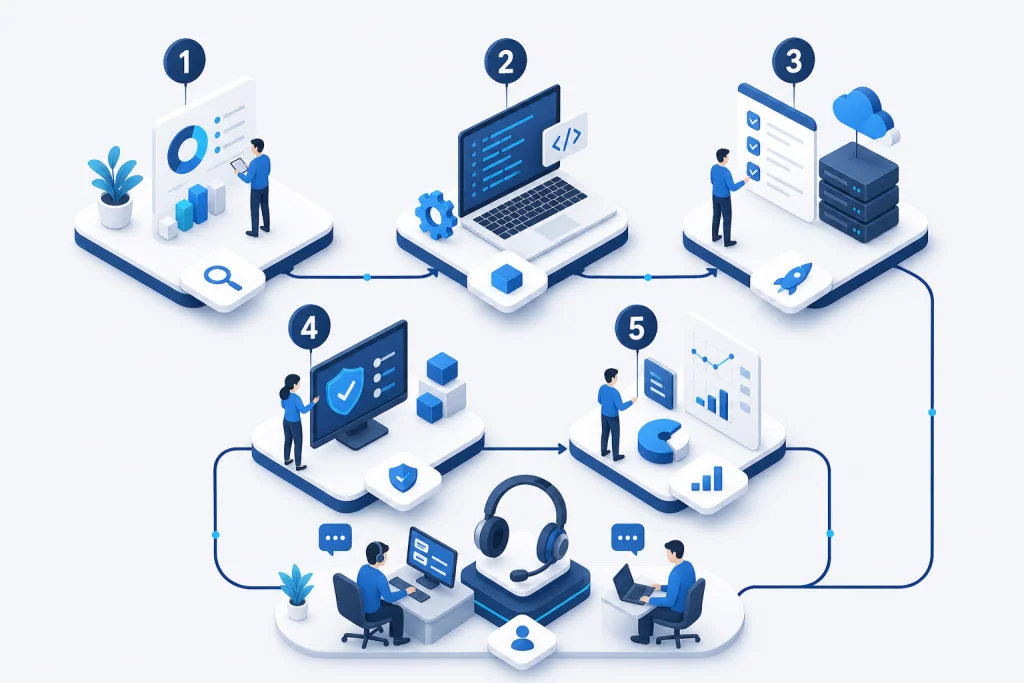
A financial services company in Jakarta with 1,200 network devices across 30 branches faced frequent WAN outages causing transaction delays. Challenge: 15% of branches experienced daily connectivity drops, with average MTTR of 4 hours. Solution: Intilogy deployed a NOC with Cisco routers, Fortinet firewalls, and SolarWinds for monitoring. Implementation followed a 5-phase methodology: (1) Discovery & Assessment: Audited existing network topology and identified critical assets. (2) Architecture Design: Designed a tiered NOC with local probes at each branch. (3) Tool Integration: Integrated SolarWinds with ServiceNow for automated ticketing. (4) Testing & Tuning: Calibrated alert thresholds to reduce false positives by 70%. (5) Go-Live & Training: Trained 10 local engineers on NOC operations. Result: Branch uptime increased to 99.95%, MTTR reduced to 30 minutes, and WAN costs decreased by 25% through optimized bandwidth usage. The project was completed in 12 weeks.
A manufacturing company in Batam with 500 IoT sensors on the production line faced network latency spikes causing 2% scrap rate. Challenge: Latency above 20ms triggered machine stops, costing IDR 500 million monthly. Solution: Implemented NOC with Dell servers, VMware NSX for network virtualization, and PRTG for monitoring. Methodology included: (1) Baseline measurement of network performance. (2) Deployment of edge computing nodes to process data locally. (3) Integration with IT Infrastructure monitoring. (4) Continuous optimization using AI analytics. Result: Latency reduced to under 5ms, scrap rate dropped to 0.5%, saving IDR 375 million monthly. Payback period was 6 months. A logistics company in Surabaya with 200 trucks using GPS trackers faced data loss during handoffs. Challenge: 10% of tracking data lost daily. Solution: NOC with Microsoft Azure IoT Hub and Veeam for backup. Result: Data loss reduced to 0.1%, improving delivery accuracy by 15%.