Enterprise IT Solutions

Server Consolidation for Enterprise

Server consolidation is a strategic approach to optimizing IT infrastructure by reducing the number of physical servers through virtualization, containerization, or hyper-converged infrastructure (HCI). For enterprises in Indonesia, this is critical for lowering total cost of ownership (TCO), improving resource utilization, and simplifying management. By consolidating workloads onto fewer, more powerful servers—often using platforms like VMware vSphere or Microsoft Hyper-V—organizations can achieve utilization rates of 80% or higher, compared to the typical 15-20% in non-consolidated environments. This not only reduces hardware, power, and cooling costs but also enhances disaster recovery and business continuity. Modern approaches leverage HCI solutions from Lenovo or Dell with integrated storage and networking, enabling seamless scaling. For Indonesian enterprises facing rapid digital transformation, server consolidation is the foundation for a more agile and cost-effective IT environment, directly supporting initiatives like hybrid cloud adoption and edge computing. With proper planning, consolidation can reduce server footprint by 70-80% while improving application performance and security posture.

Server Consolidation Architecture

The architecture of server consolidation typically involves three main approaches: physical consolidation, virtualization-based consolidation, and hyper-converged infrastructure (HCI). Physical consolidation involves migrating workloads from multiple underutilized servers onto fewer, more powerful machines using partitioning or blade systems. Virtualization, the most common method, uses a hypervisor like VMware ESXi or Microsoft Hyper-V to abstract hardware and run multiple virtual machines (VMs) on a single physical host. This allows for dynamic resource allocation, high availability, and live migration. HCI takes it further by integrating compute, storage, and networking into a single appliance, managed through a unified interface. Solutions from HP and Dell offer pre-validated HCI nodes that simplify deployment and scaling. A typical consolidated architecture includes a cluster of hosts connected to shared storage (SAN or NAS) or using hyper-converged storage pools. Management tools like vCenter or System Center provide centralized monitoring and automation. Network segmentation and security policies are enforced through virtual switches and firewalls, often integrated with firewall solutions. For high availability, features like VMware HA and Fault Tolerance ensure minimal downtime. This architecture reduces complexity, improves resource efficiency, and provides a foundation for private cloud and hybrid cloud deployments.

Key components include the hypervisor layer, management plane, and storage backend. For example, using VMware vSAN with HCI eliminates the need for external storage arrays, reducing latency and cost. Networking is often virtualized with Cisco ACI or VMware NSX for micro-segmentation. Backup and disaster recovery are integrated via solutions like Veeam or Backup & Disaster Recovery services. The architecture must also consider physical infrastructure: rack space, power, and cooling. Consolidation typically reduces these by 50-70%, leading to significant operational savings. For Indonesian enterprises, working with partners like IT Infrastructure specialists ensures proper design and implementation, aligning with local regulations and business needs.

Industry Use Cases for Server Consolidation

Server consolidation is widely adopted across industries in Indonesia to address specific challenges. In banking and finance, consolidation helps meet regulatory compliance (e.g., OJK regulations) by centralizing security controls and enabling robust disaster recovery. A major bank in Jakarta consolidated 200+ physical servers into 20 HCI nodes from Lenovo, achieving 90% virtualization ratio and reducing downtime by 80%. In manufacturing, consolidation supports Industry 4.0 initiatives by unifying OT and IT workloads. A Surabaya-based automotive parts manufacturer consolidated legacy servers onto a HP HCI platform, cutting hardware costs by 60% and improving production line monitoring latency. Retail and e-commerce companies use consolidation to handle peak demand during promotions. An Indonesian e-commerce leader consolidated its infrastructure using HCI, enabling auto-scaling and reducing time-to-market for new features by 50%. Healthcare providers consolidate to manage electronic medical records (EMR) and imaging data. A hospital in Bandung migrated from 50 physical servers to a virtualized environment with Dell servers, improving data accessibility and backup efficiency. Government agencies consolidate to optimize budget and enhance service delivery. A municipal government in Medan consolidated 30 servers into 5 virtualized hosts, reducing power consumption by 70% and freeing up IT staff for innovation. These use cases demonstrate how consolidation drives efficiency, scalability, and compliance across sectors.

Other industries like education and logistics also benefit. Universities consolidate servers for research and administrative systems, while logistics companies consolidate to support real-time tracking and warehouse management. For example, a logistics firm in Jakarta used Server & Storage consolidation to integrate its ERP and WMS, reducing latency and improving order fulfillment accuracy by 25%. The common thread is reducing complexity and cost while improving performance and agility. Each case requires careful planning, including workload assessment, capacity planning, and migration strategy, often leveraging tools like VMware Capacity Planner or Microsoft Assessment and Planning Toolkit.

Server Consolidation vs Traditional Alternatives

Traditional server deployment involves purchasing dedicated physical servers for each application or workload, leading to low utilization (often 5-15%), high power and cooling costs, and management complexity. In contrast, server consolidation through virtualization or HCI achieves 80-90% utilization, reducing hardware footprint by 70-80% and cutting energy costs by up to 50%. Traditional setups require separate storage arrays (SAN/NAS) and networking gear, increasing capital expenditure and operational overhead. Consolidation integrates these components, especially in HCI, simplifying procurement and management. For example, a traditional three-tier architecture might use Cisco switches, Dell servers, and Synology storage, but consolidation can replace this with a single HCI appliance from Lenovo or HP. Scalability also differs: traditional scaling requires purchasing and configuring new hardware, while consolidation allows adding nodes or VMs dynamically. Disaster recovery is more complex in traditional environments, often requiring duplicate hardware; consolidation enables replication and failover with tools like Veeam or VMware Site Recovery Manager. Security is enhanced in consolidated environments through centralized patch management and micro-segmentation, whereas traditional setups often have inconsistent security policies. However, consolidation requires upfront planning and skills investment, and may introduce single points of failure if not properly architected with redundancy. For Indonesian enterprises, the choice depends on workload characteristics, budget, and IT maturity. Small businesses might still opt for traditional if workloads are static, but for growth-oriented enterprises, consolidation offers clear TCO and agility advantages.

Another alternative is cloud migration, but many enterprises prefer on-premises consolidation for data sovereignty and latency reasons. Hybrid cloud models combine consolidation with public cloud bursting, offering the best of both worlds. For instance, using Hybrid Cloud solutions, enterprises can consolidate on-premises servers for steady-state workloads and burst to cloud for peaks. Ultimately, server consolidation is a stepping stone toward more advanced IT transformations, including private cloud and software-defined data centers.

Case Study & Implementation Methodology

A financial services company in Jakarta faced challenges with 150 underutilized physical servers running at 15% average CPU usage, high electricity costs (IDR 2.5 billion annually), and frequent downtime due to hardware failures. They consolidated onto a hyper-converged infrastructure using Lenovo ThinkAgile HX series with VMware vSAN. The implementation followed a phased methodology: assessment (2 weeks) using VMware Capacity Planner to identify workloads and dependencies; design (1 week) of a 10-node cluster with replication factor 2; migration (6 weeks) using VMware vMotion for zero-downtime live migration; and optimization (2 weeks) with resource pools and DRS. Result: 90% virtualization ratio, 70% reduction in hardware footprint (from 150 to 45 physical hosts), 60% lower power and cooling costs (saving IDR 1.5 billion annually), and 99.99% uptime. Backup and disaster recovery were integrated with Veeam Backup & Replication, reducing RPO from 4 hours to 15 minutes. The project achieved ROI within 18 months.

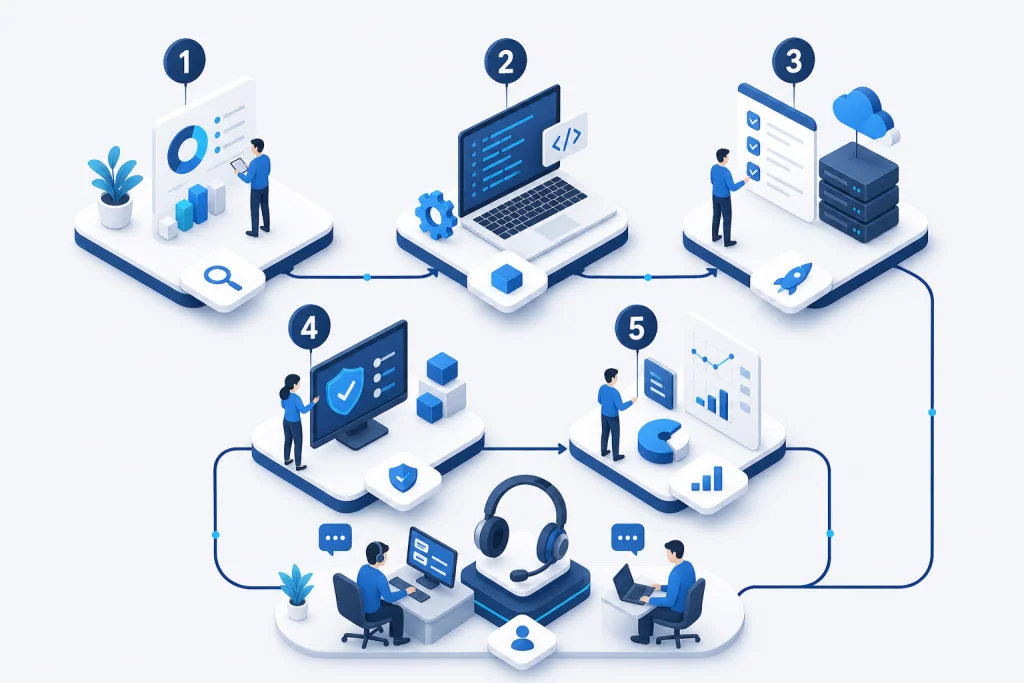
Implementation methodology for server consolidation typically includes five phases: Discovery and Assessment (inventory, utilization metrics, dependencies), Planning and Design (target architecture, capacity planning, licensing), Proof of Concept (validating on a small cluster), Migration (using tools like VMware Converter or Microsoft Migration Assistant), and Optimization (ongoing monitoring and tuning). Key success factors include executive sponsorship, skilled IT staff or partners, and clear communication with stakeholders. For Indonesian enterprises, working with local partners like IT Infrastructure providers ensures compliance with regulations and access to support. A manufacturing company in Surabaya consolidated 80 servers onto HP SimpliVity HCI, reducing deployment time for new applications from weeks to hours and improving production uptime by 30%. The methodology emphasizes minimizing business disruption and achieving quick wins to build momentum.

Server Consolidation Architecture

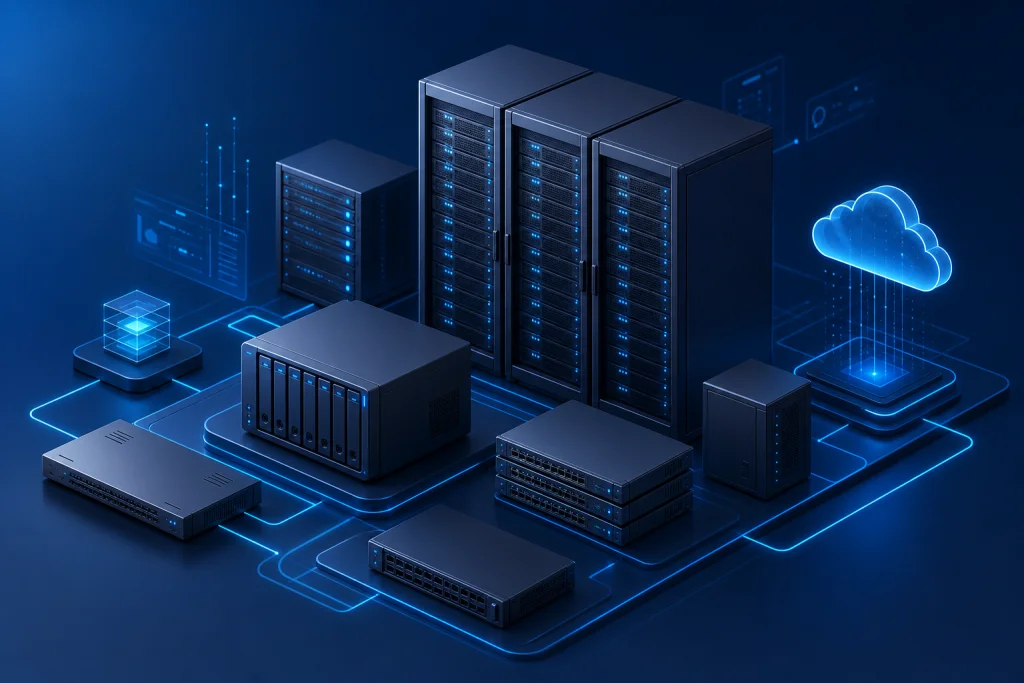
The architecture of server consolidation typically involves three main approaches: physical consolidation, virtualization-based consolidation, and hyper-converged infrastructure (HCI). Physical consolidation involves migrating workloads from multiple underutilized servers onto fewer, more powerful machines using partitioning or blade systems. Virtualization, the most common method, uses a hypervisor like VMware ESXi or Microsoft Hyper-V to abstract hardware and run multiple virtual machines (VMs) on a single physical host. This allows for dynamic resource allocation, high availability, and live migration. HCI takes it further by integrating compute, storage, and networking into a single appliance, managed through a unified interface. Solutions from HP and Dell offer pre-validated HCI nodes that simplify deployment and scaling. A typical consolidated architecture includes a cluster of hosts connected to shared storage (SAN or NAS) or using hyper-converged storage pools. Management tools like vCenter or System Center provide centralized monitoring and automation. Network segmentation and security policies are enforced through virtual switches and firewalls, often integrated with firewall solutions. For high availability, features like VMware HA and Fault Tolerance ensure minimal downtime. This architecture reduces complexity, improves resource efficiency, and provides a foundation for private cloud and hybrid cloud deployments.

Industry Use Cases for Server Consolidation

Server consolidation is widely adopted across industries in Indonesia to address specific challenges. In banking and finance, consolidation helps meet regulatory compliance (e.g., OJK regulations) by centralizing security controls and enabling robust disaster recovery. A major bank in Jakarta consolidated 200+ physical servers into 20 HCI nodes from Lenovo, achieving 90% virtualization ratio and reducing downtime by 80%. In manufacturing, consolidation supports Industry 4.0 initiatives by unifying OT and IT workloads. A Surabaya-based automotive parts manufacturer consolidated legacy servers onto a HP HCI platform, cutting hardware costs by 60% and improving production line monitoring latency. Retail and e-commerce companies use consolidation to handle peak demand during promotions. An Indonesian e-commerce leader consolidated its infrastructure using HCI, enabling auto-scaling and reducing time-to-market for new features by 50%. Healthcare providers consolidate to manage electronic medical records (EMR) and imaging data. A hospital in Bandung migrated from 50 physical servers to a virtualized environment with Dell servers, improving data accessibility and backup efficiency. Government agencies consolidate to optimize budget and enhance service delivery. A municipal government in Medan consolidated 30 servers into 5 virtualized hosts, reducing power consumption by 70% and freeing up IT staff for innovation. These use cases demonstrate how consolidation drives efficiency, scalability, and compliance across sectors.

How we work

Structured delivery from assessment to handover

Each phase has clear deliverables, owners, and acceptance criteria aligned to enterprise IT practice.

Approach

Server Consolidation vs Traditional Alternatives

Traditional server deployment involves purchasing dedicated physical servers for each application or workload, leading to low utilization (often 5-15%), high power and cooling costs, and management complexity. In contrast, server consolidation through virtualization or HCI achieves 80-90% utilization, reducing hardware footprint by 70-80% and cutting energy costs by up to 50%. Traditional setups require separate storage arrays (SAN/NAS) and networking gear, increasing capital expenditure and operational overhead. Consolidation integrates these components, especially in HCI, simplifying procurement and management. For example, a traditional three-tier architecture might use Cisco switches, Dell servers, and Synology storage, but consolidation can replace this with a single HCI appliance from Lenovo or HP. Scalability also differs: traditional scaling requires purchasing and configuring new hardware, while consolidation allows adding nodes or VMs dynamically. Disaster recovery is more complex in traditional environments, often requiring duplicate hardware; consolidation enables replication and failover with tools like Veeam or VMware Site Recovery Manager. Security is enhanced in consolidated environments through centralized patch management and micro-segmentation, whereas traditional setups often have inconsistent security policies. However, consolidation requires upfront planning and skills investment, and may introduce single points of failure if not properly architected with redundancy. For Indonesian enterprises, the choice depends on workload characteristics, budget, and IT maturity. Small businesses might still opt for traditional if workloads are static, but for growth-oriented enterprises, consolidation offers clear TCO and agility advantages.

  • Another alternative is cloud migration, but many enterprises prefer on-premises consolidation for data sovereignty and latency reasons. Hybrid cloud models combine consolidation with public cloud bursting, offering the best of both worlds. For instance, using Hybrid Cloud solutions, enterprises can consolidate on-premises servers for steady-state workloads and burst to cloud for peaks. Ultimately, server consolidation is a stepping stone toward more advanced IT transformations, including private cloud and software-defined data centers.

Capabilities

Case Study & Implementation Methodology

A financial services company in Jakarta faced challenges with 150 underutilized physical servers running at 15% average CPU usage, high electricity costs (IDR 2.5 billion annually), and frequent downtime due to hardware failures. They consolidated onto a hyper-converged infrastructure using Lenovo ThinkAgile HX series with VMware vSAN. The implementation followed a phased methodology: assessment (2 weeks) using VMware Capacity Planner to identify workloads and dependencies; design (1 week) of a 10-node cluster with replication factor 2; migration (6 weeks) using VMware vMotion for zero-downtime live migration; and optimization (2 weeks) with resource pools and DRS. Result: 90% virtualization ratio, 70% reduction in hardware footprint (from 150 to 45 physical hosts), 60% lower power and cooling costs (saving IDR 1.5 billion annually), and 99.99% uptime. Backup and disaster recovery were integrated with Veeam Backup & Replication, reducing RPO from 4 hours to 15 minutes. The project achieved ROI within 18 months.

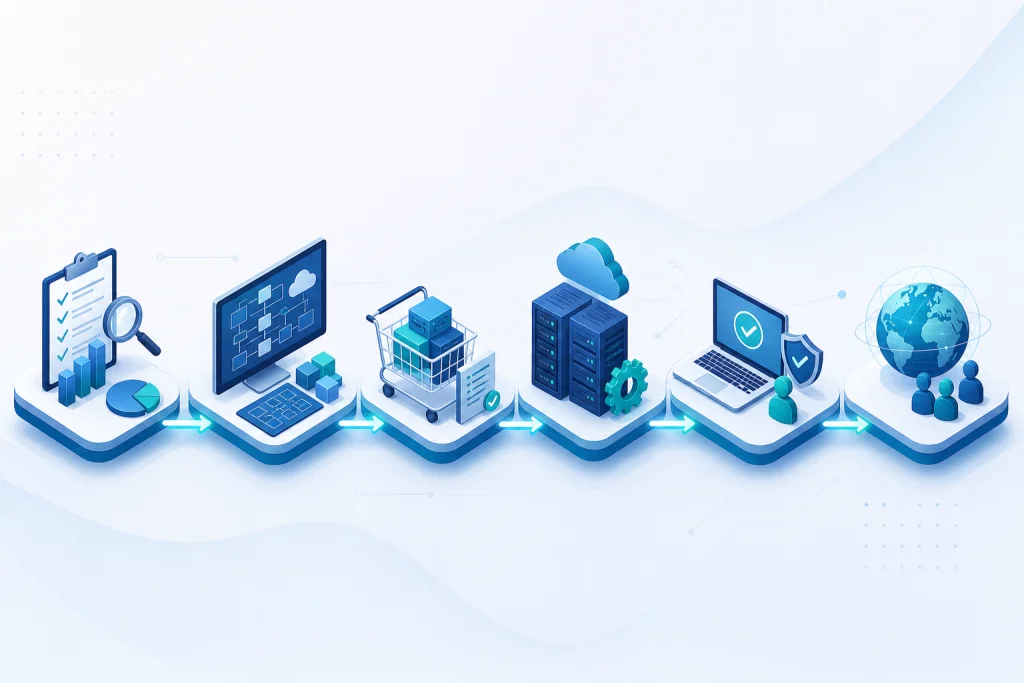
  • Implementation methodology for server consolidation typically includes five phases: Discovery and Assessment (inventory, utilization metrics, dependencies), Planning and Design (target architecture, capacity planning, licensing), Proof of Concept (validating on a small cluster), Migration (using tools like VMware Converter or Microsoft Migration Assistant), and Optimization (ongoing monitoring and tuning). Key success factors include executive sponsorship, skilled IT staff or partners, and clear communication with stakeholders. For Indonesian enterprises, working with local partners like IT Infrastructure providers ensures compliance with regulations and access to support. A manufacturing company in Surabaya consolidated 80 servers onto HP SimpliVity HCI, reducing deployment time for new applications from weeks to hours and improving production uptime by 30%. The methodology emphasizes minimizing business disruption and achieving quick wins to build momentum.
Use cases

Perencanaan infrastruktur baru

Refresh & modernisasi

Ekspansi multi-cabang

Compliance & audit IT

Server Consolidation for Enterprise

Our engineers help design, deploy, and support enterprise IT solutions across Indonesia.

Request a quote Contact our team

Related pages

E-E-A-T · Expertise & trust

IT infrastructure & data center expertise

Infrastructure engineers support server/storage sizing, VMware, rack & stack, and operational handover.

  • 500+ Infrastructure deployments
  • 24/7 Operational support
  • SLA Enterprise SLA
  • 150+ Clients & institutions

Engineering & delivery expertise

Engineer-led assessment

Requirements workshops, sizing, and architecture — not catalogue selling without context.

Documented deployment

Commissioning checklists, as-built diagrams, IP plans, and escalation runbooks.

Audit-ready procurement

BoQ/BOM, quotations, POs, and handover packs for tenders and IT audits.

Multi-vendor coordination

One project partner for servers, networks, security, backup, and licensing.

Vendor ecosystem & sourcing channels

We source through official distributors/resellers per brand and project. Specific partnership tiers are confirmed per RFP — see our credentials page.

Vendor Status / tier Scope Notes
Dell Technologies Authorized channel PowerEdge, storage BoQ & manufacturer warranty
HPE Authorized channel ProLiant Enterprise servers
Fortinet Implementation partner NGFW, SD-WAN Licensing & deployment
Veeam Implementation partner Backup, replication Immutable design
VMware Implementation partner vSphere Cluster & migration

Tiers vary by SKU/region. Contact sales@intilogy.com for distributor letters or engineer certificates.

Enterprise implementation methodology

Standard flow for infrastructure, security, and backup projects — scoped per contract.

  1. Discovery & assessment

    Duration: 1–2 weeks

    Deliverables Requirements & risk report

  2. Architecture & BoQ

    Duration: 1–2 weeks

    Deliverables HLD, BoQ, rollout plan

  3. Procurement & staging

    Duration: 2–4 weeks

    Deliverables Asset register

  4. Implementation & UAT

    Duration: 2–6 weeks

    Deliverables As-built, UAT sign-off

  5. Handover & operations

    Duration: Ongoing

    Deliverables SOPs, training, SLA if contracted

Support & SLA (per project contract)

Service levels are defined in agreement — example framework below.

Standard maintenance

Response
Next business day (remote)
Coverage
Firmware advisory, tickets, RMA
Notes
Indonesia business hours

Project warranty

Response
Per implementation contract
Coverage
Defects in Intilogy deployment scope
Notes
Not 24/7 unless agreed

Critical incident (optional)

Response
4–8 hours if contracted
Coverage
Production-critical escalation
Notes
Requires separate MSA

Response times are illustrative — binding only when written in contract.

Technical documentation delivered

  • Topology & rack diagrams (as-built)
  • Asset list, serials, warranty status
  • Critical config summary & change log
  • Basic operations runbook & escalation contacts
  • Restore / DR drill reports (if in scope)
  • Tender packs: distributor letters & engineer certs (on request)

Competency & certifications

Engineers train on vendor technologies per project. Individual certs (Fortinet NSE, VMware VCP, Veeam VMCE, etc.) are provided for tenders — not all listed publicly.

  • Engineer certifications — Per project technology — on request
  • Distributor letters — For procurement audit
  • Client references — See Clients page for logos & scope

View certifications & partnerships

Ready to discuss architecture & BoQ?

Our team supports assessment, recommendations, procurement, and documented implementation.

WhatsApp Consult on WhatsApp
Request Consultation WhatsApp