Enterprise IT Solutions

CCTV Procurement for Enterprise

Enterprise CCTV procurement in Indonesia demands a strategic approach to ensure robust security, compliance with regulations, and integration with existing IT infrastructure. Modern systems leverage IP cameras with resolutions up to 4K or 8MP, supporting H.265+ compression to reduce bandwidth by 50% compared to H.264. Network Video Recorders (NVRs) from brands like Hikvision and Dahua offer up to 64 channels with RAID 5/6 for data redundancy. Video analytics powered by AI enable real-time object detection, license plate recognition, and crowd counting, crucial for retail, logistics, and manufacturing. Integration with access control and fire alarm systems via ONVIF Profile S/G/T ensures interoperability. For large-scale deployments, centralized management software like Hikvision iVMS-4200 or Milestone XProtect provides multi-site monitoring. Storage requirements must account for retention policies; a 32-channel system recording 24/7 at 4K requires approximately 30 TB per month. Redundant power supplies and UPS ensure uptime. Intilogy's procurement process includes site survey, network assessment, and vendor selection based on TCO. Compliance with Indonesia's UU ITE and PDP law mandates data encryption and access logs. Our solutions incorporate enterprise CCTV best practices, leveraging Hikvision and Dahua hardware, with server and storage from Synology for scalable recording. This holistic approach minimizes downtime and ensures future-proof scalability.

CCTV Procurement Architecture

A robust CCTV procurement architecture for enterprises in Indonesia comprises three tiers: edge devices (cameras), network infrastructure, and backend storage/management. Cameras should be selected based on environment—bullet cameras for perimeters, domes for indoor, and PTZ for monitoring. Resolution choices range from 2MP to 12MP, with 4K being standard for critical areas. Lens selection (e.g., 2.8mm to 12mm) determines field of view. For low-light conditions, cameras with Starlight or DarkFighter technology (0.001 lux) are essential. All cameras must support ONVIF for vendor interoperability. The network layer requires PoE+ switches (IEEE 802.3at) delivering up to 30W per port, with VLAN segmentation to isolate video traffic. Redundant switches with RSTP ensure failover. For large campuses, fiber optic backbones with SFP+ modules connect remote buildings. Backend architecture uses NVRs with hot-swappable drives, supporting RAID 0/1/5/6. For scalability, VSAN or NAS from Synology or QNAP can aggregate storage. Video management software (VMS) like Genetec or Avigilon provides unified control. Integration with cybersecurity tools ensures encrypted streams (TLS 1.2) and secure authentication (LDAP/AD). Power redundancy via UPS (e.g., APC Smart-UPS) with 2-hour runtime is critical. This architecture supports up to 500 cameras with 30-day retention at 4K, consuming 100 TB storage.

For high-availability, consider distributed architecture with local recording at each site and central aggregation. Cloud-based VMS options like Eagle Eye Networks offer hybrid storage. Bandwidth calculation: 4K at 15fps uses ~8 Mbps per camera; for 100 cameras, 800 Mbps uplink required. Use QoS to prioritize video traffic. Compliance with Indonesia's Kominfo regulations mandates logging access for 90 days. Our architecture includes networking design from Cisco or Ruijie switches, ensuring low latency (<5ms) and jitter (<1ms).

Industry Use Cases for CCTV Procurement

In manufacturing, CCTV procurement enables real-time monitoring of production lines and inventory. For example, a automotive plant in Bekasi implemented 200 IP cameras with AI analytics to detect safety violations (hard hat, zone intrusion), reducing workplace incidents by 40%. In logistics, warehouses in Jakarta use LPR cameras at gates to track truck entry/exit, integrating with WMS to automate dock scheduling, cutting wait times by 30%. Retail chains in Bandung deploy heatmap analytics to optimize store layouts, increasing sales per square meter by 15%. For critical infrastructure like data centers, CCTV with thermal cameras detects overheating equipment, preventing downtime. In healthcare, hospitals in Surabaya use PTZ cameras for patient monitoring and access control, ensuring HIPAA-like compliance. Education campuses in Yogyakarta deploy CCTV with facial recognition for attendance and security, reducing unauthorized access by 60%. Mining companies in Kalimantan use ruggedized cameras with IR for 24/7 perimeter surveillance, integrated with radar for intrusion detection. Each use case requires tailored procurement: high-resolution for license plate recognition, wide dynamic range for harsh lighting, and IP67/IK10 ratings for outdoor durability. Analytics like people counting, queue management, and wrong-way detection are deployed via edge AI cameras, reducing server load. Integration with hyperconverged infrastructure from VMware enables virtualized VMS, lowering hardware costs.

For smart city projects in new capitals like Nusantara, CCTV procurement includes 5G connectivity for mobile surveillance, with cloud storage from AWS or Azure. Compliance with Indonesia's PDP law requires data localization; on-premise NVRs with encryption at rest (AES-256) are preferred. Our solutions incorporate backup and disaster recovery via Veeam for video data, ensuring 99.99% availability.

CCTV Procurement vs Traditional Alternatives

Traditional analog CCTV systems (using coaxial cables and DVRs) are limited to 720p resolution and lack advanced analytics. They require separate cabling for power and video, increasing installation costs by 30% compared to IP systems. Analog DVRs typically support up to 16 channels with 2TB storage, offering only 7-day retention at D1 resolution. In contrast, modern IP CCTV procurement provides 4K resolution with H.265+ compression, reducing storage needs by 50%. IP cameras support Power over Ethernet (PoE), simplifying cabling to a single Cat6 cable. NVRs can scale to 256 channels with RAID and hot-swap drives. Analytics like facial recognition, ANPR, and behavior analysis are native to IP systems, while analog requires external encoders, adding latency. Integration with IT infrastructure is seamless via APIs and ONVIF. For example, a retail chain upgrading from analog to IP reduced false alarms by 80% using AI-based motion detection. Total cost of ownership (TCO) over 5 years: analog system costs $50,000 for 50 cameras (including cabling and DVR), while IP system costs $60,000 but saves $15,000 in operational costs (fewer false dispatches, remote monitoring). Additionally, IP systems support cybersecurity features like encrypted streams and secure boot, mitigating risks of tampering. Traditional systems are vulnerable to signal interference and lack audit trails. For enterprises in Indonesia, mandatory compliance with UU ITE requires digital logs; analog systems cannot provide granular access logs. Therefore, IP CCTV procurement is the only viable option for B2B enterprises.

Hybrid systems (analog cameras with encoders) offer a migration path but incur higher maintenance. Our recommendation is to adopt IP-native solutions from Hikvision or Dahua with hybrid cloud storage for offsite backup. This approach ensures scalability and future-proofing against technological obsolescence.

Case Study & Implementation Methodology

Manufacturing Company in Cikarang, Challenge: 80% blind spots in warehouse, 15% inventory shrinkage, and 3-hour daily manual patrols. Solution: Deployed 120 Hikvision 4K IP cameras with DarkFighter technology, 16-channel NVRs with 48TB RAID 5, and AI analytics for object detection and loitering. Integrated with existing WMS via API. Result: 95% blind spot coverage, inventory shrinkage reduced to 2%, patrol time cut to 30 minutes daily, and 20% reduction in theft incidents within 6 months. ROI achieved in 18 months.

Logistics Company in Surabaya, Challenge: 50% of truck turnaround time >45 minutes due to manual check-in, 10% fuel theft. Solution: Installed 8 LPR cameras at gates, 20 PTZ cameras for yard monitoring, and NVR with 72TB storage. Used analytics for automatic gate opening and fuel cap detection. Result: Average turnaround time reduced to 15 minutes (67% improvement), fuel theft eliminated, and labor costs reduced by 30%. ROI in 12 months.

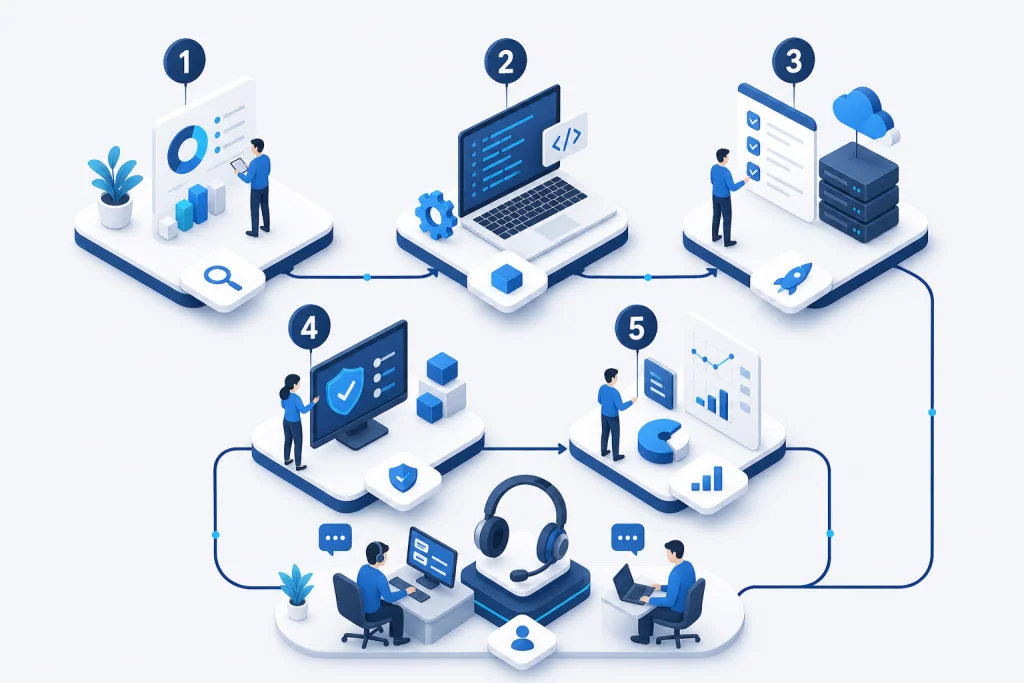
Our implementation methodology follows a five-phase approach: (1) Site Survey & Network Assessment: evaluate lighting, coverage, and existing network capacity. (2) Design: create camera placement plan using CAD, calculate bandwidth (e.g., 200 cameras at 4K require 1.6 Gbps), and specify hardware. (3) Procurement: source cameras, NVRs, switches, and cabling from authorized vendors. (4) Installation: deploy with certified technicians, test PoE distances (<100m), and configure VLANs. (5) Commissioning: calibrate analytics, set retention policies (30 days for normal, 90 days for critical), and train staff. Post-implementation, we provide 24/7 support via enterprise WiFi for mobile monitoring. This methodology ensures <99.9% uptime and compliance with ISO 27001 standards.

CCTV Procurement Architecture

A robust CCTV procurement architecture for enterprises in Indonesia comprises three tiers: edge devices (cameras), network infrastructure, and backend storage/management. Cameras should be selected based on environment—bullet cameras for perimeters, domes for indoor, and PTZ for monitoring. Resolution choices range from 2MP to 12MP, with 4K being standard for critical areas. Lens selection (e.g., 2.8mm to 12mm) determines field of view. For low-light conditions, cameras with Starlight or DarkFighter technology (0.001 lux) are essential. All cameras must support ONVIF for vendor interoperability. The network layer requires PoE+ switches (IEEE 802.3at) delivering up to 30W per port, with VLAN segmentation to isolate video traffic. Redundant switches with RSTP ensure failover. For large campuses, fiber optic backbones with SFP+ modules connect remote buildings. Backend architecture uses NVRs with hot-swappable drives, supporting RAID 0/1/5/6. For scalability, VSAN or NAS from Synology or QNAP can aggregate storage. Video management software (VMS) like Genetec or Avigilon provides unified control. Integration with cybersecurity tools ensures encrypted streams (TLS 1.2) and secure authentication (LDAP/AD). Power redundancy via UPS (e.g., APC Smart-UPS) with 2-hour runtime is critical. This architecture supports up to 500 cameras with 30-day retention at 4K, consuming 100 TB storage.

Industry Use Cases for CCTV Procurement

In manufacturing, CCTV procurement enables real-time monitoring of production lines and inventory. For example, a automotive plant in Bekasi implemented 200 IP cameras with AI analytics to detect safety violations (hard hat, zone intrusion), reducing workplace incidents by 40%. In logistics, warehouses in Jakarta use LPR cameras at gates to track truck entry/exit, integrating with WMS to automate dock scheduling, cutting wait times by 30%. Retail chains in Bandung deploy heatmap analytics to optimize store layouts, increasing sales per square meter by 15%. For critical infrastructure like data centers, CCTV with thermal cameras detects overheating equipment, preventing downtime. In healthcare, hospitals in Surabaya use PTZ cameras for patient monitoring and access control, ensuring HIPAA-like compliance. Education campuses in Yogyakarta deploy CCTV with facial recognition for attendance and security, reducing unauthorized access by 60%. Mining companies in Kalimantan use ruggedized cameras with IR for 24/7 perimeter surveillance, integrated with radar for intrusion detection. Each use case requires tailored procurement: high-resolution for license plate recognition, wide dynamic range for harsh lighting, and IP67/IK10 ratings for outdoor durability. Analytics like people counting, queue management, and wrong-way detection are deployed via edge AI cameras, reducing server load. Integration with hyperconverged infrastructure from VMware enables virtualized VMS, lowering hardware costs.

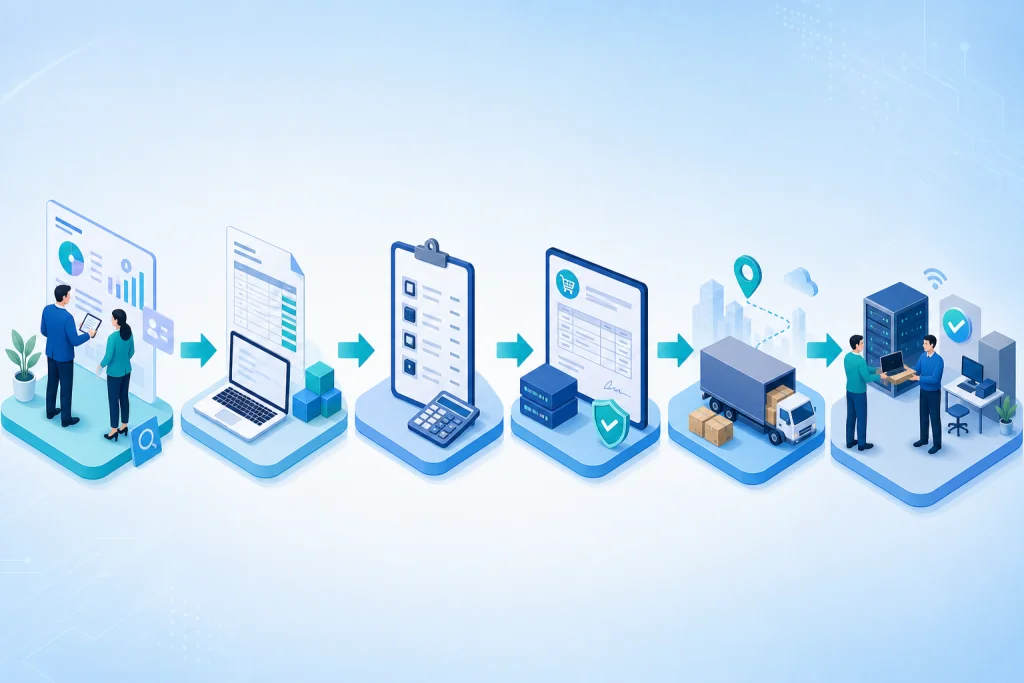
How we work

Structured delivery from assessment to handover

Each phase has clear deliverables, owners, and acceptance criteria aligned to enterprise IT practice.

Approach

CCTV Procurement vs Traditional Alternatives

Traditional analog CCTV systems (using coaxial cables and DVRs) are limited to 720p resolution and lack advanced analytics. They require separate cabling for power and video, increasing installation costs by 30% compared to IP systems. Analog DVRs typically support up to 16 channels with 2TB storage, offering only 7-day retention at D1 resolution. In contrast, modern IP CCTV procurement provides 4K resolution with H.265+ compression, reducing storage needs by 50%. IP cameras support Power over Ethernet (PoE), simplifying cabling to a single Cat6 cable. NVRs can scale to 256 channels with RAID and hot-swap drives. Analytics like facial recognition, ANPR, and behavior analysis are native to IP systems, while analog requires external encoders, adding latency. Integration with IT infrastructure is seamless via APIs and ONVIF. For example, a retail chain upgrading from analog to IP reduced false alarms by 80% using AI-based motion detection. Total cost of ownership (TCO) over 5 years: analog system costs $50,000 for 50 cameras (including cabling and DVR), while IP system costs $60,000 but saves $15,000 in operational costs (fewer false dispatches, remote monitoring). Additionally, IP systems support cybersecurity features like encrypted streams and secure boot, mitigating risks of tampering. Traditional systems are vulnerable to signal interference and lack audit trails. For enterprises in Indonesia, mandatory compliance with UU ITE requires digital logs; analog systems cannot provide granular access logs. Therefore, IP CCTV procurement is the only viable option for B2B enterprises.

  • Hybrid systems (analog cameras with encoders) offer a migration path but incur higher maintenance. Our recommendation is to adopt IP-native solutions from Hikvision or Dahua with hybrid cloud storage for offsite backup. This approach ensures scalability and future-proofing against technological obsolescence.

Capabilities

Case Study & Implementation Methodology

Manufacturing Company in Cikarang, Challenge: 80% blind spots in warehouse, 15% inventory shrinkage, and 3-hour daily manual patrols. Solution: Deployed 120 Hikvision 4K IP cameras with DarkFighter technology, 16-channel NVRs with 48TB RAID 5, and AI analytics for object detection and loitering. Integrated with existing WMS via API. Result: 95% blind spot coverage, inventory shrinkage reduced to 2%, patrol time cut to 30 minutes daily, and 20% reduction in theft incidents within 6 months. ROI achieved in 18 months.

  • Logistics Company in Surabaya, Challenge: 50% of truck turnaround time >45 minutes due to manual check-in, 10% fuel theft. Solution: Installed 8 LPR cameras at gates, 20 PTZ cameras for yard monitoring, and NVR with 72TB storage. Used analytics for automatic gate opening and fuel cap detection. Result: Average turnaround time reduced to 15 minutes (67% improvement), fuel theft eliminated, and labor costs reduced by 30%. ROI in 12 months.
  • Our implementation methodology follows a five-phase approach: (1) Site Survey & Network Assessment: evaluate lighting, coverage, and existing network capacity. (2) Design: create camera placement plan using CAD, calculate bandwidth (e.g., 200 cameras at 4K require 1.6 Gbps), and specify hardware. (3) Procurement: source cameras, NVRs, switches, and cabling from authorized vendors. (4) Installation: deploy with certified technicians, test PoE distances (<100m), and configure VLANs. (5) Commissioning: calibrate analytics, set retention policies (30 days for normal, 90 days for critical), and train staff. Post-implementation, we provide 24/7 support via enterprise WiFi for mobile monitoring. This methodology ensures <99.9% uptime and compliance with ISO 27001 standards.
Use cases

Pengadaan greenfield

Refresh infrastruktur

Multi-vendor consolidation

Renewal lisensi

Ekspansi cabang

CCTV Procurement for Enterprise

Our engineers help design, deploy, and support enterprise IT solutions across Indonesia.

Request a quote Contact our team

Related pages

E-E-A-T · Expertise & trust

Implementation expertise & enterprise trust

Intilogy (PT. Inti Jaya Teknologi) supports IT and procurement teams across Indonesia — from technical assessment and BoQ through deployment, documentation, and post go-live support.

  • 500+ Infrastructure deployments
  • 24/7 Operational support
  • SLA Enterprise SLA
  • 150+ Clients & institutions

Engineering & delivery expertise

Engineer-led assessment

Requirements workshops, sizing, and architecture — not catalogue selling without context.

Documented deployment

Commissioning checklists, as-built diagrams, IP plans, and escalation runbooks.

Audit-ready procurement

BoQ/BOM, quotations, POs, and handover packs for tenders and IT audits.

Multi-vendor coordination

One project partner for servers, networks, security, backup, and licensing.

Vendor ecosystem & sourcing channels

We source through official distributors/resellers per brand and project. Specific partnership tiers are confirmed per RFP — see our credentials page.

Vendor Status / tier Scope Notes
Dell Technologies Authorized channel PowerEdge, storage BoQ & manufacturer warranty
HPE Authorized channel ProLiant Enterprise servers
Fortinet Implementation partner NGFW, SD-WAN Licensing & deployment
Veeam Implementation partner Backup, replication Immutable design
VMware Implementation partner vSphere Cluster & migration

Tiers vary by SKU/region. Contact sales@intilogy.com for distributor letters or engineer certificates.

Enterprise implementation methodology

Standard flow for infrastructure, security, and backup projects — scoped per contract.

  1. Discovery & assessment

    Duration: 1–2 weeks

    Deliverables Requirements & risk report

  2. Architecture & BoQ

    Duration: 1–2 weeks

    Deliverables HLD, BoQ, rollout plan

  3. Procurement & staging

    Duration: 2–4 weeks

    Deliverables Asset register

  4. Implementation & UAT

    Duration: 2–6 weeks

    Deliverables As-built, UAT sign-off

  5. Handover & operations

    Duration: Ongoing

    Deliverables SOPs, training, SLA if contracted

Support & SLA (per project contract)

Service levels are defined in agreement — example framework below.

Standard maintenance

Response
Next business day (remote)
Coverage
Firmware advisory, tickets, RMA
Notes
Indonesia business hours

Project warranty

Response
Per implementation contract
Coverage
Defects in Intilogy deployment scope
Notes
Not 24/7 unless agreed

Critical incident (optional)

Response
4–8 hours if contracted
Coverage
Production-critical escalation
Notes
Requires separate MSA

Response times are illustrative — binding only when written in contract.

Technical documentation delivered

  • Topology & rack diagrams (as-built)
  • Asset list, serials, warranty status
  • Critical config summary & change log
  • Basic operations runbook & escalation contacts
  • Restore / DR drill reports (if in scope)
  • Tender packs: distributor letters & engineer certs (on request)

Competency & certifications

Engineers train on vendor technologies per project. Individual certs (Fortinet NSE, VMware VCP, Veeam VMCE, etc.) are provided for tenders — not all listed publicly.

  • Engineer certifications — Per project technology — on request
  • Distributor letters — For procurement audit
  • Client references — See Clients page for logos & scope

View certifications & partnerships

Ready to discuss architecture & BoQ?

Our team supports assessment, recommendations, procurement, and documented implementation.

WhatsApp Consult on WhatsApp
Request Consultation WhatsApp