Cloud Procurement Architecture
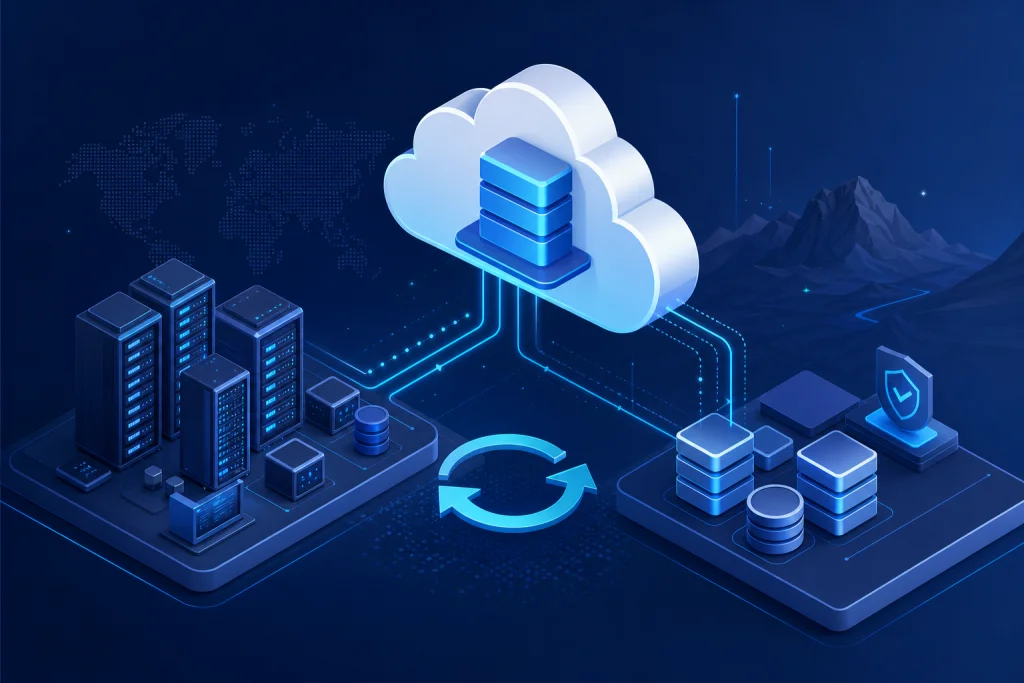
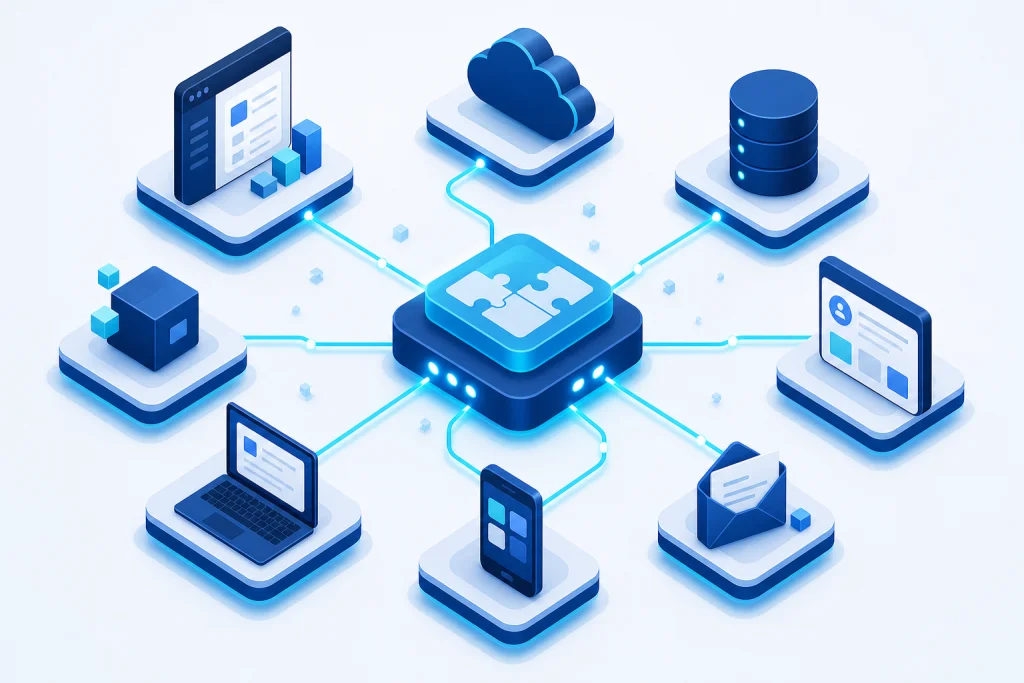
Enterprise cloud procurement architecture involves a multi-layered design encompassing compute, storage, networking, and security. At the core, we design a hybrid cloud model using HCI for on-premises workloads and public cloud for burst capacity. Key components include virtualized servers (VMware vSphere), software-defined storage (e.g., Synology or QNAP), and SD-WAN from Cisco or Ruijie. Security is enforced via Fortinet firewalls and Cyber Security tools. Procurement decisions are based on workload profiling: mission-critical apps run on dedicated private cloud, while dev/test environments leverage AWS or Azure. We implement Backup & Disaster Recovery using Veeam to ensure 99.99% uptime. Network architecture includes redundant connections with Networking gear from Cisco and Ruijie, plus Enterprise WiFi for campus connectivity. Cost governance is achieved through reserved instances, right-sizing, and automated scaling policies.
Our architecture also incorporates containerization (Kubernetes) for microservices, managed via platforms like Azure Kubernetes Service. Storage tiers are optimized using SSDs for databases and HDDs for archival, with data encryption at rest and in transit. For Indonesian enterprises, we ensure data sovereignty by deploying local regions (e.g., AWS Jakarta, Azure Indonesia). Procurement contracts include SLAs for latency, throughput, and support response times. We also integrate Server & Storage solutions from Dell and HP to build a unified fabric. The result is a cloud procurement architecture that balances performance, cost, and compliance.
Industry Use Cases for Cloud Procurement
In the financial services sector, cloud procurement enables secure digital banking platforms. A Jakarta-based bank migrated core banking to Azure with Hybrid Cloud architecture, reducing transaction latency by 60% and achieving 99.995% uptime. Procurement included reserved instances and Azure SQL Database with geo-replication. For healthcare, a hospital group in Surabaya adopted AWS for telemedicine and electronic health records. They used Backup & Disaster Recovery with Veeam to meet data retention regulations. Cloud procurement here prioritized HIPAA-like compliance and data residency. In manufacturing, a automotive company in Bandung deployed private cloud using VMware and Dell servers for IoT data processing. They integrated Enterprise CCTV analytics on the same infrastructure. Retail enterprises leverage multi-cloud for e-commerce: a fashion retailer in Bali uses AWS for frontend and Google Cloud for AI/ML recommendations, procured via Intilogy's consolidated contracts. Each use case demonstrates tailored procurement strategies that align with industry-specific requirements.
Government agencies in Indonesia require strict compliance with UU ITE. A city government in Medan implemented a hybrid cloud with Fortinet security and IT Infrastructure from Lenovo. Procurement included dedicated private cloud for sensitive citizen data and public cloud for public services. This reduced IT costs by 25% while improving service availability. Education institutions, like a university in Yogyakarta, use cloud procurement for virtual labs and research computing. They procured HP servers for on-premises HPC and AWS for elastic compute. The result was a 50% reduction in research time. These use cases highlight the importance of customized cloud procurement to meet vertical-specific challenges.
Cloud Procurement vs Traditional Alternatives
Traditional IT procurement involves capital expenditure (CapEx) for hardware, long lead times, and fixed capacity. In contrast, cloud procurement offers operational expenditure (OpEx) models, elastic scalability, and pay-as-you-go pricing. For example, a traditional server purchase from Dell or HP requires 8-12 weeks delivery and upfront costs, while cloud instances can be provisioned in minutes. However, cloud procurement introduces vendor lock-in risks and data transfer costs. Our approach combines both: we use HCI for predictable workloads and public cloud for variable demand. Security in traditional environments is managed internally, whereas cloud requires shared responsibility models. With Fortinet and Cyber Security solutions, we bridge this gap. Traditional alternatives often lack disaster recovery capabilities; cloud procurement includes built-in DR from Veeam. Cost-wise, traditional procurement has higher TCO for underutilized assets, while cloud procurement optimizes spend via right-sizing and reserved instances. For Indonesian enterprises, local support from Lenovo and Ruijie ensures faster maintenance. Ultimately, a hybrid approach yields the best of both worlds.
Performance comparisons show that traditional on-premises systems provide consistent low latency for latency-sensitive apps, while cloud offers global reach. Procurement decisions must consider workload characteristics: databases with high IOPS benefit from dedicated Server & Storage from Dell or HP, while web servers scale better on cloud. Compliance is another factor: traditional environments give full control over data location, while cloud providers offer certifications but may not cover all local regulations. Intilogy's procurement methodology includes a readiness assessment to determine the optimal mix. We also evaluate total cost of ownership (TCO) over 3-5 years, factoring in migration costs, training, and operational overhead. The result is a procurement strategy that reduces costs by 20-40% compared to pure traditional or pure cloud approaches.
Case Study & Implementation Methodology
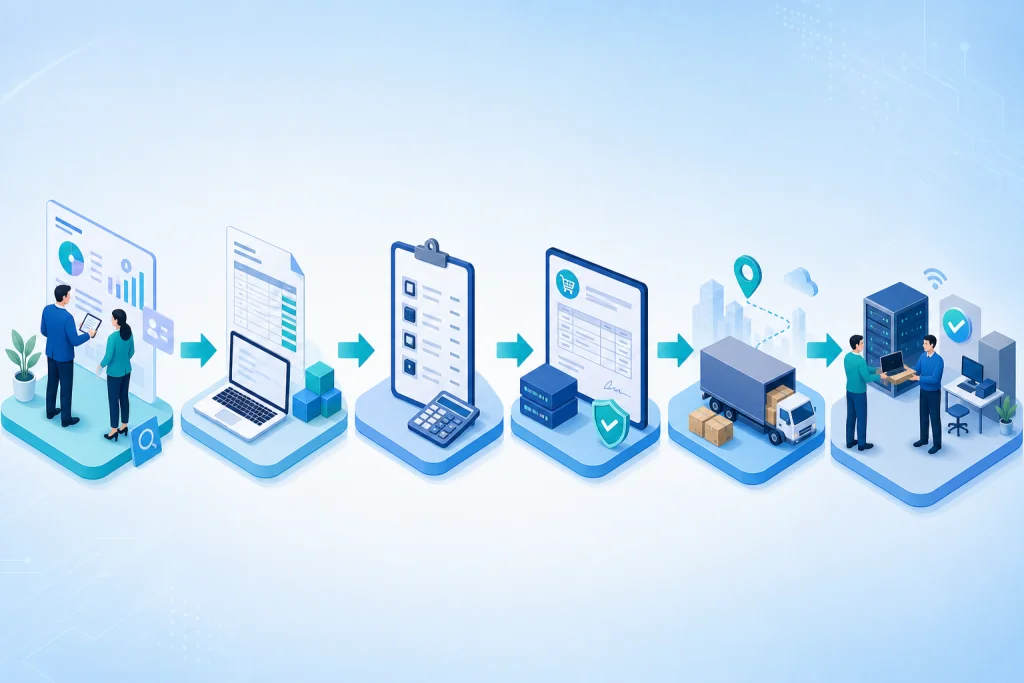
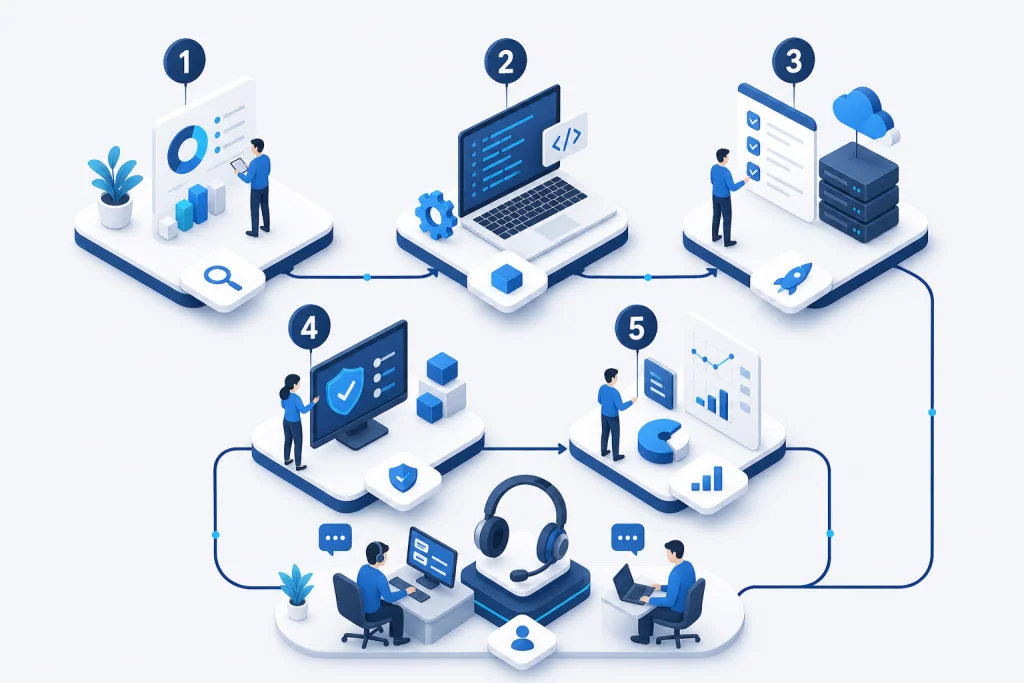
A financial services firm in Jakarta with 500 employees faced escalating IT costs and compliance challenges. Their legacy infrastructure had 80% server utilization, 15% annual cost increase, and 99.9% uptime. Challenge: Reduce costs by 30% while improving security and compliance. Solution: Intilogy designed a hybrid cloud procurement plan using VMware for private cloud and Azure for public cloud, with Fortinet firewalls and Backup & Disaster Recovery via Veeam. Implementation followed a 6-phase methodology: Discovery (2 weeks), Architecture Design (4 weeks), Procurement (6 weeks), Migration (8 weeks), Testing (2 weeks), and Optimization (ongoing). Result: 35% reduction in IT costs, 99.995% uptime, and full compliance with OJK regulations. Procurement included reserved instances for 70% of workloads, reducing cloud spend by 25%. The project was completed on time and under budget.
Another case: A manufacturing company in Surabaya with 1,200 employees needed to modernize their IoT platform. Challenge: 50% of IoT data was lost due to network latency, and on-premises storage was at 90% capacity. Solution: Procured HCI from Dell and Networking from Cisco, combined with AWS for analytics. Implementation used a phased migration: first, edge devices connected to Enterprise WiFi from Ruijie, then data streamed to HCI for real-time processing, with historical data in AWS S3. Result: 95% data capture rate, 40% reduction in storage costs, and 20% increase in production efficiency. The procurement process included vendor negotiations that saved 15% on hardware costs. These case studies demonstrate Intilogy's proven methodology: Assess, Architect, Procure, Migrate, Validate, Optimize.