Procurement Consulting Architecture
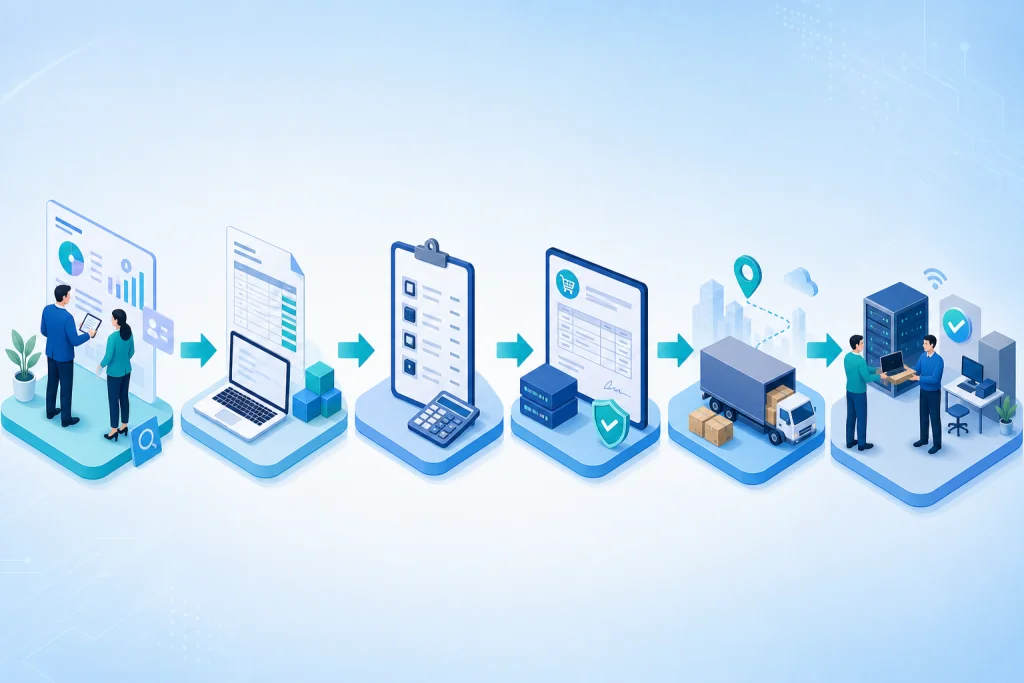
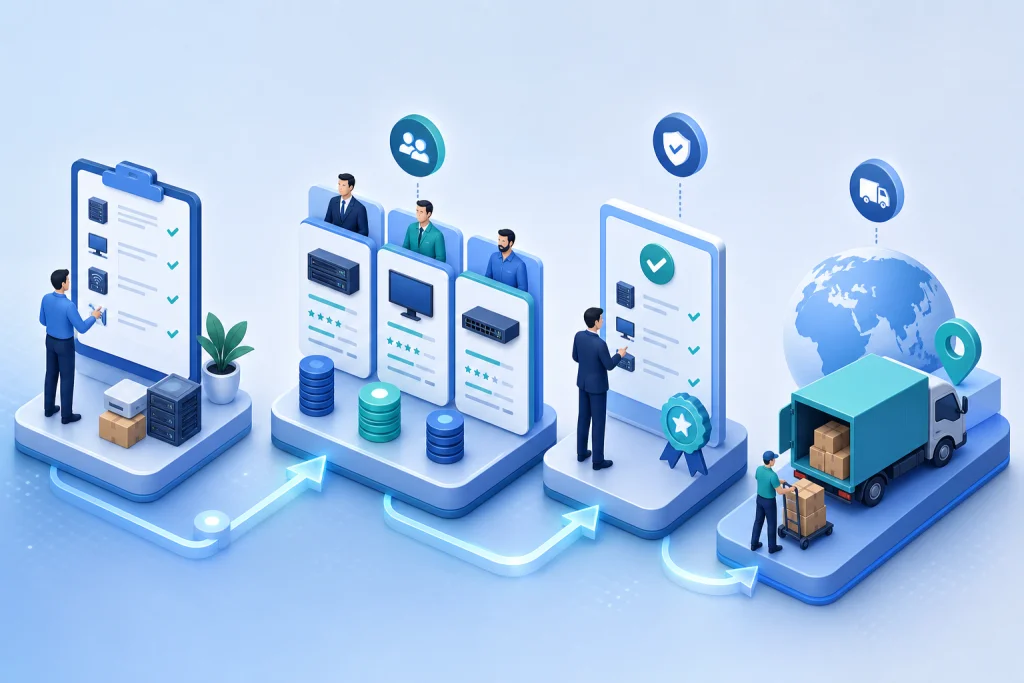
The architecture of procurement consulting for enterprises is built on four pillars: strategic sourcing, vendor management, contract optimization, and performance analytics. Strategic sourcing involves market analysis, demand forecasting, and supplier selection to ensure the best value. Vendor management encompasses relationship building, SLA monitoring, and compliance tracking. Contract optimization focuses on negotiating favorable terms, volume discounts, and exit clauses. Performance analytics uses KPIs such as cost savings, delivery times, and quality metrics to drive continuous improvement.
Our methodology integrates with enterprise systems like ERP and procurement platforms, enabling real-time visibility into spending patterns. We employ advanced analytics to identify consolidation opportunities—for example, bundling server and storage purchases from a single vendor like Dell or Lenovo to achieve better pricing. We also assess total cost of ownership (TCO) across hardware, software, and services, considering factors like energy consumption, maintenance, and end-of-life disposal. This architecture ensures that procurement decisions are data-driven, transparent, and aligned with long-term business goals, reducing maverick spending and improving supplier compliance.
Industry Use Cases for Procurement Consulting
In the manufacturing sector, a leading automotive parts supplier in Jakarta faced rising raw material costs and supply chain disruptions. Our procurement consulting optimized their sourcing strategy by consolidating suppliers and negotiating long-term contracts with Cisco for networking equipment and Fortinet for cybersecurity. This reduced procurement costs by 25% and improved delivery reliability by 30%.
For a financial services firm in Surabaya, regulatory compliance required stringent vendor risk management. We implemented a vendor assessment framework that evaluated financial stability, security certifications, and performance history. By renegotiating contracts with Microsoft for cloud services and Veeam for backup, the firm achieved a 20% reduction in licensing costs while enhancing data protection. In the healthcare sector, a hospital group in Bandung used our consulting to standardize IT procurement across multiple facilities, leveraging bulk purchasing of enterprise WiFi and CCTV systems from Ruijie, resulting in a 35% cost saving and unified management.
Procurement Consulting vs Traditional Alternatives
Traditional procurement approaches often rely on ad-hoc purchasing, decentralized decision-making, and limited supplier visibility. This leads to higher costs, inconsistent quality, and increased risk. In contrast, procurement consulting provides a structured, data-driven framework that optimizes every step. For example, while traditional methods may accept standard pricing from vendors, consulting leverages market intelligence to negotiate volume discounts and favorable terms.
Another key difference is risk management. Traditional procurement lacks systematic vendor evaluation, exposing enterprises to supply chain disruptions or security vulnerabilities. Consulting integrates risk assessments, including cybersecurity audits and financial health checks, ensuring that vendors like Synology or QNAP meet enterprise standards. Additionally, consulting introduces category management—treating IT hardware, software, and services as distinct categories with specialized strategies. This results in measurable improvements: enterprises typically see a 15-25% reduction in procurement spend, 30% faster procurement cycles, and 40% fewer compliance issues compared to traditional methods.
Case Study & Implementation Methodology
A logistics company in Jakarta with 500+ vehicles and 10 warehouses faced escalating IT costs and vendor fragmentation. Challenge: Annual IT spend of $2M with 15+ vendors, no centralized procurement, and 30% of purchases were non-compliant. Solution: Implemented a procurement consulting engagement that consolidated vendors to 5 strategic partners, including Lenovo for laptops and servers, HP for printers, and Cisco for networking. We negotiated enterprise agreements with volume discounts of 22% and included service-level guarantees. Result: Reduced annual IT spend by 28% ($560K savings), improved delivery times by 35%, and achieved 100% compliance within 6 months.
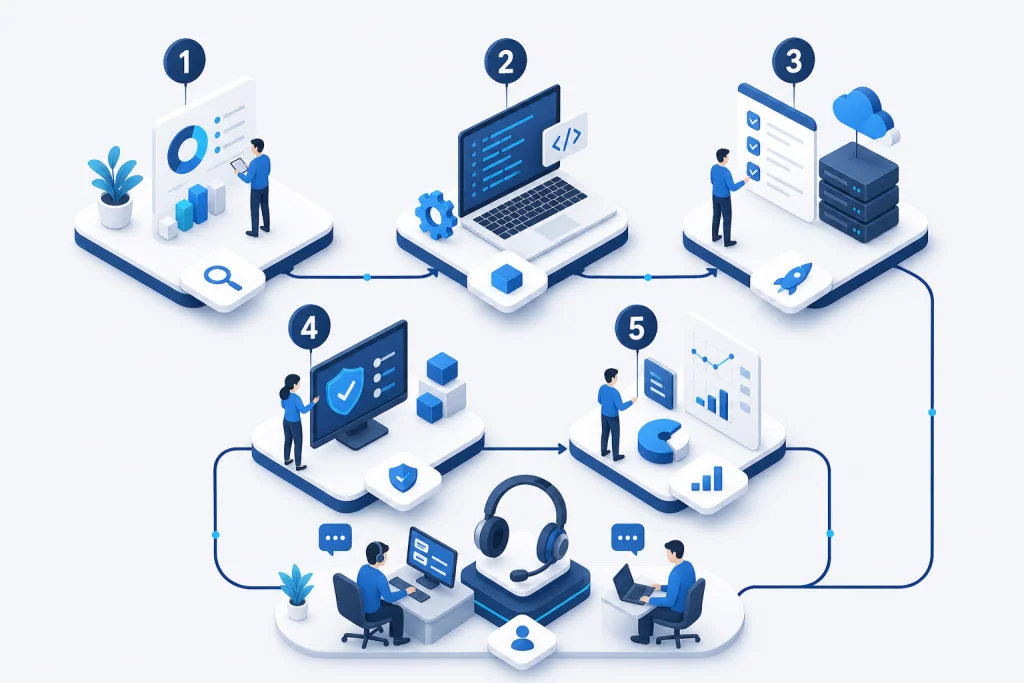
Implementation methodology follows a five-phase approach: (1) Assessment—audit current spend, contracts, and supplier performance; (2) Strategy—develop sourcing plans and vendor scorecards; (3) Negotiation—conduct RFPs and negotiate contracts; (4) Transition—migrate to new suppliers and update procurement systems; (5) Optimization—monitor KPIs and continuously improve. Each phase includes stakeholder alignment and change management to ensure adoption. This methodology is scalable for enterprises of any size and can be applied to IT infrastructure projects, backup and disaster recovery, or cybersecurity initiatives.