RFID Procurement Architecture
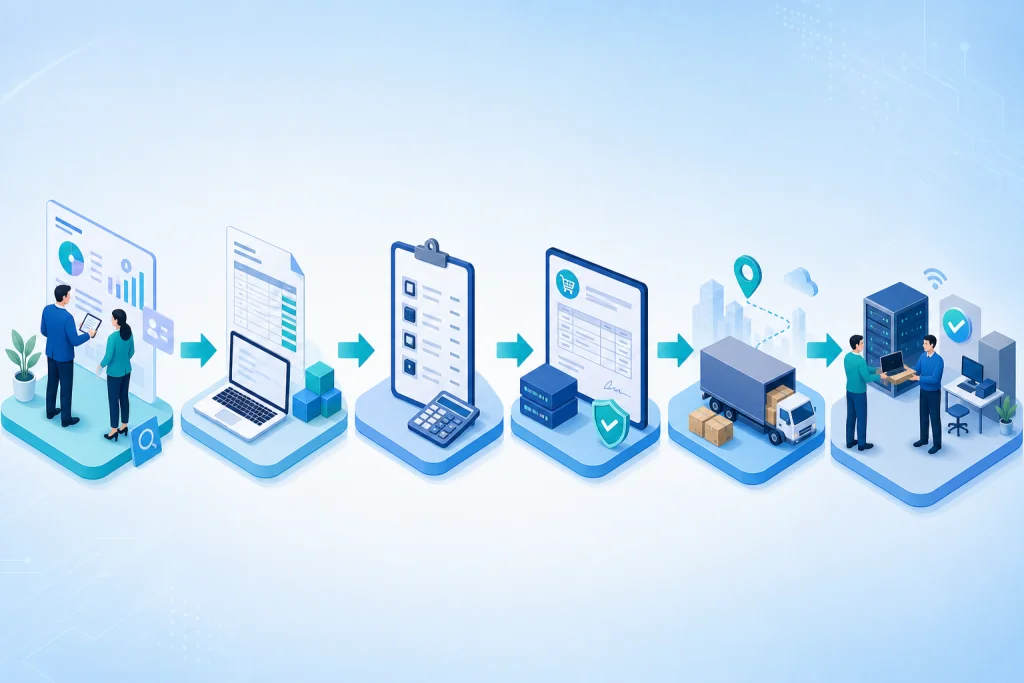
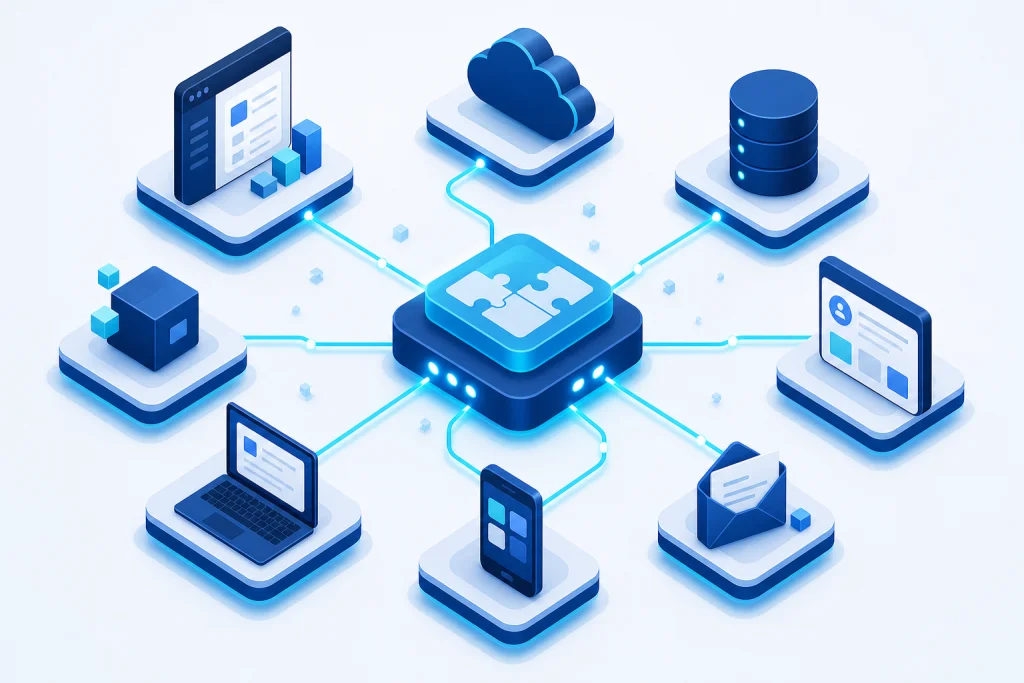
A robust RFID procurement architecture comprises four layers: tag and reader hardware, edge computing, network connectivity, and backend integration. Passive UHF tags (860-960 MHz) are standard for pallet and case tracking, offering read ranges up to 10 meters and bulk read rates of 200 tags/second. Active tags with onboard batteries extend range to 100+ meters for high-value asset tracking. Readers, such as Impinj or Zebra models, connect via Ethernet or Wi-Fi to edge servers running middleware like ThingMagic or OAT Foundation. These servers filter and process raw RFID data before forwarding to ERP systems via APIs. For Indonesian enterprises, selecting IP65-rated readers for dusty or humid warehouses is critical. The network backbone must support low-latency data flow; networking solutions from Cisco or Ruijie ensure reliable connectivity. Data storage on Synology NAS or QNAP provides redundancy and fast retrieval. Integration with hyperconverged infrastructure simplifies scaling and management, while backup & disaster recovery protects against data loss. Security measures include tag authentication and encrypted communication to prevent counterfeiting and eavesdropping.
The architecture also supports IoT convergence, where RFID data enriches analytics platforms for real-time dashboards. For example, combining RFID with enterprise WiFi enables location-based services within facilities. Edge computing reduces latency by processing data locally, critical for high-speed sorting lines. In Indonesia, where infrastructure varies, hybrid architectures with cloud backup via hybrid cloud ensure business continuity. The total cost of ownership includes hardware, installation, middleware licensing, and maintenance. Intilogy recommends a phased deployment starting with a pilot zone to validate tag readability and ROI before scaling.
Industry Use Cases for RFID Procurement
In manufacturing, RFID procurement enables work-in-progress tracking, reducing assembly errors by 30% and improving throughput by 20%. For example, an automotive parts supplier in Jakarta uses UHF tags on pallets to monitor movement across 50 stations, integrating with SAP ECC via middleware. In logistics, a third-party warehouse in Surabaya implemented RFID for inbound/outbound verification, cutting dock-to-stock time from 4 hours to 45 minutes and achieving 99.9% shipping accuracy. Retail enterprises in Bandung deploy RFID for inventory visibility, reducing out-of-stocks by 40% and increasing sales by 15% through better replenishment. Healthcare institutions use RFID for tracking medical equipment and pharmaceuticals, ensuring compliance with BPOM regulations and reducing asset loss by 60%. The technology also supports cold chain monitoring by combining RFID with temperature sensors, alerting managers to breaches in real-time. For each use case, tag selection (e.g., high-temperature tags for autoclaves) and reader placement (e.g., dock door portals) are tailored to environmental challenges. Integration with server & storage systems ensures data from thousands of reads per second is processed without bottlenecks.
RFID Procurement vs Traditional Alternatives
Traditional barcode scanning requires line-of-sight and manual labor, leading to error rates of 1 in 300 scans and average scan times of 2-3 seconds per item. In contrast, RFID reads up to 200 tags simultaneously in under a second, with accuracy exceeding 99.5%. While barcodes cost less per label ($0.01 vs $0.10 for passive RFID tags), the total cost of ownership for RFID is lower in high-volume operations due to labor savings and reduced errors. For example, a warehouse processing 10,000 items/day saves 150 labor hours weekly with RFID. Another alternative, manual data entry, has error rates of 1-3% and is unsustainable for real-time tracking. IoT-based solutions like Bluetooth beacons offer similar benefits but lack the read range and bulk capability of RFID. However, RFID requires upfront investment in readers ($500-$2,000 each) and infrastructure, including IT infrastructure upgrades. For Indonesian enterprises, the payback period is typically 12-18 months. Security-wise, RFID can be encrypted, whereas barcodes are easily duplicated. Integration with cybersecurity solutions from Fortinet ensures data protection. Ultimately, RFID is superior for automated, high-speed environments, while barcodes remain viable for low-volume, low-cost applications.
Case Study & Implementation Methodology
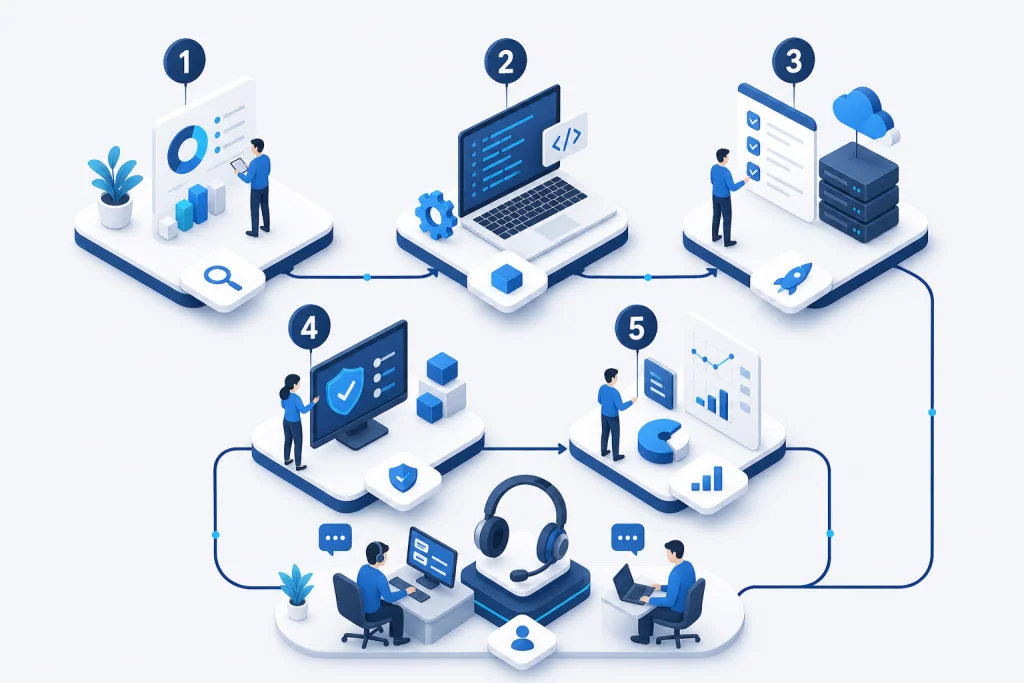
Implementation methodology follows a five-phase approach: assessment, design, pilot, rollout, and optimization. In the assessment phase, Intilogy conducts site surveys to map RF interference, tag density, and workflow bottlenecks. For example, a food distributor in Jakarta faced 15% shrinkage due to mispicks and expiry issues. Challenge: 20,000 SKUs, 3 warehouses, manual cycle counting taking 40 hours/month. Solution: Deployed UHF RFID with Dell edge servers and VMware virtualization, integrating with Microsoft Dynamics 365. Result: Inventory accuracy improved from 92% to 99.5%, cycle counting reduced to 4 hours/month, and shrinkage dropped to 3%, yielding a 22% ROI in 14 months. Another example: a hospital in Surabaya needed to track 5,000 infusion pumps across 10 floors. Challenge: 30% of pumps lost monthly, costing $50,000. Solution: Active RFID with HP servers and Veeam backup. Result: Asset loss reduced to 2%, retrieval time cut from 20 minutes to 2 minutes, saving $40,000/month. The methodology emphasizes stakeholder training and change management to ensure adoption. Post-deployment, analytics from hybrid cloud dashboards provide continuous improvement insights.