Server Procurement Architecture
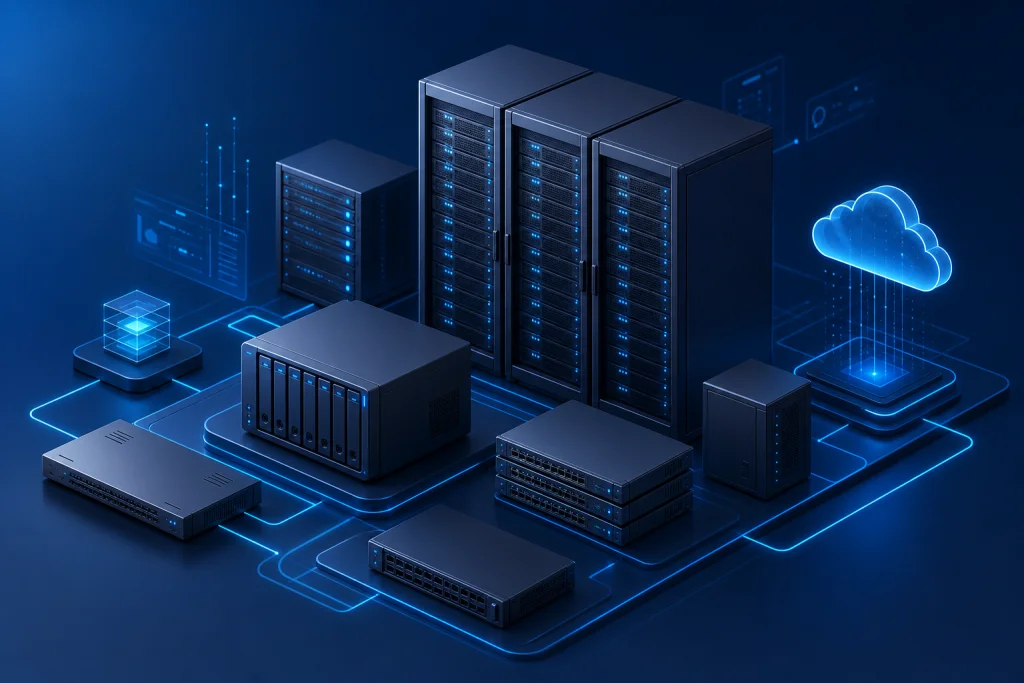
Enterprise server procurement architecture encompasses the design and selection of physical and virtualized server resources to support business applications. Key components include compute nodes (e.g., Intel Xeon or AMD EPYC processors), memory (DDR4/DDR5 ECC RAM), storage arrays (NVMe SSDs, SAS HDDs), and network interfaces (10/25/100GbE). For high-availability, architectures often employ clustering, load balancing, and redundant power supplies. In Indonesia, enterprises increasingly adopt hyperconverged infrastructure (HCI) from brands like VMware and Lenovo, which integrates compute, storage, and networking into a single system, simplifying scalability and management. Our server storage solutions include Dell PowerEdge and HP ProLiant series, optimized for virtualization with VMware vSphere. Additionally, hyperconverged infrastructure from Nutanix or Cisco HyperFlex reduces hardware footprint and operational complexity. We also recommend networking upgrades to ensure low-latency connectivity, especially for latency-sensitive applications like financial trading or real-time analytics.
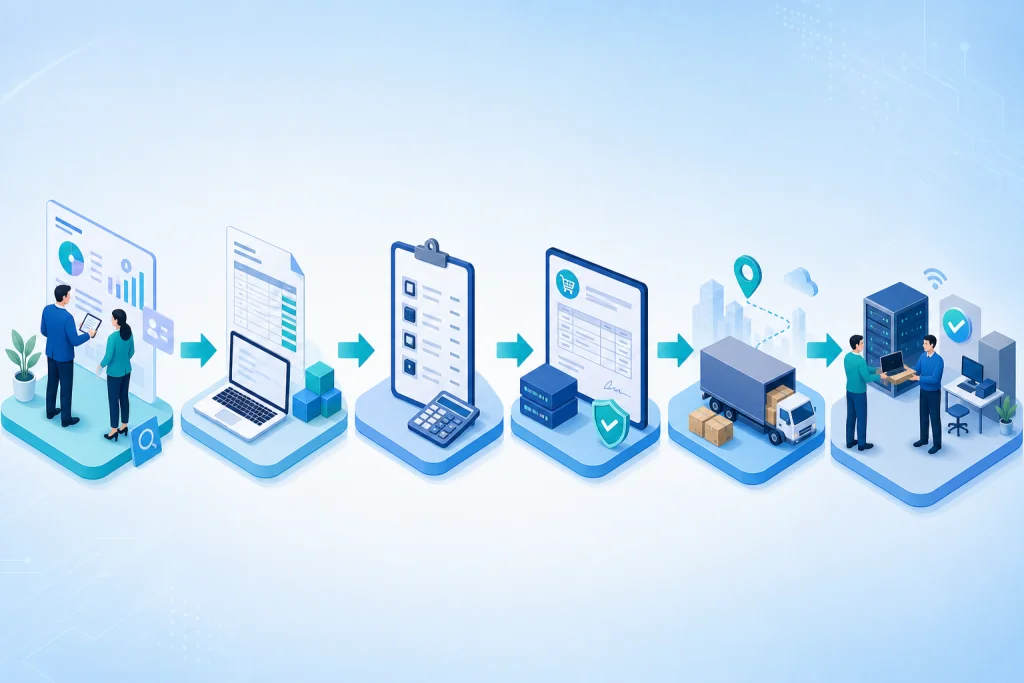
When procuring servers, enterprises must consider form factor: rack servers for data centers, blade servers for density, and tower servers for remote offices. In Indonesia, where space and cooling are critical, rack servers from HP and Dell are popular. We advise on power and cooling requirements, including PUE optimization. For hybrid cloud architectures, servers should support seamless integration with public cloud providers like AWS or Azure, often through hybrid cloud solutions. Our procurement process includes benchmarking against industry standards (SPEC, TPC) and ensuring compatibility with existing IT infrastructure. We also provide Cisco UCS for unified computing, which reduces cabling and management overhead. Ultimately, the architecture must align with workload demands, whether for OLTP databases, virtual desktop infrastructure (VDI), or containerized microservices.
Industry Use Cases for Server Procurement
In Indonesia, server procurement varies by industry. For financial services, banks and insurance companies require high-performance servers for real-time transaction processing and fraud detection. They often choose Lenovo ThinkSystem or Dell PowerEdge with Intel Xeon Scalable processors and large memory footprints. Manufacturing firms deploy servers for ERP systems (SAP, Oracle) and IoT data collection, needing ruggedized servers for factory floors. Logistics companies use servers for warehouse management and fleet tracking, often integrating with enterprise WiFi and CCTV systems. Healthcare providers require HIPAA-compliant servers for electronic health records (EHR) and medical imaging, preferring HP ProLiant for reliability. Retail and e-commerce enterprises need scalable servers for peak traffic during promotions, leveraging HCI for rapid scaling. Government agencies in Indonesia prioritize data sovereignty and often procure servers from local partners with TKDN certification. Our IT infrastructure solutions cater to these diverse needs, ensuring compliance and performance.
Another critical use case is for backup and disaster recovery (DR). Enterprises in Indonesia are adopting backup and DR solutions that require secondary servers at offsite locations. For example, a Jakarta-based bank might deploy HP servers in a DR site in Bandung, synchronized via Veeam. Media and entertainment companies use high-storage servers for video editing and rendering, often with QNAP or Synology NAS. Education institutions deploy servers for e-learning platforms and research computing. Each use case demands specific server configurations: for VDI, servers with high core counts and GPU support; for big data analytics, servers with large RAM and fast storage. We help enterprises choose the right brands, including Lenovo, HP, and Dell, based on workload characteristics and budget.
Server Procurement vs Traditional Alternatives
Traditional server procurement often involved buying standalone servers for each application, leading to silos, high power consumption, and management complexity. Modern procurement favors converged and hyperconverged systems that pool resources and reduce hardware sprawl. For example, instead of purchasing separate servers for database, web, and file services, an enterprise can deploy a single HCI cluster from VMware or Nutanix, which provides all functions with centralized management. This reduces capital expenditure by 30-50% and operational costs by 40% due to lower power and cooling needs. Additionally, traditional procurement required lengthy lead times for custom configurations, whereas modern vendors like Dell and HP offer pre-validated solutions (e.g., Dell VxRail) that can be deployed in days. In Indonesia, where time-to-market is critical, HCI adoption is accelerating, especially in industries like e-commerce and fintech.
Another alternative is cloud-based procurement, where enterprises rent virtual servers from providers like AWS or Azure. However, for long-term workloads, on-premise servers often provide better total cost of ownership (TCO) and data control. Hybrid cloud strategies combine both, using on-premise servers for sensitive data and cloud for burst capacity. Our hybrid cloud solutions help enterprises balance cost and performance. Compared to traditional alternatives, modern server procurement emphasizes software-defined storage and networking, enabling automation and orchestration. For example, using VMware vSAN eliminates the need for dedicated SAN storage. We also recommend cybersecurity integration from the start, rather than as an afterthought, to protect against ransomware and data breaches. Ultimately, the shift from traditional to modern procurement is driven by the need for agility, scalability, and reduced total cost of ownership.
Case Study & Implementation Methodology
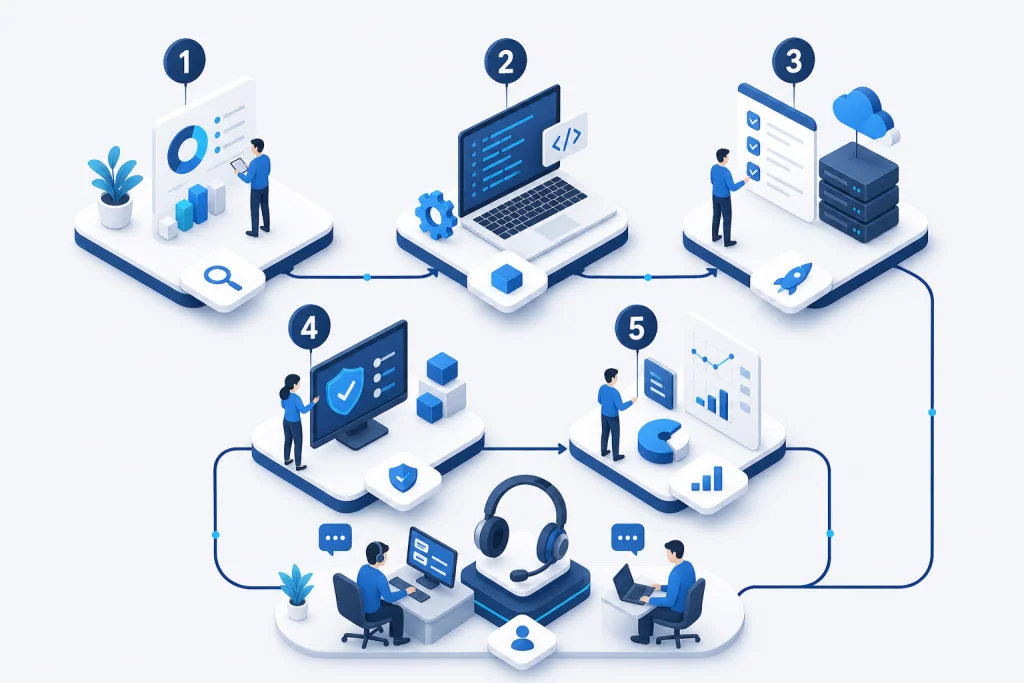
A leading logistics company in Jakarta faced server performance issues during peak hours, with 40% transaction slowdowns and 15% downtime monthly. Their legacy HP ProLiant G8 servers were underpowered for their growing warehouse management system (WMS) and real-time tracking. We conducted a needs assessment, recommending a migration to Dell PowerEdge R750xs servers with Intel Xeon Gold processors, 512GB RAM, and NVMe storage. Implementation followed our five-phase methodology: (1) Discovery & Architecture Design, (2) Vendor Selection & Procurement (via Dell), (3) Staging & Configuration, (4) Migration & Testing, and (5) Go-Live & Support. The new servers were integrated with Cisco networking and Veeam backup. Results: 60% improvement in transaction throughput, 99.99% uptime, and 35% reduction in operational costs due to lower power consumption. The project was completed in 8 weeks, with zero data loss during migration.
Another case: a manufacturing company in Surabaya needed to consolidate 20 physical servers into a virtualized environment for their ERP and MES systems. We proposed a Lenovo ThinkAgile HX HCI solution with VMware vSphere. Implementation included deploying three nodes, configuring vSAN storage, and migrating workloads using VMware HCX. The company achieved 50% reduction in hardware footprint, 70% faster provisioning, and 30% lower TCO over 3 years. Our methodology emphasizes risk mitigation: we perform pre-migration assessments, validate compatibility, and provide training. For both cases, we ensured compliance with Indonesian data regulations and provided 24/7 support. These examples demonstrate how structured procurement and implementation deliver measurable ROI for enterprises in Indonesia.